Human-robot collaboration in construction means workers and machines divide building tasks while sharing timing, space, and safety responsibility. The six levels describe how much the machine perceives, decides, and acts without direct human control. Lower levels keep the person in charge of every motion. Higher levels let the robot adjust path, force, or sequence around people and site change.
Table of Contents
- How do the six levels work?
- What does sharing space require?
- What changes for workers and supervisors?
- How do you pick the right level?
- What keeps adaptive teamwork difficult?
How do the six levels work?
The scale tracks independence and closeness. A higher level means the robot senses more and adjusts more near workers.
Movement up the scale trades direct control for sensing, stopping, and planning. Most sites mix levels, using fenced automation for one task and hand-guided help for another.
- Level 1: Powered assistance – worker guides the motion, such as a lifting aid, exoskeleton, or power screed.
- Level 2: Teleoperation – worker drives the machine by remote, such as a demolition carrier, from a safe distance.
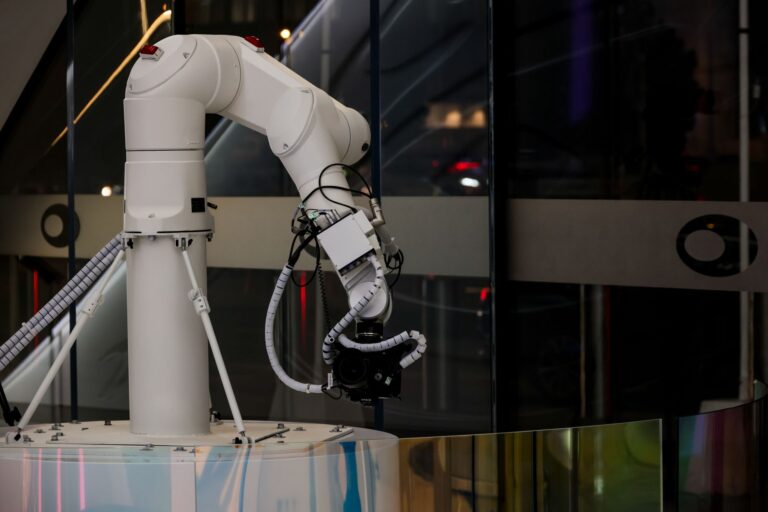
- Level 3: Fenced automation – robot repeats a set path alone, such as drilling or bricklaying, inside a barrier.
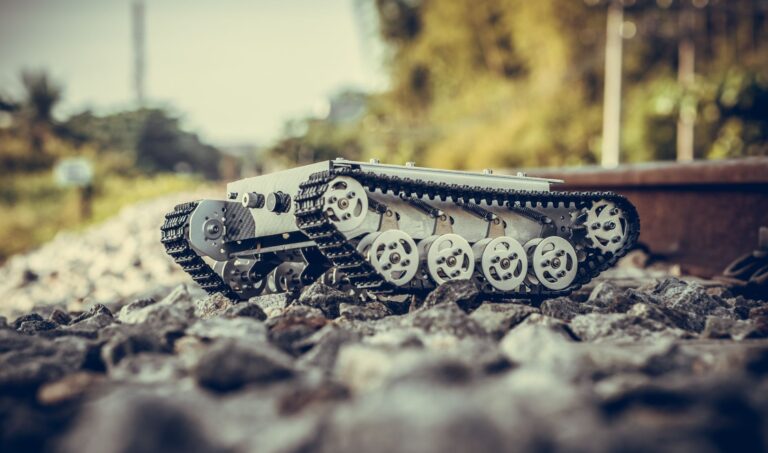
- Level 4: Supervised autonomy in shared areas – mobile machine travels, detects obstacles, and pauses for people.
- Level 5: Coordinated work – person and robot handle linked steps side by side, such as lift, position, and fasten panels.
What does sharing space require?
Fenced robots need clear barriers, locked entry, and visible status lights. Work zones need marked travel lanes and storage kept clear of robot paths. Shared-area machines need laser scanners, cameras, and reliable stop behavior.
Speed must drop near people, and the machine must hold position when view is blocked. Dust, rain, glare, and uneven ground weaken sensing. Plan cleaning, lighting, and level travel surfaces before allowing closer work.
What changes for workers and supervisors?
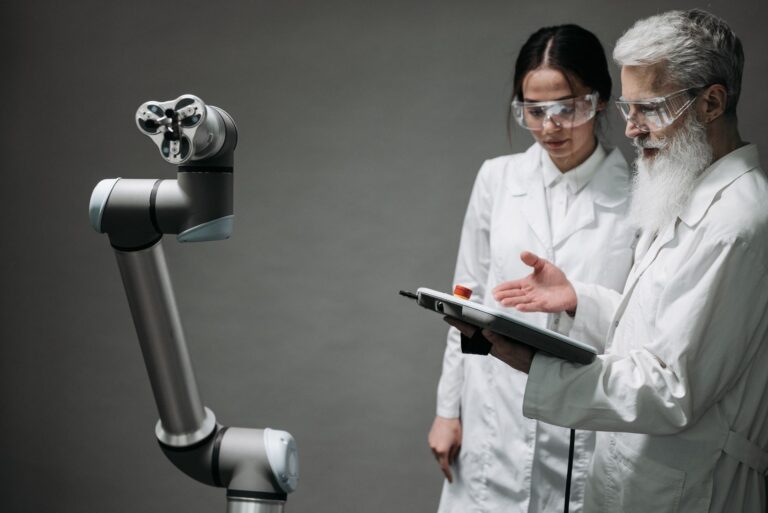
Roles shift from operator to supervisor, spotter, and task setter. Crews learn start-up checks, pause and resume, manual recovery, and emergency stop locations. Supervisors define who enters the work envelope and when.
They confirm load limits, attachment points, and hand signals or interface commands each shift. Training should use the actual tool and material. Practice blocked sensors, lost signal, low battery, and unexpected stops before live work.
How do you pick the right level?
Start from task traits, not novelty. Repetitive, heavy, or overhead work in stable areas suits fenced or supervised machines.
Keep human judgment on placement, connection, and final check. Move up only after stops, detection, and recovery work reliably.
- Pick one task with clear bounds and a clean hand-off.
- Match machine reach, payload, and tolerance to site reality.
- Staff supervision, inspection, and recovery for every run.
- Trial in a closed area, then expand time and proximity.
What keeps adaptive teamwork difficult?
Construction parts vary, surfaces move, and people cross paths without warning. A robot must track force, slip, and human intent while holding accuracy.
That demands strong perception, careful speed limits, and clear task rules. Until those prove stable, keep joint work slow, simple, and closely supervised.