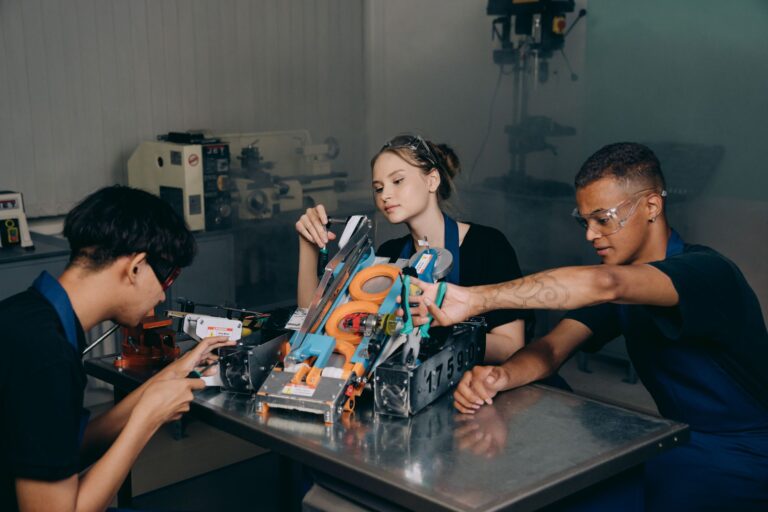

A robotics accelerator is a fixed-term program that helps early robotics startups turn a working prototype into a manufacturable, sellable product. It works by combining small initial funding, engineering facilities, supplier contacts, and hands-on mentoring in exchange for equity or a program fee.
Typical participants are small teams building mobile robots, arms, drones, or enabling sensors and software. Programs usually end in a demonstration day for customers, partners, and investors. The practical goal is faster technical proof and first paid pilots.
Table of Contents
- What Teams Actually Receive
- How the Program Works Week to Week
- Why Hardware Needs a Different Approach
- Should Your Team Apply?
- How to Compare Programs
What Teams Actually Receive
Most programs offer machine-shop time, test space, and help with parts sourcing. That matters because robot teams need to build, break, and revise hardware quickly. Mentors often include working engineers, manufacturing specialists, and prior founders. Some programs add a small investment to cover parts, travel, and basic hires.
Teams also get help with pricing, safety planning, customer discovery, and sales to industrial buyers. The strongest benefit is often introductions to pilot customers and component suppliers. Access comes with limits. Shop time is shared, support staff are few, and funding rarely covers a full development cycle. Teams still need their own technical lead and a clear owner for the prototype.
How the Program Works Week to Week
Teams join as a cohort, meaning a small group that starts and finishes together. Staff assess each robot for function, reliability, cost, and ease of repair. Then the team follows a build-test-review cycle until the final demonstration.
The rhythm forces choices about motors, batteries, sensors, and housings. Software work focuses on stable behavior, not new features. By the end, the team should have logged operating hours and a list of known faults.
- Define a testable goal, such as navigation, grasping, or inspection
- Build or revise hardware and software in short cycles
- Test in a realistic setting and record failures
- Review cost, safety, and service needs with mentors
- Show progress to potential customers and partners
Why Hardware Needs a Different Approach
Software can ship an update in hours. A robot change can require new mounts, wiring, firmware, and safety checks. Lead times for gears, boards, and enclosures slow each iteration. Testing is also physical and regulated. A warehouse robot must avoid people, handle dust and bumps, and run for long shifts.
A field or medical robot faces stricter rules for safety, cleaning, or data handling. Accelerators help by providing test floors, outdoor areas, and review of risk controls. Manufacturing adds another constraint. A design that works once may fail at ten or one hundred units. Mentors push for standard parts, simple assembly, and parts that can be replaced on site. That focus separates a lab demo from a product a customer can use.
Should Your Team Apply?
The fit is best when you have a moving prototype and a defined use. Examples include floor cleaning, shelf scanning, pallet moving, crop scouting, or pipe inspection. You should also have time for full-time building and customer visits. Wait if the idea is only slides or a simulation.
Wait if the team lacks someone who can repair the machine. A program will not replace core engineering skill or resolve an unclear buyer. Founders should weigh control and speed. You give up some equity or pay a fee, follow outside milestones, and share results with the group. In return, you can shorten sourcing, testing, and first-customer work by months.
How to Compare Programs
Look past marketing and inspect daily resources. Ask what machines are available, who maintains them, and how many hours your team can book. Ask which mentors work on site and how often they review hardware. Check customer access and follow-through. A useful program names the warehouses, farms, hospitals, or factories where you can test.
It also explains who owns your intellectual property and what happens after the final event. Clear terms for equity, fees, and shop costs are essential. Talk to recent graduates about repairs, supplier help, and pilot results. Ask what broke during the program and how staff helped. Ask to speak with two recent graduates before signing any agreement.