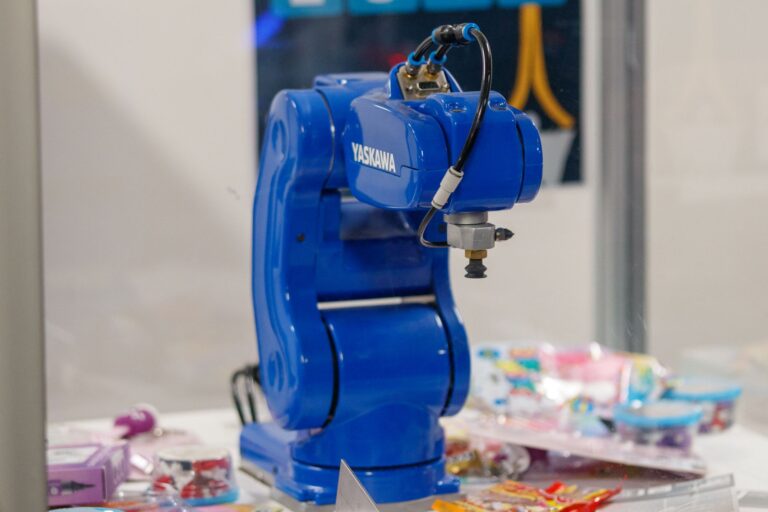

Chicago startups Formic and Cytronic secured new funding for factory robots. Formic announced October 22, 2026 that it raised $50 million in growth capital to scale physical AI across American manufacturing, according to Venture Capital Access Online relaying the Business Wire release in the growth-capital announcement.
Physical AI here means robots that sense and act in production work. Cytronic separately raised a $13.5 million seed round to build robotic fulfillment centers. Together the deals target two cost pressures for operators: factory labor gaps and order-fulfillment speed.
Table of Contents
- What Formic plans to build next
- How monthly robotics changes the purchase
- How much operating history Formic reports
- Why Cytronic's fulfillment project matters
What Formic plans to build next
Formic will move from task-specific factory automation toward more general-purpose robotics, FinSMEs reports in the FinSMEs funding breakdown. The reported expansion areas are metal fabrication, aerospace, defense, medical and energy uses. That shift matters because many mid-sized plants automate one cell at a time.
A palletizer does not help with machine tending. A more general platform could reuse sensing, deployment software and support across tasks. The financing combines a Series B led by Mercato Partners with Light Ray Ventures, Lightscape Partners, Citi and others, plus debt financing from S2G Investments. StartMidwest notes the practical split: equity plus debt means customers can get low-upfront automation while lenders carry risk if deployments underperform.
How monthly robotics changes the purchase
Formic sells Robot-as-a-Service. That means one monthly payment covers equipment, deployment software, field operations, maintenance, monitoring and financing. FinSMEs describes the model as aimed at mid-sized U.S. factories.
For a plant manager, the comparison is against a capital purchase plus integration and upkeep. Monthly service bundles those pieces into an operating expense. It lowers the entry cost but makes uptime and service terms central. Useful checks before a pilot include:.
- which tasks and cycle times are covered in the monthly rate
- who handles changeovers, spares and downtime response
- how performance is measured on the floor
- what happens if volume or product mix changes
How much operating history Formic reports
Formic reports hundreds of robots operating across more than 100 facilities in over 30 states, according to Manufacturing.net coverage in the Manufacturing.net deployment summary. The company also reports more than 750,000 hours of live production experience. Hours and site count do not prove fit for a specific plant. They do show repeated deployment, monitoring and maintenance work.
That history is most relevant for common tasks with stable parts and predictable flow. Buyers should still ask for references in their process type. Metal fabrication, food handling and precision assembly impose different Grippers, vision needs and safety controls. Ask how many hours come from work like yours.
Why Cytronic's fulfillment project matters
Cytronic raised $13.5 million in seed funding led by Slow Ventures to build robotic fulfillment centers, The AI Insider reports in the seed-funding report. Its first automated facility is operating in Chicago, with a Dallas site expected to open shortly. Fulfillment is a different buying decision than factory automation. Brands need pick, pack and ship capacity near customers.
A robotics operator can sell speed and accuracy without the brand building its own warehouse team. For Chicago readers, the near-term signal is local capacity. Watch whether the Chicago site adds customers and whether Dallas opens on schedule. Those two steps will say more than the round size.