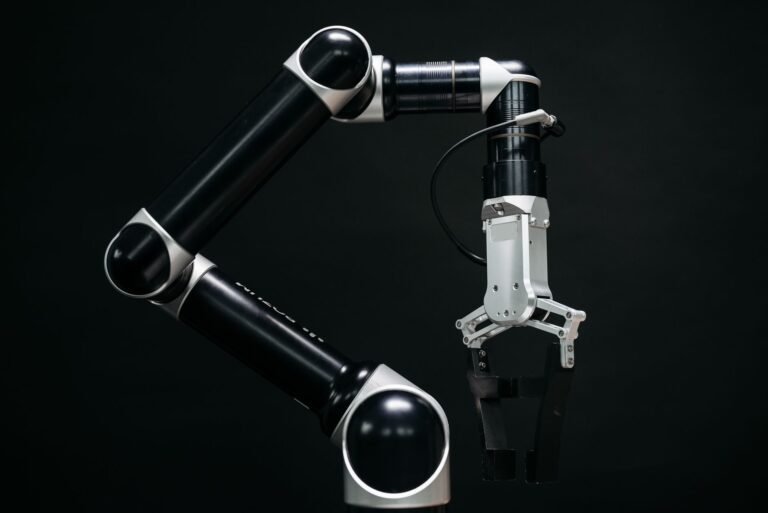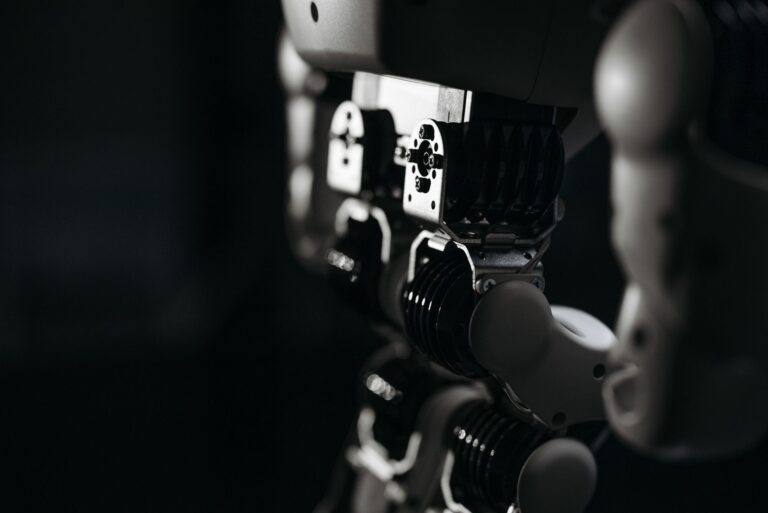

The 4-meter Chinese robot is Neo1, a heavy-duty humanoid built to take over rock handling, fuel transfer, and maintenance inside uranium mines. Built by Beijing-based NeodraDynamics Robotics, it is designed to replace human entry where heavy loads meet radiation. A heavy-duty humanoid means a human-shaped machine sized for industrial lifting, not for service or home use.
Behind Robotics identifies the builder as Qingzhuo Power, registered in 2024 to commercialize hydraulic-electric robots, in its company profile. Neo1 debuted at the World Robot Conference in Beijing and appeared with JD Industrial at the China International Industry Fair in Shanghai on Oct. 12-16, 2026.
Table of Contents
- How big and strong is Neo1?
- What moves its 41 joints?
- Why aim it at uranium mines?
- What should automation teams watch?
How big and strong is Neo1?
NeodraDynamics lists Neo1 at 4 m tall, about 1.2 tons, with 41 full-body degrees of freedom, on its official product page. Degrees of freedom means the number of independent joints that can move.
The company rates Neo1 at 300 kg single-arm payload and 500-600 kg combined dual-arm payload. It also claims plus-or-minus 0.05 mm arm-end and plus-or-minus 0.005 mm fingertip repeatability for heavy plus delicate work.
What moves its 41 joints?
Of the 41 active joints, 39 use in-house miniature digital hydraulic linear actuators. Two forearm-rotation joints use electric drives.
New Atlas describes this hydraulic-electric hybrid as a blend of high force with controlled motion, in its technical breakdown. Hydraulics supply lifting force. Electric drives handle fast, precise rotation.
Why aim it at uranium mines?
TechEBlog reports the company pitches Neo1 for dull, dirty, dangerous and difficult jobs, in its event report. The target list is direct: Uranium mines combine both main hazards in one site.
Heavy rock must move while radiation limits human time inside. That makes them the clearest case for replacing entry crews with a large remote machine.
- mine material handling
- nuclear-facility maintenance and fuel transfer
- ports, deep-sea work, and emergency rescue
What should automation teams watch?
Reports describe Neo1 as a demonstration prototype still integrating autonomy and leg control. For plant and mine teams, the near-term use is teleoperated handling in structured yards, not free walking underground.
The company lists tolerance of intense radiation, minus-50 to 300 degrees Celsius, and 10,000-m deep-sea pressure. One chassis could then shift between mines, nuclear plants, and offshore sites where standard electric humanoids struggle with load or heat.