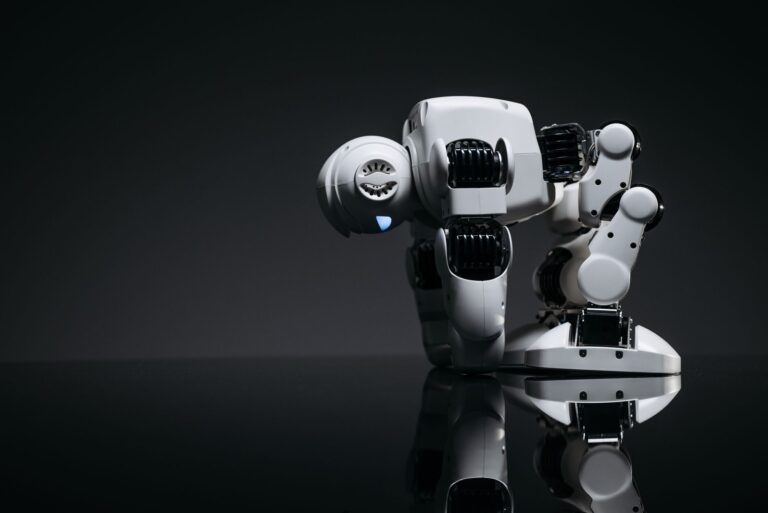

Richtech Robotics (NASDAQ: RR) has earned its reputation as an AI robotics penny stock with speculative upside because it combines real-world deployed robotics products with a volatile share price, minimal revenue relative to its valuation, and exposure to high-growth themes like humanoid robots and the Robot-as-a-Service (RaaS) model. The company trades at roughly 81 times trailing sales with a market cap hovering around $825 million against just $4.13 million in trailing twelve-month revenue”a valuation disconnect that reflects investor bets on future potential rather than current fundamentals. For example, when Richtech announced its humanoid robot Dex powered by NVIDIA’s Jetson Thor at CES 2026, the stock surged over 5% in a single session, illustrating how product demonstrations and partnership announcements can trigger dramatic price swings.
What separates Richtech from pure speculation is that the company has actual robots generating revenue. Its ADAM beverage robot has served more than 16,000 drinks at a Las Vegas location, and the company counts clients such as the Texas Rangers’ Globe Life Field, Golden Corral, Hilton, and Sodexo among its deployments. However, the speculative label persists because revenue remains small and lumpy, operating losses exceed $4 million per quarter, and the stock has experienced swings from an all-time high of $12.29 to an all-time low of $0.30 within a two-year span. This article examines what makes Richtech attractive to speculative investors, the risks involved, and how to evaluate whether the upside justifies the volatility.
Table of Contents
- What Makes Richtech Robotics a Penny Stock With Speculative AI Potential?
- How Does Richtech’s Robot-as-a-Service Model Create Upside Potential?
- What Products Give Richtech Robotics Real-World Revenue?
- How Does the Dex Humanoid Robot Expand Speculative Upside?
- What Financial Risks Should Investors Understand?
- How Does Richtech Compare to Other Robotics Penny Stocks?
- How to Prepare
- How to Apply This
- Expert Tips
- Conclusion
- Frequently Asked Questions
What Makes Richtech Robotics a Penny Stock With Speculative AI Potential?
richtech robotics fits the penny stock profile through its combination of a small revenue base, high valuation multiples, and stock price volatility that swings wildly on news events. Despite trading on NASDAQ rather than over-the-counter markets, the company’s financials show characteristics typical of speculative names: a price-to-sales ratio exceeding 150, negative EBIT margins around -367%, and quarterly net losses of approximately $4 million against operating revenue of just $1.2 million. The speculative upside stems from the company’s positioning at the intersection of multiple high-growth markets. Richtech operates across hospitality robots, industrial automation, and now humanoid robotics”all segments expected to see significant expansion as labor shortages persist and automation technology matures. According to Future Market Insights, the RaaS market alone should reach $2.4 billion by 2025 with an 18% compound annual growth rate through 2035.
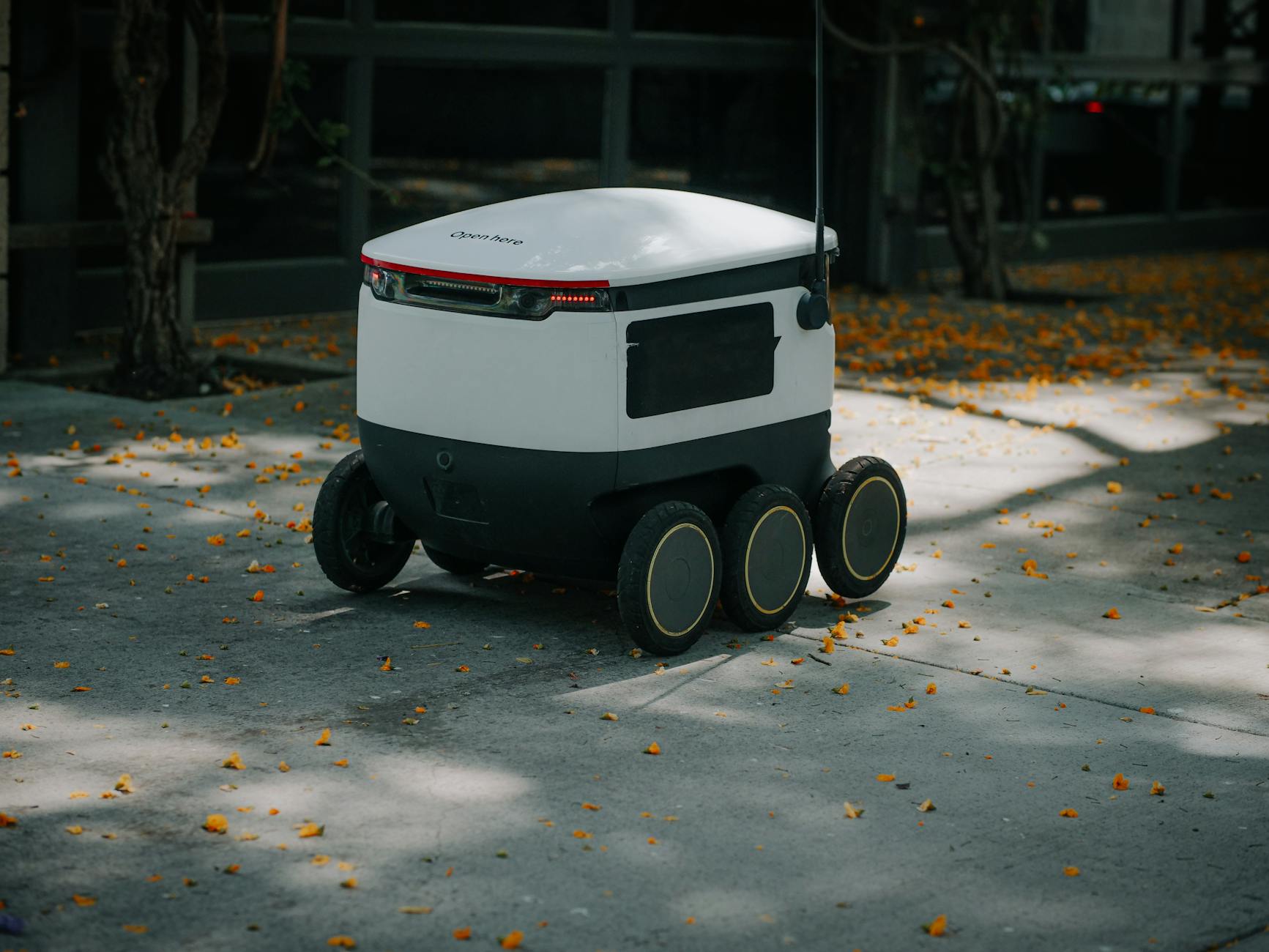
Richtech’s pivot toward multi-year service contracts rather than one-time hardware sales positions the company to capture recurring revenue if deployments scale. The comparison to Serve Robotics illustrates the speculative nature of the sector. Both companies have similar market capitalizations around $640-825 million, yet they pursue different strategies. Serve focuses exclusively on sidewalk delivery robots through partnerships with Uber and DoorDash, while Richtech spreads across food service, hospitality, healthcare, and industrial markets. This diversification gives Richtech multiple avenues for growth but makes it harder to dominate any single niche”a tradeoff that appeals to investors seeking broad robotics exposure but concerns those who prefer focused execution.
- —

How Does Richtech’s Robot-as-a-Service Model Create Upside Potential?
Richtech’s transition to a Robot-as-a-Service business model represents the primary bull case for long-term investors willing to accept near-term revenue volatility. under RaaS, customers pay monthly fees over multi-year contract terms rather than making large upfront purchases, creating predictable recurring revenue streams that can compound as the installed base grows. The company signed 55 RaaS agreements in fiscal 2025 and generated $692,000 from new RaaS contracts, with management expecting these contracts to eventually cover a significant portion of operating costs. The financial impact of this transition appears in the numbers. Fiscal 2025 total revenue reached $5.045 million, up 19% year-over-year, while gross profit climbed 20.9% to $3.289 million.
More notably, the company is targeting gross margins of 70% on RaaS contracts compared to lower margins on outright hardware sales. Zacks analysts project fiscal 2026 revenue of $13.8 million, representing 175.5% growth”though such estimates assume successful execution of the RaaS expansion strategy. However, if the company cannot scale deployments quickly enough, the RaaS model creates a dangerous dynamic. Revenue recognition spreads over the contract term rather than arriving upfront, meaning Richtech must fund robot production and deployment before collecting full payment. The 73% year-over-year revenue decline in Q3 fiscal 2025 demonstrated how this timing mismatch can produce alarming headline numbers even when underlying business health improves. investors should monitor the gap between signed contracts and recognized revenue rather than focusing solely on quarterly results.
- —
What Products Give Richtech Robotics Real-World Revenue?
Richtech’s product portfolio spans multiple robot categories, with ADAM serving as the flagship commercial success. ADAM is a two-armed beverage robot that uses AI running on NVIDIA hardware to mix cocktails, prepare coffee, and create bubble tea with consistent quality. The system monitors each cup in real-time, adjusting pour angle, flow rate, and timing to eliminate overpouring and waste. Richtech claims the robots reduce labor and operational costs by 15-20% while operating around the clock. The company has deployed over 400 robotic solutions across hospitality, retail, healthcare, manufacturing, and entertainment venues. Major clients include a contract with Sodexo to place ADAM robots in hospitals and education facilities through the Zipphaus café concept.
one notable deal involved leasing 25 ADAM units over 60 months for $5.25 million, demonstrating the revenue potential when institutional buyers commit to multi-location rollouts. Event leasing also generated $857,000 in fiscal 2024 revenue. Beyond beverages, Richtech offers Matradee service robots for restaurant running and bussing, Titan delivery robots, DUST-E floor cleaners, and the Scorpion beverage robot. This diversification provides multiple paths to revenue but also spreads R&D resources thin. Competitors like Bear Robotics and Keenon Robotics focus more narrowly, allowing deeper specialization. The pending launch of Dex, the humanoid robot, adds industrial manufacturing and logistics to Richtech’s addressable market but requires significant investment before generating meaningful returns.
- —
How Does the Dex Humanoid Robot Expand Speculative Upside?
The Dex humanoid robot represents Richtech’s most ambitious product and the catalyst most likely to generate sharp stock price movements. Unveiled at CES 2026, Dex runs on NVIDIA’s Jetson Thor supercomputer, which delivers 2,070 FP4 teraflops of AI compute”over 7.5 times more than the previous-generation Orin platform. The robot stands 4 feet 6 inches in mobile configuration with dual production arms featuring modular end-effectors for hands, clamps, or specialized tools. Dex draws on data from Richtech’s 450 prior deployments and uses NVIDIA Isaac Sim for simulation-to-reality training pipelines. The four-hour battery life in mobile mode limits continuous operation, but the stationary configuration runs 24/7.
Management expects deployment readiness by mid-2026, targeting automotive dealerships, manufacturing plants, logistics centers, and warehouses where repetitive manipulation tasks create immediate use cases. The tradeoff investors face is timing versus valuation. If Dex achieves commercial success, Richtech gains entry to industrial markets worth far more than hospitality beverage service. But humanoid robotics remains largely unproven commercially, and established players like Boston Dynamics, Tesla, and Figure AI command far greater resources. Richtech’s $86 million cash position provides runway for development, yet competing against well-funded rivals requires either differentiated technology or willingness to accept lower-margin deployments. The stock’s price already reflects optimism about Dex, meaning disappointments could trigger severe corrections.
- —
What Financial Risks Should Investors Understand?
Richtech’s financial profile contains several red flags that justify the speculative label. The negative EBIT margin of -367.3% shows operating costs vastly exceed revenue generation. Quarterly net losses around $4 million against revenue of $1.2 million indicate the company burns through cash even with relatively modest operations. While the 76.1% gross margin suggests underlying product economics work, overhead and R&D spending overwhelm contribution from robot deployments. Dilution represents an ongoing concern. Richtech has used at-the-market (ATM) equity offerings to raise capital, which increases share count and reduces existing shareholders’ ownership percentage.
The recent cash build to $86 million came partly through these offerings rather than operational cash flow. Investors should monitor shares outstanding and adjust price targets accordingly”a stock that doubles while shares outstanding also doubles leaves existing holders no better off. Additional risk factors include fraud allegations from Capybara Research, though such short-seller reports should be evaluated critically rather than accepted at face value. Regulatory uncertainty around AI could affect customer willingness to deploy robots in sensitive environments. The company’s enterprise value around $462 million looks stretched against current revenue, meaning any execution stumble could trigger significant repricing. The 52-week trading range of $1.37 to $7.43 illustrates how dramatically sentiment can shift.
- —

How Does Richtech Compare to Other Robotics Penny Stocks?
Compared to its closest public competitor, Serve Robotics, Richtech offers broader market exposure but higher execution risk. Serve’s focused strategy on sidewalk delivery robots benefits from clear partnerships with Uber and DoorDash and a single product category to optimize. Richtech’s multi-vertical approach provides diversification but requires excellence across beverage service, floor cleaning, delivery, and now humanoid industrial robots”a tall order for a company with 57 employees. Private competitors present different challenges. Bear Robotics specializes in restaurant automation with deep focus that has attracted significant venture funding.
Keenon Robotics brings scale from Chinese manufacturing and deployments across Asia. GoodBytz targets robotic kitchens with chef-replicating technology. Each competitor owns specific niches more completely than Richtech owns any single market, creating competitive pressure as the industry matures beyond early-adopter deployments. Wall Street coverage reflects the uncertainty, with just two analysts tracking the stock and ratings split between one buy and one sell. The median price target of $4.25 implies modest 12% upside from current levels, while the bullish HC Wainwright target of $6.00 suggests 58% upside. This dispersion indicates legitimate disagreement about Richtech’s prospects rather than consensus around fair value.
- —
How to Prepare
- **Review SEC filings directly** rather than relying on press releases. Richtech’s 10-K and 10-Q filings contain details about contract terms, customer concentration, and cash burn rate that rarely appear in news coverage. Pay particular attention to revenue recognition policies for RaaS contracts.
- **Calculate your maximum acceptable loss** before purchasing. Penny stocks can decline 50% or more in weeks, as Richtech demonstrated falling from $7.43 to below $3.00 during 2025. Position sizing should reflect the possibility of total loss rather than expected returns.
- **Track institutional ownership changes** through 13-F filings. Increasing institutional positions suggest professional validation of the investment thesis, while departures may signal concerns not visible in public disclosures.
- **Monitor competitor announcements** alongside Richtech news. The robotics industry moves quickly, and a breakthrough from Bear Robotics or entry by a larger player like Amazon could undermine Richtech’s competitive position regardless of its own execution.
- **Set calendar reminders for earnings dates** and prepare for volatility around announcements. Richtech’s next earnings release on February 25, 2026 will provide updated RaaS contract numbers and Dex development timeline.
How to Apply This
- **Compare valuation multiples across peers** to assess relative pricing. Richtech’s 81x sales multiple and 150x price-to-sales ratio significantly exceed industry averages, meaning the company must deliver exceptional growth to justify current prices. Calculate what revenue level would bring multiples in line with mature technology companies.
- **Create a catalyst calendar** listing expected announcements, product launches, and conference appearances. Richtech’s CES 2026 Dex showcase demonstrated how events can move the stock. Knowing the schedule allows positioning before rather than reacting after.
- **Establish entry and exit criteria** before placing trades. Define the price at which you would add to positions, the price at which you would sell partial stakes, and the fundamental developments that would change your thesis. Document these criteria to avoid emotional decision-making during volatility.
- **Allocate speculative positions within a diversified portfolio** rather than concentrating in single names. Even investors highly confident in robotics adoption should spread risk across multiple companies and asset classes. The robotics penny stock allocation should represent money you can afford to lose entirely.
Expert Tips
- Never invest more than you can afford to lose in any single penny stock, regardless of how compelling the technology or growth story appears. Richtech’s swing from $12.29 to $0.30 demonstrates downside potential.
- Avoid buying immediately after large percentage gains, as penny stocks frequently experience mean reversion and profit-taking that erases short-term spikes.
- Pay closer attention to cash burn rate than revenue growth rate, since companies can show impressive top-line expansion while moving closer to insolvency.
- Understand that analyst price targets on thinly-covered stocks often reflect promotional relationships rather than rigorous valuation work”verify the analyst’s track record before weighting their estimates.
- Do not assume NASDAQ listing provides the same investor protections as large-cap stocks; smaller companies face less scrutiny and can delist if they fail to maintain exchange requirements.
- —
Conclusion
Richtech Robotics occupies an unusual position in the robotics sector: a company with real products, paying customers, and credible technology partnerships trading at valuations typically reserved for pre-revenue startups. The speculative upside stems from the combination of a small revenue base that could grow dramatically if RaaS contracts scale, exposure to the humanoid robotics theme through Dex, and price volatility that creates opportunities for traders willing to accept asymmetric risk. The risks deserve equal consideration.
Negative operating margins, ongoing dilution through equity offerings, competition from better-funded rivals, and a stock price that has already priced in substantial optimism about future execution all temper the bull case. Investors drawn to Richtech should approach it as a high-risk allocation within a diversified portfolio, with position sizes reflecting the genuine possibility of significant or total loss. Those who conduct thorough due diligence, establish clear entry and exit criteria, and maintain discipline through volatility may find Richtech offers legitimate exposure to the AI robotics revolution”while those who chase momentum without preparation may learn expensive lessons about speculative markets.
Frequently Asked Questions
How long does it typically take to see results?
Results vary depending on individual circumstances, but most people begin to see meaningful progress within 4-8 weeks of consistent effort. Patience and persistence are key factors in achieving lasting outcomes.
Is this approach suitable for beginners?
Yes, this approach works well for beginners when implemented gradually. Starting with the fundamentals and building up over time leads to better long-term results than trying to do everything at once.
What are the most common mistakes to avoid?
The most common mistakes include rushing the process, skipping foundational steps, and failing to track progress. Taking a methodical approach and learning from both successes and setbacks leads to better outcomes.
How can I measure my progress effectively?
Set specific, measurable goals at the outset and track relevant metrics regularly. Keep a journal or log to document your journey, and periodically review your progress against your initial objectives.
When should I seek professional help?
Consider consulting a professional if you encounter persistent challenges, need specialized expertise, or want to accelerate your progress. Professional guidance can provide valuable insights and help you avoid costly mistakes.
What resources do you recommend for further learning?
Look for reputable sources in the field, including industry publications, expert blogs, and educational courses. Joining communities of practitioners can also provide valuable peer support and knowledge sharing.