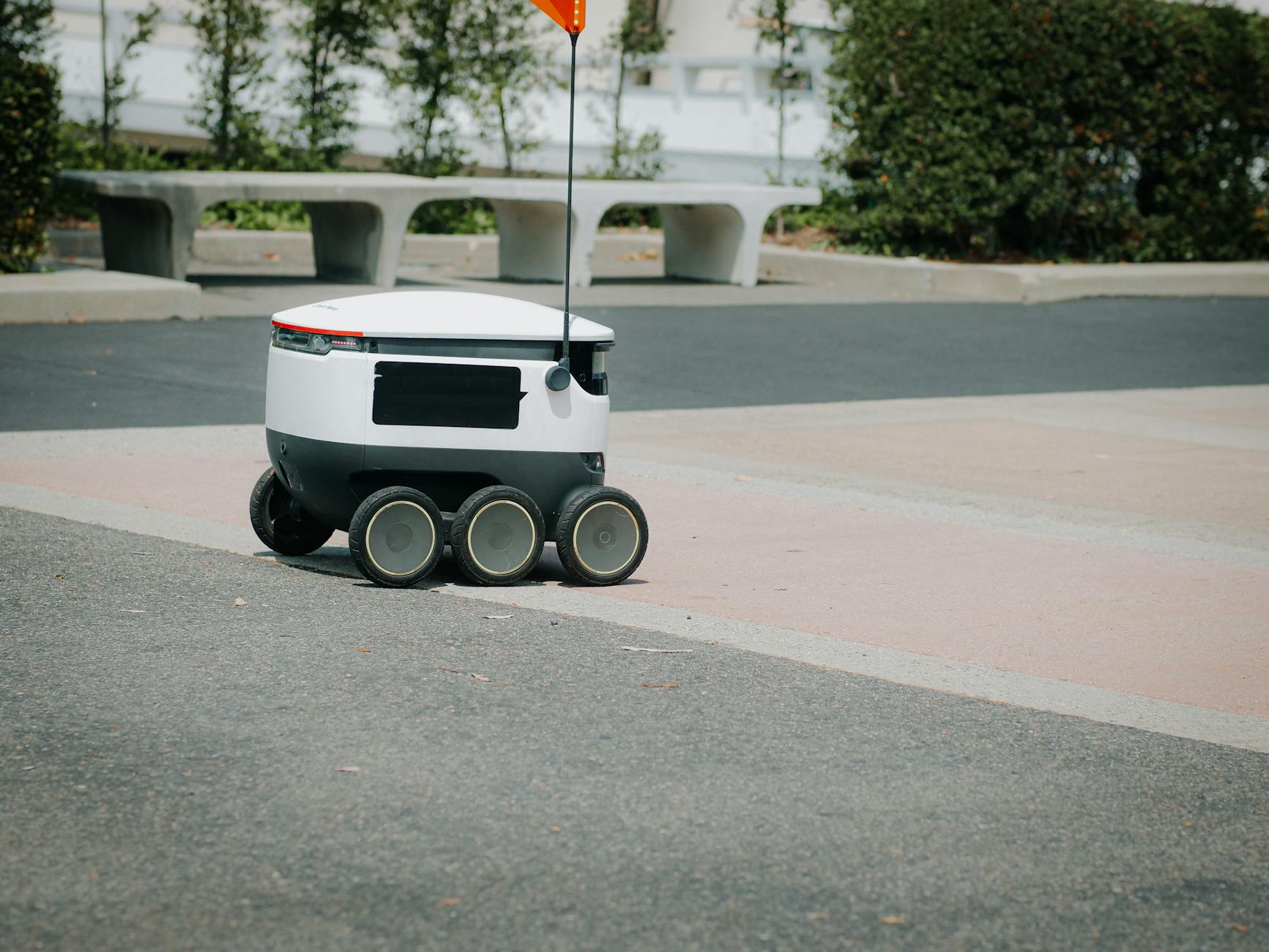

Serve Robotics is gaining significant attention in early 2026 because of a rapid convergence of major business developments: a $29 million acquisition of Diligent Robotics that expands its platform into hospital settings, the successful deployment of over 2,000 sidewalk delivery robots across the United States, and deepening partnerships with both Uber Eats and DoorDash. The company’s stock climbed more than 26 percent in the first three trading days of 2026, nearly erasing all of its 2025 losses, as analysts have named it a top pick in the physical AI sector. Northland analyst Michael Latimore specifically called Serve Robotics “one of the best investments in physical AI” with “myriad 2026 catalysts.” The momentum reflects more than just hype.
Serve now operates in Los Angeles, Atlanta, Dallas-Fort Worth, Miami, Fort Lauderdale, Chicago, and Alexandria, Virginia, covering 110 high-density neighborhoods with its Gen 3 robots. The Diligent acquisition adds nearly 100 Moxi robots deployed across 25 hospitals, which have already completed over 1.25 million autonomous deliveries in healthcare settings. This article covers how Serve reached this point, the technical specifications driving its expansion, the competitive landscape, regulatory hurdles, and what investors and industry observers should watch for in the coming months.
Table of Contents
- What Is Driving Serve Robotics’ Expansion Buzz in 2026?
- How Does Serve Robotics’ Gen 3 Technology Compare to Previous Generations?
- What Market Opportunity Does Serve Robotics Target?
- How Does the Competitive Landscape Affect Serve Robotics’ Position?
- What Regulatory and Infrastructure Challenges Limit Deployment?
- What Does the Diligent Robotics Acquisition Mean for Serve’s Strategy?
- How to Prepare
- How to Apply This
- Expert Tips
- Conclusion
- Frequently Asked Questions
What Is Driving Serve Robotics’ Expansion Buzz in 2026?
The primary catalyst for Serve robotics‘ current momentum is its January 2026 acquisition of Diligent Robotics, a healthcare robotics company whose Moxi robots assist nurses by delivering supplies throughout hospital facilities. This $29 million all-stock transaction represents Serve’s first expansion from outdoor sidewalk delivery into indoor environments. Diligent’s customer base includes Northwestern Medicine, ChristianaCare, and Rochester General Hospital, with each deployment expected to generate $200,000 to $400,000 in annual revenue. The acquisition comes on top of aggressive geographic expansion throughout 2025. Serve expanded its fleet twentyfold during the year, launching in Chicago in September 2025 to cover 14 neighborhoods and reaching Fort Lauderdale in December.
The company’s multi-year partnerships with Uber Eats and DoorDash provide a steady pipeline of delivery orders, while its DoorDash collaboration launched in Los Angeles in October 2025 and is expected to expand nationally. For comparison, competitor Starship Technologies has completed over 4 million deliveries but has focused primarily on university campuses and residential neighborhoods rather than pursuing delivery platform partnerships at similar scale. However, investors should note that the Diligent acquisition announcement triggered a nearly 10 percent stock drop on the day of the news. Some market participants expressed concern about Serve acquiring a company while itself remaining unprofitable, having reported $67 million in losses through the first three quarters of 2025. The acquisition requires Nasdaq listing approval, and integration risks remain as Serve manages two distinct robot platforms across different operating environments.

How Does Serve Robotics’ Gen 3 Technology Compare to Previous Generations?
serve‘s third-generation robots, unveiled in October 2024 and now deployed at scale, represent substantial technical improvements that enable nationwide scaling. The Gen 3 robots move roughly twice as fast as their predecessors, with top speeds increasing from 7 mph to 11 mph. Battery improvements allow approximately twice the range on a single charge, and the robots can spend six additional hours in the field each day compared to earlier versions. The computing architecture received a significant upgrade with Nvidia’s Jetson Orin module, providing five times more onboard processing power. Combined with Ouster’s REV7 digital lidar and an expanded sensor suite, these improvements enable Serve’s newest AI models to execute navigation decisions faster while maintaining safety.
The expanded cargo bin now holds four large 16-inch pizzas or 15 percent more volume than previous generations, addressing a practical limitation that restricted order types. Manufacturing costs dropped by half according to CEO Ali Kashani, achieved through a partnership with Magna International using a global supply chain with final assembly in North America. This cost reduction is critical because profitability in autonomous delivery depends heavily on unit economics. However, if sidewalk infrastructure remains poor in certain deployment areas, even advanced robots struggle. A Kiwibot pilot completed only four actual customer deliveries after encountering cracked sidewalks and obstructions like overgrown trees, demonstrating that robot capability alone does not guarantee successful deployment.
What Market Opportunity Does Serve Robotics Target?
The autonomous delivery robot market is projected to grow from approximately $795.6 million in 2025 to $3.24 billion by 2030, representing a compound annual growth rate of 32.4 percent according to MarketsandMarkets. Serve Robotics cites estimates from Ark Investment Management suggesting the robotic and drone delivery market could reach $450 billion by 2030, though this larger figure encompasses the broader last-mile delivery automation category. The economic driver is straightforward: traditional delivery methods allocate nearly 75 percent of total delivery cost to labor, while autonomous robots reduce that figure to 20-25 percent. With the U.S.
manufacturing sector projecting a 2 million-worker shortage by 2030 and last-mile driver turnover creating ongoing cost pressure, delivery platforms have strong incentives to automate. Food delivery led the market with 42.5 percent revenue share in 2024, which aligns with Serve’s focus on restaurant partnerships through Uber Eats and DoorDash. For a concrete example of deployment economics, consider that Serve’s Gen 3 robots can operate roughly 12 hours daily compared to 6 hours for previous generations. If each robot completes an average of 15 deliveries per day at a gross margin improvement over human couriers, the payback period on Serve’s reduced manufacturing costs shortens considerably. Management projects revenue will increase tenfold in 2026 with 2,000 active robots, though this projection depends on consistent order volume from delivery platform partners.
How Does the Competitive Landscape Affect Serve Robotics’ Position?
Serve Robotics operates in a competitive field that includes Starship Technologies, Nuro, Kiwibot, and Coco. Starship remains the industry leader in total deliveries, having completed over 4 million autonomous deliveries across 270 locations in seven countries with 2,700 robots. Starship’s focus on university campuses and grocery delivery provides a more controlled operating environment compared to Serve’s restaurant-focused, dense urban deployments. Nuro occupies a different segment entirely, developing larger autonomous vehicles capable of carrying significantly more cargo than sidewalk robots.
Nuro’s R2 pods operate on roads rather than sidewalks and have received regulatory approval in California and Texas, but the company faced layoffs during sector-wide cutbacks. Kiwibot has completed more than 250,000 deliveries with strong presence on college campuses in Pittsburgh, Miami, and Los Angeles, though its infrastructure pilot failures highlight deployment challenges. The tradeoff for Serve’s urban density strategy is operational complexity. Sidewalk environments present more variables than controlled campus settings: varying infrastructure quality, higher pedestrian density, and inconsistent local regulations. Serve’s partnerships with Uber Eats and DoorDash provide order volume advantages, but also create dependency on platforms that may eventually develop their own robotics capabilities or shift partnership terms.
What Regulatory and Infrastructure Challenges Limit Deployment?
Regulatory fragmentation represents one of the most significant obstacles for sidewalk delivery robots. As of late 2025, at least 23 U.S. states have laws governing delivery robots, but requirements vary dramatically. Georgia allows robots weighing up to 500 pounds to travel at 4 mph on sidewalks, while New Hampshire limits weight to 80 pounds but permits speeds up to 10 mph. New York and San Francisco maintain stricter controls or pilot-only frameworks, limiting expansion into potentially lucrative markets. Accessibility concerns have intensified as deployments scale.
Advocates for people with disabilities have documented incidents where delivery robots blocked wheelchair access or created navigation hazards for visually impaired pedestrians using canes or guide dogs. In 2019, a Pittsburgh woman reported a delivery robot preventing her wheelchair from accessing a sidewalk after crossing an intersection. Some cities, including Boston, have established specific sidewalk delivery robot programs with defined operating parameters. Infrastructure quality creates deployment limitations regardless of robot capability. Serve can launch a market only where sidewalks meet minimum standards for width, surface condition, and curb cut availability. This limitation explains why even well-funded competitors have abandoned expansion plans in neighborhoods with cracked or obstructed sidewalks. Cities must balance economic development opportunities against pedestrian access concerns, and proactive policy frameworks remain the exception rather than the rule.
What Does the Diligent Robotics Acquisition Mean for Serve’s Strategy?
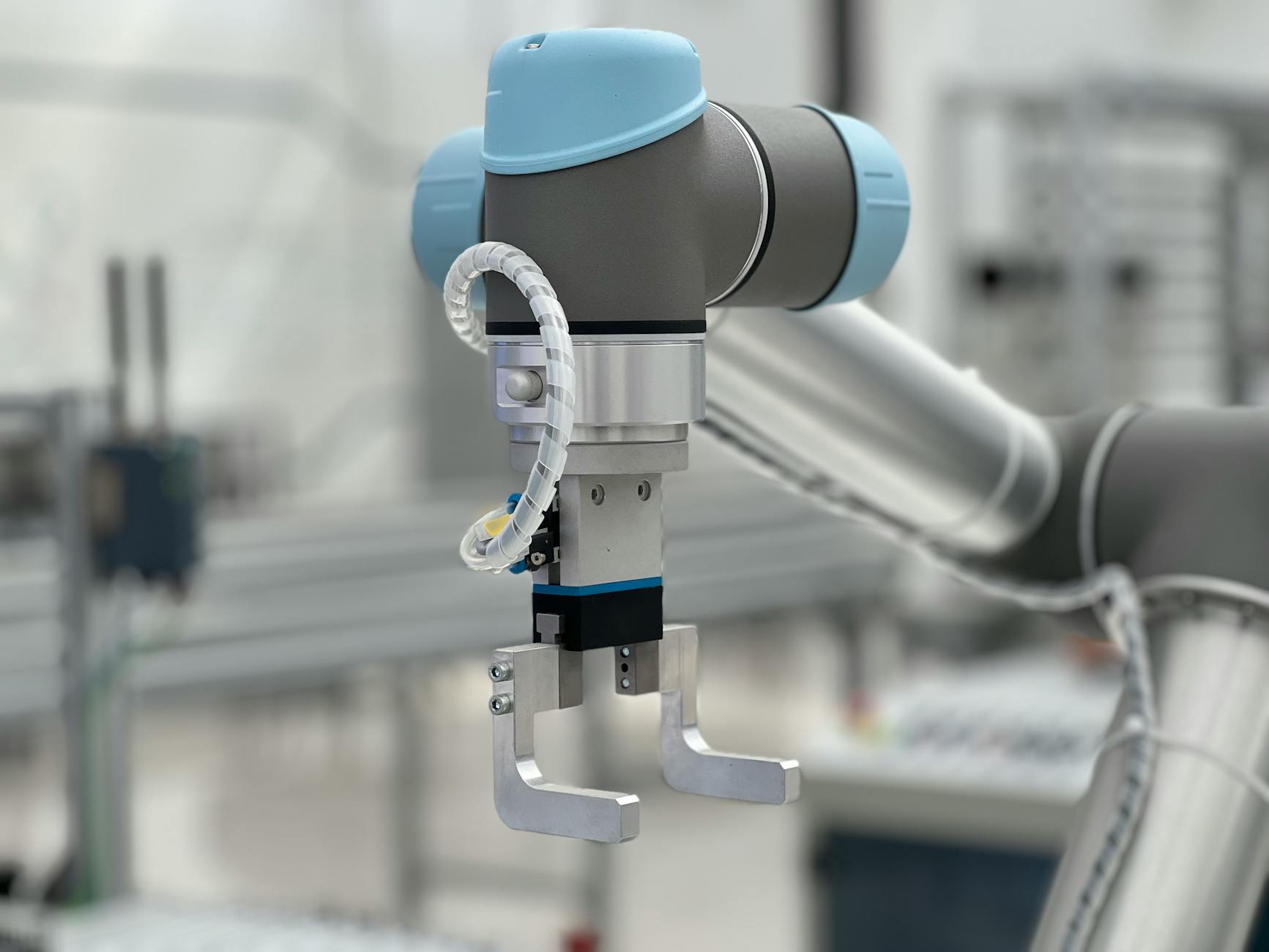
The Diligent acquisition signals Serve’s intention to become a “full-stack autonomy platform” rather than remaining solely a sidewalk delivery company. Diligent’s Moxi robots navigate complex indoor hospital environments, using NVIDIA Jetson computing and NVIDIA Isaac simulation tools for training. The robots assist nursing staff by delivering supplies, allowing healthcare workers to spend more time with patients. Moxi represents one of the largest commercial deployments of mobile manipulation robots working alongside people, with over 1.25 million deliveries completed across 25 hospital facilities.
The acquisition provides Serve with proven indoor navigation technology, an established customer base in a high-value vertical, and robotics expertise from co-founders Andrea Thomaz and Vivian Chu, both recognized social roboticists who will continue leading the Diligent subsidiary. The strategic risk is execution complexity. Managing outdoor sidewalk robots and indoor hospital assistants requires different operational knowledge, regulatory relationships, and customer engagement models. Serve will need to demonstrate that the underlying autonomy platform genuinely transfers between environments while maintaining service quality in both segments.
How to Prepare
- **Research the regulatory environment** in key target markets, as inconsistent local laws can delay or prevent expansion regardless of technology capability.
- **Examine unit economics carefully**, including manufacturing costs, operating hours per robot, deliveries per day, and gross margin per delivery compared to human couriers.
- **Assess partnership dependency** by reviewing contract terms, exclusivity provisions, and the concentration of revenue among delivery platform partners.
- **Review cash runway and path to profitability**, since most autonomous delivery companies operate at significant losses. Serve had $210 million in cash as of September 2025 with operational runway expected through end of 2026.
- **Compare competitive positioning** across market segments, recognizing that campus-focused operators face different challenges than urban sidewalk companies.
How to Apply This
- **Track deployment metrics** including total robots deployed, cities served, and deliveries completed, comparing quarterly growth rates against management projections.
- **Monitor partnership announcements** for expansion into new delivery platforms or retail categories beyond restaurant food delivery.
- **Follow regulatory developments** in major urban markets like New York and San Francisco, where approval would significantly expand Serve’s addressable market.
- **Evaluate technology milestones** such as autonomous operation rates, remote intervention frequency, and any reported safety incidents that could affect public perception or regulatory standing.
Expert Tips
- Focus on gross margin trends per delivery rather than top-line revenue growth, since profitability depends on achieving favorable unit economics at scale.
- Do not assume that large total addressable market estimates translate into near-term revenue opportunity; the $450 billion figure cited by Ark Investment Management represents a 2030 projection across all robotic and drone delivery.
- Monitor pilot program outcomes in challenging infrastructure environments, as these reveal operational limitations that press releases may not emphasize.
- Track the integration progress of acquisitions like Diligent, watching for executive departures or service quality issues that signal integration problems.
- Recognize that partnerships with delivery platforms create both opportunity and dependency; a single partner reducing order volume or changing terms can significantly impact results.
Conclusion
Serve Robotics has assembled a credible position in the autonomous delivery market through aggressive geographic expansion, technology improvements in its Gen 3 robots, and partnerships with major delivery platforms. The Diligent Robotics acquisition represents a strategic pivot toward becoming a broader autonomy platform with applications in healthcare alongside sidewalk delivery.
Analyst optimism and early 2026 stock performance reflect genuine catalysts rather than pure speculation. The path forward requires navigating regulatory fragmentation, infrastructure limitations, and competitive pressure while managing cash burn until unit economics improve. Investors and industry observers should track deployment metrics, partnership developments, and Diligent integration progress throughout 2026 to assess whether Serve can convert its current momentum into sustainable business performance.
Frequently Asked Questions
How long does it typically take to see results?
Results vary depending on individual circumstances, but most people begin to see meaningful progress within 4-8 weeks of consistent effort. Patience and persistence are key factors in achieving lasting outcomes.
Is this approach suitable for beginners?
Yes, this approach works well for beginners when implemented gradually. Starting with the fundamentals and building up over time leads to better long-term results than trying to do everything at once.
What are the most common mistakes to avoid?
The most common mistakes include rushing the process, skipping foundational steps, and failing to track progress. Taking a methodical approach and learning from both successes and setbacks leads to better outcomes.
How can I measure my progress effectively?
Set specific, measurable goals at the outset and track relevant metrics regularly. Keep a journal or log to document your journey, and periodically review your progress against your initial objectives.
When should I seek professional help?
Consider consulting a professional if you encounter persistent challenges, need specialized expertise, or want to accelerate your progress. Professional guidance can provide valuable insights and help you avoid costly mistakes.
What resources do you recommend for further learning?
Look for reputable sources in the field, including industry publications, expert blogs, and educational courses. Joining communities of practitioners can also provide valuable peer support and knowledge sharing.