
Knightscope Inc. (NASDAQ: KSCP) has positioned itself as what some investors and industry watchers call “the early Amazon of autonomous patrol robots”””a company burning cash while building infrastructure and market presence in a nascent industry that could eventually dominate physical security. The comparison stems from Knightscope’s strategy of prioritizing market share and technological development over immediate profitability, much like Amazon did in its first two decades when it reinvested every dollar into logistics, warehousing, and customer acquisition rather than posting earnings.
The analogy carries weight when you examine the numbers: Knightscope has deployed its autonomous security robots across casinos, corporate campuses, hospitals, and shopping centers throughout the United States, building a recurring revenue model based on robot-as-a-service subscriptions. The company’s K5 outdoor patrol robot and K1 stationary unit have logged millions of operating hours, collecting real-world data that competitors starting from scratch simply cannot replicate. However, the Amazon comparison also comes with a significant caveat””Amazon had e-commerce tailwinds and a capital-light model for its marketplace, while Knightscope manufactures physical hardware with all the margin pressure that entails. This article examines whether the “early Amazon” thesis holds up under scrutiny, exploring Knightscope’s technology stack, competitive moat, financial trajectory, and the practical limitations facing any company trying to automate physical security at scale.
Table of Contents
- What Makes KSCP the “Amazon” of Autonomous Patrol Robots?
- How Knightscope’s Robot Fleet Actually Works
- The Competitive Landscape Knightscope Faces
- Real-World Deployment Examples and Outcomes
- Financial Realities and the Path to Profitability
- Technical Limitations Security Directors Should Understand
- The Regulatory and Liability Landscape
- Future Outlook for Autonomous Security
- Conclusion
What Makes KSCP the “Amazon” of Autonomous Patrol Robots?
The Amazon comparison originates from a specific business strategy: sacrifice near-term profits to capture a market before competitors can establish themselves. knightscope has deliberately chosen this path, maintaining low subscription prices””typically between $6 and $12 per hour depending on the robot model””to undercut traditional security guard costs while making it economically painful for new entrants to compete on price. The company has burned through significant capital since its 2022 IPO, but in doing so, it has installed robots at over 50 client sites and built the largest operational dataset for autonomous patrol behavior in controlled environments. Amazon’s moat came from network effects and logistics infrastructure that took years to build. Knightscope’s potential moat is different but analogous: every hour its robots operate generates navigation data, incident detection patterns, and environmental mapping that improves its machine learning models.
A competitor launching today would need years of deployment experience to match this dataset. For example, Knightscope’s robots have learned to distinguish between a person sleeping on a bench versus someone who has collapsed and needs medical attention””a distinction that required thousands of real-world observations to train reliably. The comparison breaks down in one critical area, however. Amazon scaled a marketplace where third-party sellers handled inventory risk. Knightscope manufactures robots in-house, meaning every unit deployed represents substantial capital expenditure. This hardware dependency creates margin pressure that Amazon never faced during its growth phase, making Knightscope’s path to profitability fundamentally harder to execute.

How Knightscope’s Robot Fleet Actually Works
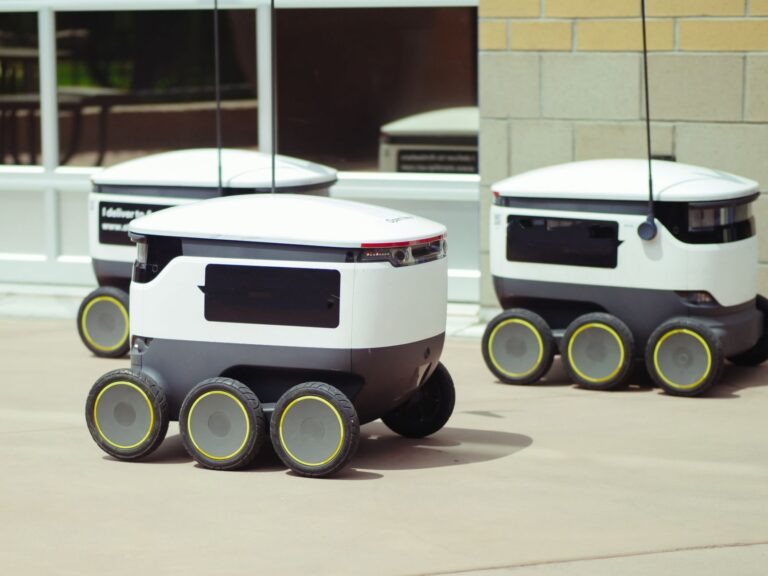
Knightscope’s lineup consists of several distinct robot platforms, each designed for specific security applications. The K5 autonomous data machine is the company’s flagship outdoor unit””a 400-pound, five-foot-tall robot that patrols parking lots, corporate campuses, and outdoor facilities using a combination of LIDAR, GPS, and multiple camera systems. The K1 stationary unit monitors building entrances and checkpoints, while the K3 handles indoor patrol duties with a smaller form factor suited to hallways and retail environments. These robots do not replace security guards in the way a self-checkout kiosk replaces a cashier. Instead, they function as force multipliers.
A single human security operator can monitor feeds from multiple robots simultaneously, with the machines handling the monotonous patrol routes while humans respond to incidents the robots flag. At a Las Vegas casino deployment, for instance, K5 robots patrol the parking structure continuously, freeing guards to focus on the gaming floor where human judgment matters most. The technology stack relies heavily on sensor fusion rather than any single detection method. Thermal cameras identify people in low-light conditions, license plate readers log vehicle movements, and directional microphones can detect sounds like breaking glass or aggressive shouting. However, if a client site has significant RF interference””common in industrial facilities with heavy machinery””the robots’ communication reliability degrades, requiring additional infrastructure investment that Knightscope typically passes on to the customer.
The Competitive Landscape Knightscope Faces
Knightscope does not operate in a vacuum. Competitors range from well-funded startups like Cobalt robotics, which has raised over $100 million and focuses on indoor security with a more premium price point, to traditional security giants like Securitas and Allied Universal, which have begun experimenting with robotic augmentation of their human guard forces. Each competitor brings different strengths: Cobalt emphasizes sleek design and enterprise integration, while the legacy security firms have existing client relationships spanning decades. The robotics security market also faces an unexpected competitor: upgraded surveillance camera systems. Modern AI-powered camera networks from companies like Verkada and Rhombus can perform many detection functions””license plate reading, person tracking, anomaly detection””without the maintenance requirements of mobile robots.
For clients whose primary need is observation rather than physical presence, stationary cameras at a fraction of the cost present a compelling alternative. Knightscope’s counter-argument centers on presence. A patrol robot moving through a parking garage provides a deterrent effect that cameras cannot match. The company cites studies suggesting crime reduction of 40-60% in areas with visible robotic patrol, though these figures come from client testimonials rather than peer-reviewed research. For budget-conscious security directors evaluating options, the question becomes whether that physical presence justifies the premium over camera-only solutions.

Real-World Deployment Examples and Outcomes
Examining specific deployments reveals both the promise and limitations of Knightscope’s technology. At Westfield Valley Fair, a major shopping mall in San Jose, K5 robots have patrolled parking areas since 2019, with the property reporting a measurable decrease in vehicle break-ins and loitering incidents. The robots operate 24/7 in a pattern that human guards could not economically sustain, and their presence has become a recognizable feature of the property. Hospital deployments present a different use case. Several healthcare facilities have deployed K1 units at entrances for screening purposes, particularly relevant during COVID-era visitor management.
The robots can verify appointments, check temperatures with thermal sensors, and direct visitors””tasks that free up administrative staff for higher-value work. One Northern California hospital system reported reallocating two full-time equivalent positions after deploying entrance robots, though the robots required a six-month adjustment period before operating reliably in the high-traffic environment. The comparison that matters for potential clients: a human security guard in a major metropolitan area costs $20-30 per hour fully loaded with benefits and overhead. Knightscope’s robots run $6-12 per hour on multi-year contracts. However, the robots cannot detain suspects, provide first aid, make judgment calls about ambiguous situations, or handle the thousand small human interactions that guards manage daily. The economics only work when robots handle patrol and surveillance duties while humans remain available for response and intervention.
Financial Realities and the Path to Profitability
Knightscope’s financial position represents the most significant risk to the Amazon thesis. The company went public via direct listing in January 2022 and has consistently reported operating losses, burning through cash while building its client base. Unlike Amazon, which achieved profitability in its AWS cloud division even while retail operations ran thin, Knightscope has no high-margin secondary business to subsidize robot deployments. The company’s strategy depends on reaching a scale where manufacturing efficiencies and software licensing revenue improve unit economics. Each robot requires ongoing maintenance, software updates, and occasional hardware repairs””costs that Knightscope has historically underestimated in its pricing models.
The challenge mirrors what electric vehicle manufacturers discovered: hardware businesses carry different cost structures than software companies, and the margin expansion that makes Amazon’s model work is harder to achieve when you ship physical products. Investors weighing the Amazon comparison should note a critical difference in timeline. Amazon went public in 1997 and did not post consistent profits until 2015″”an 18-year window that modern public markets may not grant Knightscope. The company has pursued various capital-raising strategies, including direct offerings and ATM programs, but each dilutes existing shareholders. The “early Amazon” thesis requires patience that not all investors possess, and the capital markets of 2024-2026 have proven less tolerant of cash-burning growth stories than the markets that sustained Amazon through its formative years.
Technical Limitations Security Directors Should Understand
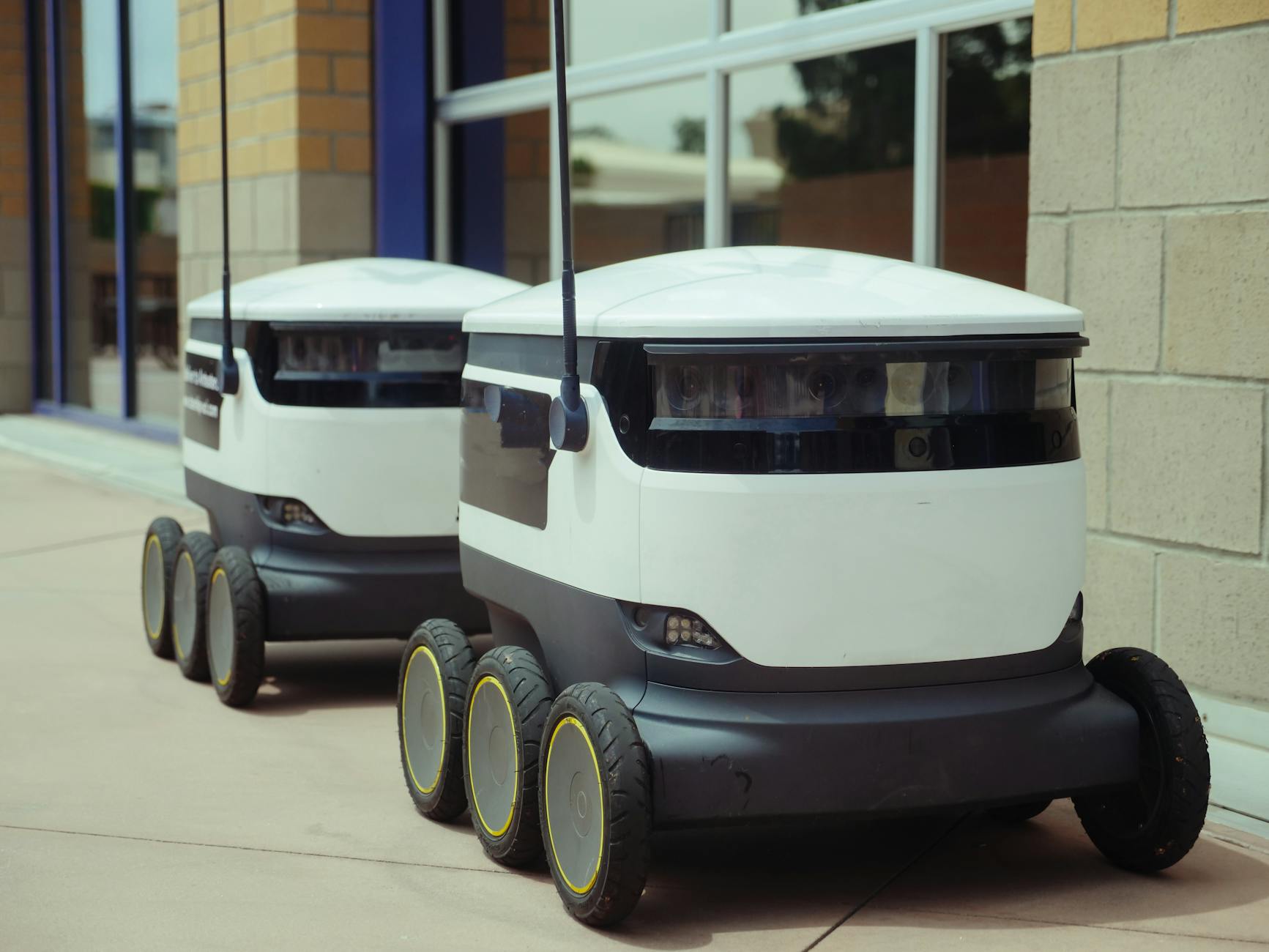
Autonomous patrol robots face environmental constraints that marketing materials often understate. Knightscope’s outdoor units struggle in heavy precipitation””the sensors can misinterpret rain or snow as obstacles, causing navigation failures. Extreme temperatures affect battery performance, reducing patrol duration in both desert heat and winter cold. One Arizona deployment reported summer battery life dropping 30% compared to spring months, requiring charging station repositioning to maintain coverage. Surface conditions matter more than casual observers expect. Uneven pavement, steep grades, and loose gravel can all challenge the K5’s navigation systems.
Clients with older facilities often discover their properties need surface improvements before robot deployment makes sense””an unanticipated capital expense that changes the ROI calculation. Knightscope has improved its robots’ terrain handling over successive hardware revisions, but the physics of mobile robotics impose fundamental limits. Network dependency creates another vulnerability. Knightscope’s robots require reliable connectivity for real-time monitoring and incident alerting. Facilities in areas with poor cellular coverage or those unwilling to extend WiFi networks into parking areas may find robot deployments impractical. The company offers hybrid solutions with edge processing and store-and-forward incident reporting, but these workarounds reduce the real-time value proposition that distinguishes robots from simple recorded surveillance.
The Regulatory and Liability Landscape
Security robots operate in a legal gray area that continues to evolve. Questions of liability when a robot fails to detect an incident, or conversely when a robot’s presence somehow contributes to an accident, remain largely untested in court. Knightscope carries substantial insurance and includes liability limitations in its service agreements, but clients should consult legal counsel before deployment.
Some jurisdictions have begun regulating autonomous robots in public spaces. San Francisco briefly banned delivery robots from most sidewalks, and similar restrictions could theoretically apply to security robots operating in publicly accessible areas. Knightscope’s focus on private property””parking garages, corporate campuses, enclosed malls””partially sidesteps these concerns, but clients with properties that include public easements should verify compliance with local regulations.
Future Outlook for Autonomous Security
The broader trajectory favors autonomous security solutions, regardless of whether Knightscope specifically succeeds. Labor costs continue rising while security guard turnover remains notoriously high””often exceeding 100% annually in the industry. Insurance companies have begun offering premium discounts for properties with documented patrol coverage, creating financial incentives for robot deployment.
Major security firms are investing in robotic capabilities either through internal development or acquisition, validating the market even as they compete with pure-play robot companies. Knightscope’s first-mover advantage provides a window of opportunity, but not an unlimited one. The company must demonstrate improving unit economics within the next two to three years, or risk competitors with deeper pockets””whether legacy security firms or well-funded robotics startups””capturing the market it helped create. The Amazon comparison will ultimately prove apt or aspirational based on whether Knightscope can translate early market presence into sustainable competitive advantage before its capital runway expires.
Conclusion
Knightscope’s positioning as “the early Amazon of autonomous patrol robots” captures a genuine strategic similarity: aggressive market-building funded by investor capital, with profitability deferred in favor of scale. The company has built real operational expertise, deployed functional robots across dozens of client sites, and accumulated data advantages that would take competitors years to replicate. These are meaningful accomplishments in a nascent industry.
However, the comparison glosses over significant differences in business model, capital intensity, and market timing. Amazon scaled a marketplace; Knightscope manufactures hardware. Amazon had two decades of market patience; Knightscope faces investors conditioned by recent tech corrections to demand clearer paths to profitability. Security directors and investors evaluating Knightscope should weigh its genuine technological lead against these structural challenges, recognizing that being early to a market does not guarantee winning it.