
Guardforce AI Co., Limited (NASDAQ: GFAI) represents one of the more speculative bets on robotics expansion in Asia””a company attempting to pivot from its cash-handling logistics roots into AI and robotic solutions across the Asia-Pacific region. With a current stock price hovering around $0.65 and a market cap of approximately $14 million as of late January 2026, GFAI trades near its all-time low of $0.52, a stark contrast to its 2021 peak of $306.03. The company has deployed over 4,800 robots across nine locations worldwide and recently launched Robotics-as-a-Service operations in Thailand, but its AI and robotics segment still contributes roughly 1% of total revenue””making this very much an early-stage transformation story rather than a proven robotics leader.
The investment thesis for GFAI rests on whether the company can successfully leverage its existing infrastructure of 25,000+ retail clients in Thailand and its regional presence across Singapore, Malaysia, Hong Kong, and Macau to scale its robotics business. The company generated $36.35 million in revenue for 2024 and maintains a cash position of $25 million, but it also faces a Nasdaq delisting deadline of June 10, 2026, if it cannot regain compliance with the $1.00 minimum bid requirement. This article examines GFAI’s position in the Asian robotics market, its financial realities, the specific expansion initiatives underway, and the considerable risks that make this a high-stakes proposition for investors interested in regional automation plays.
Table of Contents
- What Makes GFAI an Asia Robotics Expansion Play?
- Financial Reality: What the Numbers Actually Show
- Thailand: The Core of the Robotics Strategy
- Robot Deployment Scale and Geographic Reach
- The AI Agent Platform and RaaS Model
- Nasdaq Delisting Risk and Capital Markets Implications
- Comparing GFAI to Regional Robotics Alternatives
- What Would Success Look Like for GFAI?
- Conclusion
What Makes GFAI an Asia Robotics Expansion Play?
Guardforce AI operates through three business segments: Secured Logistics, AI & robotics Solution Business, and General security Solutions. The secured logistics arm””essentially cash-in-transit and ATM services””generates over 80% of the company’s revenue, primarily from Thailand’s cash-heavy economy. This isn’t a pure-play robotics company; it’s a legacy cash-handling business attempting a technological pivot. The “expansion play” element comes from GFAI’s geographic footprint and client relationships.
With approximately 1,700 employees and established partnerships across Thailand, Singapore, Malaysia, Hong Kong, Macau, Dubai, and operations in the US, Guangzhou, and Shenzhen, the company has infrastructure that a startup robotics firm would need years to build. The November 2025 launch of their AI Agent platform and Robotics-as-a-Service operations in Thailand via their Intelligent Cloud Platform represents the latest push to monetize this network. However, investors should understand the scale mismatch here. The Guardforce Digital Machine revenue grew 18.1% to $2.2 million in the first half of 2025″”meaningful growth percentage-wise, but still a small fraction of the overall business. The robotics transformation remains, as analysts note, in “early stages” with minimal disclosed AI revenue since the company began this pivot.

Financial Reality: What the Numbers Actually Show
gfai‘s financial picture requires careful parsing. The company posted 2024 full-year revenue of $36.35 million, essentially flat with 0.18% year-over-year growth. First-half 2025 showed slightly better momentum at $18.2 million in revenue, up 3.6% from the prior year period. Gross profit for H1 2025 came in at $3.0 million, representing a 16.2% margin””not terrible for a logistics-heavy business, but not the kind of margin profile that signals a successful tech transformation. The net loss of $2.2 million for H1 2025 underscores that GFAI is still burning cash while pursuing its robotics ambitions.
The company’s $25 million cash position as of June 30, 2025, provides some runway, but the math becomes concerning when you consider ongoing losses and the need to invest in scaling robotics operations. If the company continues losing roughly $4-5 million annually, that cash cushion has a finite lifespan. The Nasdaq compliance issue adds urgency to the situation. Following the December 12, 2025 notification, GFAI must maintain a closing price above $1.00 for ten consecutive trading days before June 10, 2026, or face potential delisting. This isn’t just a technical matter””delisting would significantly impair the company’s ability to raise capital and could trigger a downward spiral in liquidity and investor interest.
Thailand: The Core of the Robotics Strategy
Thailand serves as GFAI’s primary proving ground for its robotics-as-a-service model. The June 2025 renewal of a three-year contract with Thailand’s Government Savings Bank””extending a decade-long partnership””demonstrates the company’s entrenched position in the Thai market. This isn’t a company cold-calling for customers; it’s attempting to upsell robotics solutions to an existing client base of over 25,000 retail establishments. The July 2025 rebranding event in Bangkok introduced the company’s Smart Cash Solution and Smart Retail Solution products, positioning GFAI to offer integrated services that combine traditional security logistics with automated systems.
The logic is straightforward: if you’re already managing cash logistics for a retail chain, adding robotic security patrols or automated inventory systems becomes an easier sale than starting from scratch. The limitation here is Thailand-specific risk. Over 80% of GFAI’s revenue depends on Thailand’s cash-reliant economy””an economy that, like many others, is gradually moving toward digital payments. The company is essentially racing to build a robotics business before its cash logistics revenue erodes. Whether the robotics growth can outpace the potential secular decline in cash handling remains an open question that the company’s current financials don’t definitively answer.

Robot Deployment Scale and Geographic Reach
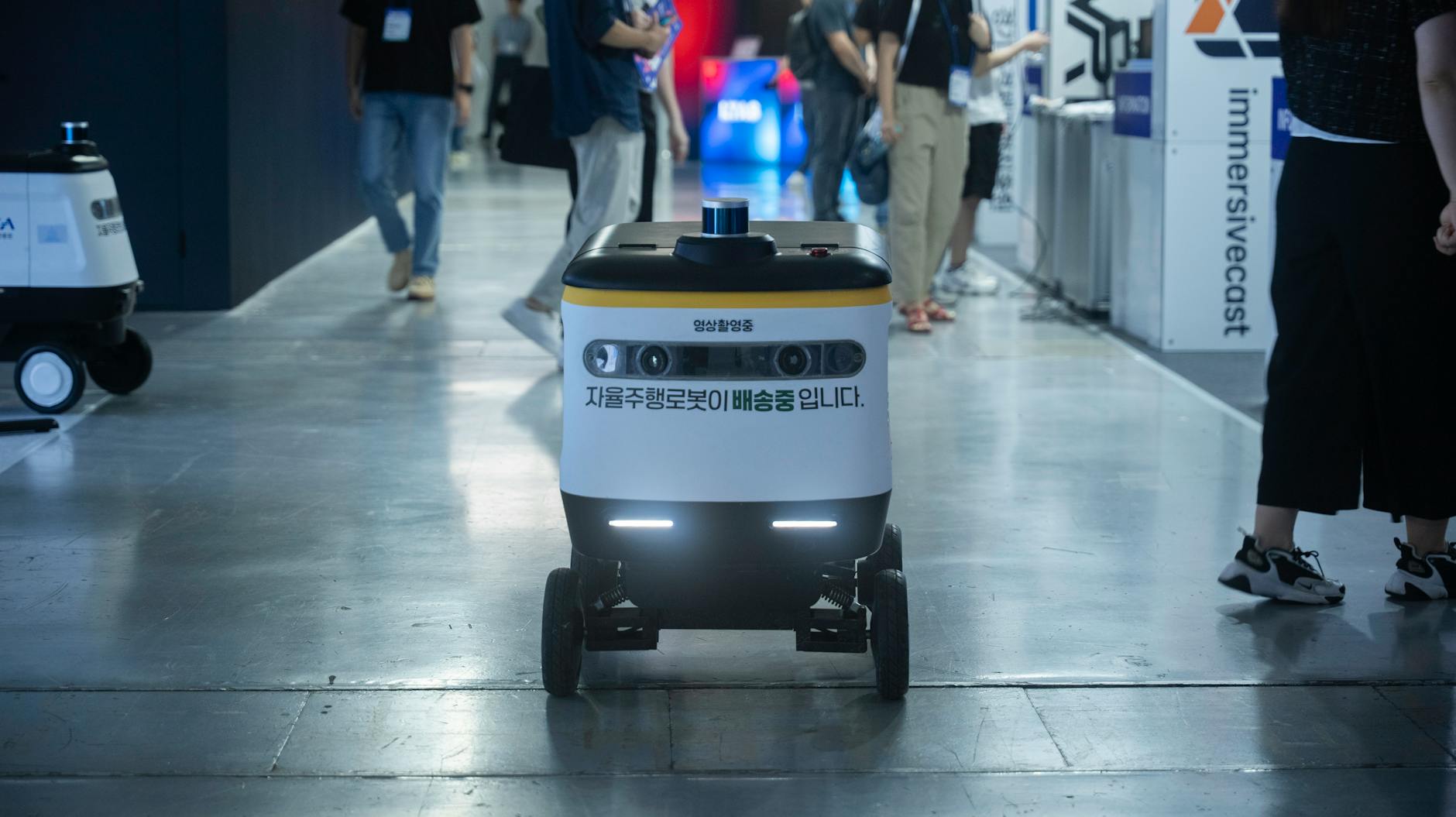
As of May 2022, GFAI had deployed over 4,800 robots across nine global locations: Hong Kong, Macau, Thailand, Malaysia, Singapore, Dubai, USA, Guangzhou, and Shenzhen. This deployment figure, while dated, establishes that the company has operational experience with robotics at scale””not just pilot programs or proof-of-concept installations. The geographic spread matters for the expansion thesis. Southeast Asian markets like Thailand, Malaysia, and Singapore share certain characteristics””growing middle classes, increasing labor costs, and government interest in automation””that could drive demand for service robots.
GFAI’s existing presence in these markets theoretically positions it to capture growth as businesses seek automation solutions. Comparing GFAI to pure-play robotics companies reveals a different competitive dynamic. Companies like UiPath or Symbotic focus exclusively on automation and command valuations that reflect investor enthusiasm for the sector. GFAI, trading at a $14 million market cap, is priced more like a distressed logistics company than a robotics growth story. This valuation gap could represent either opportunity (if the robotics pivot succeeds) or appropriate skepticism (if the transformation stalls).
The AI Agent Platform and RaaS Model
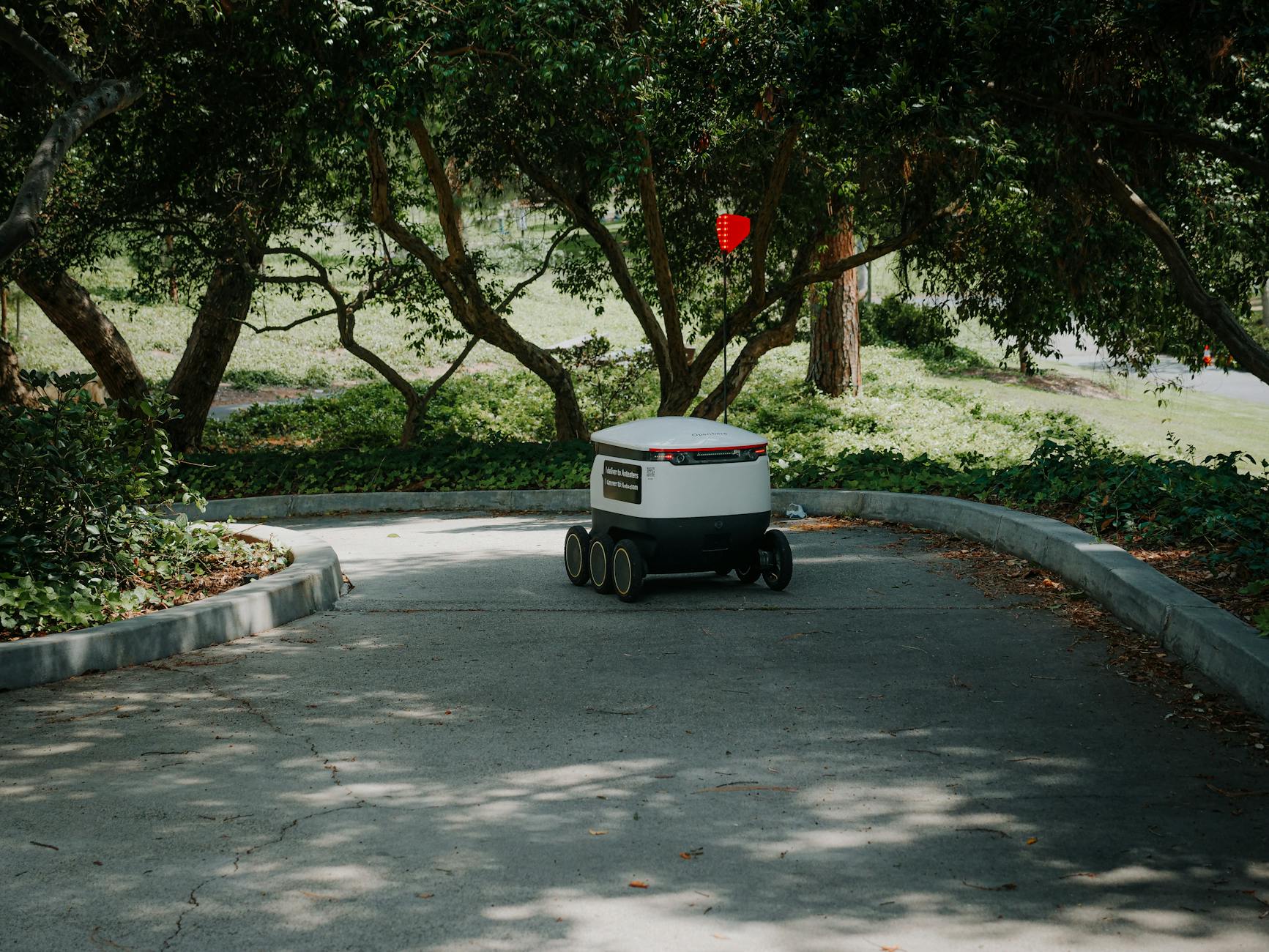
GFAI’s November 2025 launch of its AI Agent platform and Robotics-as-a-Service operations represents the company’s latest strategic initiative. The RaaS model””where customers pay ongoing fees rather than purchasing robots outright””mirrors the subscription-based approach that has driven software company valuations higher over the past decade. For GFAI, this could mean more predictable revenue streams and lower barriers to customer adoption. The Intelligent Cloud Platform (ICP) underlying these services suggests GFAI is building the software infrastructure necessary to manage robot fleets remotely. This is essential for scaling: you can’t profitably operate thousands of robots across multiple countries without centralized monitoring and management capabilities.
A word of caution on the AI terminology. Many companies have attached “AI” to their names and products in recent years, sometimes with more marketing intent than technical substance. GFAI’s DeepVoyage Go travel planning tool, launched in the US with plans for Asia-Pacific expansion, demonstrates the company is pursuing AI applications beyond robotics. Whether these initiatives generate meaningful revenue or represent distractions from core business development remains to be seen. The single analyst covering the stock rates it a “Strong Buy,” but also notes that expansion into AI and robotics has “yet to yield significant financial returns.”.
Nasdaq Delisting Risk and Capital Markets Implications
The Nasdaq compliance situation deserves specific attention because it affects everything else about the GFAI investment case. With the stock trading around $0.65 and needing to reach and maintain $1.00 for ten consecutive days before June 10, 2026, the company faces a roughly 54% required appreciation just to remain listed. Companies in this position typically have limited options: execute a reverse stock split (which often signals distress and can trigger further selling), generate positive news that drives organic price appreciation, or pursue a strategic transaction.
GFAI’s management hasn’t publicly announced which approach they’ll take, but the clock is ticking. The practical implication for investors is that even if you believe in GFAI’s robotics expansion story, the delisting risk introduces a near-term catalyst that could override fundamental considerations. A delisted stock becomes much harder to trade, often sees institutional investors forced to sell, and may lose analyst coverage entirely. This isn’t a theoretical risk””it’s a defined deadline with real consequences.
Comparing GFAI to Regional Robotics Alternatives
Investors interested in Asian robotics exposure have alternatives worth considering. Japanese robotics leaders like Fanuc and Yaskawa offer established automation businesses with proven profitability. Chinese companies like Siasun or Estun Automation provide exposure to the world’s largest robotics market.
South Korean firms like Hanwha and Doosan bring conglomerate backing to their robotics divisions. GFAI’s differentiation lies in its focus on service robots rather than industrial automation, and its Southeast Asian geographic emphasis rather than Northeast Asian manufacturing centers. For investors specifically bullish on Thai and Southeast Asian automation adoption, GFAI offers more direct exposure than these alternatives””but with correspondingly higher company-specific risk.
What Would Success Look Like for GFAI?
For GFAI’s robotics expansion to succeed, several things would need to happen. First, the company must resolve its Nasdaq compliance issue to maintain access to capital markets. Second, the RaaS and AI Agent platform launches would need to show accelerating revenue contribution””moving robotics from 1% of revenue toward a meaningful percentage.
Third, gross margins would need to expand as higher-margin robotics revenue displaces lower-margin logistics work. The company’s existing client relationships and regional infrastructure provide a foundation, but transformation at this scale typically takes years, not quarters. Investors considering GFAI need to calibrate their time horizons accordingly and size positions appropriately for a speculative, early-stage transformation story.
Conclusion
Guardforce AI represents a genuine early-stage play on Asian robotics expansion, but the “early-stage” qualifier carries substantial weight. The company has real assets””4,800+ deployed robots, 25,000+ retail clients in Thailand, and established operations across nine locations in Asia and beyond. Its November 2025 RaaS launch and AI Agent platform demonstrate continued strategic commitment to the robotics pivot.
The financial reality, however, is sobering: a $14 million market cap, stock trading near all-time lows, a Nasdaq delisting deadline in June 2026, and robotics revenue that still represents a tiny fraction of the business. For investors with high risk tolerance and a specific thesis on Southeast Asian automation adoption, GFAI offers leveraged exposure to that trend. For most others, the combination of execution risk, capital markets risk, and geographic concentration warrants caution. This is not a stock for the faint of heart or the undiversified portfolio.