
ABB Ltd., traded on the New York Stock Exchange under the ticker ABBNY, has become one of the most consequential players in factory robotics over the past four decades. The Swiss-Swedish multinational doesn’t just make robots — it supplies the integrated automation systems that keep automotive lines, electronics assembly floors, and food packaging plants running at scale.
When a major automaker like Volvo needed to overhaul its Torslanda plant for mixed electric and combustion vehicle production, it was ABB’s robotic arms and control software that anchored the retooling effort. This article breaks down what makes ABBNY a fixture in industrial automation, how its robotics division stacks up against competitors like Fanuc and KUKA, where the company’s technology falls short, and what investors and engineers should understand about its trajectory. Whether you’re evaluating ABBNY as a stock pick or trying to understand why so many factories rely on its hardware, the details matter more than the brand name.
Table of Contents
- Why Is ABBNY Considered a Backbone of Factory Robotics?
- How ABB’s Robotics Portfolio Compares to Fanuc and KUKA
- The Role of ABB’s Software Ecosystem in Modern Factories
- What Factory Operators Should Evaluate Before Choosing ABB
- Limitations and Risks in ABB’s Robotics Business
- ABB’s Push Into New Verticals Beyond Automotive
- Where ABBNY Is Headed in the Next Five Years
- Conclusion
- Frequently Asked Questions
Why Is ABBNY Considered a Backbone of Factory Robotics?
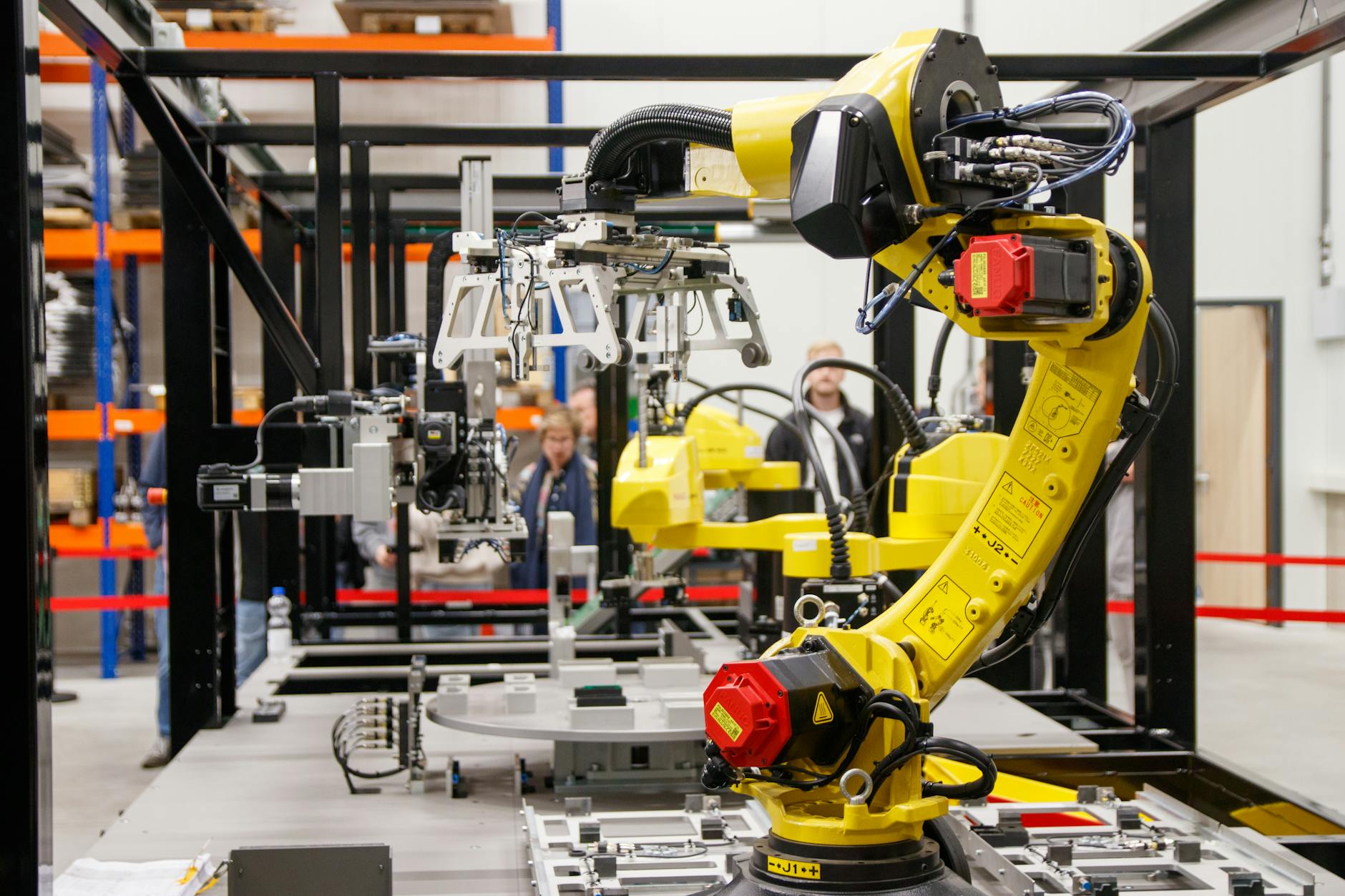
ABB installed its first industrial robot, the IRB 6, in 1974 — making it one of the earliest companies to commercialize robotic arms for manufacturing. That head start compounded over the decades. Today, ABB’s robotics division operates in over 50 countries and has an installed base of more than 500,000 robots worldwide. The company’s portfolio spans six-axis articulated robots, delta robots for high-speed picking, collaborative robots (cobots) under the GoFa and SWIFTI lines, and paint atomizers used across nearly every major automotive OEM. What separates ABB from smaller robotics firms is vertical integration. The company doesn’t just sell a robot arm and walk away.
It provides the motion controllers, the programming software (RobotStudio), the power electronics, and often the broader factory automation infrastructure including PLCs and drive systems. For a plant manager, this means fewer vendors to coordinate and a single support contract covering most of the automation stack. Compare that to buying a Universal Robots cobot and then sourcing your own vision system, controller, and integration — ABB bundles much of that together, which reduces deployment friction in large-scale operations. The tradeoff is cost. ABB’s integrated systems carry a premium over piecemeal alternatives, and for smaller manufacturers running just one or two cells, that overhead may not pencil out. But for facilities running dozens or hundreds of robots on coordinated lines, ABB’s ecosystem advantage is difficult to replicate.

How ABB’s Robotics Portfolio Compares to Fanuc and KUKA
The industrial robotics market is dominated by four companies often called the “Big Four”: ABB, Fanuc, KUKA, and Yaskawa. Each has a distinct personality. Fanuc, headquartered in Japan, is known for extreme reliability and a closed-ecosystem approach — its robots are workhorses, but customization outside Fanuc’s tooling is limited. KUKA, now owned by China’s Midea Group, has been strong in automotive but has faced questions about strategic direction since the acquisition. Yaskawa’s Motoman line competes aggressively on price in welding and handling applications. ABB’s differentiator is software sophistication and breadth of application.
RobotStudio, its offline programming and simulation environment, allows engineers to build and test entire robotic cells in a digital twin before committing to physical installation. This reduces commissioning time significantly — ABB claims by as much as 50 percent in some cases, though real-world results vary by application complexity. The company has also pushed harder into collaborative robotics than Fanuc, releasing the YuMi dual-arm cobot in 2015 and following up with the GoFa and SWIFTI lines targeting different payload and speed requirements. However, if your factory primarily runs high-volume, unchanging tasks — like the repetitive spot welding that dominates many Asian automotive plants — Fanuc’s simplicity and uptime record may actually be a better fit. ABB’s strength shows most clearly in environments that require flexibility: mixed-model assembly, frequent changeovers, or integration with complex vision and sensor systems. Choosing between these platforms without understanding your production variability is one of the more expensive mistakes a plant can make.
The Role of ABB’s Software Ecosystem in Modern Factories
The physical robot is increasingly just the starting point. ABB has invested heavily in its ABB Ability platform, a cloud-connected suite that monitors robot health, predicts maintenance needs, and aggregates performance data across entire fleets. For a company running 200 robots across three plants, the ability to spot a degrading gearbox before it fails — and schedule maintenance during a planned shutdown rather than suffering an unplanned stoppage — translates directly to reduced downtime costs. A concrete example: Hitachi’s Yasugi Works in Japan deployed ABB robots with connected services to monitor arc welding quality in real time.
The system flagged deviations in weld parameters that would have previously gone undetected until quality inspection, catching defects upstream and reducing scrap rates. This kind of closed-loop quality feedback is where ABB’s software layer adds value beyond what the mechanical arm alone provides. RobotStudio also deserves specific mention. The simulation environment lets engineers program robots without taking production cells offline, which matters enormously in facilities that run near-continuous production schedules. A new product variant can be programmed, tested against collision models, and optimized for cycle time entirely in software, then deployed to the physical cell during a scheduled changeover window.

What Factory Operators Should Evaluate Before Choosing ABB
The decision to go with ABB — or any major robotics OEM — should start with total cost of ownership, not sticker price. ABB’s robots tend to cost more upfront than comparable Yaskawa or even some Fanuc models. But integration costs, programming time, spare parts availability, and service contract terms can shift the equation substantially. A robot that costs 15 percent less but requires a third-party integrator at $180 per hour for every changeover may end up being the more expensive choice over a five-year horizon. Plant operators should also consider the skill base of their workforce.
ABB’s RAPID programming language, while powerful, has a learning curve that differs from Fanuc’s KAREL or KUKA’s KRL. If your maintenance team already has deep experience with one platform, switching to another carries retraining costs and a temporary dip in troubleshooting speed. Some integrators specialize in one OEM over others, so regional availability of ABB-certified integrators matters too — particularly in regions where Fanuc or Yaskawa have denser service networks. The practical advice: request a total cost of ownership analysis from competing vendors using your actual production data — cycle times, changeover frequency, planned uptime targets, and maintenance labor rates. The vendor whose system looks cheapest on a quote sheet is not always the vendor whose system is cheapest to run.
Limitations and Risks in ABB’s Robotics Business
ABB’s robotics division, while profitable, represents only about 20 percent of the company’s total revenue. The rest comes from electrification, motion, and process automation segments. This diversification is a double-edged sword: it provides financial stability, but it also means robotics doesn’t always get the singular focus that a pure-play competitor like Fanuc can devote. During ABB’s corporate restructuring in 2020, the robotics and discrete automation division saw leadership changes and strategic resets that created uncertainty for some customers evaluating long-term platform commitments. There are also geographic considerations.
ABB has been expanding its robotics manufacturing capacity in China — including a major factory in Shanghai that opened in 2022 — to serve the fast-growing Asian market. But this exposes the company to trade tensions and tariff risks that pure-domestic suppliers avoid. For a North American manufacturer weighing ABB against a Fanuc robot built in the company’s Michigan facility, supply chain resilience has become a legitimate evaluation criterion since 2020. Finally, ABB’s collaborative robot lineup, while improved with the GoFa series, still trails Universal Robots in market share and ecosystem breadth for lightweight cobot applications. If your use case is a simple pick-and-place cobot in a small shop, ABB may be overbuilding for your needs. The company’s sweet spot remains medium-to-large-scale industrial deployments where system integration complexity justifies the premium.
ABB’s Push Into New Verticals Beyond Automotive
While automotive has historically been ABB’s bread and butter for robotics, the company has been deliberately diversifying into logistics, healthcare, and construction. ABB partnered with Zume to deploy robots in food service operations, and its FlexPicker delta robots are a common sight in pharmaceutical packaging lines where speed and hygiene standards intersect. In construction, ABB has piloted robotic systems for modular building assembly, though this market remains nascent.
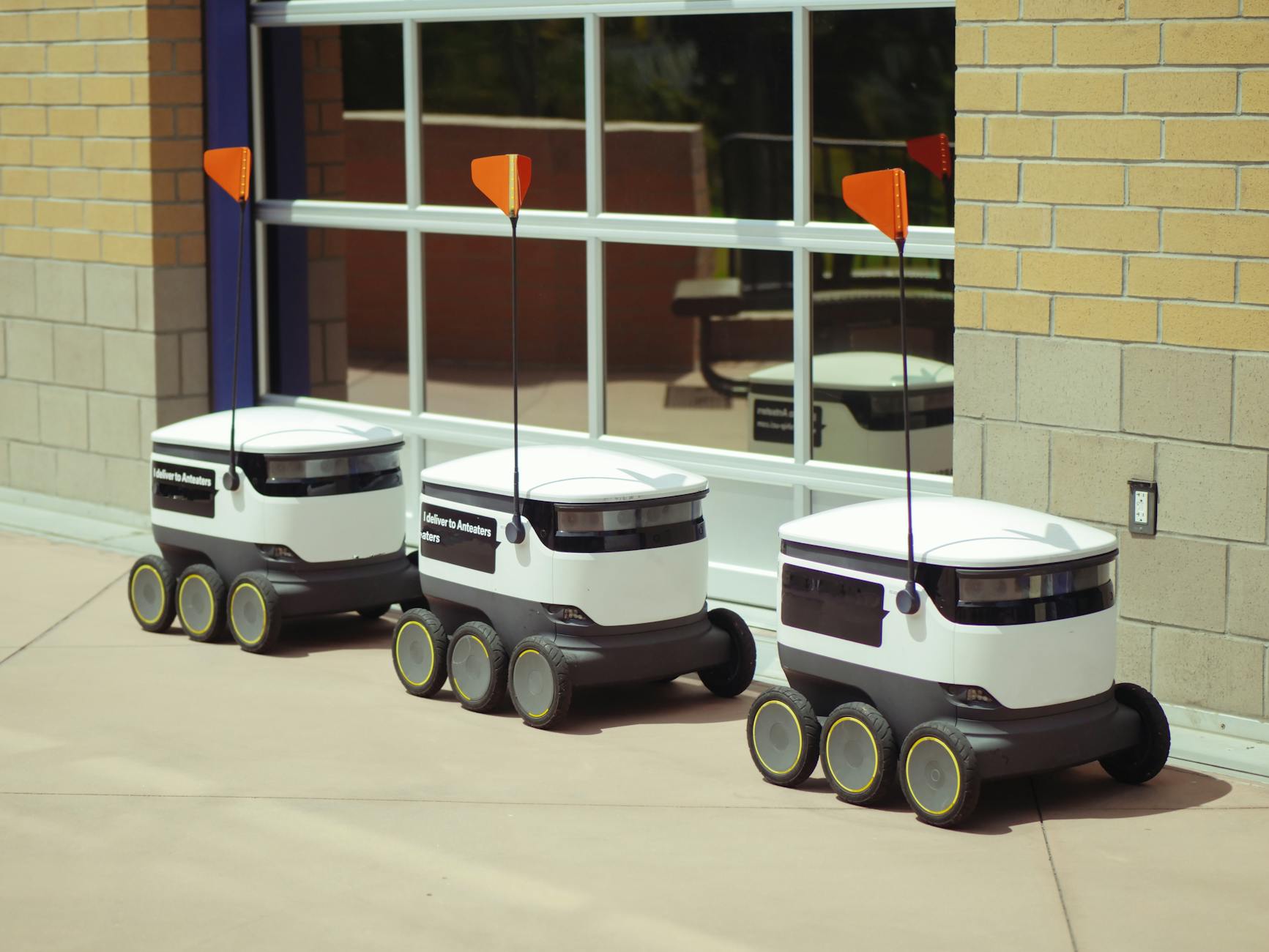
The logistics push is particularly notable. E-commerce fulfillment demands — variable product sizes, high throughput, and the need for rapid reconfiguration — play to ABB’s software and vision integration strengths. The company’s acquisition of ASTI Mobile Robotics in 2021 added autonomous mobile robots (AMRs) to the portfolio, allowing ABB to offer combined fixed-arm and mobile solutions for warehouse automation.
Where ABBNY Is Headed in the Next Five Years
ABB’s stated roadmap emphasizes three themes: AI-driven robot programming, modular and reconfigurable production cells, and deeper integration between its robotics and electrification businesses. The company has been investing in large language model interfaces that could allow operators to program robot tasks using natural language rather than writing RAPID code — a shift that, if executed well, could significantly lower the barrier to adoption for small and mid-sized manufacturers. The broader outlook for industrial robotics remains favorable.
The International Federation of Robotics projects continued growth in robot installations, driven by labor shortages, reshoring trends, and the electrification of transportation. ABB is positioned to capture a meaningful share of that growth, though it will need to defend its margins against aggressive pricing from Chinese robotics companies like Siasun and Estun that are rapidly improving their technical capabilities. For investors tracking ABBNY, the robotics story is compelling — but it’s embedded within a much larger industrial conglomerate, and the stock price reflects the whole entity, not just the robots.
Conclusion
ABB’s position in factory robotics rests on decades of installed base, a vertically integrated product ecosystem, and software capabilities that increasingly define competitive advantage in modern manufacturing. The company’s strength is most evident in complex, multi-robot deployments where system integration, simulation, and fleet management matter more than the unit price of any single arm.
For factory operators, the decision to adopt ABB should be grounded in an honest assessment of production complexity, workforce skills, and total cost of ownership. For investors, ABBNY offers exposure to industrial robotics megatrends but comes packaged with three other major business segments that dilute the pure robotics thesis. In both cases, the details behind the ticker symbol matter more than the narrative.
Frequently Asked Questions
What does ABBNY stand for on the stock market?
ABBNY is the ticker symbol for ABB Ltd.’s American Depositary Receipts (ADRs) traded on the New York Stock Exchange. Each ADR represents one share of ABB Ltd., which is headquartered in Zurich, Switzerland.
How many robots has ABB installed worldwide?
ABB has an installed base exceeding 500,000 robots globally, deployed across automotive, electronics, food and beverage, logistics, and other industrial sectors.
Is ABB better than Fanuc for factory robots?
Neither is universally better. ABB tends to excel in applications requiring flexibility, frequent changeovers, and sophisticated software integration. Fanuc often wins on raw reliability and simplicity for high-volume, repetitive tasks. The right choice depends on your specific production environment.
Does ABB make collaborative robots?
Yes. ABB’s cobot lineup includes the YuMi dual-arm robot, GoFa (for higher payload collaborative tasks), and SWIFTI (for faster-speed applications with safety-rated monitoring). These compete with Universal Robots and Fanuc’s CRX series.
What programming language do ABB robots use?
ABB robots are programmed in RAPID, a proprietary language developed by ABB. The company’s RobotStudio software provides an offline simulation and programming environment that supports RAPID development.