
ABB Ltd, traded as ABBNY on U.S. over-the-counter markets, has earned the informal title of “the Nvidia of industrial robots” for a reason that goes beyond marketing buzz. The company holds approximately 13% of the global industrial robotics market share, operates an installed base of over 500,000 robots worldwide, and has built a platform — the OmniCore controller — that functions as something close to a universal operating system for industrial automation. Just as Nvidia’s CUDA ecosystem became the default infrastructure layer for artificial intelligence computing, ABB’s robotics platform is positioning itself as the connective tissue between physical machines and AI-driven autonomy.
The comparison gained even more weight in October 2025 when SoftBank Group agreed to acquire ABB’s entire Robotics division for $5.375 billion, explicitly tying the deal to what SoftBank CEO Masayoshi Son called the next frontier of “Physical AI.” For investors tracking ABBNY, the stock sits at roughly $86.73 as of early February 2026, with a market capitalization near $158 billion — up about 39% year-over-year. The robotics division itself generated $2.3 billion in revenue in 2024, roughly 7% of ABB Group’s total. Those numbers matter because they frame a central tension: ABB is a massive, diversified industrial conglomerate where robotics is a critical but relatively small piece of the revenue picture, yet it is the robotics story that drives much of the speculative enthusiasm. This article breaks down the substance behind the “Nvidia of robots” label, the SoftBank deal, the OmniCore platform, and what investors and industry observers should actually pay attention to going forward.
Table of Contents
- Why Is ABBNY Called the Nvidia of Industrial Robots?
- The SoftBank Acquisition and What It Means for ABB’s Robotics Future
- Inside OmniCore — ABB’s $170 Million Bet on a Robotics Operating System
- ABBNY Stock Valuation — Is the Premium Justified?
- The Global Industrial Robotics Market and ABB’s Competitive Position
- ABB’s Role in the AI Data Center Buildout
- Where ABB and Industrial Robotics Go From Here
- Conclusion
- Frequently Asked Questions
Why Is ABBNY Called the Nvidia of Industrial Robots?
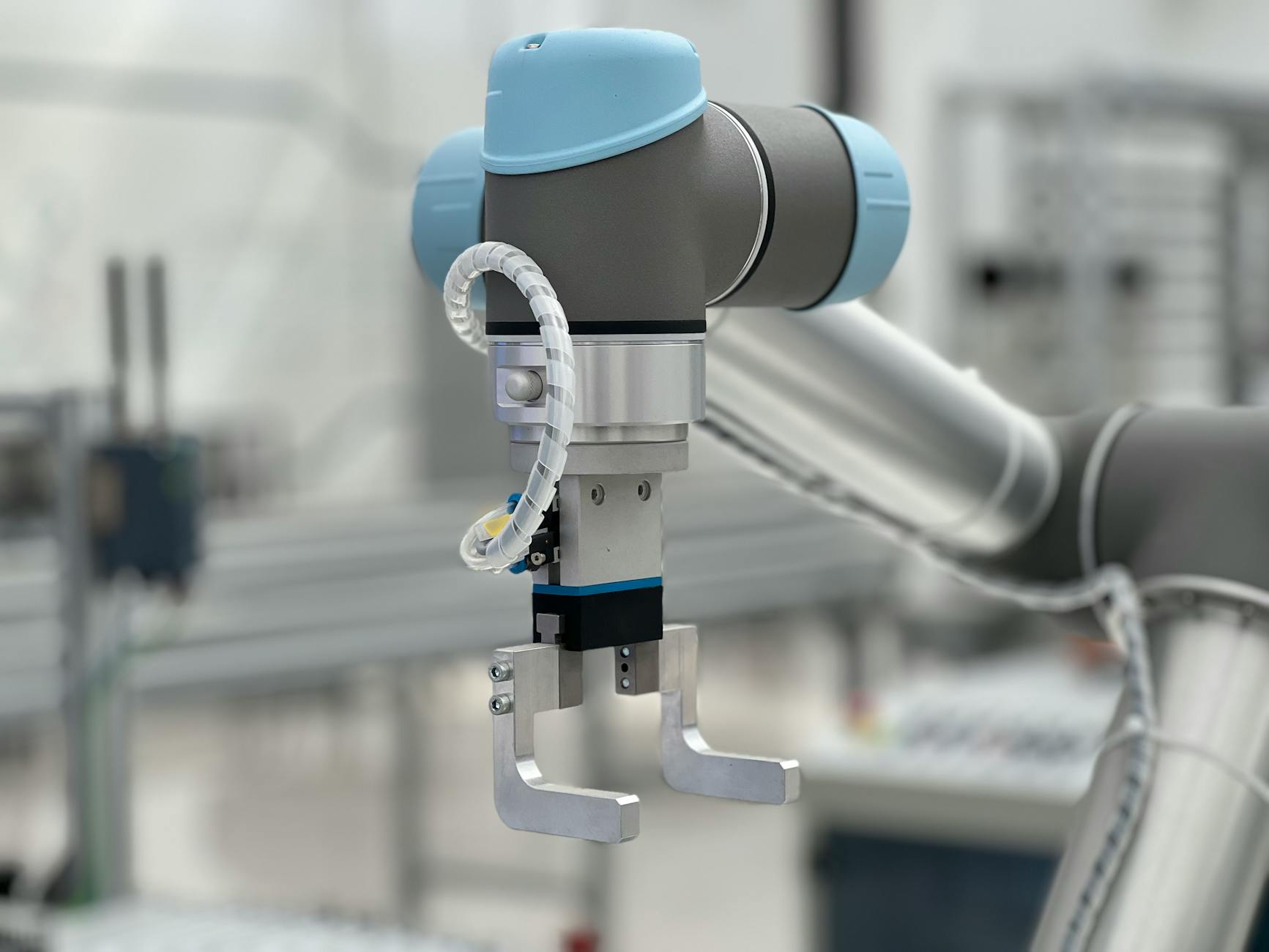
The comparison between ABB and nvidia rests on a specific structural parallel: platform dominance. Nvidia did not just make the best GPUs — it built CUDA, a software ecosystem that made its hardware the default choice for AI researchers and developers. Switching costs became enormous. ABB is attempting something analogous with OmniCore, a next-generation robotics control platform that the company invested $170 million to develop and debuted at Automate 2025 in Detroit. OmniCore integrates ABB’s full portfolio of industrial robots, collaborative robots (cobots), and mobile robots into a single modular architecture with AI-enabled vision and autonomous path planning. The goal is not just to sell individual robot arms but to become the infrastructure layer that factories build on top of. ABB is one of the “Big Four” industrial robot manufacturers alongside FANUC, KUKA, and Yaskawa.
What distinguishes ABB in the Nvidia comparison is less about raw market share — FANUC actually leads in several segments — and more about the platform play. OmniCore is designed to deliver a 20% reduction in energy consumption and can reduce cycle times by up to 50% through AI-powered automatic path planning. If OmniCore achieves the kind of ecosystem lock-in that CUDA did for Nvidia, ABB’s robotics division would become far more valuable than its current $2.3 billion revenue line suggests. The caveat is that industrial automation is a slower-moving market than AI computing, and factory operators are notoriously conservative about switching platforms. ABB has also been working directly with Nvidia. The two companies announced a collaboration to develop next-generation AI data centers, with ABB providing new power solutions for gigawatt-scale facilities and supporting Nvidia’s planned 800 VDC power architecture for 1-megawatt server racks. ABB is part of Nvidia’s broader “Physical AI” ecosystem for industrial robotics and autonomous machines, which lends the comparison some literal credibility rather than just metaphorical convenience.

The SoftBank Acquisition and What It Means for ABB’s Robotics Future
On October 8, 2025, SoftBank Group announced a definitive agreement to acquire ABB’s Robotics division for approximately $5.4 billion. The deal replaced ABB’s earlier plan to spin off the robotics unit as a separately listed company. SoftBank’s Masayoshi Son framed the acquisition in characteristically ambitious terms: “SoftBank’s next frontier is Physical AI. Together with ABB Robotics, we will unite world-class technology and talent under our shared vision to fuse Artificial Super Intelligence and robotics.” The transaction is expected to close in mid-to-late 2026, pending regulatory approvals in the EU, China, and the United States. For ABB, the divestment will produce a pre-tax book gain of roughly $2.4 billion and net cash proceeds of about $5.3 billion. The robotics division currently employs around 7,000 people and operates at an EBITA margin of 12.1%.
Those are solid but not spectacular margins by industrial standards, which partly explains why ABB was willing to let the division go rather than keep it in-house. The strategic logic for SoftBank is clearer: it gets a fully operational robotics business with half a million installed robots and a new AI-native control platform, which it can integrate with its broader portfolio of AI investments, including its stake in Arm Holdings. However, investors should recognize that the deal introduces meaningful uncertainty. Regulatory approval in China is not guaranteed given the current geopolitical environment around technology transfers. If the acquisition closes, abbny shareholders will lose direct exposure to the robotics growth story — the very narrative that has driven much of the stock’s premium. What remains will be a highly profitable electrification, motion, and process automation business, but one that trades at roughly 30 times earnings, a valuation that some analysts already consider historically elevated without the robotics upside baked in.
Inside OmniCore — ABB’s $170 Million Bet on a Robotics Operating System
The OmniCore controller represents ABB’s most significant product investment in recent years. The $170 million development effort produced a platform that ABB positions as the single control architecture for its entire robotics lineup. Before OmniCore, different ABB robot families often ran on different controllers with different software stacks, making integration across a factory floor more complex than it needed to be. OmniCore collapses that fragmentation into one system. The practical benefits are measurable. ABB claims a 20% reduction in energy consumption per robot cycle, which matters enormously at scale — a factory running hundreds of robots can see six-figure annual energy savings.
The AI-powered Automatic Path Planning feature can reduce cycle times by up to 50% in certain applications by optimizing robot movements without manual programming. For a concrete example, consider an automotive welding line where a robot must hit 200 weld points per car body. Traditional path programming requires a skilled technician to manually sequence those points and test the path. OmniCore’s path planning can generate and optimize that sequence automatically, cutting commissioning time from days to hours. ABB has been integrating AI into its industrial automation systems since 2014, which gives it a longer track record than many competitors in applying machine learning to physical operations. The OmniCore architecture also supports AI-enabled vision systems, meaning robots can identify and adapt to variations in parts or environments without hard-coded instructions. This is the foundation of what the industry calls “autonomous versatile robotics” — machines that can handle mixed tasks rather than repeating a single motion endlessly.
ABBNY Stock Valuation — Is the Premium Justified?
At roughly $86.73 per share and a market cap near $158 billion, ABBNY trades at approximately 30 times earnings. That is elevated by historical standards for industrial conglomerates. The 39% year-over-year increase in market cap reflects broader enthusiasm for companies positioned at the intersection of AI and physical infrastructure, but it also raises the question of how much future growth is already priced in. The robotics division accounts for only about 7% of ABB Group revenues. The bulk of ABB’s business is electrification and process automation — stable, profitable operations that benefit from megatrends like grid modernization and data center construction, but that do not typically command Nvidia-like multiples.
The SoftBank deal complicates the valuation further: once the robotics division is sold, investors will need to reassess whether the remaining business justifies the current premium. The $5.3 billion in cash proceeds will strengthen ABB’s balance sheet, but the growth narrative shifts from “robotics platform play” to “industrial infrastructure provider,” which is a different investing thesis entirely. For comparison, FANUC — ABB’s closest rival in industrial robotics — trades at roughly 30-35 times earnings as well, but FANUC derives a much larger share of its revenue from robotics and factory automation. Investors considering ABBNY should be honest about whether they are buying the robotics story, the electrification story, or the conglomerate discount. After the SoftBank deal closes, only two of those three will remain on the table.
The Global Industrial Robotics Market and ABB’s Competitive Position
The global industrial robotics market is projected to grow from $17.6 billion in 2025 to $39 billion by 2035, representing a compound annual growth rate of 7.49%. The broader industrial automation market is even larger, projected to reach $326.48 billion by 2032. These are not speculative projections — they reflect sustained demand from automotive, electronics, logistics, and food manufacturing sectors that face labor shortages and rising wage pressures worldwide. ABB’s 13% market share places it in the top two or three manufacturers globally, depending on how the market is segmented. FANUC typically leads in unit volume, particularly in Asia. KUKA, now owned by China’s Midea Group, has a strong presence in automotive.
Yaskawa competes aggressively on price and reliability. ABB’s differentiation has historically been in software integration and ease of programming, which is where OmniCore aims to extend the advantage. The risk is that competitors are not standing still. FANUC has its own AI integration roadmap, and Chinese manufacturers like Siasun and Estun are gaining share in lower-cost segments. One limitation worth flagging: ABB’s robotics division margin of 12.1% is respectable but not dominant. For a business positioned as a platform play analogous to Nvidia, you would expect margins to expand as software and services become a larger share of revenue. If ABB Robotics under SoftBank ownership cannot push margins above 15-18% within a few years, the “Nvidia of robots” comparison will look more like aspiration than description.

ABB’s Role in the AI Data Center Buildout
Beyond robotics, ABB’s collaboration with Nvidia on next-generation AI data centers represents a less discussed but potentially significant revenue stream. ABB is developing power solutions for gigawatt-scale data center facilities, including infrastructure to support Nvidia’s planned 800 VDC power architecture for 1-megawatt server racks. As AI compute demand grows exponentially, the physical infrastructure to power and cool these facilities becomes a bottleneck — and ABB’s electrification business is directly positioned to address it.
This is worth noting because even after the robotics division is sold to SoftBank, ABB retains a meaningful connection to the AI infrastructure buildout. The electrification and motion divisions supply transformers, switchgear, drives, and power management systems that data centers cannot operate without. It is a less glamorous business than robotics, but it may prove more durable and higher-margin over the long term.
Where ABB and Industrial Robotics Go From Here
The next 18 months will be defining for both ABB and the industrial robotics sector. If the SoftBank acquisition closes as expected in mid-to-late 2026, ABB Robotics will become part of an AI-focused conglomerate with deep pockets and a stated ambition to fuse artificial superintelligence with physical machines. That is either a transformative opportunity or a recipe for the kind of overreach that has plagued SoftBank’s Vision Fund in the past — and probably a bit of both.
For the broader market, the convergence of AI software and industrial hardware is no longer theoretical. ABB’s OmniCore platform, Nvidia’s Physical AI ecosystem, and the billions flowing into robotics from SoftBank, Amazon, and others signal that factory automation is entering a new phase. The companies that build the platforms — not just the individual machines — will capture disproportionate value. Whether ABB Robotics, under new ownership, can actually become the Nvidia of its domain depends on execution, ecosystem adoption, and whether the OmniCore platform achieves the kind of lock-in that turns a product into an industry standard.
Conclusion
ABB’s claim to the title of “the Nvidia of industrial robots” is grounded in real structural parallels — a dominant installed base, a platform strategy with OmniCore, and direct collaboration with Nvidia itself on Physical AI infrastructure. The $5.375 billion SoftBank acquisition validates the strategic importance of the robotics division, even as it removes direct robotics exposure from ABBNY shareholders. With roughly 500,000 robots deployed globally, $2.3 billion in robotics revenue, and a $170 million investment in a next-generation control platform, the foundation is substantial. The honest assessment is that the comparison remains partly aspirational.
Nvidia’s CUDA ecosystem enjoys a level of developer lock-in and margin expansion that ABB Robotics has not yet achieved. A 12.1% operating margin and 13% market share are strong positions, but they are not monopolistic. Investors considering ABBNY at 30 times earnings need to weigh the post-divestiture business against a premium that was partly built on the robotics narrative. For those focused specifically on industrial robotics exposure, the SoftBank-owned entity may eventually become the more direct play — but that is a story that will not fully unfold until 2027 and beyond.
Frequently Asked Questions
What does ABBNY stand for and where is the stock traded?
ABBNY is the ticker symbol for ABB Ltd’s American Depositary Receipts, traded on U.S. over-the-counter markets. The company’s primary listing is on the SIX Swiss Exchange under the ticker ABBN. ABB is a Swiss-Swedish multinational headquartered in Zurich.
Is ABB selling its entire robotics business?
Yes. In October 2025, SoftBank announced a definitive agreement to acquire ABB’s entire Robotics division for $5.375 billion. The deal is expected to close in mid-to-late 2026, subject to regulatory approval in the EU, China, and the United States. ABB had originally planned to spin off the division as a separately listed company before accepting SoftBank’s offer.
How does ABB compare to FANUC in industrial robotics?
ABB and FANUC are both among the “Big Four” industrial robot manufacturers alongside KUKA and Yaskawa. ABB holds roughly 13% of the global market. FANUC typically leads in unit volume, particularly in Asian markets. ABB has historically differentiated on software integration and programming flexibility, while FANUC is known for reliability and consistency. Both companies trade at elevated multiples relative to industrial peers.
What is ABB’s OmniCore controller?
OmniCore is ABB’s next-generation robotics control platform, developed with a $170 million investment and launched at Automate 2025. It unifies ABB’s full robot portfolio — industrial robots, cobots, and mobile robots — under a single modular architecture. Key features include AI-powered automatic path planning that can reduce cycle times by up to 50% and a 20% reduction in energy consumption compared to previous controllers.
Will ABBNY still be a robotics stock after the SoftBank deal closes?
No. Once the divestiture is complete, ABB will no longer have a robotics division. The remaining business will focus on electrification, motion, and process automation. ABB will receive approximately $5.3 billion in net cash proceeds and record a pre-tax gain of roughly $2.4 billion, but investors seeking direct industrial robotics exposure will need to look elsewhere.
What is ABB’s connection to Nvidia?
ABB and Nvidia have a collaboration focused on developing next-generation AI data centers. ABB is providing power solutions for gigawatt-scale facilities, supporting Nvidia’s planned 800 VDC power architecture for 1-megawatt server racks. ABB is also part of Nvidia’s broader Physical AI ecosystem for industrial robotics and autonomous machines.