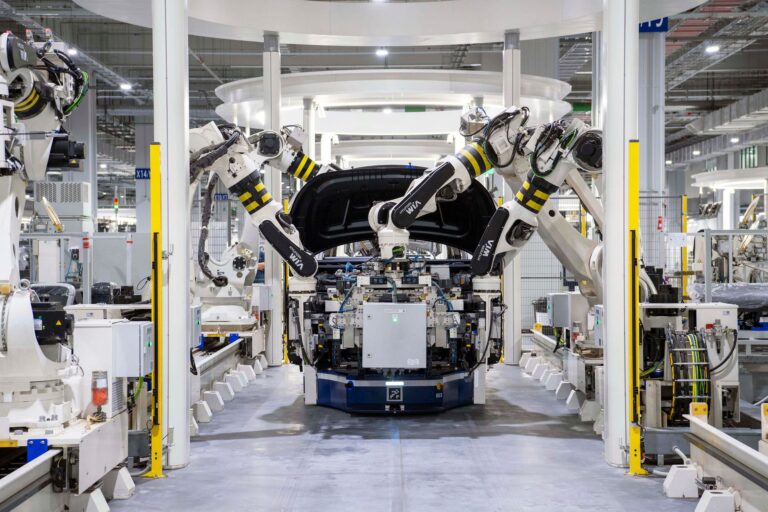

ABB stands as one of the world’s most influential players in industrial automation and robotics, and the comparison to “the Google of global automation” reflects its outsized role in shaping how factories, utilities, and infrastructure operate worldwide. With operations in over 100 countries and products used in nearly every major industrial sector, ABB has become so deeply embedded in global automation infrastructure that many companies and engineers default to ABB solutions the way internet users default to Google. The company’s robotics division alone, which includes the popular IRB robot lines, powers manufacturing floors from automotive plants in Germany to electronics factories in Southeast Asia, making ABB a standard reference point whenever industries discuss automation strategy.
However, this dominance didn’t emerge from a single breakthrough but rather from decades of consolidation, acquisition, and incremental innovation. ABB was formed in 1988 from the merger of two European powerhouses—Sweden’s ASEA and Switzerland’s Brown, Boveri & Cie—and has systematically expanded its footprint through strategic purchases. The company’s real strength isn’t in pioneering revolutionary technology but in understanding how to integrate disparate systems, standardize solutions, and deliver reliable performance at scale. This pragmatic approach is what earned ABB its “Google of automation” status: it’s not always the most cutting-edge, but it’s usually the safest bet and the most widely available option.
Table of Contents
- How ABB Became the Dominant Force in Global Industrial Automation
- The Reality Behind ABB’s Dominance—and Where It Falls Short
- ABB’s Robot Business as the Company’s Automation Flagship
- Software, Integration, and the Future of ABB’s Automation Ecosystem
- Supply Chain Vulnerabilities and Geopolitical Challenges
- ABB’s Sustainability and Energy Efficiency Focus
- The Future Outlook for ABB and Emerging Automation Trends
- Conclusion
How ABB Became the Dominant Force in Global Industrial Automation
ABB’s market position stems from three converging advantages: geographic reach, product breadth, and a service infrastructure that rivals few competitors. Unlike startups that might excel in a single technology—collaborative robots, software platforms, or vision systems—ABB competes across the entire automation stack. The company manufactures heavy-duty industrial robots, drives for motion control, power conversion systems, software for factory operations, and the personnel to install and maintain these systems. For a factory manager choosing automation partners, this breadth reduces vendor fragmentation and simplifies procurement.
When ABB won a contract to automate a Volkswagen paint line, it supplied not just robots but the conveyor controls, software integration, safety systems, and on-site support—a unified package that competitors often must assemble piecemeal. The comparison to google also holds because both companies have become so integral to their respective domains that they function almost as infrastructure. Just as engineers instinctively search Google rather than alternatives, manufacturing plants instinctively evaluate ABB robots when planning automation investments. This market position creates a self-reinforcing cycle: ABB’s ubiquity means more engineers train on ABB systems, more developers build integrations for ABB platforms, and more service providers specialize in ABB maintenance. A factory that chooses ABB gains access to a larger ecosystem of technical talent than it would with a lesser-known competitor.
The Reality Behind ABB’s Dominance—and Where It Falls Short
ABB’s dominance comes with real limitations and tradeoffs that the “Google” comparison obscures. The company’s robots, while reliable, are not typically the most agile or fastest in their class—a company like STÄUBLI might offer slightly faster pick-and-place speeds, and smaller roboticists like Universal Robots have captured meaningful share in collaborative applications where ABB arrived late. ABB’s legacy as a heavy industrial manufacturer means its DNA favors large-scale, high-volume production environments over the flexible, small-batch scenarios increasingly common in modern manufacturing. A small apparel brand automating a warehouse might find ABB’s solutions over-engineered and expensive compared to newer robotics startups.
Cost is another critical limitation. ABB’s systems, while durable and supported, carry price tags that reflect the company’s premium positioning and extensive service network. For price-sensitive manufacturers, particularly in emerging markets, Chinese alternatives like Estun or Siasun now offer viable automation options at 30-50% lower cost, even if reliability and software sophistication lag behind. Additionally, ABB’s scale and bureaucratic structure can slow innovation and responsiveness. The company’s decision-making processes, necessary for managing such a vast organization, sometimes mean that nimble competitors launch new features or address market needs faster than ABB can mobilize its resources.
ABB’s Robot Business as the Company’s Automation Flagship
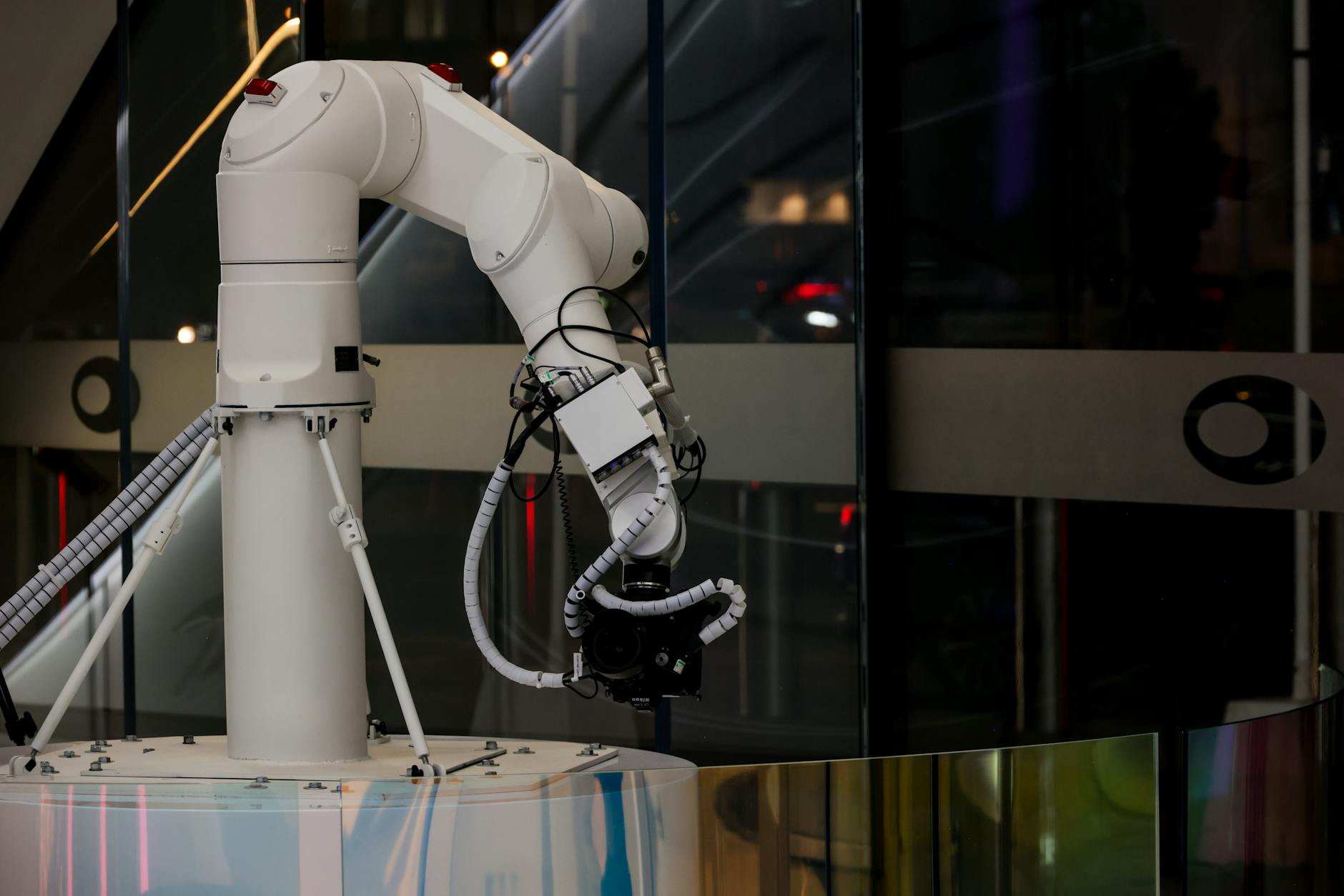
ABB Robotics represents the company’s most visible face to manufacturing decision-makers, and the product line illustrates both its strengths and vulnerabilities. The IRB 6700, a six-axis industrial robot with a 300-kilogram payload capacity, has become a standard workhorse in automotive assembly, and its presence on factory floors worldwide reinforces ABB’s “default choice” status. These robots are known for high uptime, proven track records across thousands of installations, and deep software integration with ABB’s broader control systems. When a major automotive supplier plans a new assembly line, the conversation often begins with ABB not because the company has no competition but because the risk of choosing ABB is perceived as lower.
Yet ABB’s robot division also reveals where the “Google” analogy breaks down. The collaborative robot market—cobots that work safely alongside human workers—emerged as a major trend around 2010-2012, and ABB responded relatively slowly. Universal Robots, founded in Denmark in 2005, captured significant early adoption in this category, and by the time ABB released its YuMi cobot in 2015, Universal had already established itself as the market leader and the assumed choice for cobot deployments. This gap suggests that ABB, for all its dominance in traditional industrial robotics, doesn’t automatically own emerging categories. A manufacturer evaluating cobot options might choose Universal over ABB even while using ABB robots elsewhere on the factory floor.

Software, Integration, and the Future of ABB’s Automation Ecosystem
One area where ABB’s “Google” positioning is strongest is in software and system integration. The company’s Robotics Studio, a programming environment for designing robot tasks, integrates seamlessly with ABB controllers, safety systems, and simulation tools. For engineers already committed to ABB hardware, this software ecosystem creates stickiness—switching to a different robot platform means retraining and rewriting code. ABB has also invested in cloud-based manufacturing execution systems and IoT platforms, recognizing that future automation is not just about individual robots but about connected, data-driven factory floors where equipment reports on its own performance.
However, software represents an ongoing competitive pressure. Open-source alternatives, ROS (Robot Operating System) in particular, allow smaller companies and research institutions to build automation solutions without relying on proprietary ABB ecosystems. A tech startup building a warehouse automation system might choose ROS for its flexibility and community support, then integrate a mix of robot arms from different manufacturers—a modular approach that bypasses ABB’s integrated advantage. This threat means ABB must continually invest in software innovation and ease of integration, not just hardware quality.
Supply Chain Vulnerabilities and Geopolitical Challenges
ABB’s global reach, while a strength, has also created supply chain vulnerabilities that became apparent during the COVID-19 pandemic and subsequent semiconductor shortages. As a capital equipment manufacturer, ABB relies on a complex network of suppliers for specialized motors, controllers, and semiconductors. When global supply chains disrupted, ABB faced delivery delays that affected customers worldwide—a problem that smaller, more localized competitors sometimes navigated more easily. The company has since announced plans to regionalize manufacturing and shorten supply lines, but the transition will take years.
Geopolitical tensions also threaten ABB’s dominance. The company operates significant manufacturing and service operations in China, and intensifying U.S.-China competition could force customers to reevaluate their exposure to global supply chains. Some Western manufacturers are now actively seeking domestic or allied-nation alternatives to reduce geopolitical risk, a shift that could erode ABB’s market share in sectors considered critical to national security. For ABB to maintain its “Google of automation” status long-term, it will need to address these structural vulnerabilities as thoughtfully as it manages its technology roadmap.

ABB’s Sustainability and Energy Efficiency Focus
ABB has positioned itself as an automation leader not just in manufacturing productivity but in environmental impact. The company’s energy-efficient motor drives, which control the speed and power consumption of industrial equipment, have become a visible differentiator. A factory that modernizes its motor systems with ABB VFD (variable frequency drive) technology can reduce energy consumption by 20-40%, translating to both cost savings and reduced emissions. ABB has built an entire narrative around “electrification and automation” as solutions to global decarbonization, an angle that competitors have been slower to develop comprehensively.
This positioning also exposes ABB to the risk of greenwashing criticism. While the company’s products genuinely reduce energy use, marketing automation systems as solutions to climate change can oversimplify the broader challenge. A factory that automates with ABB equipment may consume less energy per unit produced but could actually expand total production, leaving net environmental impact ambiguous. ABB must continue proving that its systems deliver real, measurable sustainability benefits rather than just claiming a green halo.
The Future Outlook for ABB and Emerging Automation Trends
ABB’s dominance in traditional industrial automation is secure for the foreseeable future, but future growth hinges on adapting to emerging paradigms: human-robot collaboration, artificial intelligence-driven predictive maintenance, and decentralized manufacturing systems. The company is investing heavily in AI and machine learning capabilities to enable robots to learn from data and adapt to variation, areas where smaller, tech-focused competitors are sometimes moving faster. If ABB can successfully integrate AI into its platforms while maintaining the reliability and support that customers expect, it will extend its lead. If it moves too slowly or delivers AI capabilities that are merely incremental, it could lose ground in high-value applications.
The rise of “lights-out” manufacturing—fully automated facilities requiring minimal human presence—represents another frontier. ABB has the technical capability to design such systems, and its service infrastructure means it can support them. However, the trend also creates opportunities for newer competitors to reimagine the entire manufacturing environment rather than simply automating existing processes. ABB’s future as the “Google of global automation” depends less on defending its current advantages and more on proving it can lead in the next generation of manufacturing transformation.
Conclusion
ABB’s status as the de facto standard in global automation reflects genuine achievements in reliability, breadth of offerings, and ecosystem maturity. Like Google in search, ABB became dominant not through a single innovation but through consistent execution, strategic acquisitions, and a willingness to serve customers at every level of the market. The company’s robots are working in factories on every continent, its software runs millions of industrial processes, and its service network reaches markets that most competitors cannot reach.
However, the “Google of automation” comparison should not obscure real vulnerabilities. Emerging competitors are outpacing ABB in new categories, geopolitical risks are fragmenting the supply chain that ABB built its advantage upon, and the shift toward AI-driven, modular, and distributed automation systems may not play to ABB’s traditional strengths. The coming decade will determine whether ABB adapts quickly enough to maintain its position or whether it becomes a reliable but legacy player in a rapidly evolving field. For now, when manufacturers ask “what automation system should we use?”, ABB remains the answer that carries the least perceived risk—a position that remains enviable, even if it is no longer unassailable.