
ROK has emerged as a foundational platform for digital automation, functioning much like Siemens in how it provides standardized, interoperable solutions across diverse robotics and automation systems. While Siemens built its dominance on industrial control systems and automation hardware, ROK operates at a higher level—creating a unified framework that allows different robots, sensors, and software components to communicate seamlessly regardless of their manufacturer or underlying architecture. For example, a manufacturing facility using robots from multiple vendors can deploy ROK as the orchestration layer, enabling a collaborative environment where a KUKA arm, a mobile robot from MiR, and vision systems from different suppliers all operate as an integrated system rather than isolated islands of automation.
This comparison reveals both the scope and the limitation of ROK’s role. Siemens controls multiple layers of the industrial stack, from programmable logic controllers (PLCs) to enterprise software. ROK, by contrast, focuses specifically on the middleware and framework that binds diverse automation components together. The platform has democratized robotics development by providing tools that reduce the complexity of writing code that works across different robot platforms—a task that would otherwise require specialized expertise for each manufacturer’s proprietary system.
Table of Contents
- How Does ROK Compare to Siemens in Industrial Automation Leadership?
- The Architecture and Limitations of ROK’s Middleware Approach
- ROK in Modern Manufacturing and Research Applications
- Implementation Strategy: Adopting ROK Versus Proprietary Systems
- Security and Maintenance Challenges in Open-Source Automation Frameworks
- Competitive Advantages of ROK’s Ecosystem Approach
- The Future Trajectory of Digital Automation Frameworks
- Conclusion
- Frequently Asked Questions
How Does ROK Compare to Siemens in Industrial Automation Leadership?
Siemens’ strength lies in vertical integration—the company manufactures hardware, writes the control software, and sells the entire ecosystem to end users. This approach ensures consistency but also locks customers into a proprietary environment. rok takes a fundamentally different approach by being agnostic to hardware. Any robot or device that can run ROK’s middleware can participate in an automated workflow, which mirrors how operating systems like Windows or Linux became dominant by supporting multiple manufacturers’ hardware rather than controlling all the hardware themselves.
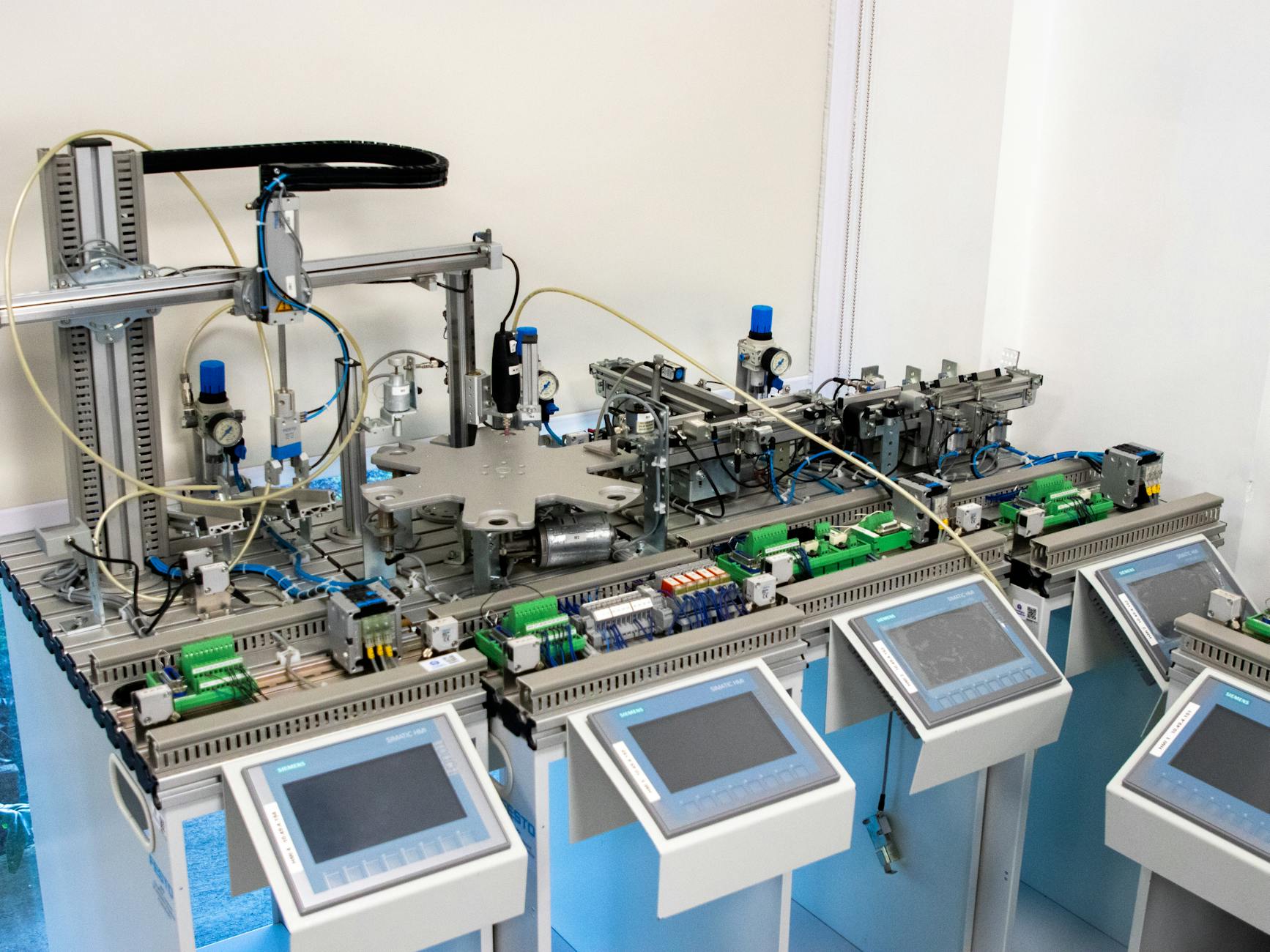
The comparison becomes clearer when examining real-world implementations. A chemical processing plant using Siemens might have PLCs controlling specific machines, human-machine interfaces (HMIs) from Siemens, and specialized industrial software all tightly coupled together. A facility using ROK-based automation might integrate cutting-edge research robots, industrial arms, mobile platforms, and custom sensors—each potentially from different vendors—all coordinating through ROK as the common language. Siemens excels at controlled, monolithic installations; ROK excels at flexible, heterogeneous environments where best-of-breed components matter more than total system consolidation.

The Architecture and Limitations of ROK’s Middleware Approach
ROK’s distributed architecture creates both significant advantages and notable constraints. The platform uses a publish-subscribe messaging system where different software components communicate by sending messages across the network rather than through direct function calls. This decoupling enables modularity—you can update one component without breaking others—but introduces latency and complexity that don’t exist in tightly integrated systems like Siemens’ offerings. A time-critical application like real-time robotic surgery or high-speed packaging operations might find ROK’s inherent communication overhead problematic, where response times measured in hundreds of milliseconds matter.
Configuration and debugging in a heterogeneous ROK environment also presents challenges that Siemens customers rarely face. When everything runs on Siemens hardware with Siemens software, troubleshooting follows predictable patterns and the company provides comprehensive support. In a ROK deployment with components from a dozen vendors, determining whether a failure originates from the robot, the middleware, the custom sensor driver, or the application code requires sophisticated diagnostic capability. The flexibility that makes ROK powerful also makes it demanding—organizations need engineering expertise to implement and maintain such systems, whereas Siemens systems often ship with implementation consulting and support already factored into the solution.
ROK in Modern Manufacturing and Research Applications
Manufacturing facilities represent one of the clearest demonstrations of ROK’s value. Consider an automotive assembly line where engineering teams want to integrate cutting-edge collaborative robots (cobots) from Universal Robots with vision systems from Cognex, mobile manipulation platforms from Boston Dynamics, and legacy conveyor control systems. Rather than attempting to bridge multiple proprietary interfaces, ROK provides the common framework where all these systems publish their status and accept commands in a standardized format. This enables the plant to upgrade individual components without redesigning the entire system—a mobility platform can be swapped for a newer model, and the rest of the system continues functioning because they all speak ROK.
Research institutions have made ROK fundamental to their work because it removes barriers to experimentation. University robotics labs can focus on algorithms and innovation rather than wrestling with proprietary APIs and hardware-specific quirks. Graduate students can write code once and deploy it across different robot platforms in different labs, accelerating research velocity. This is where ROK’s comparison to Siemens breaks down most obviously—Siemens serves production environments where standardization and support are paramount, while ROK fuels innovation environments where flexibility and cross-platform capability are paramount.
Implementation Strategy: Adopting ROK Versus Proprietary Systems
Organizations choosing between ROK-based automation and proprietary systems like Siemens face a fundamental tradeoff. Proprietary systems offer faster initial deployment with lower risk because everything is tested together, support is comprehensive, and integrations follow established patterns. A company implementing a Siemens-based packaging line for their manufacturing facility might achieve operational status in six months with manageable onboarding for their staff. The same operation using ROK might take longer to implement initially because team members must understand distributed systems, middleware configuration, and multiple vendor interfaces. However, that initial investment buys future flexibility—the ROK-based system can evolve by swapping components, adding capabilities through open-source packages, and leveraging innovations in robotics and automation faster than proprietary systems can be updated.
Cost structures differ significantly between the approaches. Siemens systems involve substantial upfront licensing and hardware costs, but ongoing costs are predictable. ROK systems have lower initial software costs (the core framework is open-source) but require more engineering investment for implementation and maintenance. A startup entering automation might choose ROK to minimize capital expenditure and build competitive advantage through engineering expertise. A mature manufacturer with hundreds of employees already trained on Siemens systems might stick with proprietary solutions because retraining represents a hidden cost that outweighs technological benefits.
Security and Maintenance Challenges in Open-Source Automation Frameworks
Security in ROK deployments requires active attention that proprietary systems often handle behind the scenes. Because ROK is open-source and community-driven, security vulnerabilities exist in the ecosystem, and organizations deploying it must stay current with patches across multiple components. A manufacturing facility running industrial robots over a networked ROK deployment must implement network segmentation, access controls, and monitoring practices that match or exceed those required for proprietary systems. The advantage is that security through open-source inspection actually provides better visibility into potential vulnerabilities, but the disadvantage is that responsibility for security falls on the deploying organization rather than a vendor taking responsibility.
Maintenance and long-term support present another consideration that often catches organizations unprepared. Siemens maintains backwards compatibility and long-term support for industrial systems—code written for their platform fifteen years ago still runs on current hardware with minimal changes. ROK’s evolution is faster but less predictable because it’s driven by community needs rather than vendor commitments. Major version upgrades might require significant rework of existing code and configurations. Organizations must plan for continuous maintenance of their automation stack rather than assuming a “build it once and it runs forever” model that proprietary systems encourage.
Competitive Advantages of ROK’s Ecosystem Approach
The ecosystem surrounding ROK has become one of its greatest assets. Because the framework is open and community-driven, third-party developers have created countless packages, drivers, and tools that extend ROK’s capabilities. A robotics company needing computer vision integration doesn’t have to wait for Siemens to add the feature—they can integrate existing open-source vision libraries directly into their ROK-based system. This creates innovation velocity impossible in proprietary environments.
The flip side is that quality varies significantly across these ecosystem components, and organizations must carefully evaluate which packages are reliable and actively maintained. Integration with cloud platforms and artificial intelligence represents another area where ROK’s openness provides advantage. Machine learning models can be deployed into ROK systems to enable intelligent automation—robots learning from observation, predictive maintenance algorithms monitoring equipment health, or computer vision systems improving through continuous training. This happens naturally in ROK environments because the framework integrates easily with TensorFlow, PyTorch, and other ML tools. Siemens is evolving to support these capabilities, but ROK ecosystems often incorporate them more quickly and flexibly.
The Future Trajectory of Digital Automation Frameworks
As automation becomes increasingly complex and heterogeneous, the architectural differences between monolithic proprietary systems and modular open-source frameworks will only become more pronounced. Siemens and similar vendors will likely continue evolving toward more openness and interoperability, recognizing that customers increasingly want to mix and match best-of-breed components rather than accept a single vendor’s vision of the complete solution.
Meanwhile, ROK and similar frameworks will need to address the operational and security challenges that currently require more engineering sophistication than proprietary alternatives demand. The next phase of industrial automation may not be dominated by either pure ROK deployments or pure proprietary systems, but rather hybrid approaches where organizations use ROK as a framework for managing cutting-edge robots and sensors while maintaining islands of proven, established Siemens or similar proprietary control systems for mission-critical legacy operations. This pragmatic approach acknowledges that both paradigms solve real problems—proprietary systems for stability and simplicity, ROK for flexibility and innovation.
Conclusion
ROK functions as a democratizing force in digital automation much as general-purpose operating systems democratized computing—it provides a common language that allows diverse manufacturers and developers to contribute innovations without needing to build complete vertical stacks. Where Siemens builds comprehensive, integrated automation ecosystems with responsibility for every layer, ROK provides the framework layer that enables organizations to assemble automation systems from best-in-class components. Neither approach is universally superior; each excels in different contexts.
The strategic choice between ROK-based and proprietary automation hinges on how much flexibility an organization needs versus how much simplicity and vendor support it requires. For organizations innovating rapidly, managing heterogeneous equipment, or building custom automation solutions, ROK provides essential infrastructure. For organizations prioritizing operational stability, comprehensive support, and proven integration patterns, proprietary systems remain compelling. The future of industrial automation will likely see both approaches coexisting, serving different needs across the spectrum of manufacturing and robotics applications.
Frequently Asked Questions
Is ROK suitable for mission-critical manufacturing environments?
ROK can support mission-critical environments, but requires sophisticated engineering for security, redundancy, and monitoring. Proprietary systems offer easier paths to mission-critical certification, while ROK requires more customization to meet those standards.
Can I migrate from a Siemens-based system to ROK?
Migration is technically possible but represents substantial effort. You would need to replace control systems, rewrite automation logic, and retrain staff. Most organizations implement ROK alongside existing systems rather than replacing them entirely.
What companies or projects successfully use ROK in production?
Automotive manufacturers, research institutions, and technology companies integrate ROK into production systems, though often in combination with other frameworks. The flexibility comes at the cost of requiring more sophisticated internal engineering.
Does ROK require all my robots to support it natively?
No—ROK’s strength is its ability to integrate robots not originally designed for it through custom drivers and middleware layers. However, this integration layer adds complexity and requires custom development.
How does ROK handle real-time requirements?
ROK has real-time variants for systems with strict timing constraints, but standard ROK introduces latency through its distributed architecture. Applications needing microsecond-level precision may require real-time extensions or proprietary alternatives.
What’s the total cost of ownership for a ROK-based automation system?
Lower software licensing costs offset by higher engineering expenses for implementation and maintenance. Total cost depends heavily on the complexity of your system and internal engineering capability.