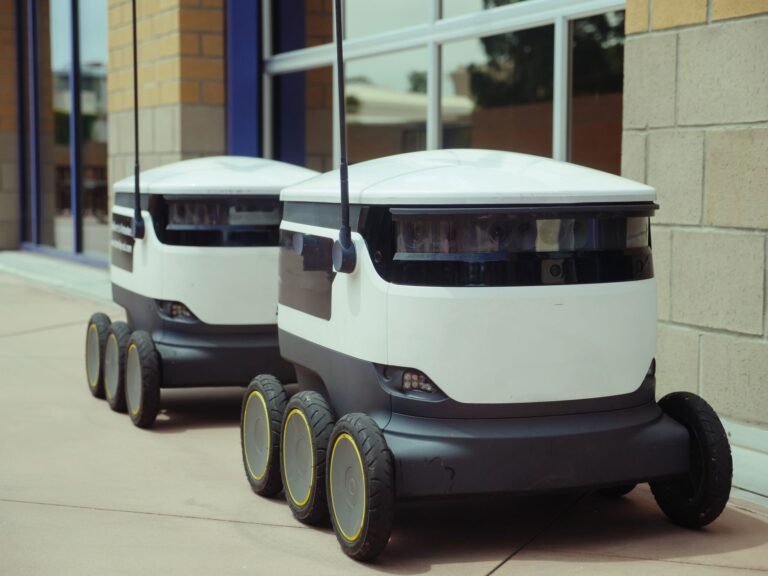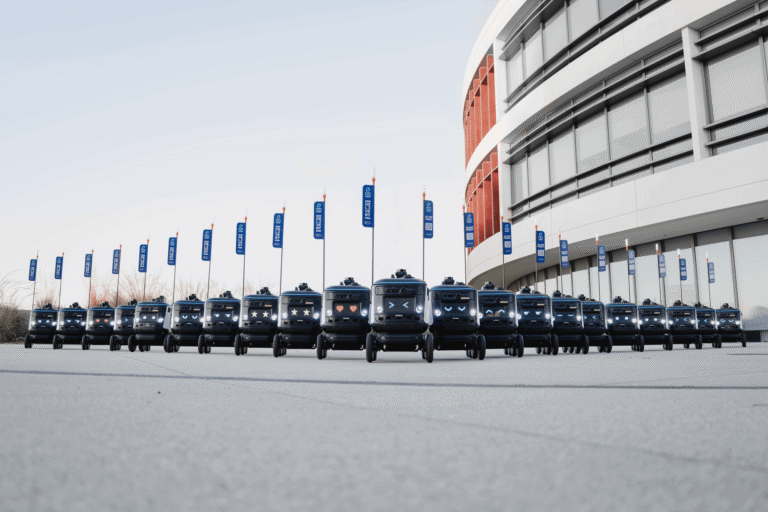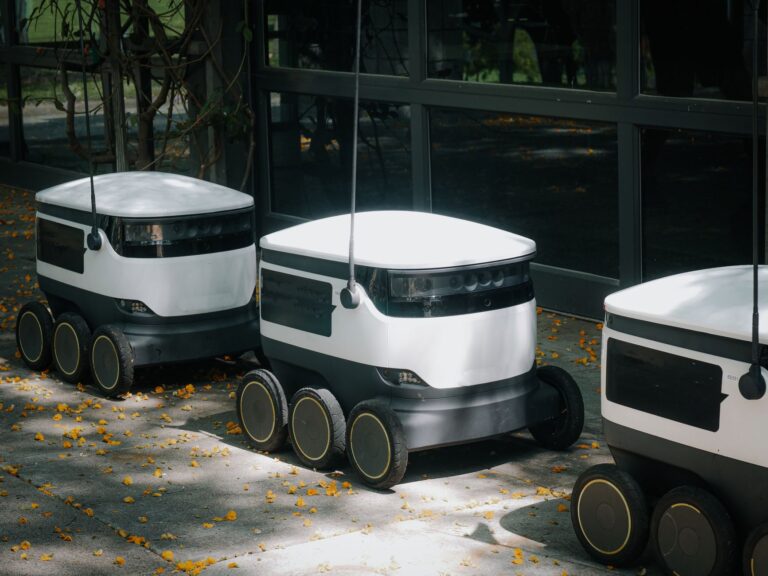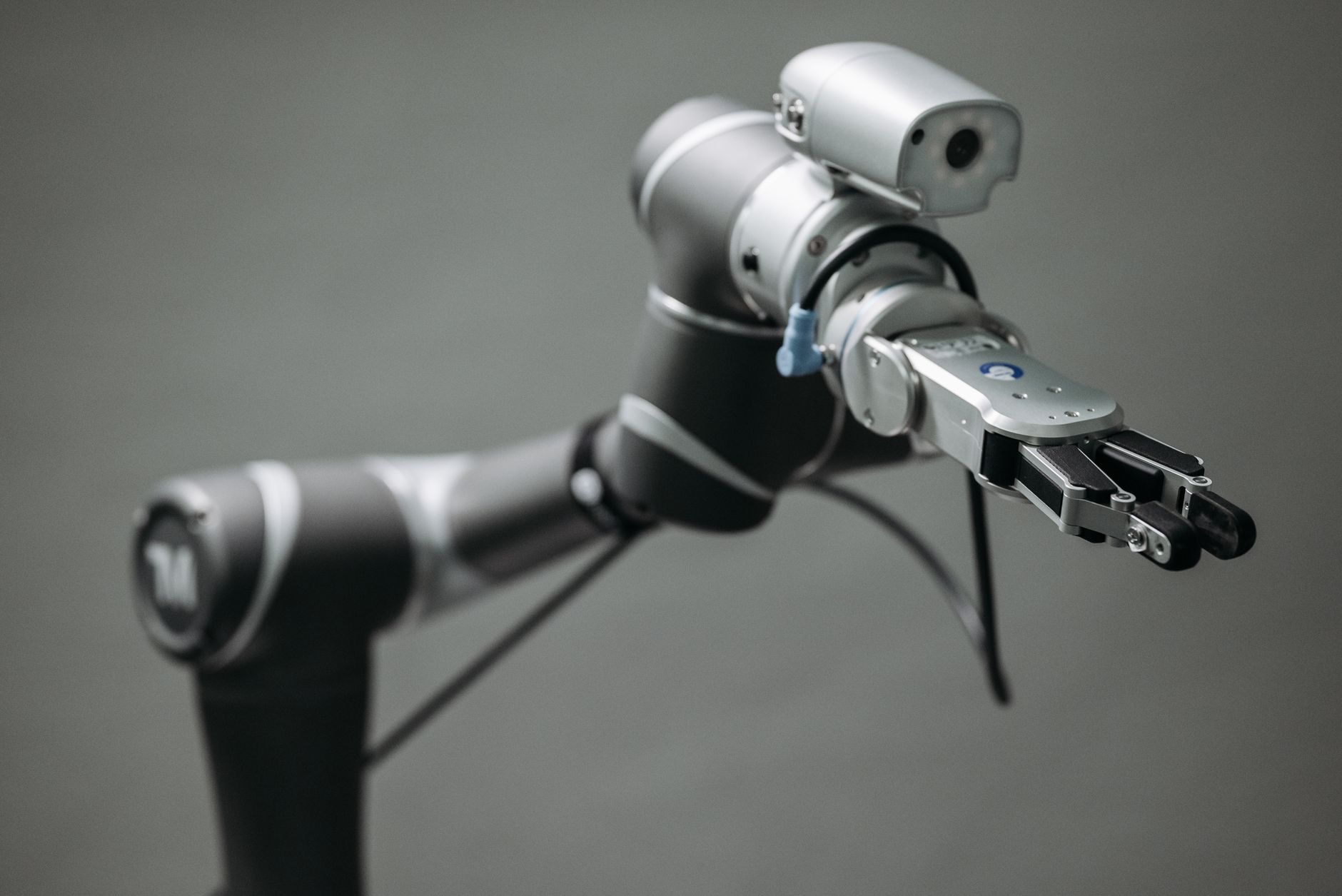

AI vision systems are making robots meaningfully safer in warehouses and hospitals by enabling machines to see and interpret their environments with greater accuracy than previous sensor technologies. Instead of relying on simple proximity sensors or preset programmed paths, modern robots equipped with computer vision can detect obstacles, read dynamic environmental changes, and adjust their behavior in real time. A warehouse robot navigating between aisles can now recognize that a worker has stepped into its path and stop or redirect immediately, rather than waiting for a collision sensor to trigger. Similarly, a hospital delivery robot can distinguish between a patient moving unpredictably and a stationary piece of equipment, allowing it to make safer navigation decisions in crowded medical environments.
The shift toward AI vision in robotics represents a practical safety upgrade, not a futuristic concept. These systems process visual data from cameras mounted on the robot to identify hazards, classify objects, and predict potential conflicts before they happen. The safety gains come from the system’s ability to recognize context—understanding that a uniformed person in a warehouse is likely to move differently than a stacked pallet, or that an open hospital door may signal sudden movement. This contextual awareness allows robots to operate around humans with greater confidence and fewer hard stops or inefficient detours.
Table of Contents
- How Do AI Vision Systems Actually Improve Warehouse and Hospital Safety?
- The Challenge of Training AI Vision for Safety-Critical Environments
- Real-World Examples of AI Vision Reducing Workplace Incidents
- Comparing AI Vision to Traditional Robotic Safety Approaches
- Common Technical Limitations and Safety Blind Spots
- Integration and Ongoing Maintenance Challenges
- The Role of Redundancy and Human Oversight in Safe Deployment
How Do AI Vision Systems Actually Improve Warehouse and Hospital Safety?
AI vision systems improve safety through real-time hazard detection and dynamic path planning. In warehouses, a robot uses computer vision to spot workers, forklifts, and obstacles as it moves through aisles, adjusting speed or route on the fly rather than following a predetermined path blindly. Hospital robots benefit similarly—they can identify equipment trays in hallways, recognize when doors open unexpectedly, and slow down in crowded nurse stations where unpredictable movement is common. The system processes dozens of images per second, allowing it to detect changes faster than humans might perceive them manually.
One concrete limitation worth noting: AI vision systems work less reliably in poor lighting or cluttered environments. A warehouse with shadows from tall racks or inconsistent fluorescent lighting can create blind spots for the camera, and a hospital supply closet packed densely with equipment can confuse object recognition algorithms. These systems also require careful tuning for the specific environments they operate in—a vision system trained on clean warehouse aisles may struggle when deployed in a hospital with medical equipment it has never encountered before. Operators often need to run training sessions in the actual deployment space before the robot achieves its target safety performance.
The Challenge of Training AI Vision for Safety-Critical Environments
Training AI vision systems for warehouses and hospitals involves collecting hundreds or thousands of labeled images and validating the system’s predictions under controlled conditions. The dataset must represent edge cases—a worker bending down, a gurney parked at an angle, equipment partially blocking a doorway—because these unusual situations are exactly when safety matters most. A vision system that performs well on common scenarios but fails during unexpected events is essentially unreliable for safety-critical work.
The practical warning here is that initial deployment rarely goes smoothly. Hospitals and warehouses often discover that the AI vision system flags too many false alarms (a shadow looks like an obstacle) or misses subtle hazards (a small spill on the floor). Operators then spend weeks refining thresholds, retraining parts of the model, or adding more training data. During this tuning period, the robot may operate more conservatively—moving slower, taking longer routes—which reduces the efficiency gains the system was supposed to deliver. Some facilities have found that the safety improvement plateaus at 70–80% of the theoretical maximum unless continuous retraining occurs as the environment changes.
Real-World Examples of AI Vision Reducing Workplace Incidents
In practice, AI vision systems have reduced collision incidents at facilities where they’ve been well-integrated. A large fulfillment center using autonomous mobile robots with computer vision reported fewer near-miss events with human workers than it had experienced with magnetic tape-guided robots, which could not adapt to workers moving outside designated areas. The vision-equipped robots learned to recognize worker vests, hand gestures, and predictable movement patterns, allowing them to co-operate in the same space with fewer shutdowns. Hospital pilot programs have shown similar promise—delivery robots that can navigate around patients, visitors, and medical staff without requiring hallways to be cleared or workers to coordinate with the robot’s movements.
However, results vary significantly based on facility design and worker behavior. A chaotic warehouse where staff frequently leave equipment in aisles and move unpredictably will see less benefit from AI vision than a well-organized facility with consistent workflow. Hospitals with narrow hallways and high foot traffic present challenges different from those in larger, more open facilities. The robot’s ability to improve safety is bounded partly by the controllability of its environment, not just the sophistication of its vision algorithms.
Comparing AI Vision to Traditional Robotic Safety Approaches
Older safety systems for warehouse and hospital robots rely on hard-coded boundaries, emergency stop buttons, and collision bumpers. These methods work—they prevent accidents by stopping the robot when contact is made—but they are reactive and inefficient. A robot with only a bumper sensor must move slowly to allow time for stopping, and it cannot plan to avoid an obstacle before getting close. AI vision operates differently, detecting hazards 10 or 20 feet away and adjusting trajectory proactively.
This means the robot can maintain faster speeds and more direct paths while still maintaining or improving safety. The tradeoff is complexity: vision systems require more compute power, camera maintenance, and software expertise than bumpers do. A bumper fails, you replace it. A vision system fails, you may need to troubleshoot software, recalibrate cameras, or deal with environmental factors like dust or condensation on lenses.
Common Technical Limitations and Safety Blind Spots
AI vision systems have several known blind spots that complicate their deployment in safety-critical settings. Occlusion—an object hidden behind another object or partially out of frame—can cause the vision system to miss hazards. A robot might see a clear floor when actually a power cord or a person’s leg is obscured by a package or medical cart. Adversarial inputs, while mostly a theoretical concern in controlled environments, do occur in real facilities: reflective surfaces, sudden lighting changes, or unusual material combinations can confuse the algorithm. Additionally, AI vision systems depend on being able to see, which means they fail in complete darkness.
Backup systems for low-light or no-light scenarios (like ultrasonic or LIDAR sensors) are often necessary, adding cost and weight to the robot. A warning relevant to safety-critical deployments: AI vision systems can have systematic biases built into them. If a system is trained primarily on data from one type of warehouse layout or one hospital design, it may behave unpredictably in a different setting. Some systems show degraded performance when encountering people of certain appearances or clothing styles that were underrepresented in training data. These biases can create unexpected safety failures or cause the robot to behave differently for different groups of humans around it, which is both a safety concern and an operational fairness issue.
Integration and Ongoing Maintenance Challenges
Integrating AI vision systems into existing warehouse or hospital operations requires more than just placing a camera on a robot and powering it on. The facility’s IT infrastructure must support the data bandwidth (camera feeds generate significant data), the robot needs regular camera cleaning and calibration, and staff must be trained to understand how the system works and what to do when it acts unexpectedly. Many hospitals and warehouses underestimate the operational burden of maintaining these systems. Camera lenses get dirty, calibration drifts over time, and software updates occasionally change behavior in subtle ways.
A facility that deployed vision-equipped robots but did not allocate staff for regular maintenance often saw performance degrade over months as dust accumulated or calibration values shifted. One real-world example: a hospital that deployed delivery robots with AI vision found that the system worked well for the first few months but then started triggering false alarms more frequently as dust settled on the camera. The facility had not budgeted for weekly camera cleaning or calibration checks. Once a maintenance schedule was established, the false alarm rate dropped back to acceptable levels, but this lesson was learned expensively in terms of staff time and robot downtime.
The Role of Redundancy and Human Oversight in Safe Deployment
Effective use of AI vision in warehouses and hospitals typically requires layered safety—the vision system is one tool, not the only safeguard. Facilities using vision-equipped robots often also employ geofencing software that prevents the robot from entering certain areas, emergency stop buttons that workers can press, and regular human audits of the robot’s behavior. A hospital, for instance, might combine AI vision navigation with a requirement that robots announce their presence audibly so staff can hear and react if the vision system makes a mistake. A warehouse might use vision for efficiency gains in normal operation but fall back to human-guided teleoperation in high-stakes scenarios like narrow aisles during peak activity.
Organizations deploying AI vision for safety need to accept that the system will occasionally make mistakes—and plan their operations accordingly. The question is not whether the vision system is perfect, but whether it reduces incidents compared to the alternative. Evidence from deployed systems suggests that when properly tuned, maintained, and integrated with redundant safety measures, AI vision does reduce workplace incidents. However, claiming complete safety automation from vision alone overstates the technology’s current maturity.
- —