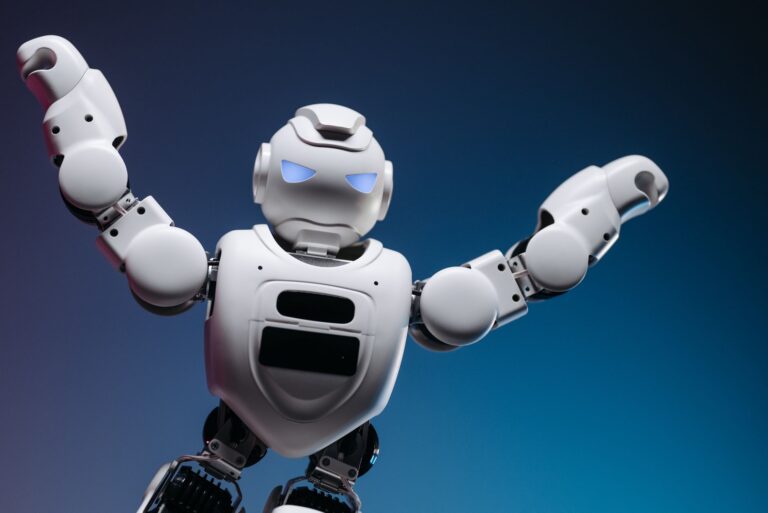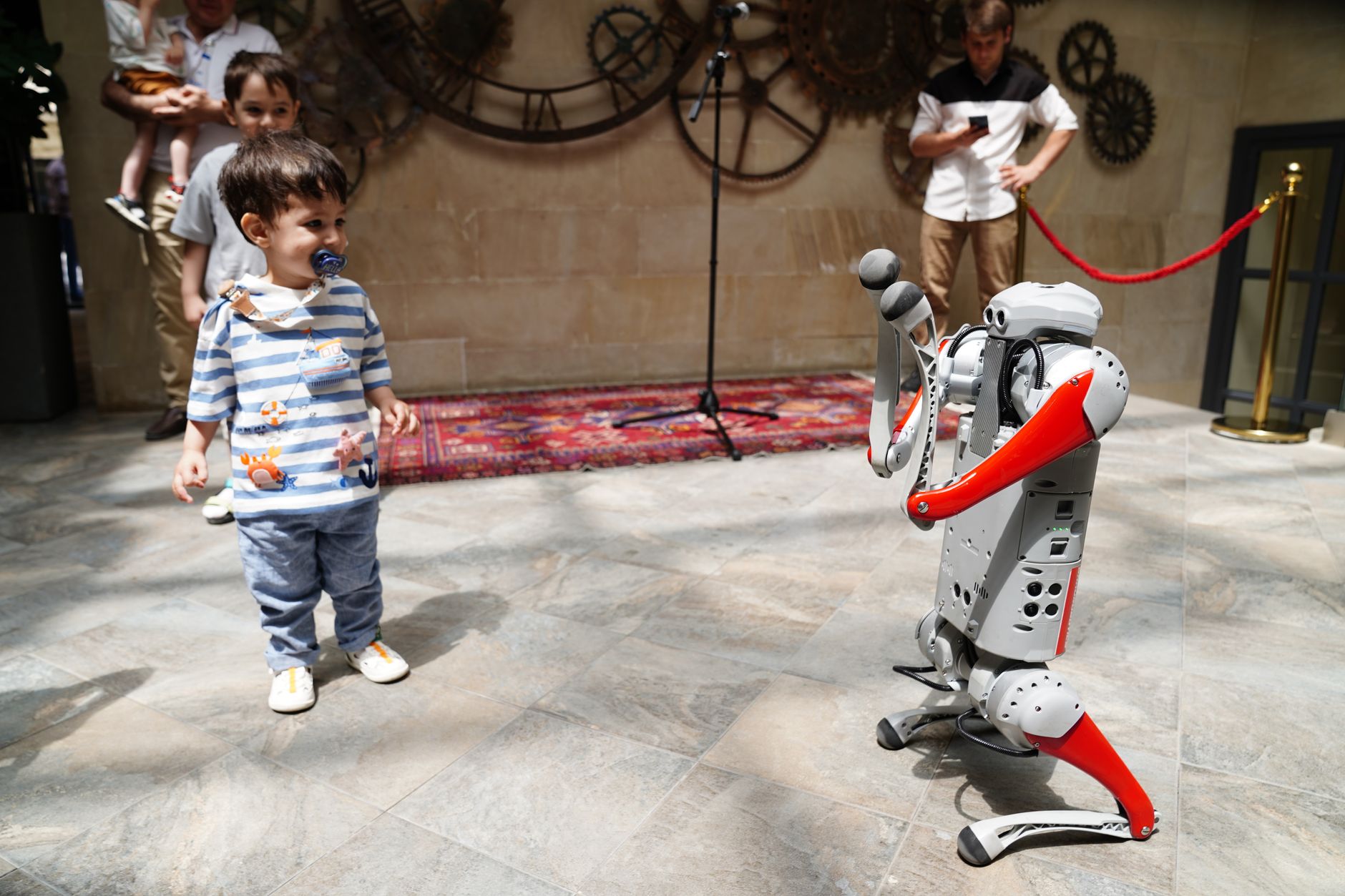

September 2026 marks a watershed moment for robotics: four leading humanoid manufacturers simultaneously operate production lines, Figure AI surpassed 1,000 units in paid industrial work, and Unitree Robotics completed a $9 billion IPO—signaling the shift from prototypes to scale. The Boston Dynamics Atlas entered production after its CES 2026 debut, Tesla Optimus V3 ramped factory output in July, and Figure AI's Figure 03 robot moved beyond test deployments into routine industrial sequencing at BMW. This month also hosted the first global humanoid robot sports competition and a major research conference, reflecting maturation from academic experiment to commercial and entertainment reality.
September brought both hard milestones—production units, deployed fleets, market capital raised—and cultural markers of normalization. No single robot yet dominates application or price point; the diversity of designs, power systems, and use cases suggests the industry remains in early-adoption phase. Understanding what shipped, where it deployed, and what it means for adoption timelines requires separating announcement hype from verifiable operational capacity.
Table of Contents
- Four Major Humanoid Robots Now in Production
- Unitree IPO Signals Investor Confidence in Chinese Market
- Industrial Deployment Moves Beyond Pilots
- CyberHero Sports League Signals Cultural Normalization
- Research Conference Shows 12–24 Month Lag Behind Commercial Products
- Frequently Asked Questions
Four Major Humanoid Robots Now in Production
Boston Dynamics, Tesla, Figure AI, and AgiBot each operate factory production lines, though at vastly different scales and timelines. Boston Dynamics' Atlas can lift 110 pounds, reach 7.5 feet, and operate across temperatures from −4°F to 104°F; first units shipped to Hyundai and Google DeepMind. Tesla's Optimus V3 measures 173 cm tall, weighs 57 kg, and features 22 degrees of freedom in its hands, though consumer availability remains targeted for end of 2027.
Figure AI's Figure 03 exceeded 1,000 units by september 2026 and continues paid industrial work including parts sequencing. AgiBot reached 10,000 units by March 2026 and unveiled its full-size A3 Ultra at WAIC 2026, rated for up to eight hours of operation on a single charge. The volume spread—AgiBot at 10,000 units versus Atlas's first-deployment tier—reflects different price points and customer bases; no standard industrial humanoid has yet emerged.
Unitree IPO Signals Investor Confidence in Chinese Market
Unitree Robotics completed a $9 billion IPO on Shanghai's STAR Market in August 2026, with retail subscriptions exceeding 8,000 times the offering size. The Chinese manufacturer reported 2025 revenue exceeding CNY 1.7 billion, with humanoid robots generating CNY 867.8 million—demonstrating that humanoid production has matured from prototype funding to sustainable commercial revenue.
This IPO establishes a public-market comparable for robotics manufacturers and signals institutional capital's readiness to fund manufacturing capacity and supply-chain buildup in the category. The oversubscription suggests demand outpaces current supply in certain segments, likely lower-cost or smaller humanoid platforms suited to assembly-line work. However, public markets do not yet distinguish between genuine industrial traction and optimistic deployment projections, so Unitree's valuation should be read as confidence in the category rather than validation of any single company's execution.
Industrial Deployment Moves Beyond Pilots
Figure AI's robots perform routine paid work at BMW Spartanburg and commercial logistics sites—no longer experimental. LimX Dynamics and ZINOVA demonstrated the TRON 2 dual-arm platform in construction workflows in September 2026, handling formwork assembly, multi-layer rebar placement, and rebar tying. These are not lab validations or one-off trials; they are repetitive jobsite tasks where errors carry real cost and safety consequence.
Construction and logistics adoption suggests humanoids are competing on speed and consistency rather than cost-per-hour (labor arbitrage). A robot tying rebar reduces injury risk and schedules work independent of fatigue; it does not necessarily undercut the wage bill. This difference matters: if humanoids succeed through safety and reliability rather than wage displacement, adoption curves lengthen but remain more resilient to labor-market cycles and skill-shortage variation.
CyberHero Sports League Signals Cultural Normalization
The CyberHero global humanoid robot sports league launched in Riyadh on September 9, 2026, marking the first organized competitive sports event for humanoid robots and attracting entrants from leading manufacturers. This milestone is not technical; it is cultural.
Robotics moves from manufacturing conference to public spectacle, reducing novelty and increasing familiarity among non-specialist audiences. Entertainment applications have historically preceded industrial scaling (video games preceded mobile computing's mass adoption; drones raced before delivery), so a sports league may signal imminent growth in consumer-facing robotics products beyond industrial deployment.
Research Conference Shows 12–24 Month Lag Behind Commercial Products
IROS 2026, the IEEE/RSJ international robotics research conference, ran September 27–October 1 in Pittsburgh, publishing research on formation control, collaborative manipulation, and autonomy. Academic research on humanoid navigation, multi-robot coordination, and dexterous manipulation remains 12–24 months ahead of commercial products—a typical gap.
This suggests that current commercial robots operate on proven techniques (rigid grasping, point-to-point motion, pre-programmed sequences) while researchers develop the next layer (adaptive grip, dynamic replanning, real-time obstacle avoidance). Readers tracking emerging capabilities should monitor IROS publications this fall; breakthroughs presented now will ship in 2028–2029 products.
Frequently Asked Questions
Which humanoid robot should I watch for business adoption?
Figure AI's Figure 03 is the furthest into paid production work (over 1,000 units, active deployments at BMW and logistics sites). Boston Dynamics Atlas and Tesla Optimus V3 are earlier in commercial ramp and may shift the market once consumer pricing emerges. AgiBot leads in total units but primarily serves the Chinese market.
Is there a cost-per-unit or price point yet?
No manufacturer has published consumer pricing. Industrial deployments are priced per-site based on contract terms, not as standard goods. Unitree's IPO filing may contain unit economics; retail pricing for Tesla Optimus remains targeted for 2027.
Does September 2026 mean humanoids will displace factory workers soon?
Current deployments perform narrow, repetitive tasks (parts sequencing, rebar tying, formwork assembly) in controlled environments. Adaptation to unstructured job sites, mixed-skill workflows, and rapid task-switching remains constrained by research timelines, not manufacturing. Broad labor displacement is a 2028+ question, not imminent.
You Might Also Like
- What Is New With Tutorials and DIY Robotics in September 2026? Latest company releases and research papers and Key Takeaways
- What Is New With Mining Robotics in September 2026? Latest company releases and research papers and Key Takeaways
- What Is New With Food and Beverage Robotics in September 2026? Latest company releases and research papers and Key Takeaways