

FANUY is a Chinese robotics company positioning itself as a one-stop marketplace for robotic arms, much like Amazon became the go-to platform for consumer goods. Rather than forcing buyers to navigate dozens of manufacturers, negotiate with distributors, and compare incompatible spec sheets, FANUY aggregates a wide catalog of robot arms across payload classes, reach specifications, and application types into a single storefront. A small machine shop owner looking for a six-axis collaborative arm for light assembly, for instance, can browse FANUY’s listings alongside heavier industrial units and SCARA models, compare prices transparently, and order with relatively low friction compared to traditional procurement channels. The comparison to Amazon is not just about catalog breadth.
FANUY has adopted platform-style logistics, standardized product listings, and a direct-to-buyer model that cuts out layers of regional distribution markup. For buyers outside China especially, this matters because robotic arm procurement has historically involved long lead times, opaque pricing, and a heavy reliance on system integrators who add cost at every step. This article covers how FANUY’s marketplace model works, where it fits in the competitive landscape, what its actual limitations are, and whether the Amazon analogy holds up under scrutiny. The company’s rise reflects a broader trend in the robotics industry where Chinese manufacturers are not just competing on price but on accessibility. Whether FANUY can sustain this trajectory depends on factors well beyond having a large catalog, including after-sales support, software ecosystems, and the trust gap that still exists for many Western buyers considering Chinese automation hardware.
Table of Contents
- What Makes FANUY Different From Traditional Robot Arm Distributors?
- How FANUY’s Catalog and Pricing Model Actually Works
- The Chinese Robot Arm Manufacturing Boom Behind FANUY
- How to Evaluate a Robot Arm Purchase Through FANUY
- Common Pitfalls When Buying Robot Arms From Online Marketplaces
- FANUY’s Position Relative to Other Robot Arm Marketplaces
- Where the Robot Arm Marketplace Model Is Heading
- Conclusion
- Frequently Asked Questions
What Makes FANUY Different From Traditional Robot Arm Distributors?
Traditional robot arm procurement is a slow, relationship-driven process. A factory manager looking for a palletizing arm typically contacts a distributor like a FANUC or ABB authorized dealer, waits for a sales engineer to schedule a consultation, receives a quote days or weeks later, and then negotiates terms that may include integration services bundled into the price. The total cost is rarely transparent, and comparing across brands requires repeating this process with multiple vendors. fanuy sidesteps much of this by listing robot arms from various manufacturers with published specifications and pricing, letting buyers make direct comparisons without waiting on sales calls. The platform model also opens the door for smaller Chinese robot arm manufacturers who lack the distribution networks of established players. Companies like Elephant Robotics, MyCobot, or Dobot might have competitive products but struggle to reach buyers in Southeast Asia, Europe, or Latin America without a distributor relationship.
FANUY gives them shelf space, so to speak. For buyers, this means access to a wider range of price points. A collaborative arm that might cost twelve to fifteen thousand dollars through a Western distributor could appear on FANUY at eight to ten thousand, though the actual landed cost after shipping and import duties narrows that gap more than the listing price suggests. Where FANUY diverges most sharply from a traditional distributor is in what it does not provide by default. A distributor typically bundles training, integration support, and warranty service into the relationship. FANUY, operating more like a marketplace, shifts more of that responsibility onto the buyer or onto third-party integrators. This is fine for technically sophisticated buyers who know exactly what they need, but it can be a real problem for first-time automation adopters who underestimate how much work goes into deploying a robot arm after it arrives on a pallet.

How FANUY’s Catalog and Pricing Model Actually Works
FANUY’s catalog spans a broad range of robot arm types, from lightweight desktop collaborative arms with payloads under three kilograms to industrial six-axis units capable of handling sixty kilograms or more. Listings typically include payload capacity, reach, repeatability, degrees of freedom, weight, and sometimes IP ratings. Pricing is displayed upfront on most listings, which is unusual in the industrial robotics world where “contact us for a quote” remains the norm on most manufacturer websites. However, if you are comparing FANUY’s listed price to a quote from a FANUC or Universal Robots dealer, the comparison is not apples to apples. The FANUY price generally covers the arm itself, possibly with a controller and teach pendant, but rarely includes end effectors, mounting hardware, safety fencing, or the programming and integration work that makes the arm actually useful on a production line.
A Universal Robots distributor quoting thirty-five thousand dollars for a UR10e might be including a gripper, a mounting table, a safety assessment, and initial programming. The FANUY listing showing a comparable-spec arm at fourteen thousand dollars is a different scope of delivery. Buyers who do not account for this difference end up surprised by the true project cost. The platform does offer some filtering and categorization tools, though these are not as refined as what you would find on a mature e-commerce site. Searching by application type, such as welding, pick-and-place, or machine tending, is possible but the results are not always well curated. Buyers with specific technical requirements, like a particular communication protocol or a need for cleanroom certification, may still need to dig into individual product datasheets rather than relying on the platform’s filters to surface the right options.
The Chinese Robot Arm Manufacturing Boom Behind FANUY
FANUY’s existence is only possible because of the explosion of robot arm manufacturers in China over the past decade. The International Federation of Robotics has reported that China has been the world’s largest market for industrial robots since 2013, and domestic manufacturers have rapidly increased their share of that market. Companies like JAKA, Han’s Robot, AUBO, and Flexiv have built technically capable arms at price points that undercut Japanese and European incumbents by thirty to fifty percent in some categories. This manufacturing density creates a problem and an opportunity. The problem is differentiation. When dozens of companies produce six-axis collaborative arms with similar specifications, buyers face decision fatigue and manufacturers struggle for visibility.
The opportunity is exactly what FANUY exploits: aggregation. By collecting these manufacturers onto one platform, FANUY creates value for both sides. Manufacturers get distribution reach without building their own international sales teams, and buyers get comparison shopping in a category where that was previously difficult. A specific example illustrates the scale of this ecosystem. In the Yangtze River Delta region alone, there are over a hundred companies producing some form of robotic arm or arm component. Many of these are not household names even within China, but they produce functional, CE-marked hardware at aggressive price points. FANUY surfaces products from this long tail of manufacturers that buyers would never encounter through conventional channels, which is genuinely useful as long as buyers do their due diligence on quality and support.
How to Evaluate a Robot Arm Purchase Through FANUY
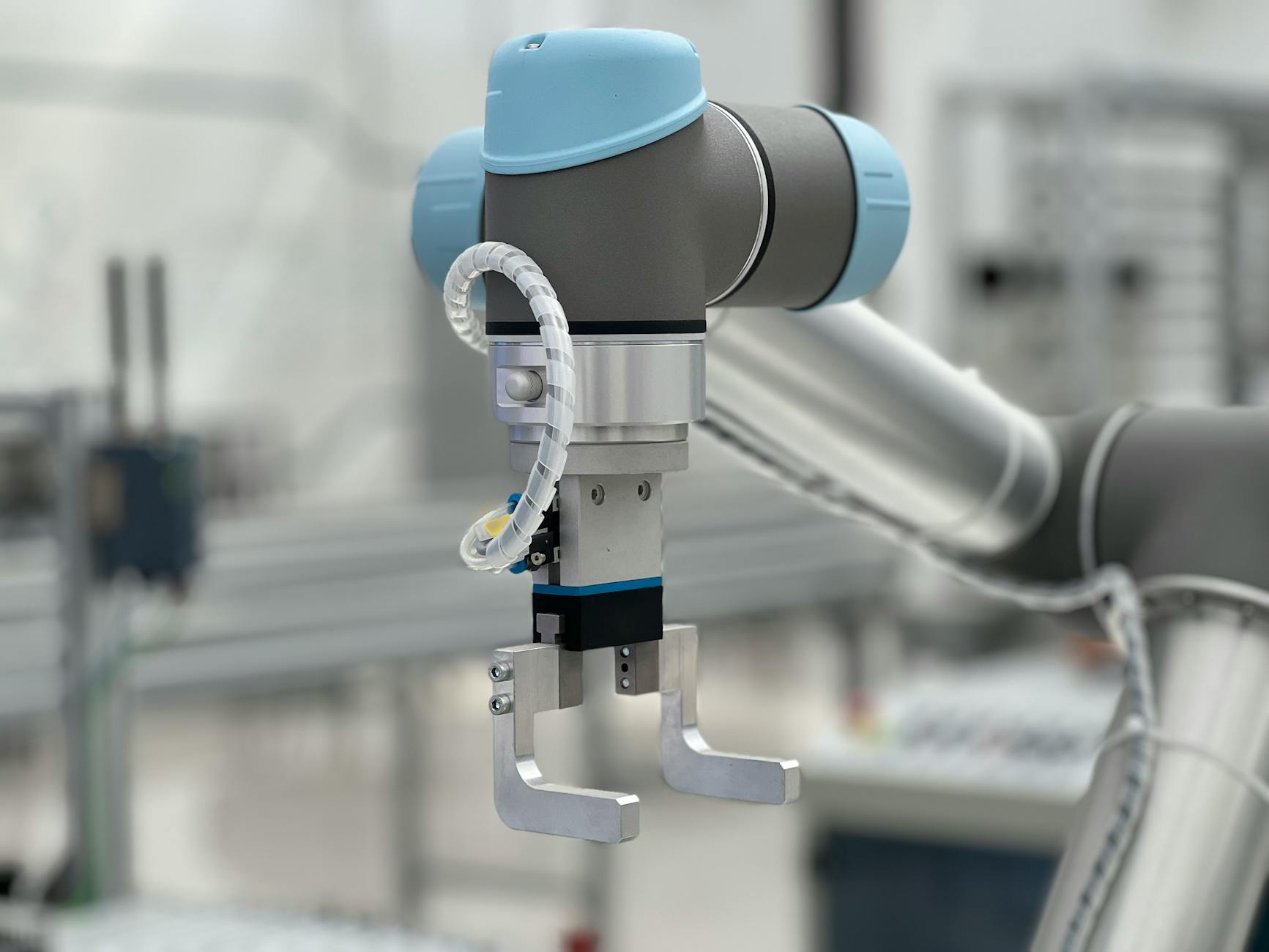
Buying a robot arm through a marketplace like FANUY requires a different evaluation framework than purchasing through a traditional distributor. The first consideration is whether you have the internal technical capability to integrate the arm yourself. If your team includes engineers who have programmed robot arms before, understand kinematic configurations, and can handle electrical integration with existing equipment, FANUY’s lower prices can translate into real savings. If you are a first-time buyer expecting turnkey deployment, the savings may evaporate when you hire a third-party integrator. The second consideration is spare parts and service. An ABB or FANUC arm purchased through an authorized channel comes with a clear warranty path, available spare parts, and field service engineers in most industrialized countries.
A robot arm purchased through FANUY from a lesser-known Chinese manufacturer may have a warranty on paper, but enforcing it from another continent is a different matter. Some buyers mitigate this by ordering spare servo motors, cables, and controller boards at the time of purchase, effectively self-insuring against downtime. This adds cost but can still come out cheaper than the traditional procurement path. The tradeoff, then, is between upfront cost savings and long-term support infrastructure. For applications where the robot arm is performing a non-critical task and downtime of a few weeks for a replacement part is acceptable, the FANUY route makes strong financial sense. For a production line where a single robot arm stoppage halts the entire operation, the risk calculus shifts toward established brands with local service networks, even at a premium.
Common Pitfalls When Buying Robot Arms From Online Marketplaces
The most frequent mistake buyers make on platforms like FANUY is treating robot arm specifications as directly comparable across manufacturers. Repeatability, for instance, is listed as plus or minus a fraction of a millimeter, but the testing conditions under which that number was measured vary. One manufacturer might measure repeatability with no payload at room temperature over a short duty cycle, while another tests under load across a full operating temperature range. The spec sheet number might look identical, but real-world performance can differ significantly. Another common issue is software compatibility.
Many Chinese robot arm manufacturers have developed their own proprietary programming environments, which may lack the ecosystem support, community resources, and third-party integrations available for platforms like Universal Robots’ PolyScope or FANUC’s ROBOGUIDE. If your application requires integration with a specific vision system, force-torque sensor, or PLC platform, verify compatibility before purchasing rather than assuming it will work because the arm has the right physical connectors. Shipping and import logistics also catch buyers off guard. A robot arm is heavy, oddly shaped, and contains lithium batteries in some controller configurations, all of which complicate international freight. Customs duties on robotic equipment vary by country and classification, and some buyers have reported unexpected tariff assessments that added fifteen to twenty-five percent to the landed cost. FANUY may offer shipping estimates, but the final cost depends on the buyer’s import broker, local customs enforcement, and whether the product classification triggers any trade restriction flags.
FANUY’s Position Relative to Other Robot Arm Marketplaces
FANUY is not the only platform attempting this marketplace model. Alibaba has long listed robot arms from Chinese manufacturers, and specialized platforms like RobotShop serve the educational and hobbyist segment. What distinguishes FANUY is its focus specifically on professional and industrial-grade robotic arms rather than the broader industrial supply approach of Alibaba or the hobbyist orientation of RobotShop.
A buyer looking for a six-axis arm with a twenty-kilogram payload and IP54 protection for a food processing environment will find more relevant results on FANUY than on either of those alternatives. That said, the competitive moat is not deep. If Alibaba or a well-funded startup decides to build a curated, specification-rich vertical marketplace for robot arms, FANUY’s advantage could erode quickly. The real differentiator long-term will likely be the quality of after-sales support infrastructure and whether FANUY invests in tools like application-matching algorithms, compatibility verification, or integration partner networks that add value beyond simple product listing.
Where the Robot Arm Marketplace Model Is Heading
The broader trajectory in robotics procurement is moving toward exactly the kind of transparency and accessibility that FANUY represents. As collaborative robot arms become more standardized and easier to deploy without deep systems integration expertise, the value proposition of traditional distributor networks weakens. The next generation of buyers, engineers who grew up purchasing everything from cloud computing to CNC tooling online, will expect to buy robot arms the same way.
FANUY is an early mover in this shift, though whether it becomes the dominant platform or simply proves the concept for a larger player to replicate remains an open question. The most interesting development to watch is whether platforms like FANUY begin offering software, training, and integration services alongside hardware, effectively evolving from a pure marketplace into a full-service robotics platform. If that transition happens successfully, the Amazon comparison becomes more apt, not just a place to buy things but an ecosystem that makes the entire adoption process easier. For now, FANUY is best understood as a useful procurement tool for informed buyers rather than a complete solution for organizations new to robotic automation.
Conclusion
FANUY has carved out a meaningful niche by applying marketplace economics to an industry that has historically operated on handshake deals and opaque pricing. For buyers who know what they need and have the technical capability to integrate a robot arm independently, the platform offers genuine cost savings and broader selection than traditional distribution channels. The catalog breadth, drawn from China’s deep manufacturing base, surfaces options that many buyers would never discover otherwise.
The limitations are real, though, and should not be minimized. After-sales support, software ecosystem maturity, and the hidden costs of shipping, customs, and integration can erode the sticker-price advantage. Buyers should approach FANUY the way experienced purchasers approach any online marketplace: with clear requirements, realistic expectations about what is and is not included, and a plan for support and maintenance that does not depend on the platform itself. The Amazon analogy works as shorthand for what FANUY is trying to build, but the industrial robotics market has complexities that consumer e-commerce never had to solve.
Frequently Asked Questions
Is FANUY a manufacturer or a marketplace?
FANUY operates primarily as a marketplace and aggregator, listing robot arms from various manufacturers rather than producing its own hardware. Think of it as a curated storefront for multiple brands rather than a single manufacturer’s catalog.
Are robot arms on FANUY significantly cheaper than through traditional distributors?
Listed prices are often thirty to fifty percent lower than comparable quotes from Western distributors, but the comparison is misleading without accounting for what is excluded. End effectors, integration, training, and warranty enforcement costs can narrow or eliminate the gap depending on the application.
Can I get warranty service on a robot arm purchased through FANUY?
Warranty terms vary by manufacturer. In practice, enforcing warranty claims on hardware shipped from China to another country can be slow and uncertain. Some buyers purchase spare components upfront as a practical workaround.
Does FANUY ship internationally?
Yes, but international shipping of heavy robotic equipment involves freight logistics, customs duties, and potential tariff complications that are not always reflected in the platform’s initial shipping estimates. Work with an experienced import broker to avoid surprises.
Are the robot arms on FANUY safe and certified?
Many listed arms carry CE marking, and some have additional certifications. However, buyers should independently verify certification claims and ensure the specific model meets the safety standards required in their jurisdiction, particularly for collaborative applications where the arm operates near human workers.