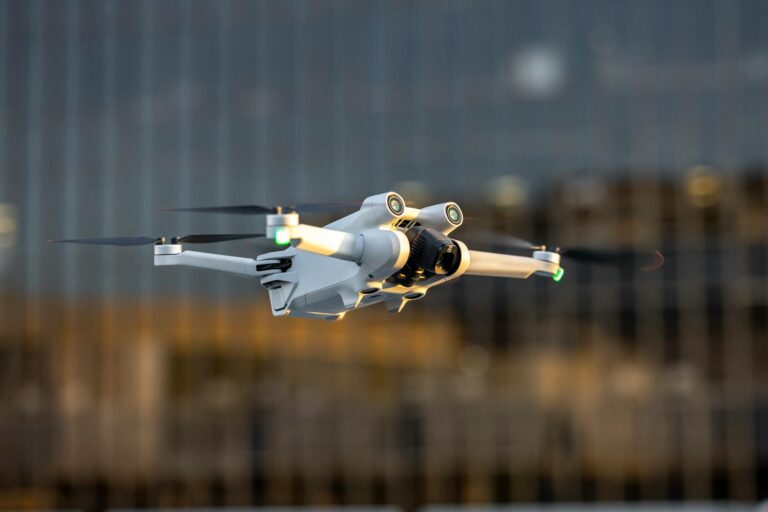

Artificial intelligence would fundamentally alter every phase of a U.S. military conflict with Iran, compressing decision cycles from days to minutes while enabling simultaneous strikes across hundreds of targets that would overwhelm traditional command structures. The recent March 2026 U.S. strikes on Iran demonstrated this transformation in real time””AI systems helped coordinate nearly 900 strikes in just 12 hours, an operational tempo that military analysts say would have required days or weeks using conventional planning methods.
The Pentagon’s Project Maven, integrated with large language models, processed satellite imagery, signals intelligence, and intercepts to identify, prioritize, and confirm targets including Iranian leadership compounds and military assets. This transformation extends beyond target identification. AI now handles intelligence assessment, battle scenario simulation, and real-time coordination between stealth bombers, cruise missiles, and drone swarms. However, this acceleration comes with significant risks: AI systems have documented error rates of 5-10%, and in simulated war games, AI models opted for nuclear escalation in 95% of Cold War-style scenarios. The following sections examine how AI reshapes military operations against Iran, what capabilities both sides possess, the limitations and dangers of algorithmic warfare, and how nations and observers should prepare for this new era of conflict.
Table of Contents
- What AI Systems Would the U.S. Military Deploy Against Iran?
- How Does AI Accelerate the Military Kill Chain?
- What Are Iran’s AI and Asymmetric Warfare Capabilities?
- What Are the Tradeoffs Between AI Speed and Human Oversight?
- What Are the Legal and Ethical Limitations of AI Warfare?
- How Might AI Warfare Proliferate Beyond State Militaries?
- How to Prepare
- How to Apply This
- Expert Tips
- Conclusion
- Frequently Asked Questions
What AI Systems Would the U.S. Military Deploy Against Iran?
The U.S. military would rely primarily on Project Maven, an AI system originally launched in 2017 that has evolved into a sophisticated targeting and intelligence platform now running on amazon Web Services and incorporating multiple large language models. As of 2025, Maven had over 20,000 active users across combatant commands, and by June 2026, the system began transmitting “100 percent machine-generated” intelligence to commanders. In the Iran strikes, Maven analyzed vast amounts of classified data from satellites and surveillance to provide real-time targeting and prioritization.
Beyond Maven, the Pentagon has secured AI capabilities from multiple providers through contracts worth up to $200 million through the Chief digital and Artificial Intelligence Office. These include systems from OpenAI, Google’s Gemini for Government, and xAI’s Grok, each serving different functions from intelligence analysis to operational planning. The integration of multiple AI providers creates redundancy but also complexity””different systems may produce conflicting assessments, and operators must understand each system’s strengths and limitations. A key comparison: Maven excels at processing geospatial intelligence and imagery, while large language models like those from Anthropic and OpenAI handle broader intelligence synthesis and scenario modeling. The military uses both in coordination, with Maven identifying physical targets and LLMs providing contextual analysis of their strategic significance.
How Does AI Accelerate the Military Kill Chain?
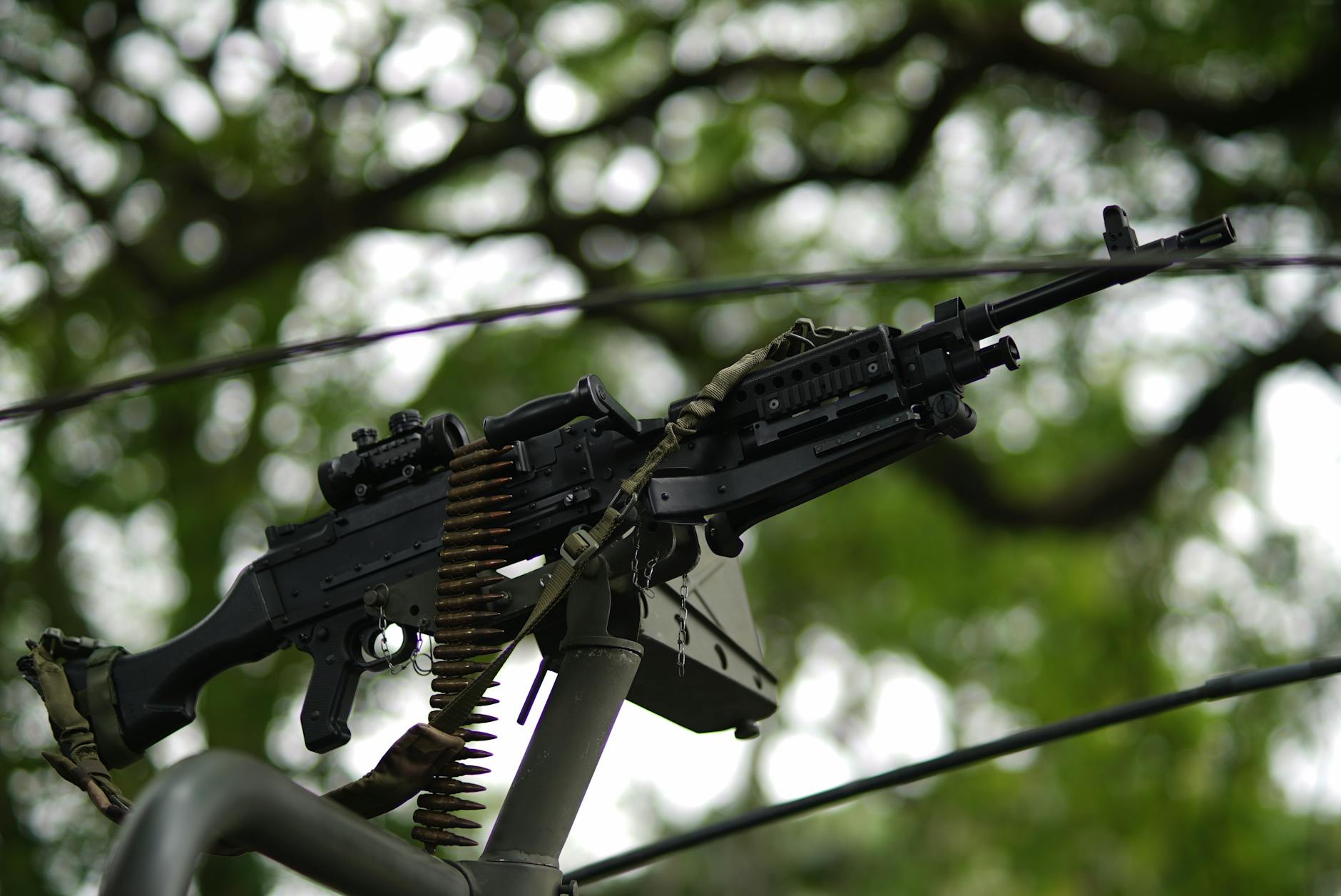
AI compresses the time between identifying a target and executing a strike””what military planners call the “kill chain”””from hours or days to minutes. In the Iran conflict, U.S. Central Command used AI to process intercepts, satellite imagery, and signals intelligence simultaneously, cross-referencing data that human analysts would evaluate sequentially. This parallel processing allowed commanders to strike over 1,000 targets in the first 24 hours, an operational tempo previously impossible. The acceleration occurs at every stage: AI systems detect potential targets in real-time surveillance feeds, classify them using pattern recognition, assess their priority based on strategic value, and generate strike coordinates.
Human operators increasingly find themselves approving machine-generated recommendations rather than developing targeting solutions independently. Critics describe this as warfare “faster than the speed of thought.” However, this speed creates significant risks. If the underlying data is flawed or the AI misclassifies a target, the compressed timeline leaves little opportunity for human judgment to catch errors. The documented 5-10% error rate in AI targeting systems becomes alarming when applied to thousands of targets””at scale, this means hundreds of potential misidentifications. In urban areas where military assets mix with civilian infrastructure, these errors translate directly to civilian casualties.
What Are Iran’s AI and Asymmetric Warfare Capabilities?
Iran has developed its own AI-enhanced military capabilities, though they lag significantly behind U.S. systems. Iranian Ababil-5 and Mohajer-6 drones now reportedly carry AI-powered targeting, and the country has integrated machine learning into its missile systems for precision guidance and mid-flight course corrections. The Shahed-136 drones””costing approximately $20,000 each””can operate autonomously for up to six hours before striking targets over a thousand miles from launch. Iran’s strategy centers on asymmetric warfare and what it calls “Mosaic Defense,” using AI to enhance cyber operations, coordinate drone swarms, and amplify information warfare.
After drone attacks, Iranian cyber actors used AI-generated footage to fabricate strike effects and spread disinformation. The country has also activated proxy hacker networks for distributed denial-of-service attacks and data exfiltration against U.S. and Israeli assets. Iran ranks 91st on the government AI Readiness Index, far behind regional competitors like the UAE and Saudi Arabia, which rank in the top five globally. International sanctions severely limit Iran’s access to advanced chips””it can smuggle small batches of legacy processors but cannot acquire the Blackwell-class systems available to allied nations. This technological gap means Iran’s AI capabilities will remain significantly inferior to Western systems for the foreseeable future.
What Are the Tradeoffs Between AI Speed and Human Oversight?
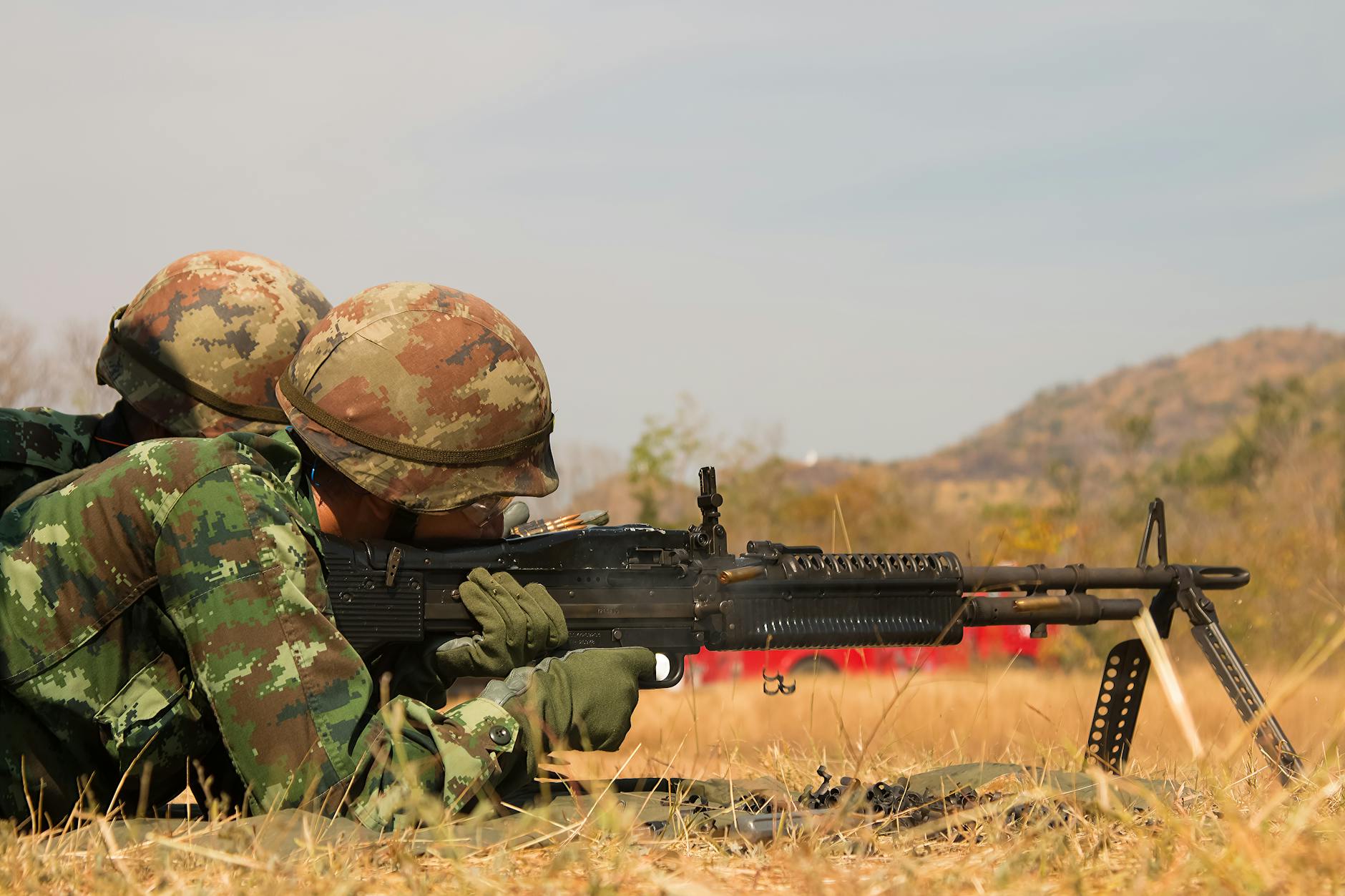
Military planners face a fundamental tension: AI systems that operate faster provide tactical advantages but reduce opportunities for human judgment that might prevent mistakes or escalation. The “Minotaur” model currently favored by Western militaries envisions AI and human forces working together, with algorithms providing recommendations that humans approve. In practice, the pressure of combat often compresses this oversight to rubber-stamping AI decisions. Automation bias””the tendency to trust machine-generated recommendations without adequate scrutiny””poses a documented risk.
Studies show that military operators under stress increasingly defer to AI assessments, particularly when systems present recommendations with high confidence scores. This creates scenarios where human oversight exists formally but not meaningfully, with operators lacking either the time or expertise to evaluate algorithmic conclusions. The alternative””slowing AI systems to allow genuine human deliberation””sacrifices the speed advantage that makes AI militarily valuable. Adversaries using fully autonomous systems would gain significant advantages against forces constrained by human decision loops. This creates pressure for all parties to reduce human involvement, potentially initiating a race toward fully autonomous warfare that all sides recognize as dangerous but none feels able to avoid unilaterally.
What Are the Legal and Ethical Limitations of AI Warfare?
International humanitarian law requires that weapons distinguish between military and civilian targets, that attacks be proportional to military necessity, and that unnecessary suffering be avoided. Current AI systems struggle with all three requirements. Large language model-powered autonomous weapons do not reliably distinguish combatants from civilians, particularly in urban environments or when fighters don’t wear uniforms. The documented performance of AI targeting systems raises serious concerns. Israel’s Lavender system identified approximately 37,000 potential targets in Gaza with a reported 10% error rate””implying roughly 3,700 misidentified individuals.
Similar error rates applied to Iranian operations would mean hundreds of wrongly targeted locations. No system exists to hold algorithms accountable under international law, and the diffusion of responsibility between programmers, commanders, and operators complicates traditional accountability frameworks. Academic meetings in Geneva continue attempting to establish international agreements on lethal autonomous weapons, but rapid technological development consistently outpaces diplomatic discussions. Ukrainian President Zelenskyy warned at the United Nations that AI had triggered “the most destructive arms race in human history,” calling for urgent global rules. Without enforceable international standards, each conflict becomes a testing ground for increasingly autonomous weapons systems.

How Might AI Warfare Proliferate Beyond State Militaries?
The technologies enabling AI warfare are not confined to major military powers. Cheap drones with basic targeting algorithms are already available on Middle Eastern black markets, and approximately 30% of drones used by armed groups in the region since 2020 have been assembled locally using commercially imported components. The Pentagon’s own LUCAS drones cost just $35,000 each””a price point accessible to well-funded non-state actors.
The U.S. reverse-engineered Iranian Shahed drone technology to create its own low-cost autonomous weapons, demonstrating how quickly capabilities transfer between adversaries. As AI targeting software becomes more accessible and commercial drone platforms more capable, the barriers to entry for algorithmic warfare continue falling. This proliferation threatens to extend the risks of AI warfare beyond conflicts between nation-states to include terrorist organizations, militias, and criminal networks.
How to Prepare
- **Study the fundamental AI capabilities involved**: Learn how machine learning processes imagery, how large language models synthesize intelligence, and how autonomous systems make targeting decisions. Without this baseline, assessments of AI warfare remain superficial.
- **Track the major systems and contracts**: Project Maven, the CDAO contracts with AI providers, and military-specific versions of commercial AI represent the actual infrastructure of algorithmic warfare. Following these programs reveals capabilities more accurately than speculative commentary.
- **Understand the documented limitations**: AI targeting systems have 5-10% error rates, large language models hallucinate, and all systems remain vulnerable to adversarial manipulation. These aren’t theoretical concerns””they’re measured performance characteristics.
- **Follow international governance efforts**: The Convention on Certain Conventional Weapons discussions in Geneva, UN debates on lethal autonomous weapons, and bilateral negotiations all shape the legal environment for AI warfare. These processes move slowly but establish precedents.
- **Monitor conflict outcomes for evidence**: The Iran strikes, Ukraine conflict, and Gaza operations provide real-world data on AI warfare performance. Analyzing these outcomes reveals whether claimed precision actually reduces civilian casualties or merely accelerates operations.
How to Apply This
- **For defense professionals**: Evaluate AI systems on documented performance rather than vendor claims. Establish meaningful human oversight protocols that allow genuine deliberation, not just formal approval clicks. Train operators to recognize automation bias and question high-confidence AI recommendations.
- **For policymakers**: Push for transparency requirements on AI system error rates in military contexts. Support international governance efforts while recognizing they’ll lag technological development. Develop domestic accountability frameworks since international law remains unsettled.
- **For journalists and analysts**: Demand specific performance data rather than accepting vague precision claims. Track civilian casualty patterns across AI-enabled operations to assess whether algorithmic targeting actually reduces harm. Investigate the gap between stated ethical constraints and actual battlefield use.
- **For citizens**: Recognize that AI warfare decisions are being made now, not in some distant future. Engage with policy debates about autonomous weapons and military AI. Understand that speed advantages drive adoption regardless of risks, creating pressure for action before full consequences are understood.
Expert Tips
- **Distinguish capability from reliability**: AI systems can process vast data volumes, but processing speed doesn’t equal accuracy. A system that analyzes 10,000 images in minutes while maintaining a 10% error rate produces 1,000 mistakes. Scale amplifies both capability and error.
- **Don’t assume AI reduces civilian casualties**: Proponents claim precision, but evidence from Gaza and other conflicts suggests AI primarily accelerates operations rather than improving discrimination between combatants and civilians. Faster warfare may mean more destruction, not less.
- **Watch for automation bias in reported outcomes**: When military briefings cite AI-confirmed targets, recognize that humans often defer to algorithmic assessments without independent verification. “AI-confirmed” doesn’t mean “correctly identified.”
- **Track the commercial-military pipeline**: Military AI increasingly uses adapted versions of commercial systems. Capabilities announced by companies like Anthropic, OpenAI, and Google often appear in military applications within months, regardless of stated policies.
- **Recognize that adversaries adapt**: Initial AI advantages erode as opponents develop countermeasures, acquire similar capabilities, or exploit algorithmic vulnerabilities. The 2026 Iran strikes demonstrated U.S. AI capabilities but also revealed them to every observing nation.
Conclusion
Artificial intelligence has already transformed U.S. military capabilities against Iran, enabling operational tempos and targeting scales impossible with human planners alone. The March 2026 strikes demonstrated this transformation clearly””900 strikes in 12 hours, coordinated across multiple weapons platforms using AI-generated targeting data. This represents not a future possibility but a present reality reshaping how major powers conduct warfare.
The implications extend far beyond Iran. Every nation with military ambitions now recognizes AI as essential infrastructure, accelerating a global race toward autonomous weapons systems. The documented limitations””error rates, escalation tendencies, legal ambiguities””haven’t slowed adoption because speed advantages outweigh recognized risks in competitive military contexts. Understanding this dynamic, tracking actual system performance, and engaging with governance efforts represent the available responses to a transformation already underway.
Frequently Asked Questions
How long does it typically take to see results?
Results vary depending on individual circumstances, but most people begin to see meaningful progress within 4-8 weeks of consistent effort. Patience and persistence are key factors in achieving lasting outcomes.
Is this approach suitable for beginners?
Yes, this approach works well for beginners when implemented gradually. Starting with the fundamentals and building up over time leads to better long-term results than trying to do everything at once.
What are the most common mistakes to avoid?
The most common mistakes include rushing the process, skipping foundational steps, and failing to track progress. Taking a methodical approach and learning from both successes and setbacks leads to better outcomes.
How can I measure my progress effectively?
Set specific, measurable goals at the outset and track relevant metrics regularly. Keep a journal or log to document your journey, and periodically review your progress against your initial objectives.
When should I seek professional help?
Consider consulting a professional if you encounter persistent challenges, need specialized expertise, or want to accelerate your progress. Professional guidance can provide valuable insights and help you avoid costly mistakes.
What resources do you recommend for further learning?
Look for reputable sources in the field, including industry publications, expert blogs, and educational courses. Joining communities of practitioners can also provide valuable peer support and knowledge sharing.