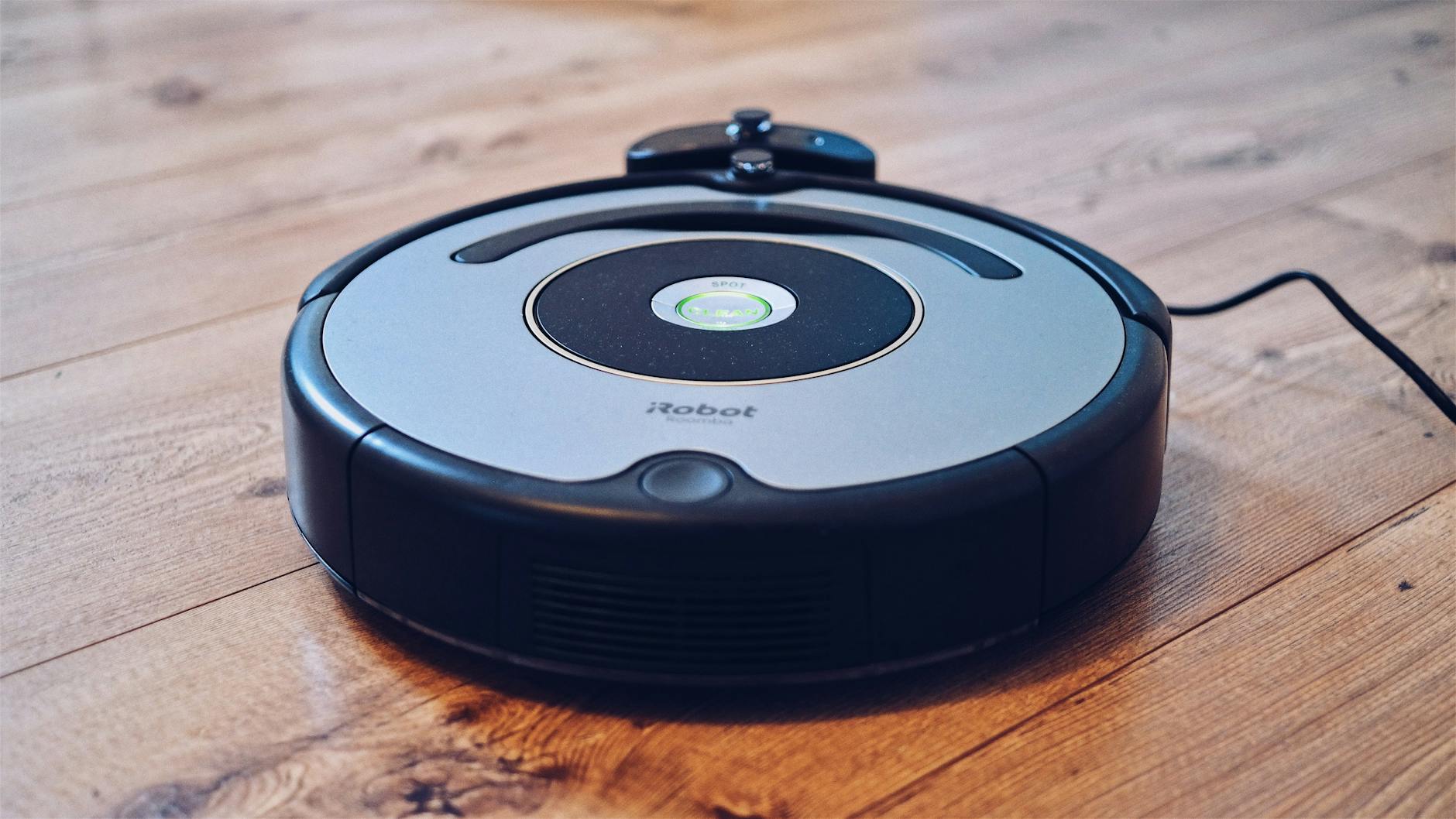

iRobot, the company behind the Roomba, has long been called “the Google of home robots” because it dominates the consumer robotics market the same way Google dominates search. At its peak, iRobot held roughly 75 percent of the global robotic vacuum market, built on decades of mapping data collected from millions of homes. That data moat, combined with over 1,500 patents, made iRobot the closest thing the robotics industry had to an unassailable platform company. The Roomba was not just a vacuum; it was a data-collection device that mapped floor plans, identified furniture, and learned household routines, creating an asset that no competitor could easily replicate. But the Google comparison cuts both ways.
Google succeeded because it turned search data into an advertising empire. iRobot, trading under the ticker IRBT, has struggled to turn its mapping data and installed base into a broader platform play. The failed Amazon acquisition in 2024, which collapsed under EU regulatory pressure, left the company financially weakened and strategically adrift. Since then, IRBT stock has cratered from its pandemic highs above $150 to single digits, and the company has undergone multiple rounds of layoffs. This article examines what made iRobot earn the “Google of home robots” label, where that thesis broke down, what the competitive landscape looks like now, and whether IRBT still has a path to reclaiming its position.
Table of Contents
- Why Was iRobot Called the Google of Home Robots?
- How iRobot’s Data Moat Eroded Faster Than Expected
- The Competitive Landscape IRBT Faces Today
- Evaluating IRBT Stock as an Investment in Home Robotics
- Why iRobot’s Software Platform Strategy Has Stalled
- iRobot’s Military and Commercial Robotics Heritage
- Can iRobot Reclaim Its Position in the Home Robotics Market?
- Conclusion
- Frequently Asked Questions
Why Was iRobot Called the Google of Home Robots?
The analogy stems from iRobot’s data advantage. Just as Google’s search engine improved with every query, every Roomba that shipped collected spatial data that fed back into iRobot’s mapping algorithms. By 2022, Roombas had mapped over 40 million homes. That dataset gave iRobot a flywheel: better maps meant better navigation, which meant better reviews, which meant more sales, which meant more data. No Chinese competitor shipping cheap lidar vacuums could match that feedback loop overnight, even if their hardware was comparable on paper. The comparison also extended to iRobot’s ambitions.
The company’s iRobot OS platform, launched in 2022, was designed to make the Roomba a smart home hub that could recognize objects, avoid pet waste, and eventually coordinate with other devices. CEO Colin Angle talked openly about Roombas understanding rooms well enough to trigger smart home actions, like turning on lights when you entered a room or adjusting the thermostat based on occupancy patterns. This was Google-style platform thinking applied to physical space. There was also the patent portfolio. iRobot held patents on everything from cliff-detection sensors to systematic navigation patterns. For years, the company aggressively defended these patents, filing suits against competitors like SharkNinja and several Chinese manufacturers. This intellectual property wall resembled the kind of moat that tech giants build, making it expensive and legally risky for competitors to replicate core functionality.

How iRobot’s Data Moat Eroded Faster Than Expected
The data advantage was real, but it came with a critical limitation: the robotics vacuum market commoditized faster than anyone predicted. Chinese manufacturers like Ecovacs, Roborock, and Dreame shipped products with advanced lidar navigation, self-emptying bases, and mopping capabilities at price points well below iRobot’s lineup. By 2023, Roborock’s flagship models were outperforming the Roomba j7 in independent cleaning tests while costing several hundred dollars less. The data moat mattered less when competitors could deliver a good-enough navigation experience through better hardware. However, if you are comparing iRobot’s position to google‘s, the key difference is monetization. Google turns data into advertising revenue with margins above 50 percent.
iRobot was still a hardware company with hardware margins, typically in the low 30s at best and trending downward under competitive pressure. The company never found a way to monetize its mapping data directly. A subscription service, iRobot Select, offered robot rentals and automatic consumable replenishment, but it did not generate the kind of recurring software-like revenue that would justify a platform valuation. The amazon acquisition would have solved this problem. Amazon wanted iRobot’s spatial data to complement Alexa and its Ring camera ecosystem. The $1.7 billion deal, announced in August 2022, would have given iRobot access to Amazon’s distribution and smart home integration while giving Amazon the indoor mapping data it lacked. When EU regulators blocked the deal in January 2024 over competition concerns, iRobot lost both its exit strategy and the $94 million termination fee it needed to stabilize its balance sheet.
The Competitive Landscape IRBT Faces Today
The robotic vacuum market in 2025 and 2026 looks nothing like the market iRobot once dominated. Roborock went public on the Shanghai Stock Exchange and has expanded aggressively into North America and Europe. Its S8 MaxV Ultra, for example, combines vacuum and mop functionality with obstacle avoidance that rivals or exceeds what iRobot offers, at a competitive price. Ecovacs and its subsidiary Yeedi cover the mid-range and budget segments. Dreame has emerged as a serious player with innovations like extending mop pads that reach edges and corners.
SharkNinja presents a different kind of threat. Unlike the Chinese pure-play robotics companies, Shark has massive retail distribution in the United States and a trusted brand in floor care. Its robot vacuums are priced aggressively and marketed through the same big-box channels where Roomba built its name. For a casual buyer at Target or Costco, the Shark robot at $299 sitting next to a Roomba at $549 is a hard comparison for iRobot to win, especially when the feature sets have converged. What iRobot still has, and what competitors cannot easily replicate, is brand recognition. Roomba is essentially a genericized trademark; people call all robot vacuums “Roombas” the way they call all tissues “Kleenex.” That brand equity is worth something, but it is a depreciating asset when the product behind it is no longer seen as the category leader in features or value.

Evaluating IRBT Stock as an Investment in Home Robotics
For investors considering IRBT, the stock presents a classic turnaround-or-bust scenario. The company’s market cap has fallen to a fraction of its pandemic-era valuation, and the balance sheet carries debt taken on partly in anticipation of the Amazon deal closing. Revenue has declined year over year as market share losses accelerated. On the other hand, the stock is priced for near-terminal outcomes, meaning any stabilization in the business could produce outsized returns. The tradeoff is straightforward. If you believe iRobot can cut costs enough to reach profitability on a smaller revenue base, maintain its premium positioning in North America, and eventually launch products that recapture technological leadership, IRBT at depressed levels could be a deep-value play. If you believe the competitive dynamics are permanently impaired and the brand advantage is insufficient to offset the cost and feature gap with Chinese competitors, then the stock is a value trap.
There is limited middle ground. Compared to investing in competitors, the options are limited for public-market investors. Roborock trades on the Shanghai exchange and is not easily accessible to most Western retail investors. Ecovacs is also listed in China. SharkNinja, trading as SN, offers exposure to the broader floor-care market but robot vacuums are a small part of its revenue. For investors who specifically want a pure-play bet on home robotics through U.S. markets, IRBT remains effectively the only option, which is itself a reason some speculative buyers hold the stock.
Why iRobot’s Software Platform Strategy Has Stalled
iRobot OS was supposed to be the company’s pivot from hardware to platform. The idea was sound: use the Roomba’s sensors and mapping capability as a foundation for broader smart home intelligence. In practice, the platform has not gained traction. Third-party developers have shown little interest in building on top of a vacuum cleaner’s operating system, and consumers have not demonstrated willingness to pay premium prices for smart home features they can get through Alexa, Google Home, or Apple HomeKit. There is a warning here for anyone evaluating iRobot’s long-term thesis. Software platform strategies only work when the platform offers something developers and users cannot get elsewhere.
Google succeeded because no one else had a comparable search index. iRobot’s indoor mapping data is valuable in theory, but in practice, every robot vacuum with lidar now generates similar spatial data. The window during which iRobot had a unique dataset has largely closed. The company’s recent product launches have also struggled. The Roomba Combo j9 Plus, which combined vacuuming and mopping, received mixed reviews for its mopping performance compared to dedicated mop-vacuum combos from Roborock and Dreame. When your flagship product is being unfavorably compared to competitors that cost less, it becomes very difficult to sustain a platform premium.

iRobot’s Military and Commercial Robotics Heritage
It is easy to forget that iRobot was not always a consumer company. Founded in 1990 by MIT roboticists including Colin Angle and Rodney Brooks, iRobot built PackBot and other military robots used for bomb disposal in Iraq and Afghanistan.
The company divested its defense division in 2016, selling it to Arlington Capital Partners, where it became Endeavor Robotics and was later acquired by FLIR Systems. That defense pedigree gave iRobot deep engineering credibility that translated into the Roomba’s early reliability advantages. Some investors still point to this heritage as evidence that iRobot has the engineering talent to innovate its way out of its current difficulties, though the company has lost significant headcount through layoffs since 2023.
Can iRobot Reclaim Its Position in the Home Robotics Market?
The path back for iRobot likely depends on two things: whether the company can ship a genuinely differentiated product that reestablishes technological leadership, and whether it can find a sustainable business model beyond selling hardware at shrinking margins. The home robotics market itself continues to grow, with estimates projecting global revenue above $15 billion by 2028. iRobot does not need to recapture 75 percent market share to survive; it needs to find a defensible niche within a growing market.
One possibility is that the “Google of home robots” thesis was simply premature, not wrong. If home robots eventually do become platforms, capable of monitoring home security, managing energy use, assisting elderly residents, or coordinating with delivery robots, then the company with the best spatial intelligence software will have a significant advantage. Whether iRobot is still that company, or whether the opportunity has passed to better-capitalized competitors, is the central question for anyone watching IRBT in 2026 and beyond.
Conclusion
iRobot earned the “Google of home robots” label through a genuine combination of market dominance, data accumulation, and patent protection that made it look like a platform company in the making. The comparison was apt during the years when no competitor could match the Roomba’s navigation intelligence or installed base. But unlike Google, iRobot never successfully monetized its data advantage, and the hardware moat proved far less durable than a software moat when well-funded Chinese competitors closed the technology gap and undercut on price.
For investors, robotics enthusiasts, and industry observers, IRBT represents a case study in how quickly category dominance can erode in consumer hardware. The brand still has value, the patent portfolio is still extensive, and the home robotics market is still growing. But the company needs a product and business model reset that goes beyond incremental Roomba updates. Whether iRobot can execute that reset from a position of financial weakness is the defining question, and the answer will determine whether the Google analogy becomes a comeback story or a cautionary tale about the limits of hardware platforms.
Frequently Asked Questions
What does IRBT stand for on the stock market?
IRBT is the NASDAQ ticker symbol for iRobot Corporation, the company best known for manufacturing the Roomba line of robotic vacuum cleaners.
Why did the Amazon acquisition of iRobot fail?
The European Commission raised competition concerns about Amazon gaining access to iRobot’s home mapping data, which could advantage Amazon’s smart home ecosystem. Amazon withdrew its $1.7 billion offer in January 2024 rather than accept the regulatory conditions.
Is Roomba still the best robot vacuum?
Roomba remains a strong brand with reliable products, but independent reviews in 2025 and 2026 frequently rank models from Roborock, Dreame, and Ecovacs higher in cleaning performance and value, particularly for combination vacuum-mop units.
How much home mapping data does iRobot have?
As of its last public disclosures, iRobot reported that its robots had mapped over 40 million homes worldwide, making it one of the largest repositories of residential floor plan data in existence.
Is IRBT stock a good investment?
IRBT is a speculative turnaround play. The stock trades at a fraction of its former valuation and carries meaningful financial risk. Potential investors should evaluate whether they believe iRobot can stabilize revenue, reduce costs, and ship competitive products before its balance sheet constraints become critical.