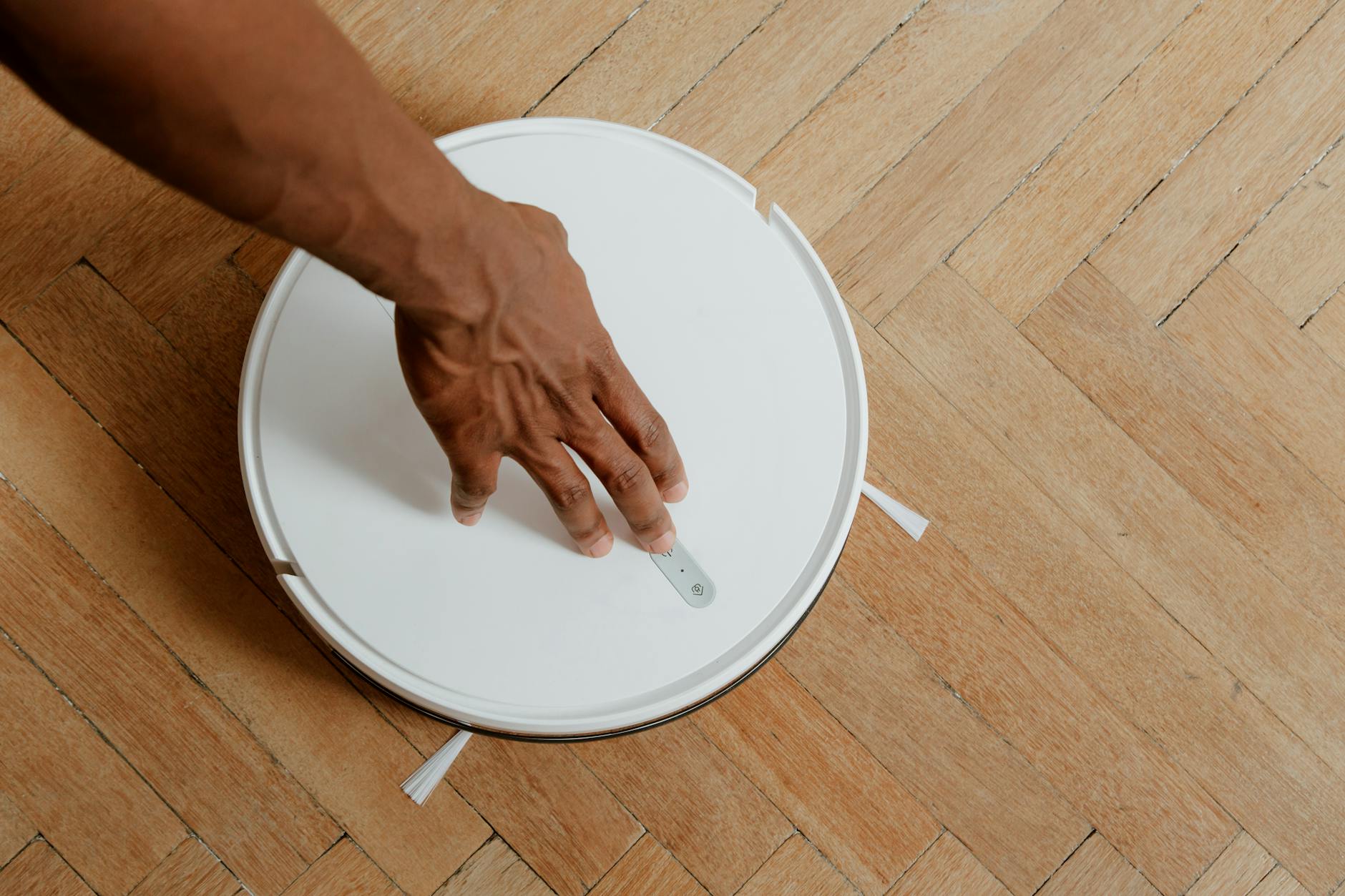

iRobot holds the position of “the Google of household robotics” because it dominates the smart home robot market with roughly 75-80% of the global robotic vacuum market share, far exceeding any competitor. Like Google’s commanding presence in search, iRobot’s Roomba line has become synonymous with autonomous home cleaning, and the company has used that position to expand into related products and establish itself as a foundational smart home player. The comparison holds because both companies started with a single breakthrough product, used market dominance to build ecosystem power, and face constant pressure to innovate while defending their territory from well-funded challengers.
iRobot’s path to this dominance began in 1990 when founders Colin Angle, Helen Greiner, and Rodney Brooks launched the company with a mission to create practical robots for everyday life. The Roomba’s 2002 launch proved that consumers would accept autonomous robots in their homes—a revolution in consumer robotics that hadn’t existed before. Today, iRobot generates nearly $1.7 billion in annual revenue, with Roomba products accounting for the vast majority of that, making it one of the few robotics companies that achieved genuine mass-market success.
Table of Contents
- What Makes Roomba the Market Leader in Household Robots?
- The Hidden Challenge of Maintaining Market Dominance
- Beyond Vacuums—iRobot’s Expanding Robot Ecosystem
- Competitive Pressure From Established Electronics Companies
- Software, Mapping, and the AI Race in Robotics
- The Subscription and Services Economy Challenge
- The Future of iRobot in an Automated Home
- Conclusion
- Frequently Asked Questions
What Makes Roomba the Market Leader in Household Robots?
Roomba’s market dominance stems from three converging factors: first-mover advantage, continuous product iteration, and brand recognition that has become genericized in many households. iRobot released the original Roomba when no consumer alternative existed, giving them years to perfect their design and software before competitors entered the space. By the time companies like Shark, Samsung, and LG launched competing robotic vacuums, Roomba had already established customer loyalty and platform maturity that proved difficult to displace. A typical consumer who owns a Roomba has invested in compatible accessories, learned the app interface, and experienced years of reliable service—switching costs are real.
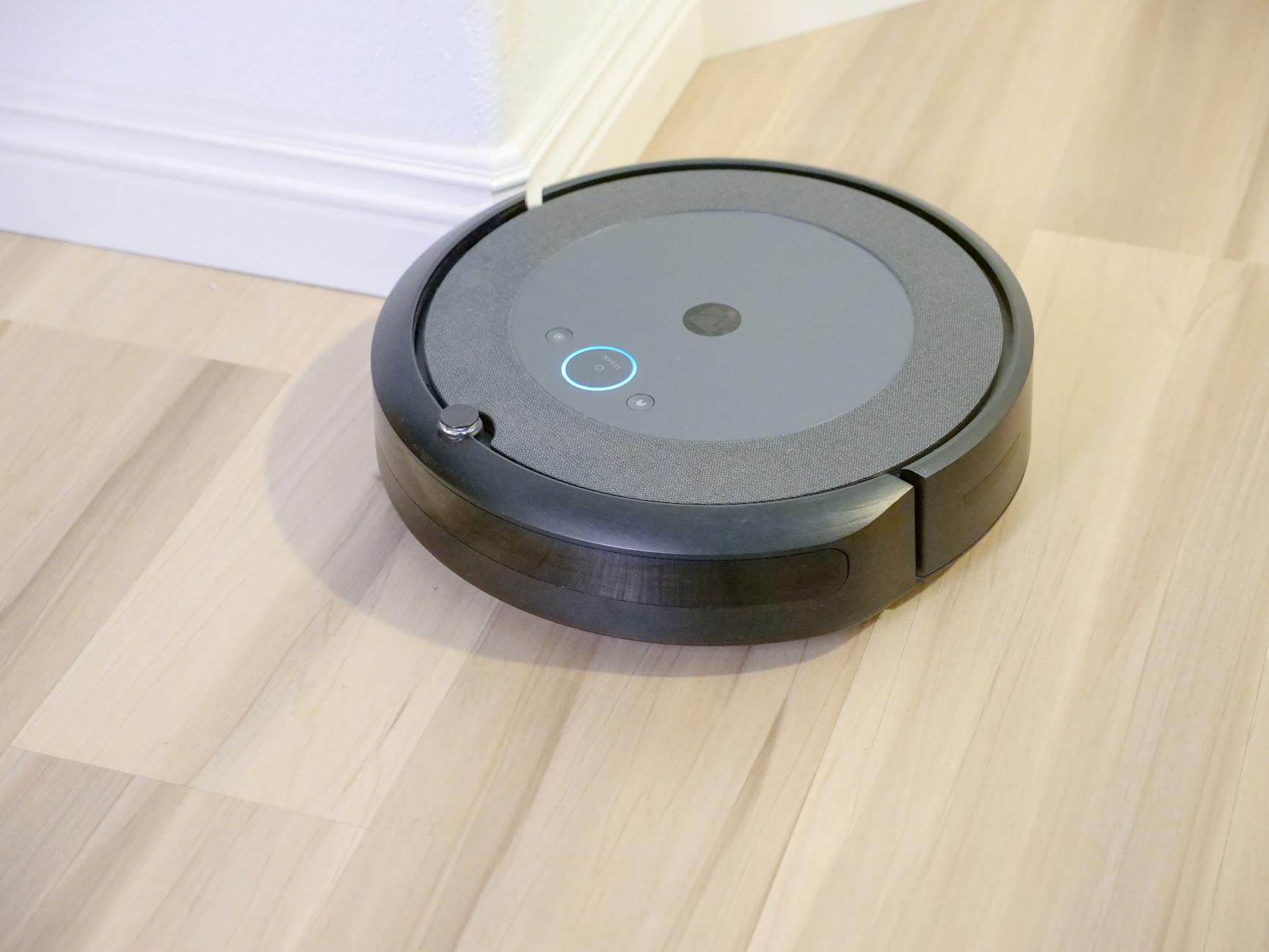
The company’s continuous innovation in vacuum technology has also maintained their lead. Early Roombas were basic bumper-based robots that moved randomly until they hit obstacles. Modern models use LIDAR mapping and AI-powered navigation systems that systematically clean rooms, avoid obstacles with precision, and adapt to different floor types. The S9+ and J7+ models represent the current premium tier, combining sophisticated mapping with auto-emptying docks that reduce user maintenance burden. This iterative approach means that even as competitors launch technically impressive robots, they’re often still chasing features that Roomba refined years earlier.
The Hidden Challenge of Maintaining Market Dominance
Despite their commanding market position, irobot faces a critical vulnerability that mirrors challenges faced by other dominant consumer electronics companies: customer adoption friction at premium price points. Roomba’s best-performing models cost $800-1,200, which positions them as luxury purchases for most households. A shopper looking for their first robotic vacuum might be tempted by less expensive alternatives from Samsung, Ecovacs, or Shark that cost $300-500 and promise similar cleaning power—a significant price gap that matters to budget-conscious consumers. This creates a two-tier market where iRobot owns the premium segment but leaves the mass market partially exposed.
Another hidden challenge is that Roomba’s success has created complacency in certain product categories. The company’s mopping robot, the Braava, has never achieved the market penetration or innovation velocity of the Roomba vacuum. Competitors like Ecovacs have actually leapfrogged iRobot in mopping technology and integrated vacuum-mop hybrids that handle both cleaning tasks simultaneously. If iRobot fails to adequately develop their all-in-one robot offerings, they could lose significant market share to companies that bundle superior functionality at competitive prices. This mirrors Nokia’s decline in smartphones—dominance in one product category didn’t guarantee success when the market evolved to require different capabilities.
Beyond Vacuums—iRobot’s Expanding Robot Ecosystem
iRobot has attempted to leverage their household robotics platform into adjacent product categories, though with mixed results. The Braava floor-mopping robot and Braava jet mopping system represent logical extensions of their core competency, but these products occupy a smaller market than vacuums. The company also developed Terra, a lawn-mowing robot, which faced regulatory challenges and technical hurdles that delayed launch in many markets. Lawn mowing robots require navigating outdoors, handling variable terrain, and managing liability—a fundamentally different challenge than indoor vacuuming.
When Terra finally launched, it arrived at a price point ($3,000+) that limited initial adoption, demonstrating that market dominance in one category doesn’t automatically transfer to others. The Roomba Combo and recent integrated platforms show iRobot’s strategy to create devices that handle multiple cleaning tasks, addressing customer complaints about needing separate robots for different jobs. However, competitors have moved faster in this space. Ecovacs’ Deebot X2 Omni, for example, offers integrated vacuuming and mopping with a single device that many reviewers consider more effective than iRobot’s separate-product approach. This suggests that iRobot’s market leadership, while strong in the core vacuum market, doesn’t guarantee success in adjacent categories where different design paradigms may be superior.
Competitive Pressure From Established Electronics Companies
While iRobot pioneered household robotics, the category has attracted formidable competitors with deeper resources and established distribution networks. Samsung, LG, Dyson, and Ecovacs have all launched advanced robotic vacuums that match or exceed Roomba’s features in specific dimensions. Samsung’s Jet Bot and LG’s VacBot series integrate with their broader smart home ecosystems, offering seamless control through phones and voice assistants. Dyson, known for high-performance traditional vacuums, has invested heavily in robotic technology and commands premium pricing similar to Roomba, splitting the luxury segment.
The most serious threat comes from Chinese manufacturers, particularly Ecovacs, which has grown to become the second-largest player globally by investing aggressively in LIDAR navigation, AI cleaning algorithms, and mopping technologies. Ecovacs prices many models 20-30% below comparable Roomba offerings while matching or exceeding their features. This competitive dynamic has forced iRobot to either maintain premium pricing and risk losing customers to Ecovacs’ value proposition, or reduce prices and compress profit margins. The company’s market share, while dominant, has contracted in recent years as Ecovacs gained ground in Asia and Europe. Unlike Google’s search dominance, which benefits from network effects and structural advantages that protect market share, Roomba’s dominance is vulnerable to commoditization as competitors’ technology converges.
Software, Mapping, and the AI Race in Robotics
Modern robotic vacuums live or die based on their software intelligence, and this is where iRobot has maintained technical superiority. Their LIDAR-based mapping systems create detailed floor plans that improve with each cleaning cycle, and their algorithms now include room recognition, custom cleaning zones, and integration with smart home ecosystems. The Roomba app allows users to set no-go zones, schedule cleanings by room, and view cleaning history—features that add genuine value beyond the hardware. However, there’s a limitation worth acknowledging: no robotic vacuum, including Roomba, performs as well as human vacuuming.
They miss corners, struggle with thick carpets, may get tangled in cords, and require maintenance of their brushes and filters. Marketing materials often overstate cleaning performance—a Roomba will maintain your floors between human cleanings, but won’t replace them entirely. Additionally, the privacy implications of LIDAR-enabled robots mapping your home layout have received little public discussion but represent a data security consideration that consumers should evaluate. iRobot’s privacy policy states they don’t sell customer mapping data, but the potential value of home layout information to future smart home services or third parties creates an ongoing concern.
The Subscription and Services Economy Challenge
iRobot has attempted to build recurring revenue through Roomba+, a subscription service that includes automatic supply replenishment (brushes, filters) and extended warranty coverage. This mirrors the trend toward services-based business models that Google pursues through Android updates and cloud services. However, the robotic vacuum market hasn’t embraced subscriptions with enthusiasm—many owners resist paying monthly fees when they can purchase replacement parts affordably. This contrasts with smartphone markets where services feel integrated and essential.
A practical consideration: iRobot’s push toward app-based features and cloud connectivity means that older Roomba models lack features that newer ones receive. A Roomba purchased five years ago has static capabilities, while current models gain new mapping features and integrations through software updates. This creates an incentive toward frequent replacement, though it also means that older units remain functional indefinitely. Some users view this positively (eventual product obsolescence justifies replacement), while others see it as planned obsolescence that extracts recurring expenditure.
The Future of iRobot in an Automated Home
iRobot’s future depends on their ability to expand beyond robotic vacuums into a comprehensive home robotics ecosystem while maintaining their quality and customer loyalty. The company faces a narrow path: pursue high-margin luxury robots that serve the premium market (and risk ceding volume to competitors), or invest aggressively in lower-cost models to capture the mass market (and risk margin compression). Their attempted acquisition by Amazon in 2022, which ultimately failed due to regulatory concerns, would have positioned Roomba as a cornerstone of Amazon’s smart home strategy. The failed deal left iRobot as an independent company, preserving their identity but removing a potential avenue for expansion.
Looking forward, iRobot’s position resembles Google’s in a critical way—both companies must constantly innovate to maintain dominance because the category they created is now attracting competitors with superior resources and alternative approaches. iRobot’s advantage today is reliability and market presence. Their challenge is that advantage alone doesn’t guarantee future dominance as the robotics market matures. Success will require excelling simultaneously in hardware innovation, software intelligence, ecosystem integration, and competitive pricing—a tall order that has defeated many market leaders in consumer electronics.
Conclusion
iRobot earned the designation “Google of household robotics” through genuine market leadership, pioneering a consumer product category and maintaining dominance through iterative innovation and brand recognition. The Roomba has become nearly synonymous with robotic vacuums, much as Google became synonymous with search, and this position has given iRobot significant power to shape customer expectations and drive the entire market forward. Their technical capabilities in mapping, navigation, and intelligent cleaning remain industry-leading in the core vacuum category.
However, dominance in one category doesn’t guarantee success across the broader robotics market, and iRobot faces serious competitive pressure from well-funded rivals who are closing the technology gap while offering lower prices. The company’s future hinges on their ability to expand beyond vacuums, maintain innovation momentum against determined competitors, and navigate the transition from product sales to services-based business models. For consumers, iRobot’s market leadership means quality and reliability, but it also means premium pricing—alternatives now exist that deliver comparable performance at lower cost, and those alternatives are improving faster than at any point in Roomba’s history.
Frequently Asked Questions
Is Roomba still worth the price compared to competitors like Ecovacs?
That depends on your priorities. Roomba generally offers superior build quality, mapping precision, and customer support, justifying the premium for users who value those factors. However, Ecovacs and other competitors now match Roomba’s core cleaning performance at significantly lower prices, making them better choices for budget-conscious buyers who don’t require premium durability.
How does iRobot’s market share compare to Google’s dominance in search?
iRobot controls roughly 75-80% of the robotic vacuum market, which is substantial but more vulnerable than Google’s search dominance (roughly 90% globally). Robotic vacuums face commoditization pressure from competitors with rapidly improving technology, whereas Google’s dominance benefits from network effects that strengthen over time. iRobot’s market share is high but declining.
What’s the biggest limitation of current Roomba models?
No robotic vacuum fully replaces human vacuuming. Roombas struggle with thick carpets, miss corners and edges, may tangle in cords, and are designed to maintain floors between professional cleanings rather than serve as a complete replacement. They work best in open floor plans with minimal obstacles.
Why did Amazon’s acquisition of iRobot fall through?
The proposed $1.7 billion acquisition faced antitrust concerns from the FTC, which worried that Amazon’s control of iRobot would reduce competition in the smart home market and disadvantage rivals. The companies abandoned the deal in early 2024.
Are robotic vacuums with mopping capabilities better than separate vacuum and mop robots?
Integrated vacuum-mop hybrids are more convenient but typically perform mopping worse than dedicated mopping robots. Ecovacs’ hybrid models are gaining ground over iRobot’s separate-product approach, suggesting that combined functionality may trump specialization in this market.
What privacy concerns should I have with a LIDAR-mapped Roomba?
LIDAR robots create detailed home floor plans that are stored in your account. While iRobot’s privacy policy states they don’t sell this data, the potential value of home layout information to future services and the possibility of policy changes represent a legitimate long-term consideration for privacy-conscious users.