
Open source software has become the foundational infrastructure for autonomous systems precisely because it enables rapid innovation, transparency, and collaborative development across the robotics and automation industry. Rather than each organization building autonomy from scratch with proprietary tools, OSS provides battle-tested frameworks, libraries, and tools that abstract away complexity and allow teams to focus on their unique challenges. Consider how ROS (Robot Operating System)—an open source middleware—powers everything from warehouse robots at Amazon to research platforms at leading universities, creating a shared ecosystem where solutions developed in one domain often benefit autonomous systems across entirely different industries.
Without open source infrastructure, autonomous systems would still be locked behind expensive proprietary stacks, leaving smaller companies and research institutions unable to compete. The availability of frameworks like ROS 2, simulation tools like Gazebo, perception libraries like OpenCV, and planning algorithms accessible to any developer has democratized autonomous robotics in a way that would have been impossible under a closed-source model. This infrastructure layer is not optional—it is the backbone that makes modern autonomy economically viable and technologically accessible.
Table of Contents
- What Makes OSS Critical Infrastructure for Autonomous Systems?
- Core Open Source Frameworks and Their Limitations
- Real-World Autonomous Systems Built on Open Source Infrastructure
- Integration Challenges and Practical Considerations
- Common Pitfalls and Advanced Implementation Issues
- Community and Ecosystem Support
- The Future of Open Source Infrastructure in Autonomous Systems
- Conclusion
What Makes OSS Critical Infrastructure for Autonomous Systems?
Autonomous systems require solving multiple interdependent problems simultaneously: perception, localization, planning, control, and real-time execution. No single organization typically excels at all of these domains, which is why oss has become indispensable. When a robotics startup needs a SLAM (Simultaneous Localization and Mapping) algorithm, they can integrate an open source library like ORB-SLAM rather than spending eighteen months and millions in development. This reduces time-to-market and lets them invest resources in their actual competitive advantage—whether that is domain-specific software, hardware optimization, or business model innovation.
The collaborative nature of open source also means that when bugs are found or improvements are discovered, they propagate through the entire ecosystem. A performance improvement in the ROS navigation stack benefits every autonomous mobile robot using that infrastructure. Compare this to proprietary systems where bug fixes might take months to deploy, or might never arrive at all if the vendor deprioritizes your use case. The openness creates a rising tide effect where the entire industry advances together, though this also means your competitors have access to the same tools—making differentiation increasingly difficult in the software layer and pushing innovation toward specialized hardware or domain expertise.

Core Open Source Frameworks and Their Limitations
ROS 2 stands as the dominant middleware for robotics, providing publish-subscribe messaging, distributed computation, and standardized interfaces for sensors and actuators. Its architecture allows a team to decompose a complex autonomous system into manageable modules that can be developed, tested, and debugged independently. However, ROS 2 introduces real trade-offs: it adds latency and computational overhead compared to tightly-coupled proprietary systems, and the flexibility of its loosely-coupled architecture can become a liability when you need guaranteed deterministic performance in safety-critical scenarios.
For perception, OpenCV dominates computer vision tasks, but it is fundamentally a lower-level library requiring significant custom engineering to build production-grade autonomous vision systems. When you move into deep learning for perception, you enter fragmented territory: PyTorch and TensorFlow are powerful but require careful integration with robotics stacks. The limitation here is that no single open source framework perfectly bridges the gap between research-grade perception algorithms and the real-time constraints of embedded robotic systems—most production autonomous systems require custom optimization work, which is expensive and error-prone. Furthermore, training data for perception models often remains proprietary or closely guarded, meaning companies building autonomous systems on OSS perception frameworks still need to invest heavily in their own datasets and model training pipelines.
Real-World Autonomous Systems Built on Open Source Infrastructure
The DARPA Subterranean Challenge demonstrated how OSS infrastructure enables cutting-edge autonomous systems. Teams competing in this challenge used ROS, Gazebo, PCL (Point Cloud Library), and various open source planning and perception libraries to build robots that autonomously explored unknown cave systems and abandoned mines. No team could have attempted this feat using proprietary software exclusively—the complexity and diversity of problems required them to mix and match components from across the open source ecosystem, customizing and integrating them for their specific robots and environments.
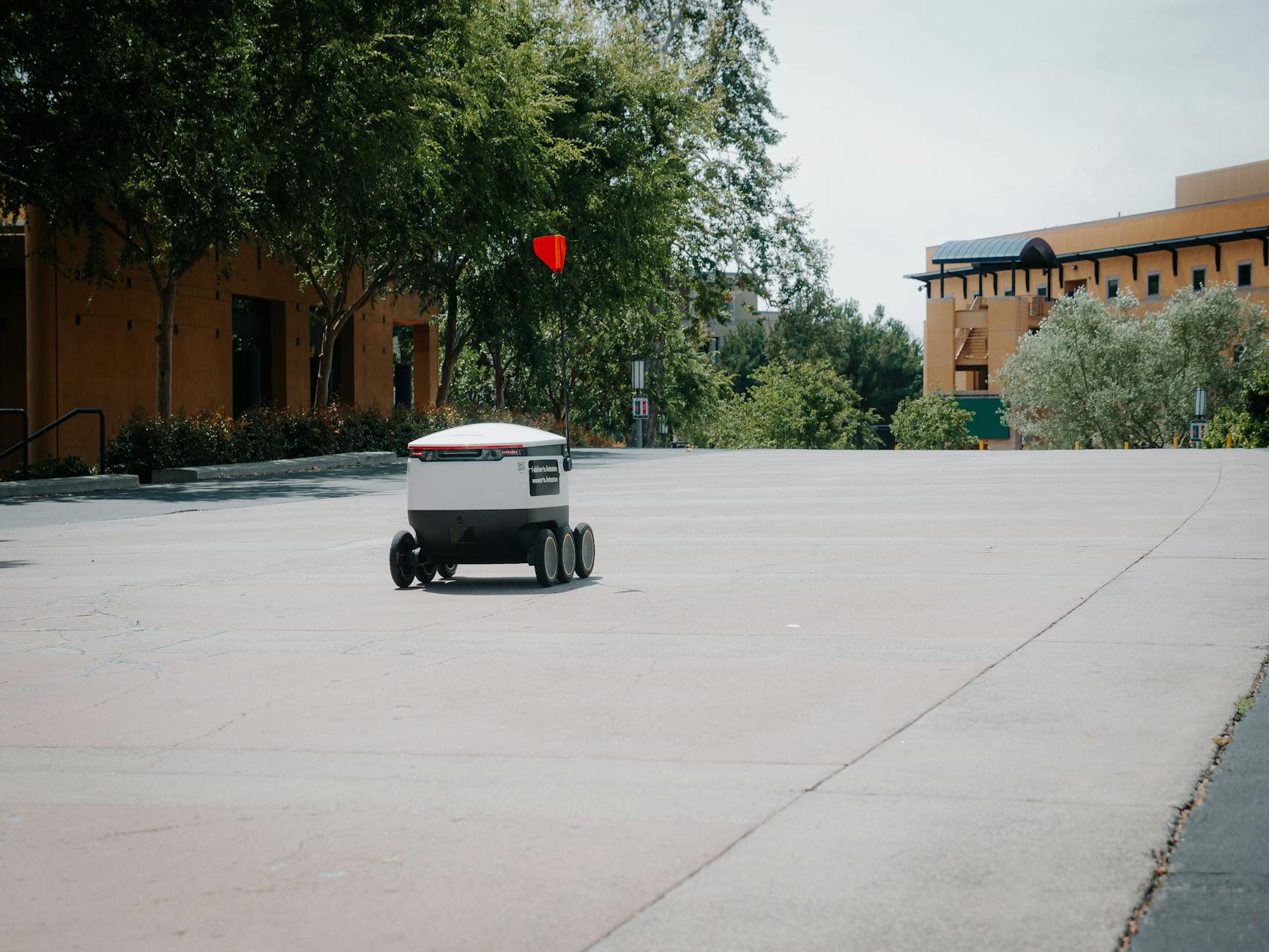
In commercial settings, companies like Clearpath Robotics have built entire product lines around open source infrastructure, selling robots that run ROS and are designed to integrate seamlessly with the open source ecosystem. This business model works because Clearpath’s value comes not from proprietary middleware but from superior hardware, domain expertise in specific applications, and integration services. Similarly, autonomous mobile robots deployed in warehouses, hospitals, and factories increasingly rely on OSS frameworks as their core infrastructure layer. The trade-off is that buyers of these robots expect interoperability and the ability to customize behavior using open source tools—locking customers into proprietary software is now a competitive disadvantage rather than an advantage.
Integration Challenges and Practical Considerations
Building a production autonomous system on open source infrastructure requires solving multiple integration challenges that don’t appear in academic papers or tutorials. Real robots operate in uncontrolled environments where sensors fail intermittently, network latency varies, and edge cases emerge constantly. Open source frameworks provide the building blocks but rarely provide out-of-the-box solutions for production reliability. A researcher can run ROS and Gazebo in a lab environment and achieve excellent results; an engineer deploying the same stack to a real robot in a factory must add extensive monitoring, fallback behaviors, and custom safety layers that are not part of the core OSS projects. The practical comparison is instructive: proprietary autonomous systems from traditional aerospace or automotive suppliers include hardened frameworks designed for safety-critical environments, with liability structures and support agreements that companies can rely on.
OSS provides flexibility and cost advantages but places the burden of production hardening on the implementing organization. This is neither good nor bad—it is a trade-off. Small and medium robotics companies often accept this trade-off because the cost of proprietary software would exceed their entire budget. Large enterprises sometimes find it worth building in-house hardening layers rather than licensing expensive proprietary alternatives. What is critical is understanding that moving from “OSS works in my lab” to “OSS works reliably in production at scale” requires substantial additional engineering investment that is not captured in the code itself.
Common Pitfalls and Advanced Implementation Issues
One of the most common pitfalls when relying on OSS for autonomous systems is version dependency hell: the autonomous system depends on specific versions of ROS, specific versions of OpenCV, specific CUDA versions for GPU acceleration, and specific versions of custom dependencies built by the team. Over time, these versions accumulate incompatibilities. A robot deployed two years ago may run perfectly on that frozen set of dependencies, but upgrading to fix a security vulnerability in one library cascades into incompatibilities elsewhere. The open source community is excellent at forward progress but less incentivized to maintain long-term backward compatibility. Proprietary vendors have commercial motivation to support legacy versions; open source maintainers do not.
A second advanced issue is the lack of integrated testing and validation frameworks. While individual OSS components have unit tests, the system integration testing—ensuring that your perception system, localization system, planning system, and control system work together reliably under diverse real-world conditions—falls entirely on the implementing team. This is not a bug in open source; it is a fundamental consequence of decomposition. Each library is correct in isolation, but the integrated system requires specialized testing, simulation, and validation that each organization must build themselves. Teams that underestimate this frequently discover late in development that their autonomous system fails in specific edge cases that no individual component anticipated, requiring months of debugging and redesign.

Community and Ecosystem Support
The OSS robotics community is substantial and engaged, with active development happening across ROS, ROS 2, Gazebo, and dozens of specialized libraries. This community support is real and valuable—a difficult problem with ROS can often be solved by posting to the ROS Discourse forum or finding a GitHub issue where someone encountered the same problem months prior. However, this support is asymmetrical. Popular libraries like OpenCV have large, responsive communities.
Niche libraries, especially those critical to specific domains like underwater robotics or space applications, may have small communities or may be maintained by individuals without resources for rapid support. Organizations building autonomous systems on OSS should budget for community engagement: submitting bug reports with detailed reproductions, contributing fixes back upstream when possible, and hiring experienced developers familiar with the specific OSS stack they are using. The alternative—relying solely on external support—often results in projects stalling when they encounter unfamiliar territory. The most successful robotics companies treat OSS contributions as an investment in the infrastructure they depend on, not as a cost center.
The Future of Open Source Infrastructure in Autonomous Systems
As autonomous systems mature and move into safety-critical applications—autonomous vehicles, collaborative robots in shared human workspaces, autonomous medical devices—the robotics industry will likely develop OSS frameworks specifically designed for safety and certification. Projects like the Linux Foundation’s Zephyr RTOS already address embedded systems requiring real-time guarantees.
We can expect similar efforts to emerge for higher-level autonomy frameworks, possibly including formal verification tools, standardized simulation environments with certified properties, and community-driven safety standards built into the infrastructure itself. The trajectory suggests that OSS will remain the foundation for autonomous systems, but the ecosystem will bifurcate: lightweight, real-time critical components moving toward formal verification and safety certification, while higher-level planning and perception layers remain flexible and rapidly evolving. Organizations building autonomous systems today should view OSS as a long-term strategic dependency worthy of investment, not just a cost-saving measure.
Conclusion
Open source software is the infrastructure provider for autonomy because it solves the coordination problem inherent in autonomous systems: no single organization can excel at all the required technical domains, and proprietary silos prevent the cross-domain learning that drives innovation. By providing standardized interfaces, reusable components, and transparent implementations, OSS has made autonomous robotics accessible to companies of all sizes and has accelerated the pace of technological progress across the entire industry.
The organizations that will thrive in autonomous robotics are those that understand OSS not as a shortcut to avoid development costs, but as the foundation requiring careful integration, production hardening, and active community participation. Investing in OSS literacy, maintaining clear architectural boundaries, planning for version management across your dependency tree, and budgeting for integration testing are practical steps that separate successful deployments from failed projects. For companies entering the autonomous systems space, the question is not whether to use open source infrastructure—it is how to integrate it responsibly and build differentiated value on top of it.