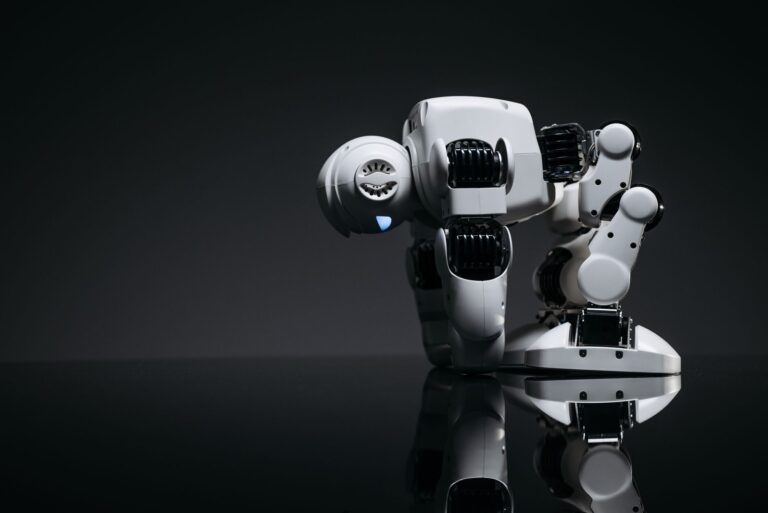

Palladyne AI Corporation—trading under the ticker PDYN—has become the dominant force in military robotics autonomy for the same reason Nvidia dominates AI infrastructure: it owns the foundational layer that everything else depends on. Just as Nvidia’s GPUs became essential to virtually every AI advancement, Palladyne’s SwarmOS and BRAIN Flight Computer technologies have become the backbone of the U.S. military’s autonomous systems strategy. The company is no longer a startup pitching concepts; it’s executing against billions in military procurement interest, demonstrated by its recent Air Force contract for UAV swarming capabilities announced in January 2026 and its selection as one of just 14 companies invited to the Air Force Research Laboratory’s Relentless Wolfpack Industry Day in May 2026.
The comparison to Nvidia extends beyond market position to financial trajectory. In Q1 2026 alone, Palladyne generated $3.5 million in revenue—a 107% year-over-year increase—while building a backlog of approximately $17 million and guiding toward $24-27 million in full-year revenue. These aren’t theoretical projections; they’re orders from military procurement offices that have tested and validated Palladyne’s technology. For a company trading at $6.34 as of May 2026, this growth rate and contract pipeline suggest an early-stage infrastructure play in an industry where the barriers to entry are extraordinarily high.
Table of Contents
- Why Military Robotics Autonomy Is the Next Computing Megatrend
- The Backlog Tells the Real Story
- Recent Military Validation and Operational Testing
- The Technology Moat and Competitive Positioning
- Regulatory and Operational Risks in Autonomous Weapons
- The Importance of Military Exercises and Demonstration Programs
- The Path to Scaled Production and Market Dominance
- Conclusion
- Frequently Asked Questions
Why Military Robotics Autonomy Is the Next Computing Megatrend
Military autonomy isn’t niche procurement anymore—it’s strategic imperative. Every major defense power is racing to field autonomous systems that can operate in degraded communications environments, coordinate across multiple platforms, and respond faster than human-controlled alternatives. The problem isn’t lack of interest; it’s lack of reliable technology that actually works in the field. Palladyne’s positioning as the software and hardware layer that other defense contractors build on top of is structurally similar to how Nvidia positioned itself: not as the final product, but as the essential input layer. The military applications range from UAV swarms that operate collectively to robotic ground vehicles that can coordinate without constant human intervention.
These systems require real-time decision-making, resilience to signal jamming, and the ability to operate autonomously when communications are severed. Palladyne’s SwarmOS platform specifically addresses collaborative autonomy—the ability for multiple robotic platforms to work together as an integrated unit. This is fundamentally different from just making a single robot autonomous; coordinating multiple platforms across diverse environments requires solving orders of magnitude more complexity. What separates Palladyne from academic research or one-off prototypes is that its technology has already passed military validation gates. The company wasn’t randomly selected for the Relentless Wolfpack Industry Day; it was chosen alongside 13 other vetted contractors because its systems actually demonstrate networked collaborative autonomous capabilities that the Air Force can evaluate and potentially integrate into operational doctrine. That’s the difference between promising technology and technology that military procurement offices are willing to fund.

The Backlog Tells the Real Story
Financial markets often chase narratives, but military procurement offices are purely results-driven. Palladyne’s $17 million backlog as of March 31, 2026 is not projected or speculative revenue—it represents contracts already awarded or in final negotiation stages. The 107% year-over-year revenue growth in Q1 is being driven by this backlog converting to actual deliveries. This is the inverse of most venture-backed robotics companies, which spend years building technology with minimal commercial revenue; Palladyne is already at scale, generating millions quarterly while still investing in platform expansion. The full-year guidance of $24-27 million for 2026 is conservative relative to the backlog. If the company executes without delays, actual results could exceed guidance.
The risk on the downside isn’t demand—it’s execution and supply chain. Military contracts are won, but they must also be delivered on spec, on schedule, and with appropriate security clearances and compliance. Any slippage in program execution could delay revenue recognition by quarters, which would create stock volatility despite underlying business health. There’s also a scaling risk that’s often overlooked in early defense contractors: as volume increases, the company must maintain quality while ramping production. Robotics manufacturing isn’t software where you just compile and ship; you’re building physical hardware that has to function reliably under extreme conditions. Palladyne has the BRAIN Flight Computer as proprietary hardware, which gives it differentiation but also means it can’t infinitely scale through third-party manufacturing without quality control challenges.
Recent Military Validation and Operational Testing
The Northern Strike 26-2 exercise scheduled for August 2-14, 2026 at the National All-Domain Warfighting Center is not a corporate demo—it’s one of the largest U.S. military exercises, drawing over 9,000 participants from all branches of service, allies, and industry. Palladyne’s participation means its autonomous systems will be integrated into a live exercise environment alongside manned platforms, legacy systems, and real-world logistics challenges. This is where theory meets reality; a system that works in a lab or controlled test range may face unexpected behaviors in a chaotic operational environment. The Air Force’s contract for UAV swarming capabilities awarded in January 2026 is particularly significant because UAV swarming has been promised for over a decade across multiple defense programs without achieving reliable operational deployment.
Swarming requires not just individual platform autonomy but seamless coordination protocols, dynamic role assignment (which UAV leads versus follows in real-time), and recovery from individual platform failures without cascading system collapse. Palladyne’s IntelliSwarm product suite—combining SwarmOS and BRAIN hardware—is explicitly designed to solve these coordination problems at scale. The limitation here is important: military exercises and contract awards are not the same as operational deployment. Palladyne’s systems will be tested in Northern Strike 26-2, but results from a controlled exercise don’t automatically translate to field performance in actual conflict scenarios. The company will learn valuable data about how its autonomy stack performs with legacy systems and at operational scale, but this also creates risk if major issues surface that require fundamental redesign rather than incremental improvement.

The Technology Moat and Competitive Positioning
SwarmOS as a proprietary autonomy software layer creates a defensible moat similar to operating system control in computing. Once the military invests in developing doctrines, training programs, and platform integrations around SwarmOS, switching to a competitor’s autonomy software requires re-validating everything from scratch—a process measured in years and hundreds of millions in development costs. This is why Nvidia’s CUDA remained dominant even as rival GPUs offered better raw performance; switching costs are astronomical once you’ve built on top of a platform. The BRAIN Flight Computer adds a hardware layer to this moat. It’s not a commodity flight controller; it’s designed to run SwarmOS-native autonomy algorithms efficiently and securely.
This vertical integration—software and hardware together—means Palladyne controls both the algorithms and the hardware they run on, similar to Apple’s approach. Competitors can’t simply swap in a different flight computer; they’d need to port their entire autonomy stack and re-validate across thousands of testing scenarios. The competitive weakness is that Palladyne is a relatively small player in the vast defense ecosystem. Larger contractors like Lockheed Martin, Northrop Grumman, and General Dynamics have enormous system integration capabilities and existing military relationships. These companies could potentially license or acquire Palladyne’s technology rather than compete directly, which would be lucrative for shareholders but potentially limiting to long-term independent growth. The risk isn’t that Palladyne’s technology is inferior; it’s that size and relationships matter enormously in military contracting, and Palladyne doesn’t yet have the scale to win sole-source major platform contracts.
Regulatory and Operational Risks in Autonomous Weapons
Autonomous weapons systems operate in a complex regulatory and policy environment. International agreements, military doctrine, legal frameworks around autonomous decision-making, and political sensitivity to unmanned systems all impact how rapidly these technologies can be deployed. Palladyne’s technological capability to build autonomous swarms doesn’t automatically mean the military can deploy them at scale without updated rules of engagement, legal review, and political consensus. There’s also the operational complexity that shouldn’t be underestimated: autonomous systems are only autonomous until they malfunction, face adversary countermeasures, or encounter scenarios outside their training data. A swarm of UAVs operating autonomously might lose communication, encounter electronic warfare, or face adversary AI systems designed to defeat them.
Palladyne’s technology addresses these challenges through redundancy and decentralized decision-making, but there are no guarantees that autonomy remains reliable in contested environments. Every large autonomous system deployment will face scenarios where the system must fall back to degraded mode or human control, and those transitions can be dangerous if not architected carefully. The regulatory risk is particularly important for investors: if international pressure or domestic political opposition restricts autonomous weapons deployment, Palladyne’s addressable market shrinks substantially. Conversely, if conflicts escalate and autonomous systems prove tactically decisive, demand accelerates dramatically. This binary outcome creates significant long-term uncertainty despite current momentum.

The Importance of Military Exercises and Demonstration Programs
Northern Strike 26-2 and similar exercises serve a specific function beyond testing: they provide visibility to military planners, procurement officers, and industry stakeholders about which technologies actually work and which are still immature. For a company like Palladyne, this is free marketing to the right audience—active-duty military decision-makers who control billions in procurement budgets. When a general or field commander sees SwarmOS-controlled UAVs operating reliably in an exercise environment, that becomes credible evidence for internal military arguments about resource allocation.
Participation in these exercises also generates technical data that improves Palladyne’s product. The company will identify integration issues with legacy systems, discover performance limitations under specific environmental conditions, and gather operational feedback that guides future development. This learning loop—participate in exercises, gather data, improve product, become more attractive to next procurement cycle—is how defense contractors build institutional relationships and market position.
The Path to Scaled Production and Market Dominance
If Palladyne executes against its current backlog and wins additional military contracts at expected pace, the company faces a transition from startup to growth-stage defense contractor within the next 24-36 months. The financial metrics—$17 million backlog, $3.5 million quarterly revenue, $24-27 million annual guidance—suggest the company is already past the “will this work?” phase and deep into the “how do we scale this?” phase. This is where many promising defense technologies fail: they work in controlled environments and small-scale deployments, but scaling production while maintaining quality, security, and profit margins is fundamentally different from R&D. The long-term thesis for Palladyne is that autonomous military robotics will become as foundational to future military power as satellite communications became in the 1990s.
If that thesis is correct, then companies that provide the core autonomy infrastructure layer—like Palladyne—will capture extraordinary value. The comparison to Nvidia is apt because both companies found themselves in a position where they weren’t fighting for a niche market; they were building the layer that all future systems depend on. Nvidia’s advantage wasn’t that it was right about AI being important; it was that it had already built the infrastructure when demand exploded. Palladyne faces a similar opportunity if military robotics demand accelerates as current trends suggest.
Conclusion
Palladyne AI represents a rare combination in defense technology: proven product-market fit demonstrated through actual military contracts and backlog, technology with defensible competitive moats, and early positioning in a market that governments are investing billions to develop. The comparison to Nvidia isn’t perfect—Palladyne operates in a more regulated, slower-moving sector—but the structural similarities are real: both companies provide essential infrastructure that other companies build on top of, both operate in markets with extreme barriers to entry, and both benefited from positioning early before demand exploded. The risks are equally real: military procurement is unpredictable, autonomous weapons face political and regulatory headwinds, and Palladyne’s scale is still small relative to larger defense contractors that could acquire or compete with the company.
For investors, the key question isn’t whether Palladyne’s technology works—that’s already been demonstrated through military validation. The question is whether the company can scale from $3.5 million quarterly revenue to billions annually, and whether geopolitical conditions and military doctrine continue to favor autonomous systems deployment. Based on current momentum, the Northern Strike 26-2 exercise results in August 2026 and Q3 earnings will be critical inflection points for validating whether Palladyne is indeed building the infrastructure layer for the next generation of military capability.
Frequently Asked Questions
Why is Palladyne called the “Nvidia of military robotics”?
Both companies provide essential infrastructure layers that other companies and military services build on top of. Once integrated into military systems and doctrine, switching to a competitor would require re-validating entire platforms, creating a moat similar to Nvidia’s CUDA ecosystem.
What is SwarmOS and why does it matter?
SwarmOS is Palladyne’s proprietary autonomy software that enables multiple robotic platforms to operate collaboratively without constant human control. It matters because coordinating multiple autonomous systems is an unsolved problem in military robotics, and Palladyne’s solution has already passed military validation gates.
Is $3.5 million quarterly revenue significant for a defense contractor?
Yes, because it represents actual military procurement revenue combined with 107% year-over-year growth and a $17 million backlog, indicating the company has moved past the R&D phase into production. For comparison, most venture-backed robotics companies operate on losses for 7-10 years before generating meaningful revenue.
What could derail Palladyne’s growth?
Execution risk in scaling production, geopolitical restrictions on autonomous weapons, competition from larger defense contractors, or military doctrine decisions that limit autonomous systems deployment. Any of these could significantly impact revenue timing and scale.
What does Northern Strike 26-2 mean for Palladyne?
It’s an operational test of Palladyne’s technology alongside 9,000+ military participants. Success would provide credible evidence to military planners that SwarmOS-based autonomy works at scale, potentially unlocking larger future contracts.
Is PDYN a good investment at $6.34?
That depends on risk tolerance and time horizon. The company has genuine technology, military demand, and growth momentum, but defense contracts are unpredictable, and the company faces scaling challenges. It’s a high-risk, high-reward early-stage defense infrastructure play, not a stable blue-chip investment.