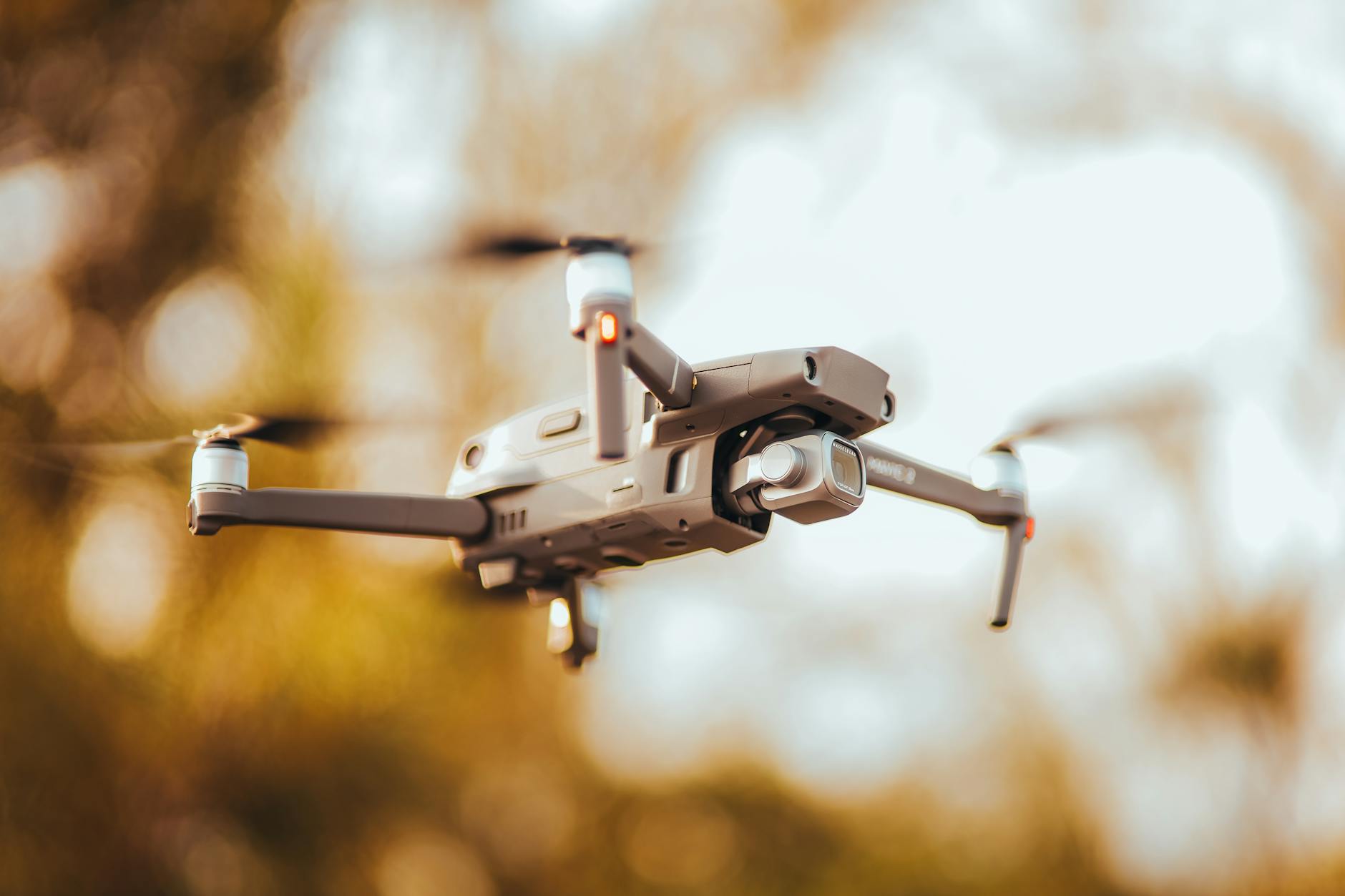

UAVS, trading at $0.91 per share as of April 2026, represents the kind of penny stock that periodically captures investor attention in the robotics sector—a small-cap drone manufacturer with real contracts, improving financials, and government backing, but significant volatility and execution risk. AgEagle Aerial Systems, Inc. (ticker: UAVS) has shifted from a perpetual money-loser into a company showing measurable traction with military customers and commercial clients, making it the type of speculative play that attracts traders seeking exposure to the booming drone market without the valuation premium of larger competitors. The recent 11.96% rally on April 14, 2026, following news of a U.S.
Army contract, illustrates both the opportunity and the whipsaw nature of trading at penny stock prices—genuine business wins can move the stock sharply, but so can disappointments. What makes UAVS noteworthy is not hype but substance: 35% year-over-year growth in drone sales during fiscal 2025, a margin improvement from 47% to 51.8%, and most crucially, a net loss tightening from $35 million to just $5.3 million. These numbers suggest a company moving toward profitability, not a shell struggling for relevance. However, at $0.91 per share, UAVS trades at less than 5% of its 52-week high of $3.69, reflecting both the volatility that defines penny stocks and the skepticism many investors maintain about the company’s ability to sustain growth and manage its capital structure.
Table of Contents
- Why Pentagon Contracts Matter for a Penny Stock Drone Maker
- The Financial Turnaround That Suggests Real Progress
- Government Contracts and the Path to Commercial Scale
- Volatility and the Penny Stock Reality
- Technology Positioning and Competitive Dynamics
- Capital Structure and Dilution Risk
- Future Outlook and Execution Dependency
- Conclusion
Why Pentagon Contracts Matter for a Penny Stock Drone Maker
Government contracts represent the most tangible signal that uavs has moved beyond the startup phase. In April 2026 alone, the company secured orders from the U.S. Army, including a nine-unit sale of eBee VISION ISR (Intelligence, Surveillance, and Reconnaissance) kits to the National Training Center and a 15-unit order from an Army unit in Europe. These aren’t hypothetical sales; they represent real procurement by end-users with budgets and specific operational needs. For context, the eBee VISION ISR is a fixed-wing tactical drone designed for autonomous surveillance missions, positioned to compete against systems from larger contractors like AeroVironment and DJI.
The significance of military adoption for a company at UAVS’s stage cannot be overstated. A single government contract can anchor quarterly revenue and signal product reliability to other potential customers. However, there’s a limiting factor: government procurement cycles are long, budgets are unpredictable, and contracts can be cancelled. The February 2026 Malaysian government purchase of an eBee TAC (tactical) drone shows UAVS can sell internationally, but this represents diversification of risk rather than a guaranteed revenue stream. For penny stock investors, the warning is clear—government orders are encouraging but not a foundation for valuation alone.

The Financial Turnaround That Suggests Real Progress
The most compelling argument for UAVS is the dramatic improvement in unit economics and losses over the past fiscal year. Going from a $35 million net loss to $5.3 million demonstrates that the company is scaling revenue faster than expenses, a prerequisite for any unprofitable tech company aiming for sustainability. The gross margin jump to 51.8%—up from 47%—indicates that either manufacturing is becoming more efficient or the product mix is shifting toward higher-margin offerings, both positive signs. Yet there’s a critical caveat: UAVS remains unprofitable and cash-dependent.
The company’s cash position of $29.9 million provides runway, but at a $5.3 million annual loss rate, that translates to roughly five years of operations without additional revenue growth or capital raising. The company has already raised $36.2 million in preferred equity and warrants and has a Series G financing agreement for up to $100 million in additional preferred financing. This dilution structure is typical for venture-backed companies but represents a significant risk for common stock holders, as future financing rounds often come at depressed valuations for existing shareholders. The improvement in fundamentals is real, but it doesn’t erase the structural risk that comes with operating in a capital-intensive industry while unprofitable.
Government Contracts and the Path to Commercial Scale
The U.S. Army’s procurement of UAVS drones signals that the platform meets military specifications and has cleared the security and integration hurdles required for defense applications. This is materially different from landing a commercial customer—government purchases involve months of evaluation, compliance verification, and documentation. The fact that UAVS has passed these gates multiple times suggests the hardware and software are robust enough for demanding operational use.
The Malaysian government’s purchase of the eBee TAC demonstrates that UAVS can compete in the international tactical drone market, a growing segment as countries outside the United States seek indigenous or allied drone capabilities. However, international sales introduce currency risk, export compliance complexity, and longer sales cycles. Importantly, these contracts remain small compared to what UAVS needs to justify its valuation and support growth. Military drones are a massive market—estimated in the tens of billions globally—but UAVS’s current contract values appear to be in the millions, not yet a material percentage of total addressable market.

Volatility and the Penny Stock Reality
The 52-week range from $0.724 to $3.69 encapsulates the penny stock experience: a 410% swing in valuation based on the same underlying business. UAVS rallied 11.96% on a single news release about the Army contract, typical of low-volume, low-price stocks where modest news drives outsized percentage moves. This volatility creates both opportunity and peril. On the opportunity side, a positive catalyst—a major commercial order, a strategic partnership, or a path to profitability—could trigger explosive upside. On the peril side, negative news, a delayed contract, or a competing product launch can trigger equally sharp downside moves.
The comparison to larger drone manufacturers is instructive. AeroVironment, a U.S.-listed competitor, trades at a substantial premium with a market cap in the billions because it has consistent revenue, profitability, and a diversified customer base. UAVS, by contrast, remains execution-dependent and heavily reliant on a few large customers. For penny stock traders, this is the core tradeoff: higher potential return against much higher volatility and real risk of permanent loss. The fact that the stock has recovered only to $0.91 from its 52-week high of $3.69 suggests that many investors who bought near the peak have faced significant losses, a cautionary tale for anyone considering entry at current levels.
Technology Positioning and Competitive Dynamics
UAVS operates in a highly competitive drone market where large players like DJI dominate consumer and commercial segments, while AeroVironment, Textron, and others control military and tactical niches. UAVS’s strategy appears focused on the tactical military and government surveillance segment, where it competes primarily on platform capability and compliance rather than price. The eBee VISION ISR is a fixed-wing design optimized for longer flight times and endurance, differentiating it from rotorcraft alternatives but limiting its adaptability for some missions. A significant risk for UAVS investors is technological disruption.
The drone market evolves rapidly, with advances in battery technology, AI-enabled autonomy, and hybrid designs constantly reshaping competitive positioning. Additionally, larger defense contractors with deeper pockets and established relationships could enter UAVS’s market segments. The Aerodrome Group investment—a strategic stake in an Israel-based autonomous loitering munition company with an option for a future U.S. joint venture—suggests UAVS is attempting to diversify its technology portfolio and position for next-generation platforms. However, this investment also indicates the company is aware of competitive pressure and may be hedging its bets on the eBee platform alone.

Capital Structure and Dilution Risk
UAVS’s reliance on preferred financing and warrant issuance introduces a structural headwind for common stock investors. The $36.2 million already raised in preferred equity means that common shareholders rank below preferred holders in any liquidation or restructuring scenario. The Series G financing agreement for up to $100 million in additional preferred financing could be accessed if the company accelerates growth or faces unexpected capital needs, further diluting common stock ownership.
For penny stock investors accustomed to higher-risk profiles, this capital structure is not unusual, but it’s worth understanding explicitly. If UAVS reaches profitability and becomes attractive to strategic acquirers or public investors, a transaction could benefit common holders, but any outcome short of strong growth and successful exit carries significant downside risk. The dilution mechanism is a tool for survival and growth but comes at the cost of reducing the value per share for existing common holders.
Future Outlook and Execution Dependency
UAVS’s path forward hinges on three variables: sustained government procurement, expansion into commercial markets, and the ability to reach cash flow breakeven before capital runs out. The recent Army contracts suggest government demand is real, but quarterly results will determine whether this is a trend or a one-time spike. Commercial opportunities exist in agriculture, infrastructure inspection, and environmental monitoring, but UAVS has shown limited progress in these segments relative to specialized competitors. The company’s strategic investments, including the Aerodrome Group stake, suggest management is positioning for longer-term growth beyond the current eBee platform.
If these bets pay off and UAVS successfully scales, penny stock investors could see meaningful returns. However, the execution risk remains high. For the robotics and automation sector broadly, UAVS exemplifies a category of companies—underfunded relative to the opportunity but with real technology and real customers—that periodically surface as penny stocks. Whether UAVS evolves into a sustainable mid-cap company or remains a speculative trade depends on the next 18 to 24 months of execution.
Conclusion
UAVS is a penny stock for a reason: it’s small, unprofitable, volatile, and execution-dependent. However, it’s also a company with improving fundamentals, real military contracts, and a product that works in demanding operational environments. The penny stock classification reflects market skepticism about the company’s ability to scale sustainably and manage its capital structure, not the absence of genuine business activity.
For traders and investors considering exposure, the opportunity lies in the improving unit economics and government traction, but the risks are equally significant—dilution, competitive pressure, and the capital intensity of the drone manufacturing business. The 35% drone sales growth, margin improvement, and loss reduction during fiscal 2025 demonstrate that UAVS is moving in the right direction, but the journey from a $5.3 million loss to profitability at a $0.91 stock price requires flawless execution and favorable market conditions. For those willing to tolerate volatility and accept the possibility of permanent loss, UAVS represents the type of robotics sector exposure that periodically generates outsized returns—but only for investors with the risk tolerance and time horizon to weather the inevitable swings between $0.70 and $3.70 that define penny stock trading.