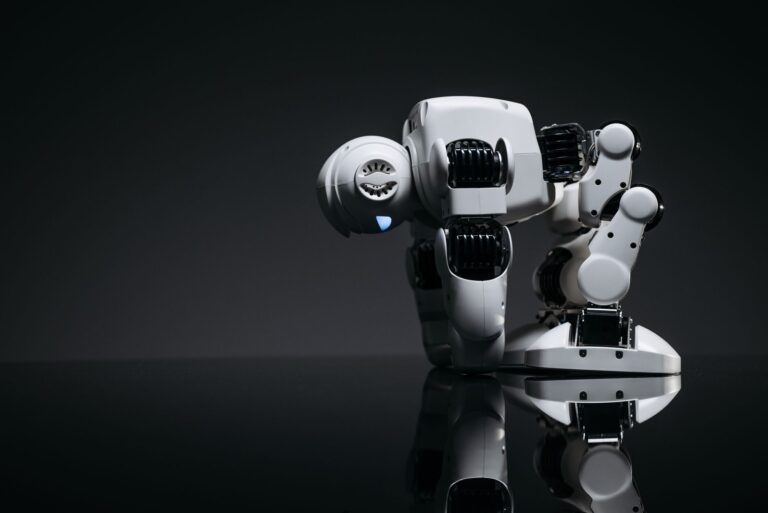

A pure-play robotics microcap is a small-cap company whose primary business focus is designing, manufacturing, or supplying robots and automation systems without significant diversification into other industries. Unlike large conglomerates that may bundle robotics within broader industrial portfolios, pure-play microcaps put all their eggs in the automation basket—meaning their financial performance rises or falls almost entirely on the strength of robotics demand. These companies typically trade with a market capitalization under $500 million and often operate in niches like collaborative robots for small manufacturers, specialized industrial arms for specific applications, or software platforms that orchestrate robotic systems.
The appeal of investing in or tracking a pure-play robotics microcap lies in its focused exposure to an industry expected to grow substantially in the coming decades. Unlike a diversified industrial company where robotics contributes only a fraction of revenue, a pure-play microcap’s entire valuation reflects robotics adoption trends. However, this concentration also means volatility is amplified—a single contract win can send the stock soaring, while a manufacturing disruption or delayed customer adoption can cause sharp declines. Companies in this category often struggle with profitability in their early years while building market share, and access to capital can be constrained compared to larger, more established competitors.
Table of Contents
- Why Pure-Play Robotics Companies Choose the Microcap Space
- Market Positioning and Competitive Dynamics in Robotics
- Technology and Product Development in Robotics Microcaps
- Investment Considerations and Market Timing
- Profitability Challenges and Operational Risks
- Customer Support and Service Ecosystems
- Future Outlook and Market Evolution
- Conclusion
Why Pure-Play Robotics Companies Choose the Microcap Space
Pure-play robotics companies remain in the microcap territory for several structural reasons related to market development and scaling challenges. The robotics industry is still in a growth phase where companies need to prove their technology works in real-world conditions before attracting massive customer bases. A company like Universal Robots started as a startup backed by venture capital and took years to reach profitability—remaining small and focused allowed it to refine its collaborative robot technology without the pressure of serving legacy business units. For microcap players, this means they can pivot quickly, target emerging applications before larger competitors notice them, and maintain a lean operation focused entirely on robotics innovation.
The capital requirements also explain why some companies remain small by choice rather than circumstance. A robotics company focused on a specific vertical—say, sorting automation for warehouses or precision assembly for medical devices—may have a total addressable market that supports $100–$300 million in annual revenue at peak maturity. Scaling beyond that niche requires either expanding into adjacent markets or acquiring complementary technologies, both of which are challenging for a company that started with a narrow focus. This reality means many pure-play robotics microcaps will never become mega-cap companies, and investors need to understand that the “small” is often fundamental to the business model rather than a temporary stage.

Market Positioning and Competitive Dynamics in Robotics
Pure-play robotics microcaps occupy a different competitive tier than giants like ABB, Fanuc, or Yaskawa, which dominate traditional industrial automation. These larger players have established relationships with major manufacturers, proven track records spanning decades, and vast service networks—advantages that a small competitor cannot easily replicate. Instead, pure-play microcaps succeed by targeting underserved segments: smaller manufacturers who find ABB’s systems overengineered and expensive, applications where existing robots are inadequate, or geographies where large manufacturers have weak distribution. A microcap company might specialize in soft robotics for food handling, or in AI-driven robot vision systems that solve problems legacy manufacturers haven’t addressed.
The limitation here is customer concentration risk. A microcap robotics company often depends on a handful of major contracts to drive revenue growth. If a key customer reduces orders or defects to a competitor, the impact on overall earnings can be severe—unlike a diversified industrial giant that can absorb the loss within its broader portfolio. Additionally, microcaps typically lack the R&D budget of larger competitors, which can slow innovation and create windows of vulnerability when a better-funded rival enters their niche. One comparative example: a microcap developing autonomous mobile robots for warehouses may have a 3-year technology lead, but a well-funded deep-pocketed competitor can close that gap within 18 months if the market becomes attractive enough.
Technology and Product Development in Robotics Microcaps
The robotics microcaps that survive tend to be intensely focused on solving a specific technical problem exceptionally well. This might mean developing a robot arm that operates in high-temperature environments, creating software that allows non-engineers to program robots, or building a platform that manages fleets of autonomous machines. Because they cannot compete on scale or global distribution, these companies compete on innovation—their robots must do something notably better, cheaper, or differently than existing options. For example, a microcap company pioneering collaborative robots designed specifically for small batch manufacturing may succeed because it offers simplicity and affordability that Fanuc’s industrial robots, designed for high-volume production, cannot match.
However, technology alone is insufficient—these companies must also manage the heavy capital requirements of scaling production while maintaining R&D spending. Unlike software startups that can grow revenue with minimal additional capital, a robotics company must build factories, manage supply chains, and maintain inventory of specialized components. Many promising robotics microcaps have stumbled here, securing initial customer adoption but running out of cash before they could manufacture units at sufficient scale to become profitable. The warning sign for investors or customers evaluating a robotics microcap is a company with impressive technology but uncertain funding and weak gross margins, which suggests manufacturing efficiency hasn’t yet caught up with design sophistication.

Investment Considerations and Market Timing
Investing in or relying on a pure-play robotics microcap requires understanding that timing and industry cycles matter enormously. When robotics adoption accelerates—driven by labor shortages, competitive pressure on manufacturing costs, or technological breakthroughs—microcaps in the right segments can see explosive growth. Conversely, during recessions or periods when manufacturers focus on cost-cutting rather than equipment upgrades, small robotics companies often face severe headwinds because they lack the customer relationships and service ecosystems that larger competitors rely on for stability. A microcap may have achieved only 15 percent gross margin while trying to scale, leaving it vulnerable to any downturn.
The tradeoff in dealing with robotics microcaps is choosing between upside potential and stability. A large robotics supplier like ABB will grow at perhaps 5–8 percent annually during normal economic periods, with predictable revenue streams and established profit margins. A pure-play microcap might offer 50 percent revenue growth if everything aligns—customer adoption accelerates, manufacturing scales, and the company successfully enters adjacent markets—but it could also see its customer base consolidate or defect to larger competitors, resulting in revenue declines. For manufacturers evaluating suppliers, using a microcap means access to cutting-edge technology and personalized service, but also accepting the risk that the company might not be around in five years or might be acquired and integrated into a larger player where that specialized focus disappears.
Profitability Challenges and Operational Risks
Most robotics microcaps operate at thin margins or even losses during their growth phase, burning cash to fund R&D and market development. The path to profitability is long because the industry requires upfront investment in prototyping, manufacturing capability, and field support without guarantee of return. A company with a promising robot design might take 5–7 years to achieve 20 percent gross margins if it’s fortunate, and longer if it enters a crowded segment where pricing pressure intensifies. This creates a critical vulnerability: a robotics microcap can innovate brilliantly but still fail financially if it miscalculates the timing of when its market will materialize or if it underestimates the capital needed to reach profitability.
Supply chain dependencies also threaten robotics microcaps disproportionately. Unlike diversified manufacturers that can shift sourcing or absorb component cost increases, a small robotics company operating on thin margins has limited flexibility. A semiconductor shortage, a disruption at a key supplier, or rising logistics costs can quickly erode margins to unprofitable levels. Additionally, regulatory changes—such as new safety standards for collaborative robots or tariffs on imported components—can force rapid redesigns or cost increases that a microcap is less equipped to handle than an established competitor with global scale. The warning: a robotics microcap’s financial statements may look stable in one quarter but collapse in the next if operational assumptions shift unexpectedly.

Customer Support and Service Ecosystems
One practical advantage pure-play robotics microcaps offer is dedicated customer support and willingness to customize. A large robotics manufacturer sells standardized solutions; a microcap, especially in early growth phases, often provides white-glove service, technical customization, and close collaboration with key accounts. This can be valuable for manufacturers with non-standard automation challenges or specific industry requirements.
However, this advantage is also a limitation: the microcap’s ability to provide comprehensive global support, spare parts availability, and multi-year service contracts is constrained by its size. When evaluating a robotics microcap as a supplier, consider whether it has established service centers in your region or through authorized partners. A company brilliant at innovation but weak at service could leave you stranded if the robot requires repairs and the microcap lacks local technicians or spare parts inventory. Larger robotics companies build extensive ecosystems of integrators and service partners over decades; a microcap starting this process will take years to build equivalent support infrastructure, creating a real risk if your operation becomes dependent on their technology.
Future Outlook and Market Evolution
The robotics industry is expected to grow substantially over the next decade, driven by labor shortages, advancing AI and vision capabilities, and declining robot costs. In this environment, pure-play robotics microcaps face both opportunity and pressure. Those focused on emerging applications—such as soft robotics, humanoid robots, or autonomous mobile manipulation—could become valuable acquisition targets for larger companies or grow into meaningful independent players if they execute well. Conversely, microcaps locked into mature segments like traditional industrial arms face competitive commoditization as larger, better-capitalized players consolidate the market.
The forward-looking reality is that the robotics microcap category will likely see significant consolidation. Some companies will be acquired by ABB, Siemens, or other industrial giants seeking specific technologies or market positions. Others will fade as competitors with deeper resources outspend them in R&D or manufacturing efficiency. A smaller subset will escape the microcap tier by becoming dominant players in genuine niche markets or by expanding into adjacent segments successfully. For anyone tracking pure-play robotics microcaps, the key is distinguishing between companies with durable competitive advantages—proprietary technology, strong customer relationships, or entry into a truly large market—versus those with trendy products that larger competitors could easily replicate if the market proves large enough.
Conclusion
A pure-play robotics microcap represents a focused bet on the robotics industry’s ability to expand beyond its current markets and established competitors. These companies offer the potential for innovation-driven growth and exposure to emerging automation trends that larger, diversified manufacturers may not pursue aggressively.
However, the microcap structure brings real constraints: limited capital, concentration risk, operational vulnerability, and the perpetual challenge of achieving profitability while scaling manufacturing and innovation simultaneously. For manufacturers, partners, or investors evaluating such companies, the key is to assess whether the microcap’s specific focus addresses a genuine, growing market need and whether the team has the financial resources and operational discipline to reach profitability within a reasonable timeframe. The robotics industry will certainly grow; the question is whether any given microcap will be part of that growth or whether it will be consolidated, outcompeted, or run out of capital before its technology can fully mature.