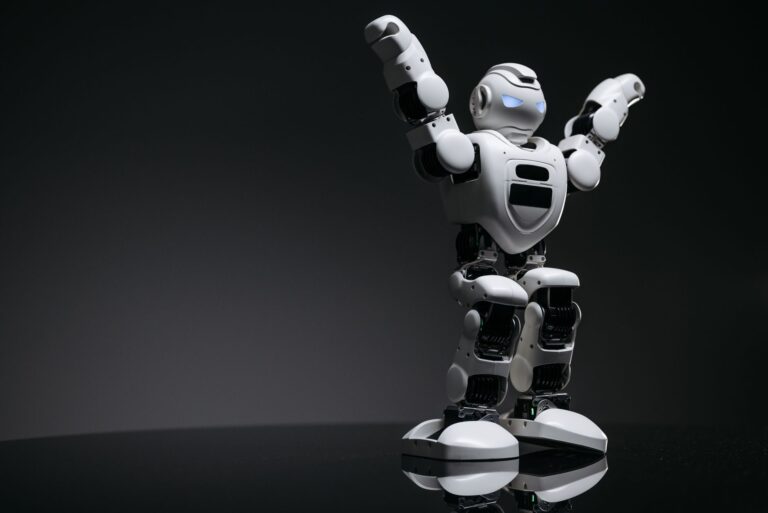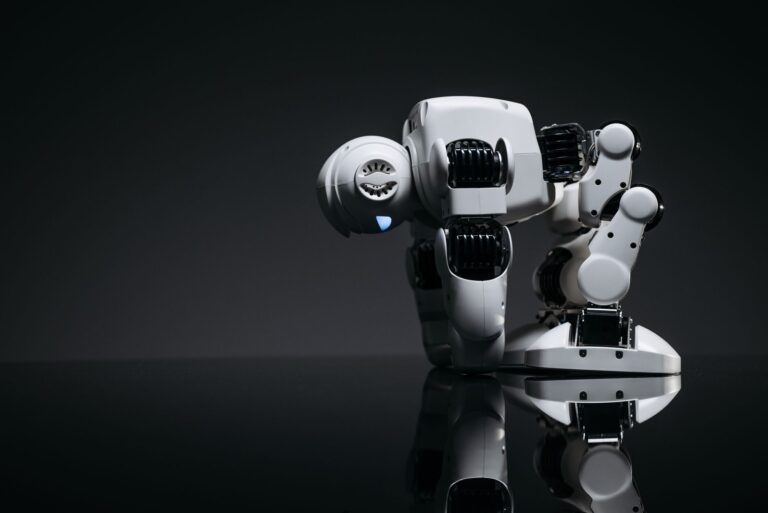

Rockwell Automation (ROK) represents one of the most substantial long-term plays in the industrial robotics and automation sector, offering investors exposure to the structural shift toward factory modernization and digital manufacturing. The company has spent over 130 years building the backbone of industrial automation, from programmable logic controllers (PLCs) to integrated software platforms that coordinate entire manufacturing operations. ROK isn’t a flashy robotics manufacturer like Boston Dynamics; instead, it’s the critical infrastructure that makes modern factories actually run—controlling everything from conveyor systems to robotic arms across hundreds of thousands of facilities worldwide.
What makes ROK a compelling long-term thesis is that its products sit at the convergence of three unstoppable trends: aging industrial infrastructure requiring replacement, labor shortages driving factory automation adoption, and the digital transformation of manufacturing. A semiconductor fab can’t operate without ROK’s control systems. A food processing plant replacing manual packaging with robotic lines relies on ROK’s software to orchestrate the machinery. As manufacturers face decades-old equipment reaching end-of-life and tighter labor markets, they’re forced to modernize rather than simply maintain the status quo.
Table of Contents
- Why Rockwell Automation Dominates Industrial Control Systems
- The Digital Transformation of Manufacturing Creates Sustained Demand
- Labor Shortages Are Forcing Factories to Automate at Scale
- Investment Considerations and Valuation Mechanics
- Supply Chain Dependency and Cyclical Risks
- Real-World Applications Across Industries Show Breadth of Opportunity
- The Structural Tailwinds Will Persist for Decades
- Conclusion
Why Rockwell Automation Dominates Industrial Control Systems
Rockwell’s dominance stems from a fortress of competitive advantages built over decades of refinement. The company controls roughly 30% of the global industrial automation market, but the real competitive moat is something deeper: lock-in. Once a manufacturer standardizes their factory floor on ROK’s PLCs, control software (FactoryTalk), and networking protocols (EtherCAT), switching to a competitor becomes extraordinarily expensive and disruptive.
Retraining technicians, rewriting control logic, and managing downtime during migration create switching costs that protect ROK’s market position indefinitely. The company’s recent acquisition of Plex Systems (a cloud-based manufacturing execution system) for $1.3 billion signals a deliberate strategy to move beyond hardware controllers and into software-as-a-service. This shift is crucial because SaaS generates recurring revenue with higher margins—a factory that licenses Plex for production scheduling creates a predictable, multi-year revenue stream compared to one-time controller sales. Combined with ROK’s push into Industrial Internet of Things (IIoT) connectivity, the company is transitioning from a cyclical hardware vendor into a stickier subscription-based model.
The Digital Transformation of Manufacturing Creates Sustained Demand
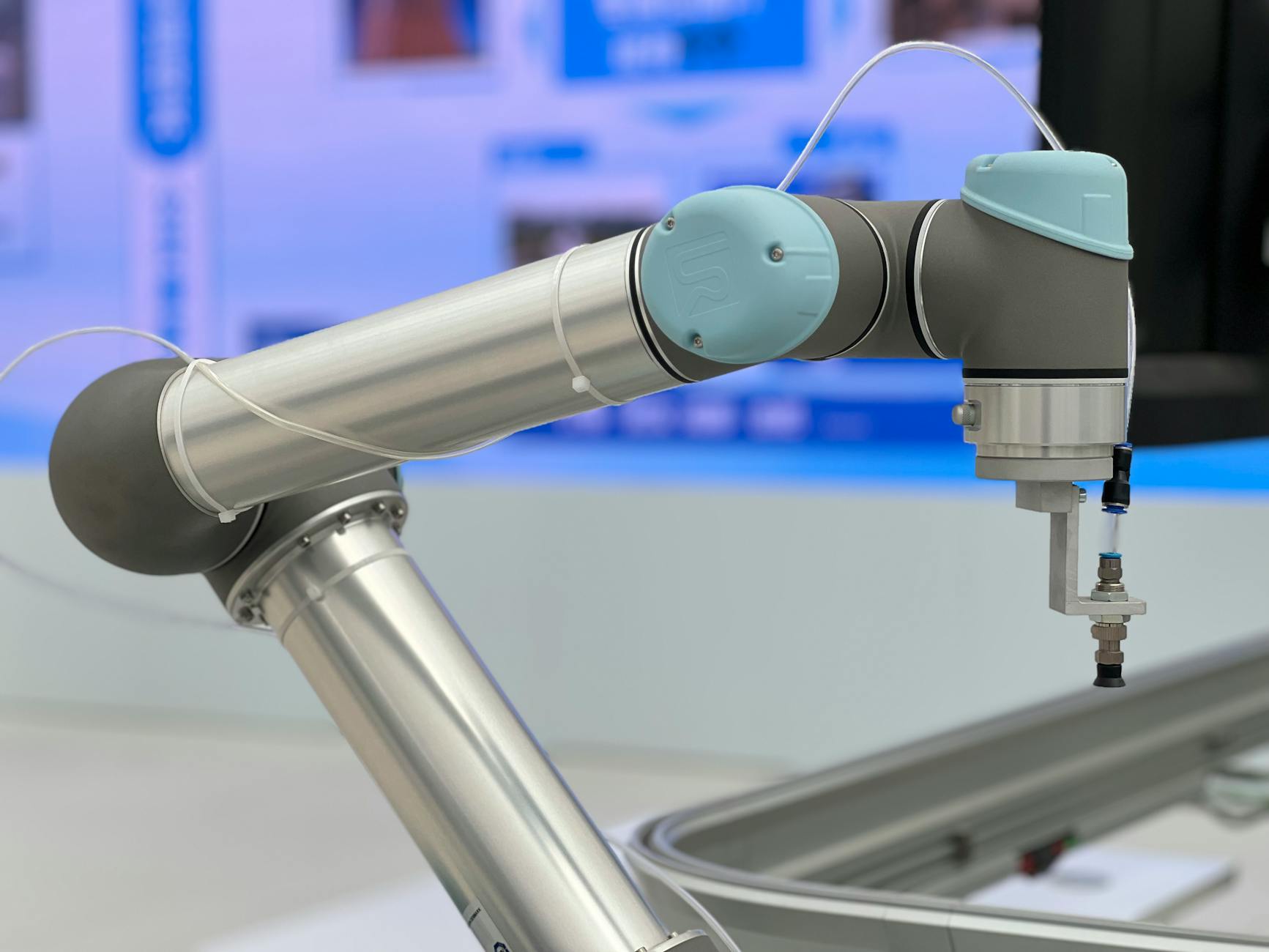
Manufacturing worldwide is in the early stages of what’s often called Industry 4.0—the integration of data analytics, cloud computing, and artificial intelligence into production processes. rok sits directly in the center of this transformation. Its software platforms now ingest data from thousands of sensors on a factory floor, feeding that information into cloud-based analytics that help manufacturers identify inefficiencies, predict equipment failures, and optimize production schedules in real time. However, this digital shift comes with real friction.
Older factories (which make up the bulk of industrial installations globally) were built on closed-loop systems that have no cloud connectivity or data infrastructure. Retrofitting these facilities with IoT sensors and connecting them to ROK’s cloud platforms requires significant capital investment and technical expertise that many smaller manufacturers lack. This creates a limitation: while large automotive, semiconductor, and pharmaceutical companies race to digitalize, mid-sized manufacturers often lack the budget and talent to fully adopt ROK’s advanced software capabilities. For investors, this means ROK’s software revenue growth—while higher-margin—may grow more slowly than hardware sales in certain regions and industries.
Labor Shortages Are Forcing Factories to Automate at Scale
One of the most overlooked drivers of ROK’s long-term growth is the severe shortage of skilled factory workers across developed economies. The United States alone faces shortages of more than 500,000 manufacturing workers, with similar pressures in Europe and Japan. This isn’t a cyclical unemployment issue; it’s structural. Younger workers often avoid factory work, and existing workers are retiring faster than replacements are entering the field.
As a result, manufacturers have no choice but to automate. ROK benefits directly from this pressure because labor-intensive industries—food and beverage processing, automotive component manufacturing, logistics—are the first to adopt robotic systems, and ROK’s control platforms orchestrate the entire operation. When a snack food manufacturer moves from 200 employees hand-packaging products to a fully automated line with 20 technicians managing ROK-controlled robots, ROK wins both the initial platform installation and years of ongoing software maintenance and upgrades. Real-world example: automotive suppliers in North America have increased robotic deployment by over 40% in the past five years, directly correlating with the manufacturing talent shortage.

Investment Considerations and Valuation Mechanics
Evaluating ROK as a long-term holding requires understanding its mixed cash generation model. The traditional hardware business (controllers, drives, sensors) generates steady but slow growth—roughly 3-5% annually in mature markets. The software and services segment grows faster (10-15% annually), but represents a smaller portion of total revenue. ROK’s enterprise value reflects expectations that software will eventually comprise 40-50% of total revenue, versus roughly 25% today.
This creates a valuation tradeoff: current shareholders benefit from stable hardware margins while betting that management can successfully execute the software transition. The company’s capital intensity also matters for investors. Building and maintaining cloud infrastructure, funding R&D for AI-driven analytics, and integrating acquired companies like Plex requires billions in annual spending. Unlike pure software companies that scale with minimal incremental cost, ROK must continuously invest to maintain its technological edge. This means ROK’s free cash flow margins, while healthy at 15-20%, will likely remain below pure SaaS businesses operating at 30-40% margins.
Supply Chain Dependency and Cyclical Risks
ROK’s business carries inherited cyclicality from manufacturing itself. When factories face recession or economic uncertainty, capital spending on new automation systems drops sharply. During the 2020 COVID-19 lockdowns, ROK’s orders fell 20% as manufacturers froze spending. While hardware demand eventually bounced back, this volatility creates real risk for investors seeking smooth growth.
Long-term thesis investors must accept that ROK shares will decline during manufacturing downturns, even if the underlying automation trends remain intact. The company’s supply chain has also been tested repeatedly. Semiconductor shortages in 2021-2022 limited ROK’s ability to fulfill orders for embedded controllers, forcing customers to wait months for delivery. As ROK expands its software footprint, it’s less exposed to chip supply problems, but legacy hardware customers still depend on component availability. Additionally, ROK derives roughly 40% of revenue from outside North America, creating currency exposure and geopolitical risks that the company cannot fully hedge.
Real-World Applications Across Industries Show Breadth of Opportunity
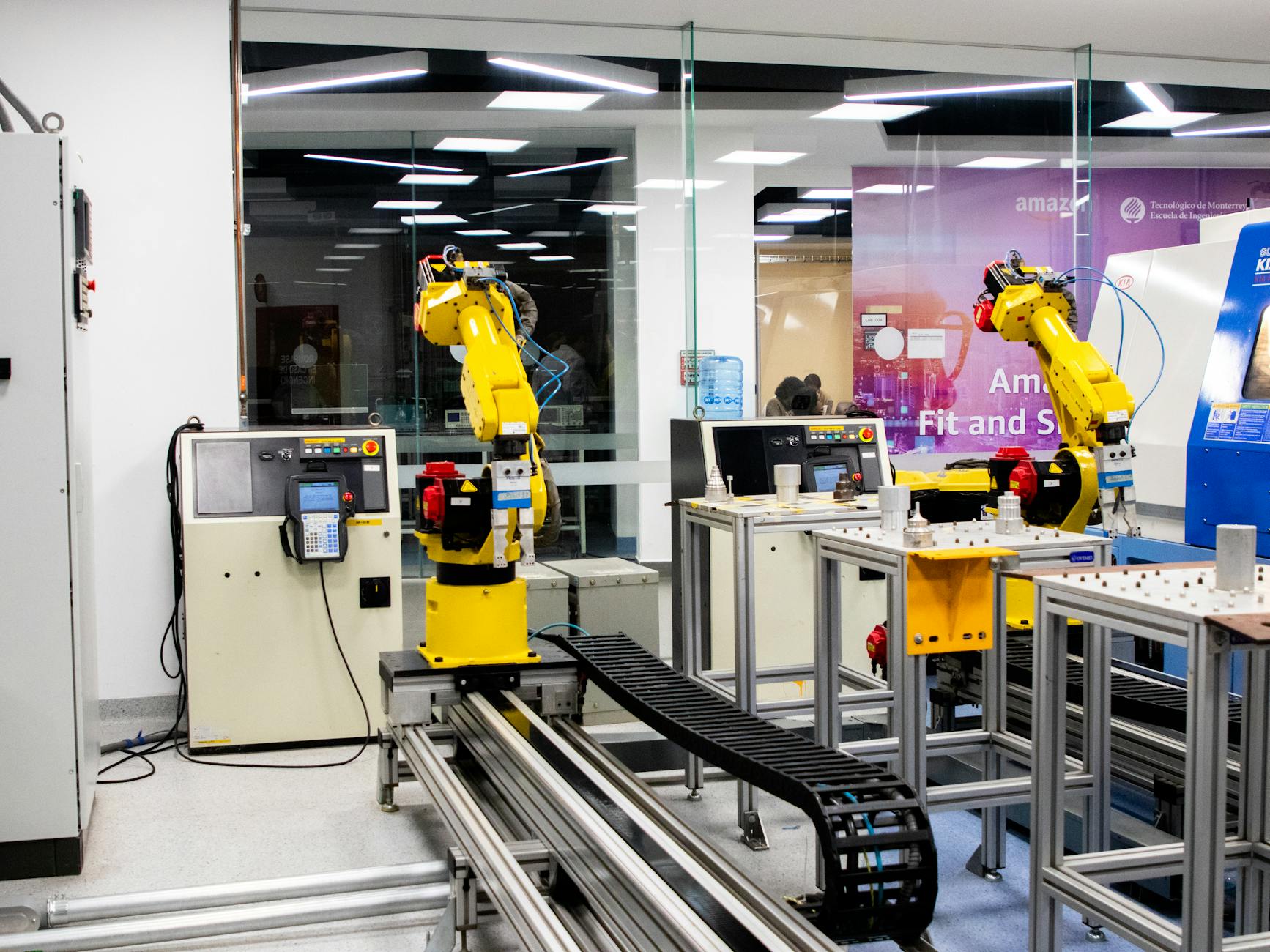
ROK’s technology footprint is unusually broad because almost every manufacturing sector requires automation controls. In pharmaceutical manufacturing, ROK systems manage cleanroom automation and ensure precise dosing in tablet production—where deviation costs millions and risks patient safety. In semiconductor fabrication, ROK’s integrated platforms coordinate wafer handling, lithography alignment, and quality inspection at microscopic tolerances. In food and beverage, ROK manages high-speed packaging lines operating at thousands of units per hour.
Each vertical carries different growth dynamics: pharma automation is growing at 12% annually due to increased production safety requirements, while food processing automation is growing at 8% but from a much larger installed base. A concrete example illustrates ROK’s stickiness: a mid-sized beer brewery in the Midwest completely automated its canning line using ROK controllers and software in 2018. The system integrates speed controllers, labeling systems, and quality inspection into a single coherent operation. Seven years later, the brewery has never replaced a single ROK component—instead, it has continuously upgraded software, added IoT monitoring, and extended the system to handle new product lines. That brewery is now ROK’s customer for life, paying annual software maintenance fees and licensing fees for upgrades.
The Structural Tailwinds Will Persist for Decades
Looking forward, the drivers supporting ROK’s long-term thesis are decades away from exhaustion. Global manufacturing capacity will need to be rebuilt over the next 20 years as aging facilities reach end-of-life. Climate pressure is driving energy-efficient manufacturing, which requires modern automation platforms to optimize power consumption. Geopolitical reshoring initiatives—particularly in semiconductors and critical industries—will create waves of new factory construction where ROK’s technology will be standard.
Additionally, the emergence of collaborative robots and AI-powered predictive maintenance opens entirely new product categories where ROK is positioned to lead. The company’s recent focus on building an ecosystem through acquisitions and partnerships signals management confidence in these trends. By acquiring Plex, expanding its software library, and developing integration partnerships with cloud providers like AWS and Microsoft, ROK is positioning itself not as a hardware vendor but as the operating system of the modern factory. For investors with a 10-20 year horizon and tolerance for cyclical volatility, this structural positioning offers genuine durability.
Conclusion
Rockwell Automation merits serious consideration as a long-term robotics and automation play for investors willing to look beyond flashy consumer robotics toward the foundational infrastructure that actually powers global manufacturing. The company’s entrenched market position, recurring software revenue streams, and exposure to structural forces—labor shortages, aging infrastructure, and digital transformation—create a compelling multi-decade investment thesis.
However, this is not a high-growth technology stock; it is a boring, essential infrastructure company that will benefit from inevitable industrial modernization rather than revolutionary disruption. For those considering ROK, the key questions aren’t whether automation will continue growing—that’s inevitable—but whether the company can successfully transition from a hardware vendor to a software-driven platform provider while maintaining its market leadership during inevitable manufacturing cycles. The evidence suggests management can execute this transition, but patience and acceptance of volatility are requirements for this particular long-term play.