
SERV represents one of the most ambitious attempts to build a comprehensive autonomous delivery ecosystem, drawing comparisons to Amazon’s dominance in e-commerce through its vertical integration of logistics, technology, and infrastructure. The company’s approach goes beyond single-use robots—SERV has developed an integrated platform that handles last-mile delivery at scale, incorporating hardware, software, operations, and now regulatory compliance into a unified system. This architectural approach mirrors Amazon’s strategy in other verticals: owning the full stack rather than licensing technology piecemeal. SERV’s positioning becomes clearer when examining its expansion into multiple geographies simultaneously.
Unlike earlier autonomous delivery startups that focused on proof-of-concept in single cities, SERV has pursued simultaneous operations across the United States, Europe, and other markets. This parallel deployment strategy, combined with the company’s focus on building its own fleet rather than licensing to third parties exclusively, reveals an ambition to become the infrastructure layer for autonomous delivery—much like Amazon Web Services operates in cloud computing. The comparison to Amazon also reflects SERV’s willingness to absorb losses in the short term to establish market dominance. Early autonomous delivery companies often struggled with unit economics; SERV has signaled it understands this requires deep capital reserves and patience.
Table of Contents
- What Sets SERV Apart in the Autonomous Delivery Market
- Technical Architecture and Current Limitations
- Deployment in Real-World Environments
- Business Model and Operational Economics
- Challenges and Regulatory Warnings
- Safety, Integration, and Operational Lessons
- Future Outlook and Market Trajectory
- Conclusion
What Sets SERV Apart in the Autonomous Delivery Market
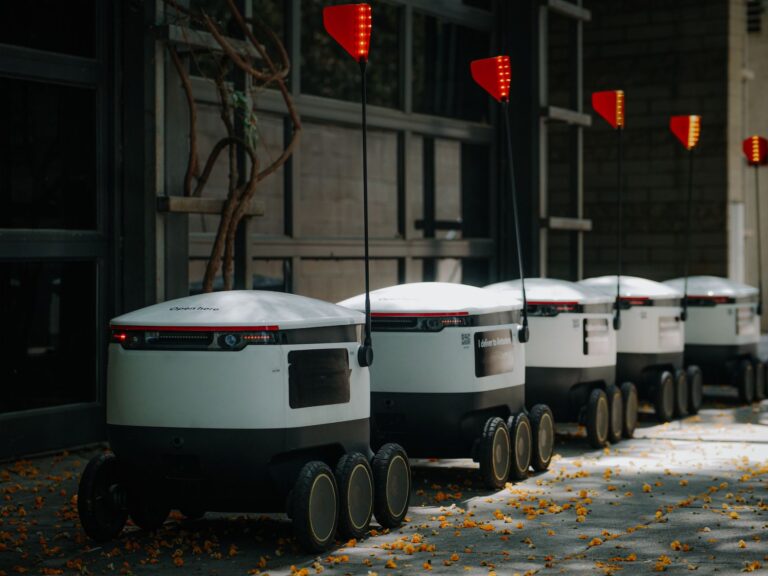
The autonomous delivery space has become crowded, with competitors ranging from Waymo to Nuro to Refraction AI each pursuing different strategies. SERV distinguishes itself through its choice of robot form factor and operational model. Rather than adapting existing vehicle platforms or creating experimental prototypes, SERV designed robots specifically for the sidewalk environment—roughly four feet tall, wheel-based, with a cargo capacity of 20-30 pounds per trip. This specialization contrasts with some competitors who attempted to use smaller robots (too limited in capacity) or modified autonomous vehicles (too expensive, too visible on sidewalks). The operational model matters equally. SERV has built what amounts to a “robot franchising” system for municipalities and logistics partners, providing robots, software, maintenance, and regulatory navigation as a bundled service.
This differs fundamentally from companies selling robot units and walking away. For a delivery partner, the appeal is clear: they gain autonomous delivery capability without becoming experts in robotics maintenance, software updates, or navigating city-by-city regulatory approval. However, this also means SERV bears significant operational burden—a single widespread software bug or mechanical failure could impact dozens of partnerships simultaneously. Geographic expansion demonstrates the model’s ambition. SERV has operated pilot programs in San Francisco, Tokyo, Milton Keynes (UK), and other cities, each with distinct regulatory environments. Successfully navigating Tokyo’s strict rules around pedestrian interaction, UK rules around autonomous operation on pavements, and American city-by-city approval processes simultaneously is operationally complex but creates defensible barriers to entry. Competitors must either build this regulatory expertise in-house or enter markets where it’s less required.

Technical Architecture and Current Limitations
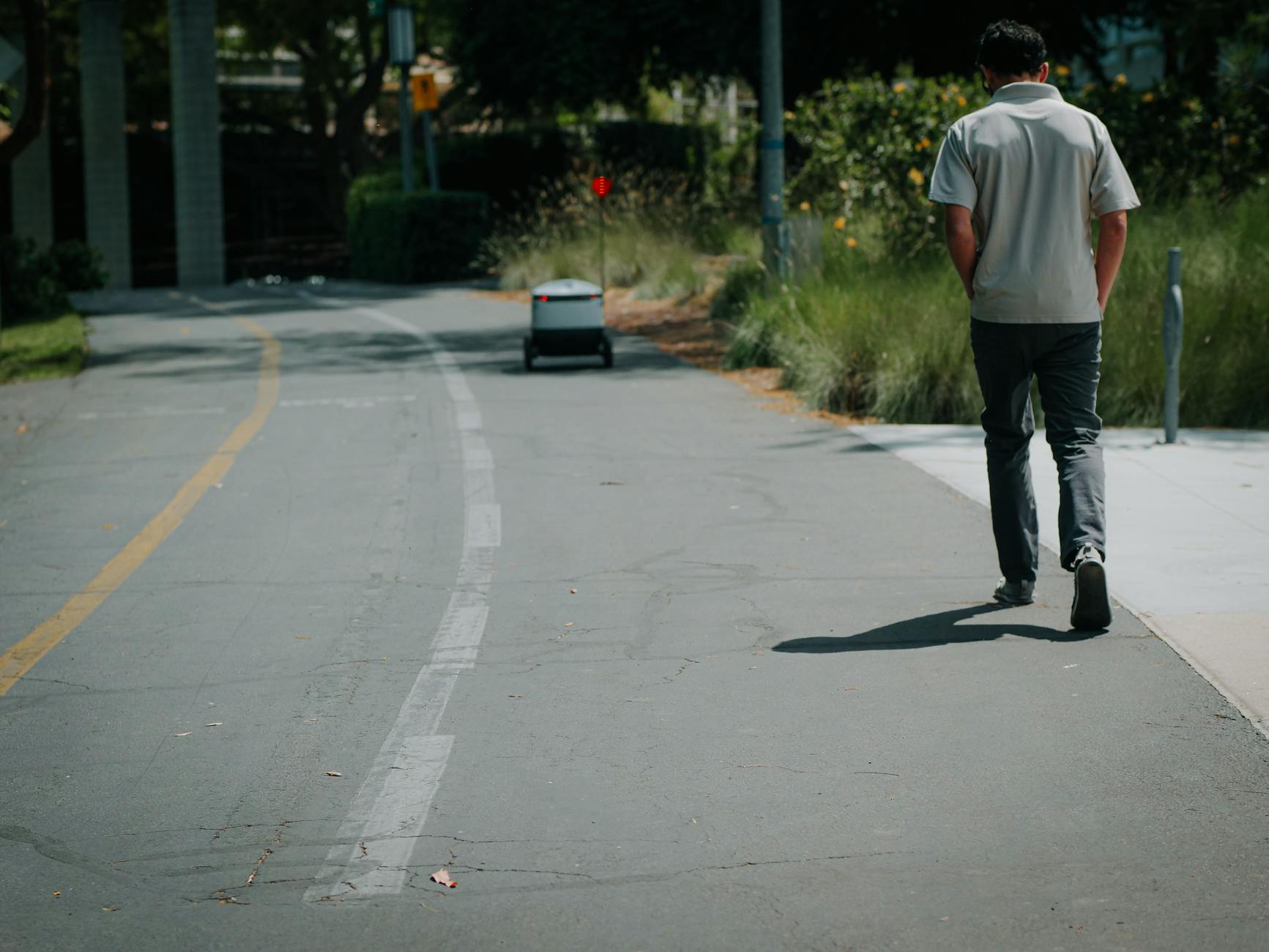
SERV robots rely on LiDAR, cameras, and possibly radar for perception—a multimodal sensor suite that has become standard in autonomous vehicles. The real challenge isn’t perception; it’s prediction and real-time decision-making in crowded pedestrian environments. A sidewalk in San Francisco at noon presents vastly more complexity than a suburban residential street. Children running unpredictably, bicycle couriers moving at variable speeds, and temporary obstacles like opened car doors create an environment where sensor fusion alone insufficient—the robot must understand human intent and communicate clearly. Communication is a critical but often-overlooked element of SERV’s system. The robots include lights, sounds, and behavioral signaling designed to indicate intent to pedestrians. If a robot approaches a person, does it slow down? Speed up? Stop? Get out of the way? These aren’t algorithmic questions alone; they’re questions of human-robot interaction.
SERV has invested in research here, but the solution varies by geography—what works in Tokyo may not work in Texas because pedestrians have different expectations about robot behavior. A significant limitation emerges from payload constraints. SERV robots carry roughly 20-30 pounds, which covers many deliveries but not all. A grocery delivery of 15 items might exceed this weight. Multiple trips solve the problem economically but increase time and cost. Competitors with larger robot platforms or those using modified autonomous vehicles can carry more per trip, creating a unit-economics advantage in certain delivery scenarios. SERV must therefore target delivery types where small, frequent trips work: restaurant orders, pharmacy pickups, parcel deliveries, small grocery items.
Deployment in Real-World Environments
San Francisco serves as SERV’s marquee example. The city‘s tech-friendly environment, density, and regulated pilot program structure made it an ideal testing ground. SERV robots began operating in limited geographies within San Francisco, delivering for local restaurants and retailers. Initial feedback highlighted both capabilities and friction points. Pedestrians generally found the robots non-threatening and even charming; construction sites and double-parked cars created unexpected obstacles. Rain affected sensor performance in ways initial planning hadn’t fully accounted for. Tokyo represents a different deployment model. Rather than operating as a merchant delivery service, SERV positioned itself as a logistics provider within the city’s tight regulatory environment.
Japanese pedestrians interact with robots differently—there’s less suspicion, more curiosity. However, Tokyo’s infrastructure presents unique challenges. Utility boxes, delivery trolleys, and outdoor restaurant seating create a cluttered sidewalk environment that demands precise navigation. The successful operation here proved the robots could handle non-US environments, but also showed that localization isn’t just regulatory; it’s deeply environmental and cultural. Milton Keynes, an English city specifically designed for vehicle-centric planning, offered yet another context. Wide sidewalks, lower pedestrian density, and a more car-oriented culture created conditions where autonomous robots could operate without much friction. But this also meant the company gained less learning about operating in truly dense environments. A robot that works smoothly in Milton Keynes might struggle in London or Manchester.
Business Model and Operational Economics
SERV’s business model hinges on solving the “last-mile crisis” in logistics. For food delivery, e-commerce fulfillment, and pharmacy operations, the last mile represents 50 percent or more of total delivery cost. Autonomous robots promise to reduce this to marginal costs once the fleet is deployed—perhaps 30-50 cents per delivery after amortization of robot hardware. If SERV can achieve this, the economics transform. However, current reality is messier. Robot hardware costs roughly $15,000-$25,000 per unit depending on sensors and build quality. Software development, maintenance, insurance, and regulatory compliance add overhead.
A single robot must complete roughly 10-20 deliveries per day to reach profitability, and that assumes high utilization rates and no major repairs. Compared to a delivery driver who might complete 40-50 deliveries daily, the robot economics remain challenged. Partnerships solve some of this. If SERV operates robots on behalf of multiple delivery partners—food delivery, e-commerce, pharmacy, local retail—a single robot can be utilized across multiple customers throughout the day. This creates network effects; each new customer partner improves unit economics for existing partners. This is Amazon-like thinking: the platform becomes more valuable as more participants join. But executing this requires building trust and integration with multiple logistics networks, which is slow and expensive.
Challenges and Regulatory Warnings
Regulation remains the largest wildcard. Each city, state, and country has different rules about autonomous operation on public property. Some prohibit operation; others permit it under strict conditions (designated streets, speed limits, human monitoring). SERV’s simultaneous operation in multiple jurisdictions means it must maintain different operational software and hardware configurations. A feature that works in San Francisco might be prohibited in Los Angeles. This regulatory complexity creates operational drag—it’s harder to benefit from economies of scale when you can’t run identical robots identically across different cities. Insurance and liability present another barrier. If a SERV robot causes injury to a pedestrian or property damage, liability may fall on SERV, the delivery partner, the city, or some combination.
This ambiguity makes underwriting expensive and deters insurance companies from offering coverage at reasonable rates. Some cities require operations to be bonded; others require operators to be insured for specific amounts. Until liability frameworks stabilize through legislation and case law, autonomous delivery companies bear significant tail-risk exposure. Bad weather poses a real constraint. Rain degrades LiDAR performance. Snow obscures camera vision. Extreme heat can damage batteries. In climates with harsh winters or tropical downpours, robot utilization drops seasonally. This seasonal variation makes capacity planning difficult—you must buy robots to handle peak season but underutilize them in bad weather, which damages unit economics.

Safety, Integration, and Operational Lessons
SERV robots have generally maintained good safety records, but near-miss incidents teach important lessons. A robot approaching a child at an intersection must respond to unpredictability in ways that exceed standard autonomous vehicle decision-making. A car can detect a pedestrian and brake; a robot operating on a sidewalk must navigate around people, not just avoid hitting them. Integration with existing logistics infrastructure creates friction. SERV robots need to pick up orders from restaurants or fulfillment centers, but not all partners have loading stations designed for autonomous robots.
Humans must still place packages in the robot’s payload area carefully to maintain balance and accessibility. For food delivery, the robot must maintain proper temperature, which adds complexity. These integration points reveal that autonomous delivery is only partly about the robot itself; it’s largely about restructuring last-mile operations to work with robots. Learning from competitor challenges has been valuable. When Nuro, a competitor, eventually paused operations in some markets, the reasons were telling: low delivery volumes in some areas, regulatory pushback in others, and unit economics that didn’t improve as quickly as expected. SERV appears to have internalized these lessons, focusing on higher-density areas where delivery demand justifies fleet investment.
Future Outlook and Market Trajectory
The autonomous delivery market is entering a critical phase. Early pilots have proven technical feasibility; the question now is whether unit economics can justify scaling. SERV’s ability to operate profitably at scale—and to raise capital from investors who believe in that future—will determine whether the company becomes the autonomous delivery equivalent of Amazon or a cautionary tale about scaling too quickly in an unproven market. One emerging trend is the potential for autonomous robots to serve as platforms for other services. If a robot can reliably navigate city streets, why not add cameras for parking enforcement, air quality sensors, or public WiFi? SERV hasn’t heavily emphasized this bundling yet, but it represents potential future revenue diversification.
This again mirrors Amazon’s path—start with one service (books), expand to adjacent services (electronics, groceries), then leverage infrastructure for new services (cloud computing, advertising). The next three years will be decisive. If SERV achieves profitable operations in 10+ cities and begins opening new markets profitably, it demonstrates the model works at scale. If deployment costs remain high and utilization rates stay low, the company may become a niche player or consolidation target. The “Amazon of autonomous delivery” label depends less on vision than on execution.
Conclusion
SERV’s comparison to Amazon reflects not just ambition but a specific strategic approach: vertical integration of technology, operations, and partnerships to solve an industry-wide cost problem. Where competitors have pursued narrow paths—selling robots, licensing software, or operating in single geographies—SERV has attempted to build a complete system for autonomous delivery at scale. This comprehensive approach creates defensible advantages through regulatory expertise and multi-customer utilization of deployed assets, but also concentrates execution risk.
The company’s trajectory will inform the entire autonomous delivery industry. Success proves that autonomous delivery can reach unit economics that justify commercial deployment; failure suggests the problem is harder than current solutions address. Either way, SERV’s lessons—regulatory navigation, human-robot interaction design, fleet operations, and partnership management—will shape how future autonomous delivery companies approach the challenge.