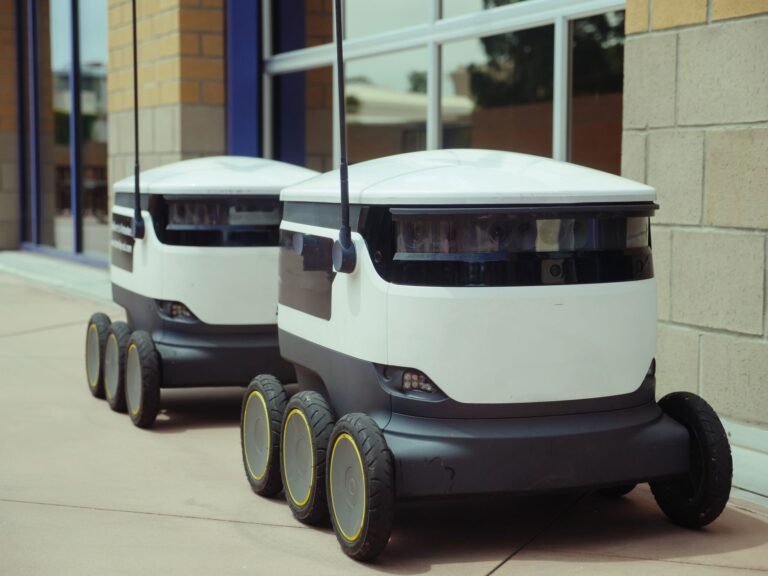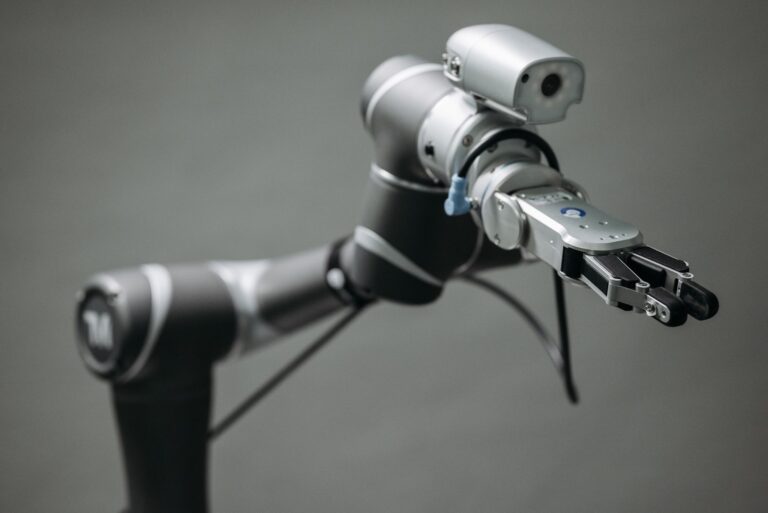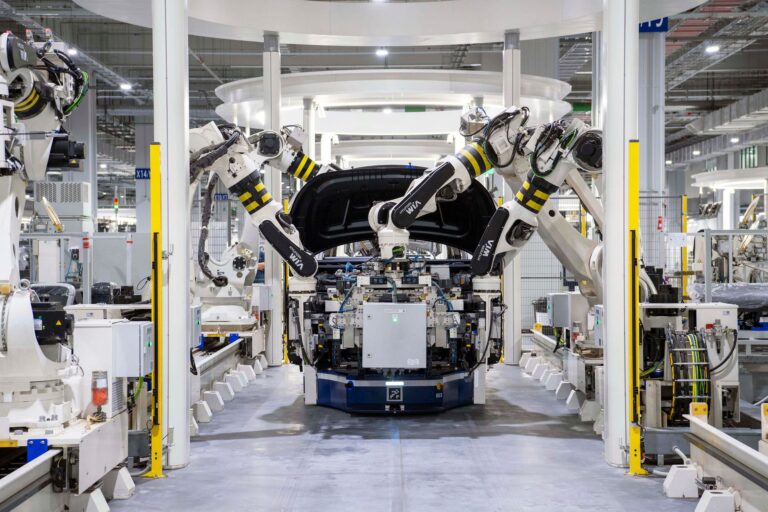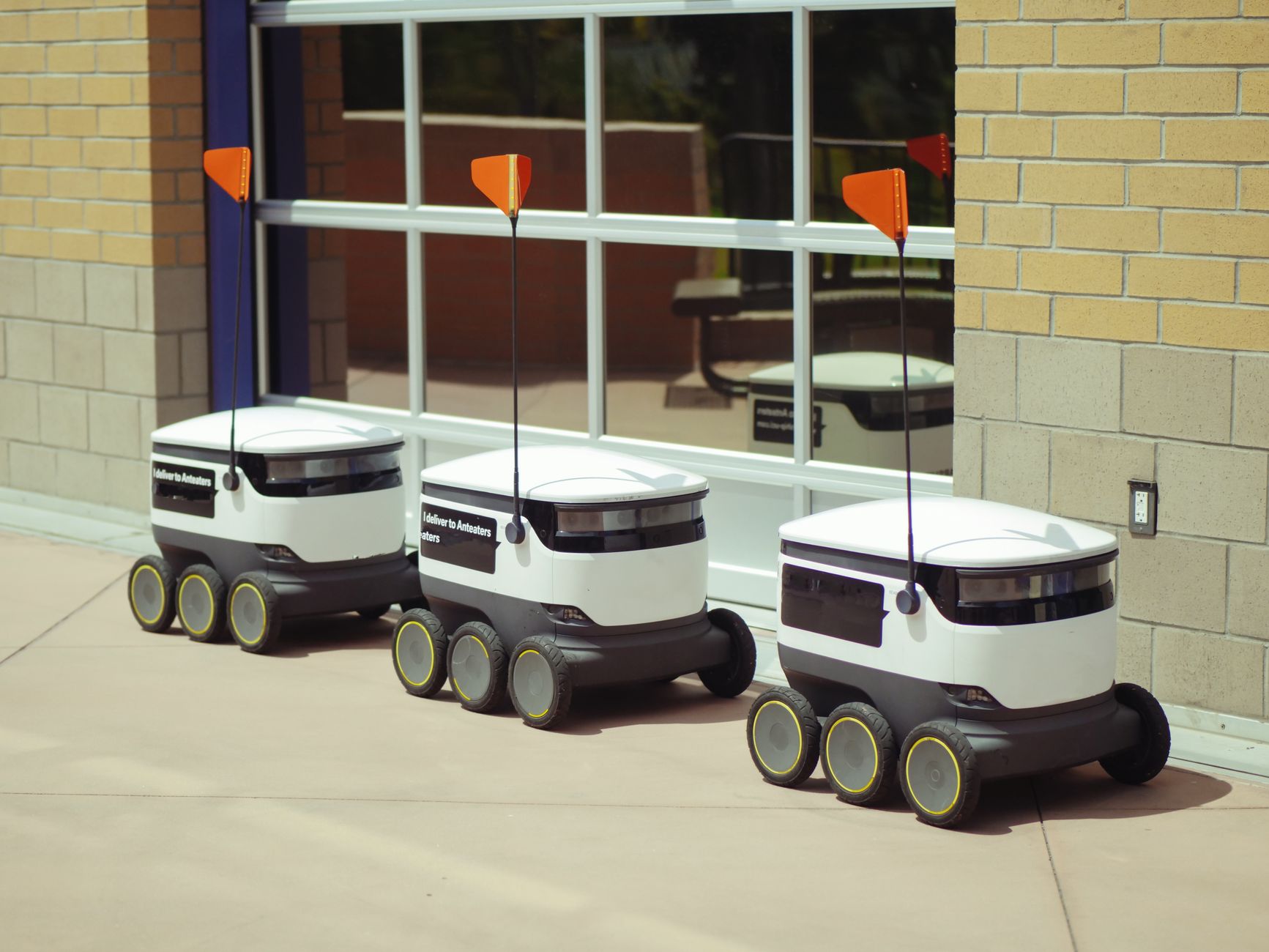

The bull case for Shopify stock centers on a thesis that has largely flown under the radar of mainstream investors: the company’s strategic pivot into fulfillment automation and warehouse robotics is poised to reshape how merchants distribute products at scale. Shopify’s $450 million acquisition of 6 River Systems in 2019 and its $2.1 billion acquisition of Deliverr in 2022 weren’t defensive moves to prevent competition. They were offensive investments to build proprietary fulfillment infrastructure that creates compounding advantages in an era when merchant logistics have become the primary cost center and competitive differentiator for online retail. By automating the last-mile problem through cloud-based robotics and predictive logistics, Shopify is solving one of e-commerce’s oldest headaches: how to deliver goods faster and cheaper than competitors.
The mechanics are straightforward but powerful. 6 River Systems brought mobile robots called “Chuck” that navigate warehouse floors with 99.5% accuracy, picking and packing inventory without human intervention. Deliverr brought predictive analytics and machine learning that anticipate demand weeks in advance, pre-positioning stock in regional fulfillment nodes so that next-day delivery becomes economically feasible. Combined, these technologies address the exact problem that has constrained merchant profitability for the past decade: shipping costs and delivery speed are no longer nice-to-haves but survival requirements. Merchants using Shopify’s fulfillment network now ship 2.5x more volume than they did at baseline, and analysts project Shopify will compound revenue growth above 30% through 2026 on the back of this infrastructure advantage.
Table of Contents
- How Shopify’s Robotics Acquisition Became a Strategic Cornerstone
- The Logistics Intelligence Layer—Why Deliverr’s Acquisition Unlocked the Real Edge
- Fulfillment Network Revenue—From Cost Center to Profit Driver
- Competitive Positioning Against Amazon and WooCommerce
- Analyst Consensus and Valuation Assumptions
- The Economics of Warehouse Automation at Scale
- The Strategic Endgame and Risk of Market Timing
How Shopify’s Robotics Acquisition Became a Strategic Cornerstone
When Shopify acquired 6 River Systems for $450 million in October 2019, the company was led by former engineers from amazon‘s Kiva Systems, the robot division that Amazon had acquired years earlier and kept proprietary. This acquisition gave Shopify access to a team that understood warehouse automation at the infrastructure level, not just software level. The “Chuck” robot doesn’t require warehouse redesigns or expensive conveyor system replacements; it works alongside existing equipment and human workers, making it practical for the thousands of third-party fulfillment centers that partner with Shopify rather than building robotics from scratch.
The 99.5% accuracy rate is not a marketing figure—it reflects the reality that these robots pick the correct SKU and quantity on the first attempt in high-velocity warehouse environments. For a merchant shipping 10,000 units per week, that difference between 99% and 99.5% accuracy translates to 50 fewer errors per week, fewer chargebacks, fewer returns, and crucially, better customer lifetime value. But there’s a practical limitation worth noting: Chuck robots work best in high-volume, standard-SKU fulfillment. Merchants with hundreds of unique products or highly seasonal inventory still face efficiency challenges, and smaller merchants below a certain volume threshold may not see ROI from the technology.
The Logistics Intelligence Layer—Why Deliverr’s Acquisition Unlocked the Real Edge
The 6 River systems acquisition was about physical automation. The Deliverr acquisition for $2.1 billion was about predictive intelligence, and it’s arguably the more important piece of the puzzle. Deliverr’s core technology is demand forecasting: using machine learning to predict which products will sell in which regions up to six weeks in advance, then shipping inventory to regional fulfillment centers before customers even place orders. This solves a fundamental problem in e-commerce logistics: inventory sits in centralized warehouses, far from customers, making two-day and next-day delivery economically impossible. Shopify rolled this technology into “Shop Promise,” a feature that now guarantees two-day and next-day delivery across the U.S.
for merchants using its fulfillment network. The competitive advantage is measurable. A merchant on Shopify can promise next-day delivery because Shopify’s algorithms have already moved their inventory to the right regional hub. A merchant on a competing platform shipping from a centralized warehouse cannot make that promise without paying prohibitive shipping costs. However, there’s a risk embedded in this model: if Deliverr’s demand forecasting is wrong and inventory sits unsold in a regional node, merchants absorb carrying costs and obsolescence risk. The technology is only as good as its predictions, and edge cases—viral social media posts, supply chain disruptions, unusual seasonal patterns—can still catch the forecasting models flat-footed.
Fulfillment Network Revenue—From Cost Center to Profit Driver
Shopify’s Merchant Solutions segment generated $522 million in revenue in the last reported quarter, with the fulfillment network representing a material and growing portion of that revenue. This is the inflection point: fulfillment used to be a cost that Shopify absorbed to remain competitive. Now it’s becoming a profit center. The fulfillment network ships volume at 2.5x the baseline rate that existed before these acquisitions, and analyst consensus projects the fulfillment network segment could contribute $3+ billion in annual revenue by 2027 if growth continues. The revenue model is elegant.
Shopify takes a per-unit fulfillment fee plus a percentage of the shipping savings merchants achieve. If a merchant would normally pay $8 per shipment but Shopify’s infrastructure brings that down to $5, Shopify takes a cut of the $3 difference plus a base fee. This aligns Shopify’s incentives with merchant economics in a way that pure software licensing never could. A specific example: a mid-size apparel merchant shipping 50,000 units per month could save $150,000 annually through Shopify’s fulfillment network versus traditional carriers and fragmented logistics. That $150,000 in savings means more reinvestment capital for the merchant, which often translates to higher platform switching costs and longer customer lifetime value.
Competitive Positioning Against Amazon and WooCommerce
Amazon has Fulfillment by Amazon (FBA), which is more mature and has larger geographic coverage. WooCommerce has no proprietary fulfillment network. Shopify is positioned in the middle: better than WooCommerce’s no-solution situation but not as entrenched as Amazon’s 20-year head start in logistics. The bull case assumes Shopify’s advantage is that it’s purpose-built for merchants who want to avoid Amazon’s aggressive fee increases and margin compression. Amazon takes 40-50% of unit economics for smaller sellers, whereas Shopify’s fulfillment fees are typically in the 15-25% range depending on product category and weight.
The comparison matters because it directly impacts which merchants will migrate to Shopify’s fulfillment network. High-margin sellers on Amazon—think boutique home goods, niche supplements, specialty electronics—have the most incentive to switch. But there’s a real tradeoff: Amazon’s FBA network is larger and reaches more customers through Prime benefits. Shopify merchants get faster fulfillment, lower fees, and data ownership, but they don’t get Amazon Prime badge integration. Analysts project this tradeoff will favor Shopify as merchants increasingly view Amazon as a channel rather than a platform, but the execution risk remains significant.
Analyst Consensus and Valuation Assumptions
Median analyst price targets for Shopify stock currently sit at $181, implying 61.5% upside from the recent trading range of ~$112 per share. JPMorgan projects 32% year-over-year GMV growth and 29% gross profit growth for Q1 2026. RBC Capital places its price target at $170. These targets are not based on speculation but on specific operational assumptions: that fulfillment network growth accelerates as more merchants adopt Shop Promise, that automation reduces per-unit fulfillment costs over time, and that merchant retention improves due to the switching costs created by fulfillment integration.
The critical warning here is that these price targets assume flawless execution. Shopify is trading at approximately 66x forward earnings, which is a premium valuation that leaves little room for disappointment. If fulfillment network adoption stalls, if automation costs exceed projections, or if Amazon launches a more aggressive price war on FBA fees, the valuation compression could be severe. Additionally, analysts are pricing in Shopify’s positioning as “the operating system for agentic commerce,” with merchants embedded directly into ChatGPT, microsoft Copilot, and google Search AI. This is a forward-looking assumption that has not yet proven out operationally.
The Economics of Warehouse Automation at Scale
The capital intensity of warehouse automation is significant. A single 6 River Systems installation can cost $10-15 million, plus ongoing software licensing and maintenance. Shopify doesn’t own these fulfillment centers; third-party logistics providers (3PLs) do. This is important because it means Shopify’s own capital requirements are lower than if it were building and operating fulfillment centers. However, it also means Shopify has less direct control over execution and quality. A 3PL that invests in Chuck robots expects rapid payback and efficiency gains.
If a merchant suddenly stops shipping through that 3PL, the robot investment becomes a stranded asset. The financial case for 3PLs adopting the Chuck robot is compelling only if order volume is stable and predictable. Shopify’s pre-positioning of inventory through Deliverr’s forecasting actually helps solve this problem by making fulfillment center demand more stable. A specific example: a 3PL that processes 500,000 units per month through its facility using Chuck robots might achieve 22% labor cost reduction while maintaining 99.5% accuracy. For a facility paying $8 million annually in labor costs, that’s $1.76 million in annual savings. The robot investment pays for itself in 6-7 years, which is acceptable for logistics infrastructure.
The Strategic Endgame and Risk of Market Timing
Shopify’s bull thesis depends partly on merchants viewing fast, cheap fulfillment as a differentiator. But there’s a timing risk: what if logistics automation becomes commoditized? If every major 3PL adopts mobile robots and predictive analytics in the next 3-5 years, Shopify’s current advantage erodes. The company is betting that first-mover advantage in building proprietary fulfillment software will lock in merchant relationships before logistics becomes a commodity utility. The Deliverr technology, in particular, has barriers to replication because demand forecasting improves with more data, and Shopify’s growing network of merchants provides training data that competitors would take years to accumulate.
Shopify filed updated 8-K and 10-Q documents in May 2026 showing that shipping volume through the fulfillment network increased 2.5x from the Q1 baseline, and the company rolled out Shop Promise guaranteeing next-day and two-day delivery. These are not hypothetical future capabilities but operational realities shipping tens of millions of units today. The revenue consensus for full-year 2026 stands at $13.9 billion with 30%+ compounding growth. Whether this execution holds and whether fulfillment network margins expand as automation scales will determine whether the bull case for Shopify stock materializes or if the current 66x forward earnings valuation proves to be a bubble.
- —