
The bull case for Yaskawa Electric (TYO: 6506 / OTC: YASKY) rests almost entirely on two businesses: motion control and industrial robots. These are the segments where Yaskawa holds genuine global leadership, and they are the segments management is counting on to drive a profit turnaround after a soft year. For fiscal 2026, ended February 2026, Yaskawa posted consolidated revenue of ¥542.1 billion (up 0.8% year over year) but operating profit of ¥47.3 billion (down 5.7%) — a “revenue growth but profit decline” year. The forward story is different: for fiscal 2027, ending February 2027, the company guides for 7.0% revenue growth, 26.8% operating profit growth, and 33.4% net income growth, the first declared return to profit growth in four terms. What is supposed to power that swing is concrete rather than abstract. The motion control business alone is projected to grow revenue roughly 19%, helped by strong orders for servo motors used in semiconductor manufacturing equipment.
The robotics segment, which generated about ¥247.0 billion in revenue (up roughly 4%), benefits from auto, electronics, and semiconductor capital spending, plus tailwinds from U.S. reshoring and EV supply chains. Management has also said its AI robot business “is finally entering the monetization stage” after a prolonged investment phase — the single line most cited by bulls as the reason profit should rebound. None of this makes Yaskawa a sure thing. The projected profit rebound comes off a depressed base, the AI robot monetization claim is still a claim rather than a track record, and published price targets conflict badly across data providers. The sections below walk through where the optimism is grounded and where it needs caveats.
Table of Contents
- Why Are Motion Control and Industrial Robots the Core of the Yaskawa Bull Case?
- What Does the FY2027 Profit Turnaround Forecast Actually Promise?
- How Does the AI Robot and “Physical AI” Story Fit In?
- How Does Yaskawa’s Valuation and Analyst Support Compare?
- What Are the Risks and Data Problems Bulls Should Not Ignore?
- How Do Reshoring and EV Supply Chains Strengthen the Case?
- Where Does Healthcare and Agricultural Automation Expansion Stand?
- Frequently Asked Questions
Why Are Motion Control and Industrial Robots the Core of the Yaskawa Bull Case?
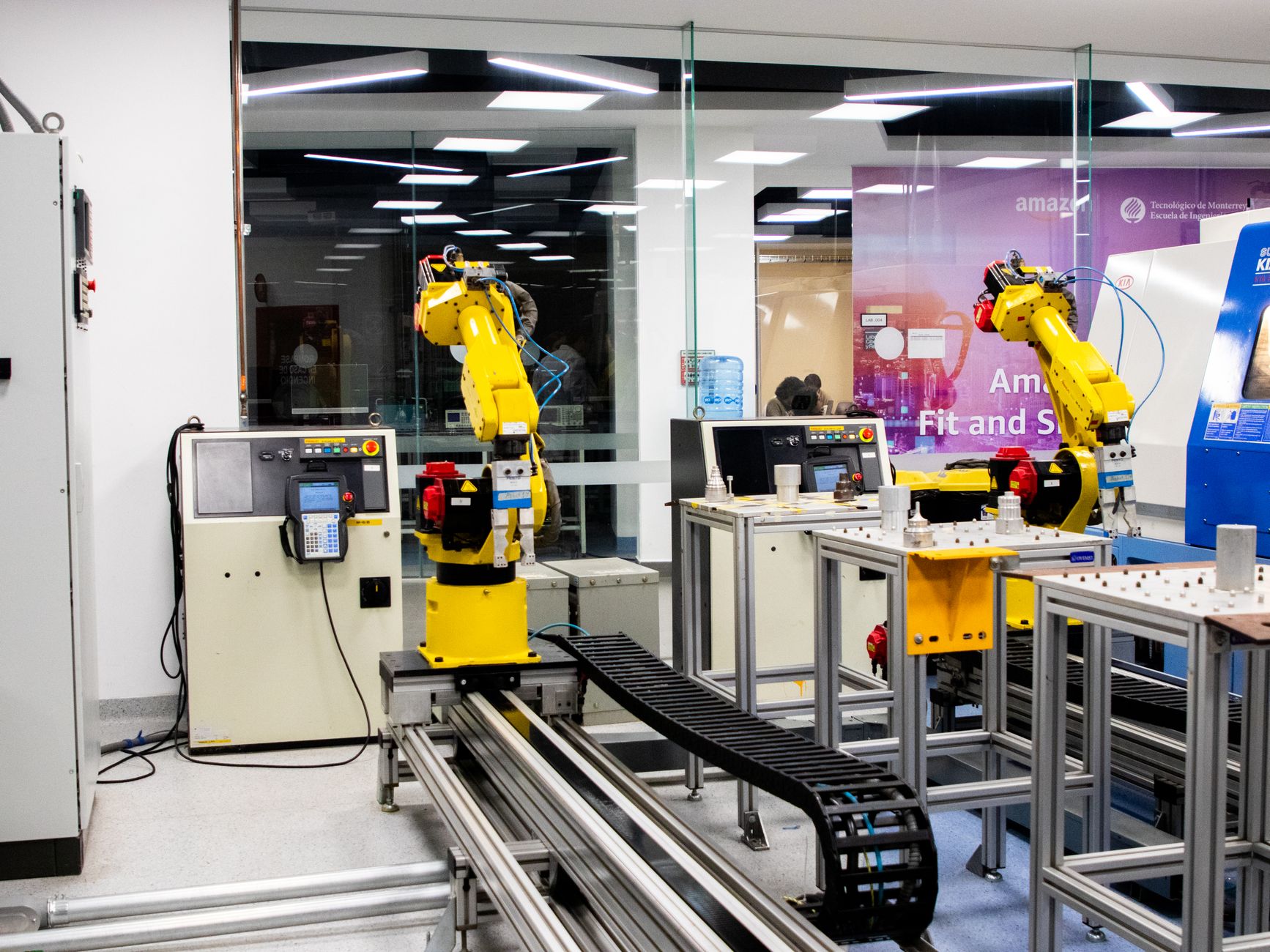
Yaskawa is not a diversified conglomerate that happens to make robots. Its identity and its margins are tied to two things it does at world-class scale: motion control (servo motors, drives, and the controllers that move machinery precisely) and industrial robots (the articulated arms used in welding, assembly, painting, and material handling). When analysts build a bull case, they build it on these because that is where Yaskawa has pricing power and installed-base lock-in, not on peripheral lines. The fiscal 2026 numbers show why the segments matter.
Robotics revenue rose about 4% to ¥247.0 billion, and while its operating profit slipped on a temporary sales mix, the volume held up in a weak year. Motion control is the sharper growth lever for fiscal 2027, guided to roughly 19% revenue growth on the back of servo motor demand from semiconductor equipment makers. Consider the mechanics of that: every advanced chip fab tool needs precise motion components, so when semiconductor capex turns up, Yaskawa’s servo orders turn up ahead of many downstream players — a leading-indicator position that few competitors occupy as cleanly. The comparison worth drawing is with broader industrial peers whose robotics exposure is diluted by elevators, factory IT, or power equipment. Yaskawa’s concentration is the bull thesis and the risk at once: when motion and robots are strong, the whole company moves; when both soften, as they did in fiscal 2026, there is little else to cushion operating profit.
What Does the FY2027 Profit Turnaround Forecast Actually Promise?
The headline that excites bulls is the fiscal 2027 guidance: 7.0% revenue growth, 26.8% operating profit growth, and 33.4% net income growth. After a year of falling operating profit and three prior terms without profit growth, a guided double-digit rebound across all three lines is a meaningful signal of management confidence. It implies operating leverage — revenue growing modestly while profit grows several times faster — which is exactly what you want to see when a company exits an investment-heavy phase. The warning sits in the base. The same reporting that frames the rebound also notes that net income was set to drop by roughly 38% in one framing before the projected ~27% recovery.
A 27% to 33% rebound off a depressed number is not the same as 27% growth off a healthy one; it can leave net income below where it stood two years earlier. Investors who anchor only on the growth percentage risk overstating the absolute earnings recovery. There is also execution risk baked into the guidance. Much of the projected profit growth depends on the AI robot business converting from cost center to contributor and on semiconductor capex staying firm. Both are plausible, but guidance is a forecast, not a result, and Yaskawa has just demonstrated — in fiscal 2026 — that revenue can rise while profit falls. Treat the fiscal 2027 figures as the company’s target, not as money in the bank.
How Does the AI Robot and “Physical AI” Story Fit In?
The most forward-looking part of the bull case is Yaskawa’s claim that its AI robot business “is finally entering the monetization stage.” For years this was an R&D and investment line that weighed on margins; management now frames it as a contributor to the fiscal 2027 profit rebound. That shift from spending to earning, if real, is the kind of inflection that re-rates a stock, because it changes a cost into a growth engine. This connects to the long-term strategy. Yaskawa’s “Vision 2035” and “Dash 35” plans target higher profitability and expansion into “physical AI” — robots that combine perception, learning, and motion control rather than executing fixed programs.
The strategy also reaches beyond the factory floor into healthcare and agricultural automation, two areas where labor shortages create durable demand. A concrete example of the direction: servo and motion expertise that today positions a welding arm can be redirected toward surgical-assist or harvesting robotics, where the same precision-motion DNA applies. The honest qualifier is that “entering the monetization stage” is a management assertion, not yet a proven revenue stream with a multi-year record. Physical AI is an industry-wide buzz area where many firms are spending and few are profiting. The bull case treats Yaskawa’s motion-control heritage as the moat that lets it monetize sooner — but until the segment reporting shows AI robotics carrying its own weight, this remains the most speculative leg of the thesis.
How Does Yaskawa’s Valuation and Analyst Support Compare?
On valuation, Yaskawa trades around an 18.5x price-to-earnings multiple, which has been cited as one of the more attractive entry points among robotics names. That matters because much of the robotics and automation space carries richer multiples on thinner profitability; a recognized global leader at roughly 18x earnings is a different risk profile than a story stock trading on revenue multiples alone. The tradeoff is that an 18.5x multiple already prices in some recovery, so the cheapness is relative, not absolute. Analyst support has been firming.
Recent actions include a Buy from Nomura (May 28, 2026), a Buy from Citi (May 12, 2026), and a Buy reiterated by SBI Securities (May 11, 2026). The consensus 12-month target for the 6506 shares sits around ¥6,409.4, with a high of ¥9,200 and a low of ¥4,700, and a consensus rating of “Buy” per aggregators such as Investing.com and MarketBeat. The wide spread between the ¥4,700 low and ¥9,200 high tells you the analyst community agrees on direction but not on magnitude. Compared with chasing pure-play humanoid or AI-robotics startups, Yaskawa offers an established earnings base, a dividend-paying industrial profile, and segment leadership — at the cost of slower top-line growth than a speculative newcomer might promise. The bull case here is “quality leader at a fair price,” not “moonshot,” and investors should weigh which exposure they actually want.
What Are the Risks and Data Problems Bulls Should Not Ignore?
The most practical warning involves the published price targets themselves: the figures conflict badly across sources. ADR targets have been cited at around $34 while an ADR quote of roughly $79.28 was reported on May 21, 2026 — numbers that cannot both be current and correct. This points to stale or mismatched data feeds, and it means any single target you find online should be verified against a live broker feed before you rely on it. Acting on a $34 target against a $79 quote, or vice versa, would produce a wildly wrong thesis. Beyond data hygiene, the cyclical exposure cuts both ways. Yaskawa’s strength in semiconductor servo motors and auto-sector robots is a tailwind when capex is rising and a headwind when it stalls.
Fiscal 2026’s profit decline is the live example: the same segments that anchor the bull case delivered a down year when mix and demand turned unfavorable. Concentration in two cyclical end-markets means there is limited diversification to offset a downturn. Finally, there is the catalyst gap. As of mid-June 2026, there was no confirmed same-week news catalyst driving the stock; the most recent dated events were the May 2026 analyst Buy actions and the April 2026 earnings cycle. The fiscal 2026 Q1 earnings date was reported as “set” but the specific date was not pinned down in available materials. Buyers expecting an imminent trigger should recognize the recent record is a string of analyst endorsements and a guidance promise, not a fresh, dated event.
How Do Reshoring and EV Supply Chains Strengthen the Case?
A meaningful piece of the demand story is structural rather than cyclical. U.S. reshoring, EV supply-chain build-out, and the broader push toward factory AI all increase the number of automated production lines being built, and every new line needs robots and motion components.
Yaskawa, described as a “quiet robotics powerhouse” appearing on U.S. watchlists, is positioned to supply that buildout across autos, electronics, and semiconductors. The concrete example is the EV transition: a new battery or EV assembly plant is far more robot-dense than a legacy combustion-engine line, requiring more welding, handling, and precision-motion equipment per unit of output. As automakers and suppliers stand up new capacity in North America to satisfy reshoring incentives, the addressable market for Yaskawa’s arms and servos expands independently of the near-term capex cycle.
Where Does Healthcare and Agricultural Automation Expansion Stand?
Beyond the factory, Yaskawa’s “Vision 2035” and “Dash 35” plans explicitly target healthcare and agricultural automation as growth frontiers, applying its motion-control and robotics expertise to sectors facing chronic labor shortages. These are early-stage moves rather than established revenue pillars, but they show the company trying to extend its core competency into markets with long demographic tailwinds — aging populations needing care, and farms needing automated harvesting and handling.
The factual anchor is that this expansion is framed as part of a multi-year strategy aimed at higher profitability and “physical AI,” not as a quarter-to-quarter contributor. An investor evaluating the bull case should treat healthcare and agricultural robotics as optionality layered on top of the motion-control and industrial-robot core, where the company already earns the bulk of its ¥542.1 billion in revenue.
Frequently Asked Questions
What are Yaskawa Electric’s ticker symbols?
It trades as 6506 on the Tokyo Stock Exchange (TYO) and as YASKY on the U.S. OTC market via an ADR.
What is Yaskawa’s fiscal 2027 forecast?
For the year ending February 2027, Yaskawa guides for 7.0% revenue growth, 26.8% operating profit growth, and 33.4% net income growth — its first declared return to profit growth in four terms.
Why did fiscal 2026 profit fall despite higher revenue?
Revenue rose 0.8% to ¥542.1 billion, but operating profit fell 5.7% to ¥47.3 billion on an unfavorable sales mix and softer demand, including a slight dip in robotics-segment operating profit.
What drives the motion control growth forecast?
Motion control revenue is projected to grow about 19%, led by strong orders for servo motors used in semiconductor manufacturing equipment.
What is the analyst price target for Yaskawa?
The consensus 12-month target for 6506 is about ¥6,409.4, with a high of ¥9,200 and a low of ¥4,700, and a consensus “Buy” rating. ADR targets conflict across sources, so verify against a live feed.
What is the biggest risk to the bull case?
The profit rebound is off a depressed base, the AI robot monetization is unproven, and the company’s concentration in cyclical semiconductor and auto end-markets offers little cushion in a downturn.