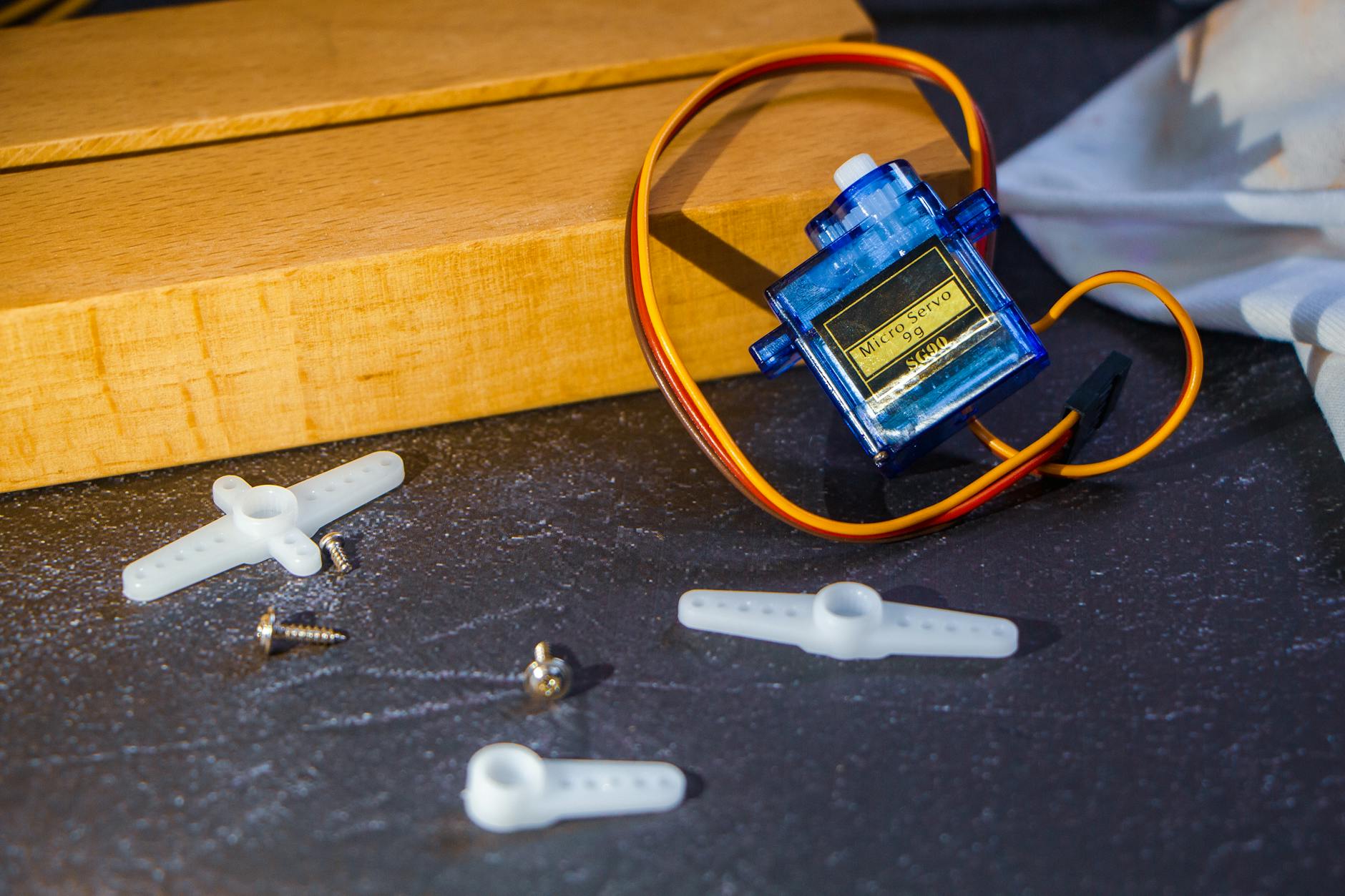

YASKY, the OTC ticker for Yaskawa Electric Corporation, commands roughly 15 percent of the global servo motor market — the single largest share held by any company on the planet. If Nvidia owns the GPU layer that makes artificial intelligence possible, Yaskawa owns the physical motion layer that makes industrial robots actually move. The comparison is not just catchy branding. Yaskawa designs and manufactures its servo motors in-house, and those motors are the core actuators inside its own MOTOMAN line of industrial robots. The company has shipped more than 20 million AC servo units as of 2020, and it sits alongside Fanuc, ABB, and KUKA as one of the “Big Four” in industrial robotics.
Founded in 1915 and headquartered in Kitakyushu, Japan, Yaskawa is not a startup riding a hype cycle. It is a 110-year-old industrial manufacturer with operations in 29 countries, production bases in 12, and a constellation of 81 subsidiaries and 24 affiliates. Its business breaks into three segments — Motion Control (servo motors, controllers, AC drives), Robotics, and Systems Engineering — and the servo motor division is the engine that ties everything together. For investors tracking the stock under YASKY on the OTC market or 6506 on the Tokyo Stock Exchange, the company carried a market cap of approximately $8.96 billion as of mid-February 2026. This article breaks down why the Nvidia comparison holds more weight than it first appears, examines Yaskawa’s financials and strategic bets, looks at the servo motor market trajectory through 2030, and considers where the risks actually lie for anyone watching this stock or this technology sector.
Table of Contents
- Why Is YASKY Called the Nvidia of Servo Motors?
- Yaskawa’s Financial Picture — Profitable Despite a Revenue Dip
- The Servo Motor Market and Why Humanoid Robots Change the Math
- i3-Mechatronics, MOTOMAN NEXT, and the U.S. Expansion Bet
- Competitive Risks and the Limits of Market Leadership
- The Physical AI Thesis — SoftBank, Nvidia, and What Comes Next
- What the Next Five Years Look Like for YASKY
- Conclusion
- Frequently Asked Questions
Why Is YASKY Called the Nvidia of Servo Motors?
The analogy works on a structural level. Nvidia does not just sell GPUs — it sells the foundational compute layer that the entire AI industry depends on. Yaskawa occupies an analogous position in physical automation. Every industrial robot needs servo motors to translate electrical signals into precise mechanical motion, and Yaskawa is the dominant supplier. When a car body gets welded on a factory floor, when a semiconductor wafer gets positioned with micron-level accuracy, when a palletizing arm stacks boxes in a fulfillment center, there is a meaningful probability that Yaskawa servos are doing the actual work. The parallel deepens when you look at recent partnerships. Yaskawa has been expanding its collaboration with Nvidia directly, working on intelligent robot development that links Nvidia’s AI compute stack with Yaskawa’s physical motion hardware.
At iREX 2025 in December, Yaskawa exhibited alongside SoftBank on a “Physical AI” initiative aimed at developing AI-driven office and social robots. The company also acquired Tokyo Robotics Inc. to accelerate development of humanoid robot actuators. In other words, the two companies are not just metaphorically similar — they are literally converging on the same problem from opposite ends of the stack. Where the analogy breaks down is in margin profile and growth rate. Nvidia’s gross margins routinely exceed 70 percent and its revenue has grown at triple-digit percentages during the AI boom. Yaskawa is an industrial manufacturer with industrial-grade margins and cyclical revenue patterns. The comparison captures market position and strategic importance, not financial similarity.

Yaskawa’s Financial Picture — Profitable Despite a Revenue Dip
For fiscal year 2025, which ended in February 2025, Yaskawa reported revenue of ¥537.68 billion (approximately $3.6 billion USD), a 6.6 percent decline from the prior year’s ¥575.66 billion. On the surface, a revenue drop looks concerning. But earnings told a different story — ¥56.99 billion, up 12.43 percent year-over-year. The company got more profitable even as the top line shrank, suggesting successful cost discipline or a favorable product mix shift toward higher-margin offerings. For FY2026, management raised guidance to ¥525 billion in revenue and ¥48 billion in operating profit, up from an initial forecast of ¥515 billion.
That upward revision signals confidence in the recovery trajectory, particularly in the motion control segment, where servo demand tends to correlate with capital expenditure cycles in manufacturing. As of early February 2026, the stock was trading at $66.21, near the top of its 52-week range of $36.11 to $67.78 — a significant run from the bottom. However, if you are looking at this purely as a growth stock, the revenue trajectory introduces a caution. Industrial automation spending is cyclical, tied to global manufacturing capex, and Yaskawa is not immune to downturns in Chinese factory spending, European industrial contraction, or currency headwinds from a strong yen. The earnings improvement is encouraging, but one year of margin expansion during a revenue dip does not guarantee a sustained re-rating.
The Servo Motor Market and Why Humanoid Robots Change the Math
The global servo motor market is projected to grow from $14.57 billion in 2025 to $19.33 billion by 2030, representing a 5.82 percent compound annual growth rate. That is a solid but not explosive trajectory for a mature industrial technology. Servo motors are critical components in robotics, CNC machines, semiconductor fabrication equipment, and general factory automation. Demand tracks closely with global industrial production and, increasingly, with the buildout of advanced manufacturing capacity for EVs, batteries, and chips. What makes the next decade potentially different is humanoid robots.
A conventional six-axis industrial robot arm might use six or seven servo motors. A humanoid robot — the kind being developed by Tesla, Figure, Apptronik, and others — requires dozens of servo actuators per unit to drive joints across two arms, two legs, a torso, and hands. If humanoid robots reach even modest production volumes, the servo motor content per unit increases by an order of magnitude compared to traditional industrial robots. Yaskawa’s acquisition of Tokyo Robotics is a direct play on this thesis. For Yaskawa specifically, the combination of its existing 15 percent market share, its vertically integrated manufacturing capability, and its early moves into humanoid actuator development positions it to capture a disproportionate share of this emerging demand. Whether that demand materializes on a commercially meaningful timeline remains the open question.

i3-Mechatronics, MOTOMAN NEXT, and the U.S. Expansion Bet
Yaskawa’s internal strategy centers on a platform called i3-Mechatronics, which integrates AI, IoT, and data management into factory automation cells. The idea is to move beyond selling standalone servo motors and robots toward selling intelligent, connected automation systems that optimize themselves over time. This is the same “platform” playbook that has worked for Nvidia (CUDA ecosystem), and Yaskawa is attempting its own version in the physical automation domain. The company’s next-generation robot product line, MOTOMAN NEXT, is being expanded globally as a strategic priority. Alongside the product push, Yaskawa is building a new manufacturing campus in Franklin, Wisconsin — the first time the company will produce high-volume industrial robots on U.S. soil.
This is a direct response to reshoring trends, tariff uncertainties, and growing customer preference for domestically manufactured automation equipment. In Japan, Robot Plant No. 5 has been completed to enable integrated production of AC servos and robots under one roof, tightening the supply chain further. The tradeoff with geographic expansion is capital intensity. Building factories in the United States is expensive, and the payoff depends on sustained demand from North American manufacturers choosing Yaskawa over Fanuc, ABB, or Siemens. If the reshoring trend stalls or tariff policy shifts again, those fixed costs remain on the balance sheet regardless.
Competitive Risks and the Limits of Market Leadership
Yaskawa’s 15 percent global servo market share makes it the leader, but that also means 85 percent of the market belongs to competitors. Siemens AG, Mitsubishi Electric, ABB, Rockwell Automation, and Delta Electronics are all formidable players with their own servo motor lines, their own robotics platforms, and in several cases, their own AI and IoT strategies. Siemens in particular has deep integration between its servo drives and its factory automation software stack (TIA Portal), which creates switching costs that favor incumbents in the Siemens ecosystem. Chinese servo motor manufacturers represent another competitive pressure. Companies like Inovance Technology and Estun Automation have been gaining share in the domestic Chinese market by offering lower-cost servo systems that are adequate for less demanding applications.
If Chinese manufacturers move upmarket — as they have in solar panels, batteries, and EVs — Yaskawa’s premium positioning could face margin pressure in price-sensitive segments. A further limitation is concentration risk. Yaskawa’s fortunes are heavily tied to the health of the global manufacturing capex cycle. A prolonged downturn in industrial investment, particularly in Asia, would directly impact servo motor demand regardless of the company’s competitive position. The revenue decline in FY2025 was a mild version of this dynamic. A deeper or more sustained cycle would test the earnings resilience that impressed investors this year.

The Physical AI Thesis — SoftBank, Nvidia, and What Comes Next
The partnership between Yaskawa and SoftBank on Physical AI is worth watching closely. SoftBank has been aggressively investing in robotics, including its ownership of Boston Dynamics (subsequently sold) and its broader Vision Fund portfolio.
The collaboration exhibited at iREX 2025 focuses on AI-driven office and social robots — a category that barely exists commercially today but could become significant if large language models and vision systems improve enough to make general-purpose robots viable outside of factory settings. Yaskawa’s simultaneous work with Nvidia on intelligent robot development suggests the company is positioning itself at the intersection of AI compute and physical actuation. If the “Physical AI” thesis plays out — where AI models directly control robotic hardware in unstructured environments — the company that supplies the dominant servo motors and actuators stands to benefit in much the same way Nvidia benefited from being the default GPU supplier when deep learning took off.
What the Next Five Years Look Like for YASKY
The bull case for Yaskawa over the next five years rests on three converging trends: the continued growth of factory automation as labor costs rise globally, the emergence of humanoid robots as a new high-volume servo consumer, and the integration of AI into motion control systems in ways that expand the addressable market beyond traditional manufacturing. The company’s investments in U.S. manufacturing, its i3-Mechatronics platform, and its partnerships with Nvidia and SoftBank all align with these trends.
The bear case is simpler: Yaskawa is a cyclical industrial company in a competitive market, and cyclical companies can spend years going sideways during manufacturing downturns regardless of their long-term positioning. The stock’s run from $36 to $66 over its recent 52-week range suggests that much of the optimism is already priced in. For investors and industry watchers alike, the critical variable is not whether Yaskawa is well-positioned — it clearly is — but whether the timing and magnitude of the robotics and AI tailwinds justify current valuations.
Conclusion
Yaskawa Electric, trading under YASKY, has earned its reputation as the Nvidia of servo motors through a combination of market-leading share, vertical integration, and strategic moves that tie its hardware directly to the AI-driven future of robotics. With 20 million-plus AC servo units shipped, a 15 percent global market share, expanding U.S. manufacturing, and active partnerships with both Nvidia and SoftBank, the company is positioned at the center of the physical automation stack in the same way Nvidia sits at the center of the compute stack.
The practical takeaway is that YASKY is not a speculative bet on an unproven technology. It is the incumbent leader in a critical industrial component category that is about to see demand growth from humanoid robots, AI-integrated manufacturing, and global reshoring. The risks are real — cyclicality, competition from Chinese manufacturers, and capital-intensive expansion — but for anyone building a thesis around the physical infrastructure of the robotics age, Yaskawa is one of the names that has to be on the list.
Frequently Asked Questions
What does YASKY stand for and where is the stock traded?
YASKY is the OTC ticker symbol for Yaskawa Electric Corporation. The stock also trades on the Tokyo Stock Exchange under ticker 6506. The company is headquartered in Kitakyushu, Japan, and was founded in 1915.
How large is Yaskawa’s share of the global servo motor market?
Yaskawa holds approximately 15 percent of the global servo motor market, making it the single largest player worldwide. Its cumulative AC servo motor shipments surpassed 20 million units as of 2020.
What is Yaskawa’s market cap and recent stock price?
As of mid-February 2026, Yaskawa’s market cap was approximately $8.96 billion. The stock was trading around $66.21 as of early February 2026, near the top of its 52-week range of $36.11 to $67.78.
Why is Yaskawa compared to Nvidia?
Yaskawa dominates servo motors — the physical motion components that make robots move — in the same way Nvidia dominates GPUs that make AI computation possible. The two companies are also directly collaborating on intelligent robot development, linking AI compute with physical actuation.
Is Yaskawa building manufacturing capacity in the United States?
Yes. Yaskawa is constructing a new manufacturing campus in Franklin, Wisconsin, which will be the first time the company produces high-volume industrial robots on U.S. soil. This is part of a broader response to reshoring trends and tariff considerations.
How could humanoid robots affect Yaskawa’s business?
Humanoid robots require significantly more servo motors per unit than conventional industrial robot arms. If humanoid robots reach commercial production volumes, the total servo motor content per unit increases by an order of magnitude, which represents a major potential growth driver for Yaskawa.