
Fanuc Corporation, traded on international markets under the ticker FANUY, has established itself as the dominant force in global industrial automation. If you are looking for the company that most comprehensively shapes how factories around the world operate, Fanuc is the answer. Founded in Japan in 1956 and headquartered in Oshino, Yamanashi Prefecture, Fanuc controls an estimated 65 percent of the global market for computerized numerical control (CNC) systems and holds a commanding position in industrial robotics, with over 750,000 robots installed worldwide as of recent counts.
The company’s reach extends from automotive assembly lines in Detroit and Stuttgart to consumer electronics manufacturing facilities in Shenzhen. This article examines what makes Fanuc the benchmark in automation technology, covering its core product lines, the competitive dynamics of the industrial robotics market, the company’s financial characteristics, risks investors and integrators should understand, and where Fanuc fits in the evolving landscape of smart manufacturing. Whether you are an engineer evaluating automation vendors, an investor analyzing FANUY stock, or a manufacturer planning a capital project, understanding Fanuc’s strengths and limitations is essential.
Table of Contents
- What Makes Fanuc the Global Automation Champion?
- Fanuc’s Core Product Lines and Technology Architecture
- Financial Profile of FANUY and the OTC Market Listing
- Competitive Positioning Against ABB, KUKA, and Yaskawa
- Risks, Limitations, and What Fanuc Does Not Do Well
- Fanuc’s Manufacturing Philosophy and the Yellow Robots
- The Future of Fanuc in an AI-Driven Manufacturing Era
- Conclusion
- Frequently Asked Questions
What Makes Fanuc the Global Automation Champion?
Fanuc’s dominance is not the product of marketing but of sustained engineering focus over seven decades. The company’s CNC controllers are the standard by which machine tools are measured globally. A CNC system is the computational brain that translates design files into precise machine movements, and Fanuc’s units are known for exceptional reliability and longevity. It is not uncommon to find Fanuc CNC systems still operating effectively after 20 or even 30 years of continuous use, a fact that purchasing managers in heavy industry cite repeatedly when justifying the premium price point.
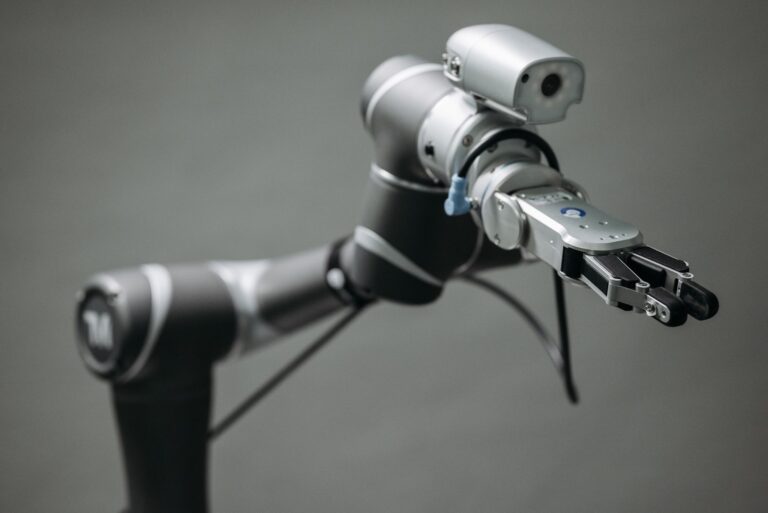
The robotics division, operating under the Fanuc Robot brand, produces machines ranging from small SCARA robots for electronics assembly to the M-2000iA series, capable of lifting payloads exceeding 2,300 kilograms. A practical example of Fanuc’s scale advantage: when Toyota restructures a production line, Fanuc robots are the default consideration precisely because the automaker already has decades of institutional knowledge, spare parts inventory, and trained technicians for the platform. Switching costs are high, and Fanuc has benefited enormously from this installed-base loyalty. By comparison, competitors like KUKA or Yaskawa Motoman each hold significant market segments, but neither approaches Fanuc’s combined share across CNC and robotics simultaneously.

Fanuc’s Core Product Lines and Technology Architecture
Fanuc organizes its business into three primary segments: FA (Factory Automation, which includes CNC systems and laser products), Robots, and ROBOMACHINE (CNC-driven machine tools like the ROBOCUT wire EDM and ROBODRILL machining centers). This vertical integration is a strategic differentiator. A manufacturer can source the controller, the robot arm, and the machine tool from a single vendor with guaranteed compatibility and unified service contracts.
The FIELD system, Fanuc’s industrial Internet of Things platform, connects these hardware assets and allows real-time monitoring of machine health, cycle time optimization, and predictive maintenance scheduling. A stamping plant in Ohio, for example, might use FIELD to track spindle load data across 40 ROBODRILL units and receive alerts before a tool change becomes urgent, reducing unplanned downtime. However, FIELD has faced adoption challenges in markets where manufacturers already committed to competing IIoT ecosystems such as siemens MindSphere or Rockwell Automation’s FactoryTalk. The closed-loop advantage disappears if a facility runs mixed hardware from multiple vendors, which is common in older plants that have grown through acquisition.
Financial Profile of FANUY and the OTC Market Listing
FANUY trades as an American Depositary Receipt on the U.S. over-the-counter market, with each ADR representing one ordinary share of Fanuc Corporation listed on the Tokyo Stock Exchange. The OTC listing makes the stock accessible to U.S. retail investors without requiring a foreign brokerage account, though trading volume on the OTC market is considerably lower than on the Tokyo exchange. Investors comparing FANUY quotes to the TSE price should account for currency conversion and the timing differential between markets.
From a financial standpoint, Fanuc is notable for its cash accumulation. The company historically held cash and liquid equivalents representing a substantial portion of its market capitalization, a practice that attracted attention from activist investors in the mid-2010s. In response to shareholder pressure, Fanuc increased its dividend payout ratio and initiated share buybacks, shifting toward a more conventional capital return policy. Revenue is sensitive to two primary drivers: global capital expenditure cycles in manufacturing, and automotive production volumes. When automakers pull back on new model investments, Fanuc feels the impact within two to three quarters. This cyclicality is the most important financial characteristic a long-term investor must understand before holding FANUY through a downturn.

Competitive Positioning Against ABB, KUKA, and Yaskawa
In the industrial robotics segment specifically, Fanuc competes most directly with ABB, KUKA, Yaskawa, and to a growing degree, Universal Robots in the collaborative robot category. Each has a distinct strategic emphasis. ABB leads in power and water utilities automation and has a broader electrification portfolio. KUKA, acquired by China’s Midea Group in 2016, has deeper exposure to the European automotive market and has pursued aggressive pricing in some segments. Yaskawa, another Japanese firm, is particularly strong in motion control and servo systems and competes closely with Fanuc in Asian electronics manufacturing.
The tradeoff that integrators frequently articulate is this: Fanuc offers unmatched reliability and global service coverage, but its programming environment, KAREL and TP language, is considered less intuitive than some competitors. Universal Robots’ cobots use a simplified interface that allows line operators without robotics training to modify programs, which Fanuc’s traditional systems do not match without add-on software layers. Fanuc has responded with its CRX collaborative robot series and partnerships with system integrators to provide more accessible programming tools, but in the cobot segment specifically, it is a challenger rather than the incumbent leader. For high-volume, fixed automation in automotive or aerospace, Fanuc remains the default. For flexible, small-batch manufacturing cells, the competitive calculus is more open.
Risks, Limitations, and What Fanuc Does Not Do Well
No company maintains leadership across every dimension, and Fanuc has documented weaknesses. The most significant is its communication culture. For decades, Fanuc was famously opaque, rarely granting press access, providing minimal investor guidance, and maintaining a deliberately low profile. This created a corporate culture that prioritized engineering over market responsiveness. While the company has opened up modestly in recent years, customers still report that getting detailed technical roadmap information requires persistent engagement with local distributors rather than direct access to Fanuc’s product teams.
Software complexity is a second area of friction. The Fanuc programming ecosystem, while powerful, has a steep learning curve. A mid-sized contract manufacturer setting up its first automated cell may find that the technician training requirements and the cost of qualified Fanuc programmers add substantially to total project costs. This is not a hypothetical concern. Several automation integrators surveyed in trade publications have noted that total cost of ownership estimates frequently underestimate labor costs for Fanuc deployments relative to simpler cobot solutions. The warning for any prospective buyer: Fanuc’s hardware reliability is exceptional, but calculate the full staffing and training cost before signing a purchase order.
Fanuc’s Manufacturing Philosophy and the Yellow Robots
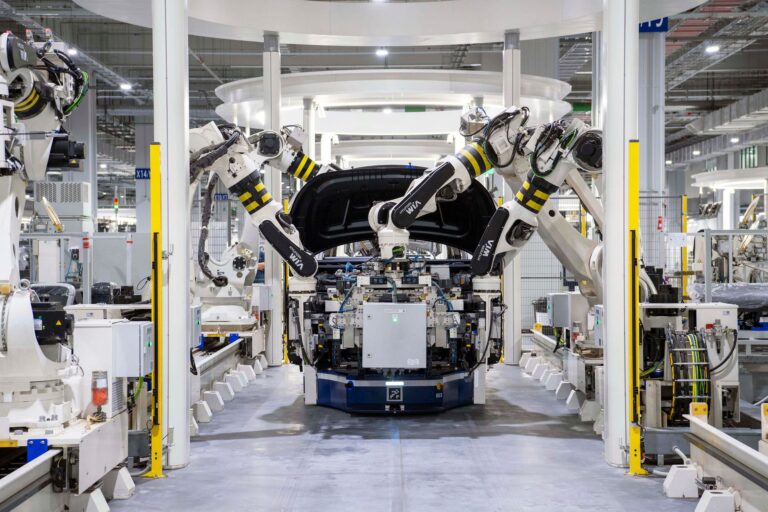
Fanuc’s manufacturing facilities in Yamanashi Prefecture are themselves a showcase of automation. The company operates lights-out manufacturing cells where robots produce robots with minimal human intervention, running overnight without staffing. This internal application of their own technology serves both a practical and a marketing function: it demonstrates that the systems are mature enough for the company to trust in its own production environment.
The distinctive yellow color of Fanuc robots, a shade the company has maintained consistently, functions as an inadvertent brand identifier on factory floors globally. A visitor to any major automotive assembly plant can identify Fanuc installations immediately, which reinforces the sense of ubiquity. That visibility has genuine business value: when a plant manager sees yellow robots reliably performing the same task for 15 years without major intervention, the brand perception is formed through observation rather than advertising.
The Future of Fanuc in an AI-Driven Manufacturing Era
The automation industry is evolving toward machine learning integration, where robots learn tasks from demonstration rather than explicit programming, and where vision systems handle part variation without requiring precise fixturing. Fanuc has invested in AI capabilities through its FANUC Intelligent Edge Link and Drive (FIELD) ecosystem and through research partnerships, but the company faces a structural challenge: its core customer base values proven, certified, stable software over experimental AI-enhanced capabilities. An automotive OEM cannot deploy an AI system that might behave unexpectedly on a safety-critical assembly step.
Fanuc’s response has been incremental: adding AI-assisted features as optional layers on top of deterministic control systems rather than replacing them. This is strategically conservative but appropriate for its markets. The longer-term question is whether AI-native robotics companies building from different architectural assumptions will eventually erode Fanuc’s position in new factory builds, even if the installed base remains loyal. That erosion, if it comes, will be slow and measurable through orders data rather than sudden.
Conclusion
Fanuc’s claim to the title of global automation champion rests on a combination of installed base scale, engineering reliability, and vertical integration across CNC, robotics, and machine tools that no competitor has yet replicated in full. Its dominance in the CNC controller market is essentially structural, and its robotics business benefits from decades of customer loyalty and switching cost advantages. For manufacturers evaluating automation vendors and investors analyzing the industrial technology sector, Fanuc represents the baseline against which alternatives are measured.
The limitations are real: communication culture issues, programming complexity, cyclical financial exposure, and a measured rather than aggressive response to the cobot and AI integration trends. None of these represent existential threats in the near term, but they define the boundaries of where Fanuc leads and where competitors have found room to grow. The practical takeaway is straightforward: for high-volume, mission-critical industrial automation, Fanuc remains the most proven choice; for more flexible or AI-forward applications, the competitive landscape is genuinely open.
Frequently Asked Questions
Is FANUY the same as Fanuc Corporation?
Yes. FANUY is the American Depositary Receipt ticker symbol for Fanuc Corporation, a Japanese industrial automation company listed on the Tokyo Stock Exchange. Each FANUY ADR corresponds to one ordinary share.
What industries use Fanuc robots most heavily?
Automotive manufacturing is the largest segment, followed by electronics and semiconductor equipment manufacturing. Fanuc also has significant penetration in aerospace components, food processing, and metal fabrication.
How does Fanuc’s CNC market share compare to competitors?
Fanuc is estimated to hold approximately 65 percent of the global CNC controller market. Mitsubishi Electric and Siemens are the closest competitors, each with substantially lower market share.
What is the FIELD system?
FIELD (Fanuc Intelligent Edge Link and Drive) is Fanuc’s IIoT platform that connects CNC machines, robots, and other factory equipment to enable real-time monitoring, predictive maintenance, and production optimization.
Why do Fanuc robots last so long?
Fanuc designs for longevity using conservative component ratings, rigorous quality control, and a proprietary servo motor and amplifier ecosystem optimized specifically for their control architecture. The company also maintains spare parts availability for older models longer than most competitors.
Is Fanuc a good investment?
Fanuc is a high-quality industrial company with strong returns on capital historically, but its stock is sensitive to global manufacturing capex cycles. Investors should understand that revenue and earnings can decline significantly during industrial downturns and recover strongly in expansion periods.