
Intuitive Surgical (ISRG) earned the “Amazon of Surgical Automation” comparison because it has built a dominant, ecosystem-driven platform that controls the vast majority of the surgical robotics market, much like Amazon’s dominance in e-commerce and cloud services. With over 7,000 da Vinci surgical systems installed worldwide, ISRG commands approximately 60% of the global surgical robotics market and has become the de facto standard in operating rooms across the United States and internationally. This isn’t accidental—it’s the result of a two-decade strategy to establish the da Vinci as the essential infrastructure for modern surgery, then build an entire ecosystem of software, services, and add-on products around that installed base. The comparison holds because ISRG operates on Amazon’s principle: establish platform dominance first, achieve profitability through services and ecosystem lock-in second.
A surgeon trained on da Vinci stays with da Vinci. A hospital with a da Vinci investment buys ISRG’s maintenance contracts, software upgrades, and proprietary instruments. This creates a self-reinforcing cycle where market leadership translates into recurring revenue and strategic control that newer competitors struggle to penetrate. Unlike surgical companies that sell discrete products, ISRG sells an ongoing relationship—and that difference fundamentally shapes how the company competes.
Table of Contents
- How Did ISRG Build Surgical Robot Dominance?
- The Business Model Behind Platform Dominance
- Surgical Specialties and the Expanding Use Case
- Competition, Market Dynamics, and Realistic Threats
- The Technological Debt and Innovation Risk
- The Regulatory and Reimbursement Landscape
- The Future: Consolidation, Autonomy, and Market Maturation
- Conclusion
How Did ISRG Build Surgical Robot Dominance?
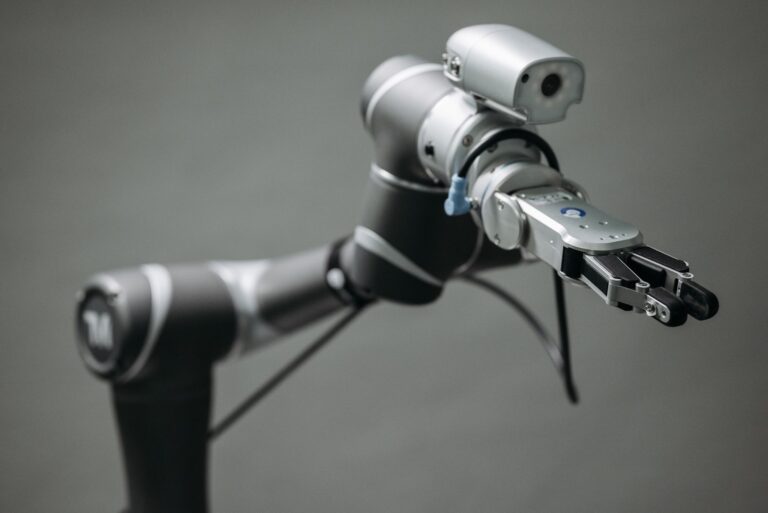
isrg didn’t invent minimally invasive surgery, but it engineered the platform that made it reproducible at scale. The da Vinci system, approved by the FDA in 2000, translated a surgeon’s hand movements into precise instrument movements while filtering natural tremors. From a technical standpoint, this solved a real problem: laparoscopic surgery (traditional minimally invasive work) requires extreme dexterity and carries a steep learning curve. The da Vinci democratized advanced technique by allowing surgeons to achieve better outcomes with less training time.
The company then followed Amazon’s playbook: aggressive expansion into new markets (prostatectomies, hysterectomies, colorectal procedures) while building switching costs. Once a hospital invested $2+ million in a da Vinci system, the decision to buy a competitor’s robot meant writing off capital and retraining staff. ISRG capitalized on this by steadily raising prices for instruments, service contracts, and software updates. A hospital might pay $200 per instrument set that costs ISRG perhaps $25 to manufacture—margins that would be unsustainable for a product with open competition, but standard when one vendor owns 60% of the market.
The Business Model Behind Platform Dominance
ISRG’s financial structure reveals why the amazon comparison runs deep. Hardware (the da Vinci system) generates roughly 40% of revenue, but instruments, services, and software upgrades account for 60%. This means that once a surgeon adopts da Vinci, ISRG has 15+ years of high-margin recurring revenue locked in through instrument sales alone. A single complex prostatectomy can consume $5,000-$8,000 in instruments that are used once and discarded.
Over the life of a robot, that hospital might spend $15-$20 million on instruments alone—often at prices that exceed what independent manufacturers charge by 30-50%. The limitation worth noting: this model creates tension with hospital economics. As healthcare margins tighten, some hospital systems have begun questioning whether they can afford ISRG’s instrument pricing and service contracts, leading to careful evaluation of alternative platforms. However, ISRG’s response has been predictable—introducing service bundles and financing options that make the upfront pain less acute, much as Amazon prime hides the true cost of free shipping through annual subscriptions. The company is also protecting its ecosystem through intellectual property barriers: third-party instrument manufacturers have faced legal challenges, and ISRG’s software typically cannot control non-ISRG instruments effectively.
Surgical Specialties and the Expanding Use Case
ISRG initially focused on general surgery and urology, where the learning curve was steep and the technology offered clear advantages. A prostatectomy using da Vinci has become the gold standard: faster recovery, less blood loss, lower complication rates than open surgery. This clinical validation created powerful network effects—surgeons wanted to specialize in robotic prostatectomy because they saw better outcomes and could charge appropriately. Hospitals wanted da Vinci because their surgeons demanded it and patients began requesting it by name. The company has since expanded into gynecology, colorectal surgery, head and neck procedures, and thoracic surgery.
Each new specialty required FDA clearance and evidence generation, but ISRG’s installed base made this faster—they could fund studies on existing systems and build credibility. A warning here: not every specialty benefits equally from robotics. While prostatectomy outcomes are clearly superior to open surgery, da Vinci’s advantages in colorectal cancer cases are less decisive. Surgeons in these fields are more heterogeneous in their adoption, which means ISRG cannot simply assume that owning urology translates into owning all of surgery. Some specialties may always prefer traditional laparoscopy or hybrid approaches.

Competition, Market Dynamics, and Realistic Threats
Despite ISRG’s dominance, competitors are emerging—and they’re learning from the Amazon playbook themselves. Medtronic acquired Hugo RAS (Robotic Assisted Surgery) and has begun deploying it in hospitals, often bundled with other surgical products. Stryker acquired Mako Robotic Surgery and is integrating it into orthopedic workflows. These companies lack ISRG’s installed base, but they have something ISRG’s newer competitors don’t: existing relationships with hospital procurement, established service networks, and cross-selling leverage. A hospital already buying anesthesia equipment and surgical lights from Medtronic has a reason to consider Hugo even if da Vinci remains superior in narrow use cases.
The critical tradeoff for ISRG is that its dominance invites both competition and scrutiny. Hospitals are becoming more price-sensitive, and some are pushing back on instrument costs. Regulators in multiple countries have begun investigating ISRG’s pricing practices. The company’s ability to maintain margins while competition intensifies will determine whether the Amazon comparison proves accurate long-term. Amazon sustained dominance through consistent reinvestment in infrastructure and aggressive pricing on customer-facing services; ISRG will face pressure to do the same while protecting its margin structure.
The Technological Debt and Innovation Risk
One often-overlooked limitation of ISRG’s dominance is technological lock-in that could work against it. The da Vinci’s architecture—a console surgeon, a patient-side cart, and instrument arms—was designed 25 years ago. While the company has continuously upgraded the system, some of its design choices (bulky footprint, limited range of motion compared to human arms) now seem quaint. Newer competitors are designing robots from scratch with different ergonomics, smaller form factors, and more intuitive controls that might actually appeal to younger surgeons who haven’t been trained on da Vinci.
Additionally, ISRG has been cautious about artificial intelligence integration—the company has acquired AI startups and filed patents, but da Vinci robots still rely almost entirely on surgeon control rather than autonomous or semi-autonomous features. Competitors without this legacy burden might integrate AI-assisted surgery (real-time guidance, automated movements for routine steps) faster. ISRG’s risk is real: becoming the “digital mainframe” of surgery, dominant but increasingly perceived as old technology. A warning: hospitals that assume da Vinci’s dominance guarantees future relevance may find themselves locked into aging infrastructure as the field evolves.
The Regulatory and Reimbursement Landscape
ISRG’s market position depends not just on clinical evidence but on reimbursement. In the United States, Medicare and insurance companies determine what they’ll pay for robotic surgery, and these reimbursement rates have been stable but not growing. Some procedures (like prostatectomy) have accepted robotic reimbursement, while others remain contested. This regulatory environment could constrain ISRG’s growth—if insurance companies decide that da Vinci doesn’t justify premium reimbursement, hospitals will have less financial incentive to invest in new systems or upgrade existing ones. Internationally, the picture is more fragmented.
European countries have been slower to adopt robotics due to cost concerns, and many use a mix of laparoscopy and robotics depending on case type. This geographic variation means ISRG cannot assume its U.S. dominance translates globally. The company has been investing in emerging markets, but adoption patterns vary widely. An example: Japan and South Korea have embraced surgical robotics more aggressively than Europe, creating regional pockets of strength rather than the universal dominance ISRG enjoys in North America.
The Future: Consolidation, Autonomy, and Market Maturation
ISRG’s long-term trajectory mirrors Amazon’s in an important way: the company faces a choice between defending its current market or evolving to remain relevant in a transformed one. Surgical robotics is moving toward greater autonomy—systems that can execute routine portions of procedures without surgeon input, handle navigation during complex cases, and integrate with augmented reality interfaces. ISRG has shown interest in these technologies, but competitors like CMR Surgical (Versius) and TransEnterix (Senhance) are specifically designed around newer paradigms. The surgical robotics market is also maturing, which means ISRG’s growth rate will likely decelerate.
The company has already saturated much of the U.S. prostatectomy market; future growth depends on expanding to new specialties and geographies. This is harder than capturing a new market—it requires proving value in contexts where the surgeon is less convinced and the outcome advantage less obvious. ISRG’s strategy appears to be two-pronged: defend dominance through pricing power and ecosystem lock-in while investing in next-generation capabilities. Whether this succeeds depends on execution—staying innovative enough to keep younger surgeons interested while maintaining the installed base of older ones.
Conclusion
ISRG’s claim to being the “Amazon of Surgical Automation” is well-earned but not unassailable. The company has built a durable market position through technological excellence, aggressive ecosystem development, and strategic adoption of a platform business model. Its 60% market share, recurring revenue from instruments and services, and deep integration into hospital workflows create powerful competitive moats. For surgeons and hospitals currently invested in da Vinci, this dominance offers stability and consistent innovation.
However, dominance brings complacency risk—and ISRG’s challenge is to remain innovative while competitors catch up and the market matures. The company’s future depends on two factors: maintaining clinical and economic justification for its premium position while successfully transitioning to the next generation of surgical automation. Institutions considering robotics investment should evaluate ISRG not as a permanent standard but as the current leader in a field that will evolve. Competitors will gain ground, and the “Amazon” analogy only holds if ISRG continues to reinvent itself faster than others can catch up.