
Knightscope, Inc. (KSCP) is positioning itself as a comprehensive physical security intelligence platform—much like how Palantir Technologies has become synonymous with data integration and intelligence for government and enterprise clients. The comparison is not incidental. In July 2025, Knightscope partnered directly with Palantir through its FedStart program, aiming to integrate autonomous security robots with Palantir’s data orchestration capabilities within federal infrastructure. This partnership represents a fundamental shift in how Knightscope sees itself: not just as a robot manufacturer, but as a data aggregation layer for physical security operations.
The autonomous robots serve as distributed sensors collecting real-time information from facilities, which is then processed, analyzed, and actionable through intelligence platforms—creating a unified view of security risks across facilities, just as Palantir creates unified intelligence from disparate data sources. KSCP’s path to becoming this “Palantir of physical security data” reflects both the company’s ambitions and its current market position. Trading at $4.17 as of March 31, 2026, Knightscope is backed by strong analyst sentiment—rated “Strong Buy” by multiple analysts with a 12-month price target of $17.0, implying 381.59% upside potential. However, the company is still in a growth-at-loss phase, reporting a net loss of $33.8 million in 2025 despite generating $11.3 million in revenue (up 5% from the prior year). Understanding KSCP requires recognizing both the scale of its ambition and the substantial financial hurdles it must clear to reach profitability while building out this security intelligence infrastructure.
Table of Contents
- How KSCP’s Autonomous Robots Function as Distributed Intelligence Collectors
- The Palantir Partnership and Federal Infrastructure Integration
- The Event Risk Acquisition and Expansion Into Armed Response
- Revenue Model and the Service Revenue Opportunity
- Financial Losses and the Path to Scale
- The K7 Robot and Next-Generation Capabilities
- Strategic Partnerships and the Path Forward
- Conclusion
How KSCP’s Autonomous Robots Function as Distributed Intelligence Collectors
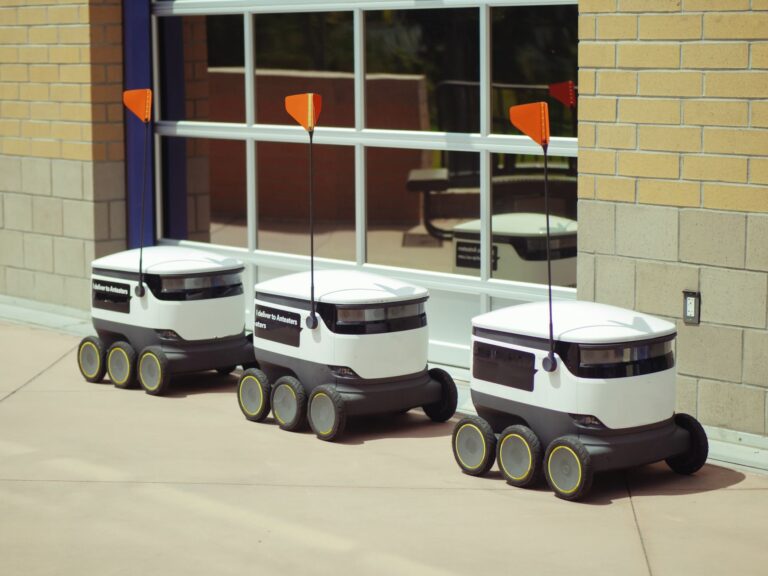
The core of KSCP’s intelligence platform is its family of autonomous security robots (ASRs), which operate as mobile sensors in physical environments. Unlike stationary cameras or alarm systems, these robots continuously patrol facilities, collecting data on facility conditions, occupancy patterns, perimeter security, and anomalies. A K3 or K5 robot deployed at a Fortune 500 entertainment facility, for example, continuously monitors multiple areas, capturing images, environmental data, and behavioral patterns that feed into a central command system. This data—timestamp-tagged, geographically indexed, and contextually rich—becomes the raw material for security intelligence. The difference between KSCP’s approach and traditional security systems is architectural.
Traditional systems are passive—they react when someone triggers an alarm or manually reviews footage. KSCP’s robots are active data collectors generating continuous streams of information. The robots themselves have onboard AI for local threat detection, but the real leverage comes when this distributed data is aggregated and analyzed centrally. In February 2026, Knightscope reported deploying 20 new autonomous robots while renewing contracts with 21 existing clients, including Fortune 500 companies. Each deployment adds to a growing dataset about how physical security actually operates at scale, which improves the machine learning models that power threat detection across the entire network.

The Palantir Partnership and Federal Infrastructure Integration
The palantir partnership, announced July 17, 2025, explicitly wired Knightscope into federal security infrastructure. Under the two-year FedStart program agreement, Knightscope commits to achieving FedRAMP High and DoD Impact Level 5 accreditation—certifications that allow its data and systems to integrate with federal networks. Operationally, Knightscope’s infrastructure will run within Palantir-managed AWS GovCloud clusters, meaning the data flows through federal-approved channels and integrates with existing intelligence systems used by defense and civilian agencies. However, this partnership also carries hidden complexities.
Federal certifications like FedRAMP High require extensive security audits, compliance documentation, and operational overhead. The timeline for achieving these certifications can stretch 12-18 months or longer, and any security vulnerabilities discovered during audits can delay deployment. Additionally, operating within GovCloud adds latency and cost—data cannot flow directly from robots to cloud; it must be routed through federal-approved pathways. For time-sensitive security operations, this can be a limitation. kscp is betting that the strategic access to federal agencies justifies these architectural constraints, but small security incidents at enterprise customers are unlikely to wait for GovCloud processing.
The Event Risk Acquisition and Expansion Into Armed Response
In February 2026, Knightscope acquired Event risk LLC, a security guarding company. This move signals a critical evolution in KSCP’s strategy. The company is no longer positioning itself purely as a robot manufacturer; it is attempting to become a full-spectrum autonomous security force provider, combining robotic systems, AI-driven command software, and human security personnel (armed and unarmed) under one operational umbrella. The acquisition means Knightscope now has legal entities, licensing, and operational infrastructure for on-site armed response—something robots alone cannot provide. This vertical integration changes KSCP’s competitive positioning but introduces new operational and liability risks.
Security guarding services are heavily regulated, require specific licensing in each state, maintain insurance and bonding requirements, and carry personal liability if incidents occur. A robot patrolling a facility has clear liability boundaries; a human security guard employed by Knightscope’s subsidiary operates under much broader legal exposure. The company now must manage two distinct business models simultaneously—the capital-efficient robot business and the labor-intensive guarding business. Over time, this could create powerful synergies: data from robots identifies genuine threats, and human responders are dispatched where robots cannot act. But in the near term, integrating Event Risk operationally and culturally is a substantial distraction from KSCP’s core technology mission.

Revenue Model and the Service Revenue Opportunity
KSCP’s financial structure reveals where the real intelligence value resides. In 2025, the company generated $11.3 million in total revenue: $8.0 million from service revenue (approximately 70% of total) and $3.4 million from product revenue. The service revenue includes recurring subscriptions for monitoring, software, and data analytics—the intelligence layer. Product revenue includes the sale of robots themselves. This ratio is crucial: if KSCP is truly becoming a data intelligence platform, it must grow service revenue faster than product revenue, since recurring software revenue is more valuable and profitable than one-time hardware sales.
The challenge is that KSCP currently operates at a gross loss of $4.8 million on $11.3 million in revenue. Service revenue is only marginally profitable if at all, because supporting a distributed network of robots in the field is operationally expensive. To reach profitability, KSCP needs to dramatically increase revenue without proportionally increasing operating costs—a scaling dynamic that favors software and data services over field operations. The company spent $29.1 million on operating expenses in 2025, meaning every dollar of revenue was accompanied by $2.57 in operating costs. The path to profitability requires either tripling revenue or cutting operating expenses by two-thirds; the Palantir and federal market opportunities are intended to unlock revenue at scale, but the execution risk is substantial.
Financial Losses and the Path to Scale
KSCP’s $33.8 million net loss in 2025 is the reality behind the “Strong Buy” analyst ratings. The stock trades at a low price precisely because the company burns cash aggressively, and market participants are pricing in significant dilution or the need for future capital raises. This is a classic high-growth, pre-profitability venture capital dynamic, but Knightscope is a public company, which means it must satisfy quarterly earnings expectations and shareholder scrutiny while running a long-term technology buildout. The critical limitation facing KSCP is that building intelligence platforms for federal agencies takes time.
FedRAMP certification alone typically requires 6-12 months after application, and that’s assuming no compliance issues. Customer buying cycles for federal contracts are measured in quarters or years, not months. In the meantime, KSCP must fund operations, pay engineers, maintain robots in the field, and support existing customers—all while the company is unprofitable. The company has reported that it surpassed $2 million in new sales and renewals in February 2026, which is meaningful but insufficient to close a $33.8 million annual loss. Unless KSCP materially accelerates revenue growth or raises additional capital, the stock will remain under pressure regardless of the analyst price targets.

The K7 Robot and Next-Generation Capabilities
In 2025, Knightscope unveiled the K7, its next-generation autonomous security robot designed for large outdoor environments, fence-line monitoring, and critical infrastructure protection. The K7 represents a hardware evolution—larger, more rugged, and designed for extended outdoor deployment. An early access waitlist opened in 2025, with limited series production expected in the second half of 2026. The K7 targets critical infrastructure operators: power plants, water treatment facilities, border security, and large industrial complexes.
The K7 is strategically important because it expands KSCP’s addressable market beyond mid-size commercial facilities into high-security, high-consequence environments. However, the timeline is optimistic. “Expected in second half of 2026” is a common phrase in robotics, and delays are frequent. If K7 production slips into 2027, or if demand for outdoor security robots proves lower than expected, the company will face another year of revenue disappointment. The success of the K7 will be measured not just by unit sales, but by how much incremental service revenue it generates—each K7 deployment should come with monitoring contracts, software subscriptions, and data integration fees that compound over time.
Strategic Partnerships and the Path Forward
Beyond Palantir, Knightscope has secured a partnership with Carnegie Mellon University’s School of Computer Science, committing to a 5-year collaboration that includes funding for five educational course projects. This partnership signals Knightscope’s intent to deepen its technology foundation and establish credibility in academic AI research. Academic partnerships also provide access to talent and early validation of emerging technologies—valuable for a company that must compete with larger defense contractors and technology firms.
The cumulative effect of Knightscope’s strategic moves—the Palantir integration, the Event Risk acquisition, the K7 launch, and the Carnegie Mellon partnership—suggests a company attempting to become essential infrastructure for physical security. If the federal market embraces FedRAMP-certified autonomous security intelligence, and if the K7 succeeds in large-scale deployments, KSCP’s revenue could accelerate dramatically. Alternatively, if federal adoption moves slowly, if the K7 faces technical issues or demand disappointments, or if larger competitors (Amazon, Google, traditional defense contractors) enter the market with superior technology or relationships, KSCP could struggle to justify its current valuation. The company is at an inflection point where its strategic decisions of the next 12-18 months will determine whether the “Palantir of physical security data” narrative holds or becomes another promising robotics startup that failed to reach scale.
Conclusion
KSCP’s positioning as the “Palantir of physical security data” is more than marketing language—it reflects a fundamental strategic shift from hardware manufacturer to intelligence platform provider. The company’s autonomous robots serve as distributed sensors, the Palantir partnership integrates KSCP into federal infrastructure, and the Event Risk acquisition adds human response capabilities. The analyst “Strong Buy” rating and $17.0 price target reflect confidence in this vision, but they also discount substantial execution and market risk. The next 18 months will be critical.
KSCP must deliver on FedRAMP certification, successfully launch the K7, scale revenue faster than operating costs, and convince federal and enterprise customers that autonomous robot networks provide genuine security intelligence advantages over traditional systems. The company is unprofitable and burning cash aggressively, making execution flawless and market demand real prerequisites for reaching the analyst price targets. For investors and security operators watching KSCP, the question is not whether the vision is compelling—it is. The question is whether Knightscope can execute at scale before capital constraints or competitive pressure force a strategic retreat.