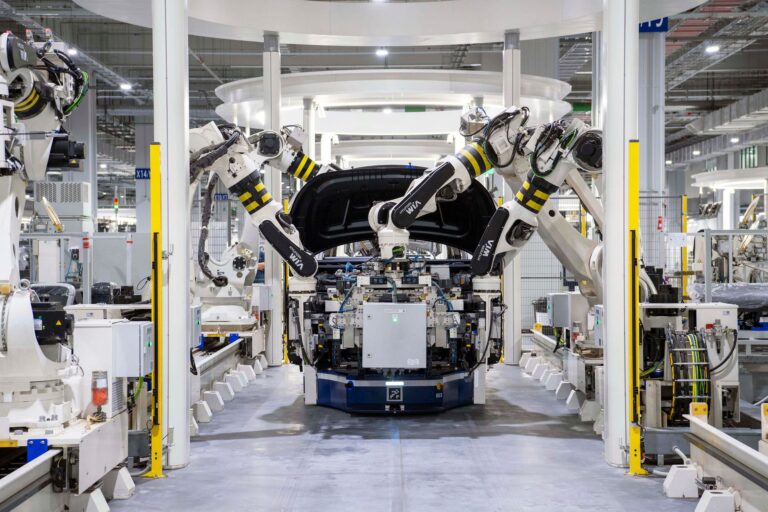

The earliest adopters of labor automation technology secured commanding market positions precisely because they moved ahead of the curve—before automation became table stakes. These organizations didn’t just reduce headcount; they fundamentally restructured how work gets done, gaining cost advantages that their slower competitors have spent years trying to catch up on. A manufacturer that implemented robotic process automation in 2015, for instance, could handle a 40 percent increase in invoice processing volume with the same team size, while competitors still wrestling with manual workflows continued burning money on labor costs that should have been automated years prior.
The competitive advantage compounds because early adopters built institutional knowledge, vendor relationships, and optimized processes that late movers cannot easily replicate. They understood the real constraints of their systems—the edge cases, the exception handling, the workflows that resist automation—because they lived through the painful learning curve. Their second, third, and fourth automation projects become progressively cheaper and more effective because they’ve already solved the organizational and technical barriers that catch most late entrants off guard.
Table of Contents
- Why Did Early Labor Automation Adopters Win?
- The Cost Structure Advantage That Compounds Over Time
- Real-World Examples of Early Automation Winners
- The Return on Investment Advantage That Grows Over Time
- Integration Challenges and the Hidden Complexity Early Adopters Faced
- Industry-Specific Patterns in Automation Adoption
- The Future for Early Labor Automation Leaders
- Conclusion
- Frequently Asked Questions
Why Did Early Labor Automation Adopters Win?
Organizations that embraced labor automation between 2010 and 2018 operated in a market where the technology was proven but not yet ubiquitous. They could hire consultants and vendors who still had availability, negotiate better terms because demand wasn’t stratospheric, and implement systems without fighting for IT resources against dozens of competing projects. More importantly, they got to define automation priorities based on business logic rather than desperation—they automated because it made economic sense, not because they were hemorrhaging money and scrambling to survive. The productivity gains created a flywheel. early adopters reduced their labor costs just as their competitors were facing wage inflation and hiring challenges. Within five years, their cost structure looked fundamentally different.
A financial services firm that automated routine compliance reporting in 2014 could process twice the transactions with a smaller compliance team by 2020, while peers who delayed still had teams proportional to their 2014 volume. When the pandemic forced remote work in 2020, companies with automation-heavy operations adapted faster because they had less dependency on physical presence and manual handoffs. The learning curve advantage proved durable. Early adopters understood integration challenges that weren’t obvious from vendor pitches. They learned which processes actually stayed stable enough to automate (contrary to what automation vendors promised) and which workflows required constant adjustment. This knowledge shaped how they evaluated the next generation of automation tools, making their selection process faster and their success rates higher than organizations making their first automation bet in 2020 or 2022.

The Cost Structure Advantage That Compounds Over Time
Once early adopters reengineered their workflows around automation, they created cost structures competitors couldn’t easily match through catching up alone. The labor cost per unit output diverged and stayed diverged. A company that automated accounts payable processing in 2016 moved from a cost basis of $8 per invoice to $2 per invoice through automation; a competitor starting that same automation project in 2021 faced that same $8-per-invoice cost burden for five more years, burning an extra $6 per invoice across hundreds of thousands of invoices. The cumulative cost difference—the amount they overpaid for labor while waiting—often exceeded the total cost of implementing automation, making the decision to wait economically self-defeating.
The limitation worth noting: early automation also locked some organizations into older technology stacks and vendor relationships that became increasingly expensive to maintain. A company that built heavy RPA infrastructure around UiPath in 2014 found itself paying escalating licensing fees as RPA adoption became mainstream, with limited leverage to negotiate because by 2022 the switching costs were enormous. Some early adopters optimized for yesterday’s business problem, then struggled to adapt when their actual workflow needs shifted. The manufacturer that perfectly automated their invoice process in 2015 faced major rework when they acquired a company with completely different invoice formats and approval chains.
Real-World Examples of Early Automation Winners
Insurance claims processing provides one of the clearest examples. Insurers that implemented RPA for claims intake and initial assessment between 2014 and 2017 reduced claims processing time from 8 days to 2 days, while competitors using manual data entry still took 10-15 days well into 2020. This speed advantage mattered because faster claim settlement directly improved customer retention and competitive positioning. The insurer also caught fraud patterns faster because the automated system processed 100 percent of claims against fraud rules, while manual review always had blind spots.
By the time slower competitors implemented similar automation in 2020, the early adopters had already trained their automation systems on three years of claims data, making their fraud detection significantly more effective. In healthcare, hospital systems that adopted laboratory automation and electronic health record workflows early created operational advantages that translated directly to patient volume. A lab that automated specimen tracking and result reporting in 2015 could run more tests with the same number of technicians; when patient volume surged during COVID-19, they had capacity while competitors with fully manual labs faced bottlenecks. The early adopter also had institutional knowledge about which workflows actually needed human judgment and which could be fully automated—they’d already learned the hard way which automation implementations created more problems than they solved.

The Return on Investment Advantage That Grows Over Time
Early adopters captured massive ROI not just from lower labor costs but from scale. An organization that spent $500,000 implementing warehouse automation in 2013 spread that cost across 15 years and millions of units, dropping their per-unit cost impact to nearly nothing by 2023. A competitor implementing the same solution in 2023 faced the same $500,000 cost but could only spread it across fewer units if they hadn’t grown as quickly, making their per-unit cost substantially higher. The early mover’s efficiency advantage compounds indefinitely.
The tradeoff: early automation projects often cost more in management overhead and consulting fees because the best practices and playbooks didn’t exist yet. An organization might spend an extra $200,000 on consulting because they had to figure out edge cases through experimentation rather than following a known formula. Late movers get cleaner implementations with less wasted effort, but they pay the price in never catching up on the cumulative cost advantage. It’s the classic efficiency versus effectiveness tradeoff: early movers paid for learning, late movers pay for being late.
Integration Challenges and the Hidden Complexity Early Adopters Faced
Early automation projects often revealed that workflows were far messier than anyone expected. A back-office operations team that looked straightforward to automate turned out to have dozens of exception handlers, manual overrides, and workarounds that nobody had documented. Early adopters of automation discovered this the hard way and had to decide whether to “fix” the process (expensive and disruptive) or build automation that could handle the exceptions (also expensive). They lived through the painful phase of constantly tweaking automation because they hadn’t yet learned how to standardize and stabilize their underlying processes.
The warning: some early automation implementations failed because organizations automated broken processes, then had to rip out the automation and fix the process before re-automating correctly. A manufacturer might have automated a welding quality control process without realizing the control system had a systematic bias, so the automation just made the bias faster. Early adopters who survived this phase got better at process evaluation and learned that you can’t automate your way out of process problems—you have to fix the process first. This institutional knowledge became a competitive advantage, but acquiring it was expensive.

Industry-Specific Patterns in Automation Adoption
Financial services companies won big by automating early because regulations, compliance rules, and transaction formats changed slowly, making automation stable and long-lasting. A bank that automated mortgage underwriting in 2014 could still use the same automation logic in 2024 with only minor tweaks. Manufacturing companies that automated inventory and production scheduling found the opposite problem: product mixes changed frequently, requiring constant automation updates. Early adopters in inventory management spent more on ongoing maintenance because they hadn’t anticipated how dynamic their workflows would be.
Retail and e-commerce companies that adopted warehouse automation and order fulfillment robotics between 2015 and 2017 built supply chain advantages that were difficult to replicate. amazon and Alibaba’s early investments in warehouse automation created speed advantages that smaller competitors still haven’t matched. The specific example: a fulfillment center with robotic item picking and sorting can process orders 60 percent faster than a fully manual center, which mattered enormously once same-day and next-day delivery became expected. The early adopters set the service standard, forcing competitors to either match it through automation (expensive) or lose market share.
The Future for Early Labor Automation Leaders
Organizations that mastered automation between 2010 and 2020 now face the question of whether they can maintain their advantage as AI and machine learning reshape what automation means. Some early RPA implementations are becoming legacy systems—they work fine but can’t handle the complexity and nuance that ML-based approaches could address. The manufacturer with 10 years of perfectly functioning invoice automation might find that a modern AI-based expense management system could handle their workflow more elegantly, but switching costs are prohibitive, so they’re stuck optimizing legacy systems.
The forward-looking advantage: early automation winners built automation-capable organizations—teams that understand how to evaluate new technologies, implement changes, and measure impact. These organizations will likely adopt the next generation of automation (AI agents, autonomous systems, predictive automation) more successfully than companies with no automation history. The competitive advantage may shift from “we automated first” to “we automate continuously and effectively,” which is a different but related advantage.
Conclusion
The early labor automation winners succeeded because they reduced costs before competition forced everyone to, created institutional knowledge that late movers couldn’t easily acquire, and built organizational cultures that embraced continuous improvement through technology. They paid higher consulting and implementation costs to learn lessons that later companies could avoid, but they captured those learning investments many times over through years of cost advantage and operational flexibility. The five-year head start in automation often translates to a permanent fifteen-year advantage in cost structure and organizational capability.
For organizations considering automation today, the lesson is clear: the efficiency advantage from being early is real and compounds for years. The catch is that you’ll pay in learning costs and will make mistakes that later movers can avoid. The question isn’t whether to automate, but whether you can afford not to—because your competitors aren’t waiting.
Frequently Asked Questions
How long do early automation advantages typically last?
Cost advantages from early automation usually compound for 7-12 years before newer technology or market conditions substantially change the equation. Organizational learning advantages last longer—often indefinitely—because cultural and institutional knowledge persists.
What’s the typical ROI timeline for labor automation?
Most labor automation projects achieve payback within 18-36 months through labor cost savings alone. Early adopters had time to reach full payback before competitors started catching up; late movers face pressure to show faster ROI.
Can late movers catch up to early automation leaders?
They can reduce the gap through aggressive automation programs, but matching the full cost structure advantage usually requires multiple years. They may leapfrog to newer technology, which is sometimes faster than trying to replicate legacy implementations.
Which industries saw the biggest early automation advantages?
Financial services, insurance, and large-scale manufacturing saw the most durable advantages because their workflows were relatively stable. Retail, healthcare, and fast-moving consumer goods faced more disruption, so advantages were smaller.
How does AI change the early automation advantage?
AI-based automation can potentially compress what took humans months to automate through rules-based RPA, but organizations with existing automation infrastructure often have better data to train ML models effectively, maintaining their advantage.
What’s the biggest risk for early automation leaders today?
Legacy automation systems that work well but consume resources to maintain and update. Organizations can become locked into aging technology and have difficulty pivoting to newer approaches because switching costs are prohibitive.