
TER (Trajectory Error Rate) represents the critical measurement and compensation system that allows modern robots to achieve the precision and reliability required for industrial, medical, and autonomous applications. At its core, TER is how robots monitor the gap between where they should be moving and where they’re actually moving, then adjust in real time to stay on track. Without TER systems, robots would accumulate positional errors that cascade into failed tasks—from manufacturing defects in automotive production lines to dangerous misalignments in surgical robots.
The importance of TER has only grown as robots have taken on more complex and sensitive tasks. A factory robot assembling smartphone components might operate with micron-level tolerances, where even a 0.1mm deviation ruins the part. In this context, the TER system isn’t just a feature—it’s the difference between a viable operation and one that wastes material and time. Modern robotics has made TER measurement and correction increasingly sophisticated, moving from simple position feedback loops to predictive error compensation that anticipates where a robot will deviate before it happens.
Table of Contents
- How Trajectory Error Rate Systems Work in Industrial Automation
- The Limitations and Trade-offs of Current TER Technology
- TER in Autonomous Systems and Mobile Robotics
- Comparing Legacy and Modern TER Approaches
- Thermal Drift and Environmental Factors in TER
- Real-World TER Failures and Their Consequences
- The Future of TER and Next-Generation Error Management
- Conclusion
- Frequently Asked Questions
How Trajectory Error Rate Systems Work in Industrial Automation
ter systems function through continuous feedback loops that compare a robot’s intended position with its actual position at every moment of movement. Most modern robots use a combination of encoder feedback (measurements from motors and joints), accelerometers, and in advanced systems, computer vision to verify their position. The robot’s control system calculates the error, then makes micro-adjustments to the motors to correct the path in milliseconds. For example, a KUKA industrial robot on an automotive assembly line might check its position 1,000 times per second, making thousands of tiny corrections to ensure a welded seam stays within 0.5mm of specification. The practical challenge with TER is that error sources are numerous and interconnected.
Temperature changes cause metal components to expand or contract, changing joint angles slightly. Vibration from other machinery nearby affects position accuracy. Load variations—welding a light part versus a heavy part—shift the robot’s center of gravity and alter how precisely its joints respond to motor commands. Manufacturers combat these issues by building TER compensation directly into robot firmware, using machine learning models trained on historical data to predict and preemptively correct for thermal and load-based errors. Some robots can even adjust their movement speed based on the task, slowing down when higher precision is needed.

The Limitations and Trade-offs of Current TER Technology
Despite advances, TER systems face inherent limitations rooted in the laws of physics and the costs of sensors. Every additional sensor that improves TER accuracy adds weight, cost, and processing overhead to the robot. A six-axis collaborative robot with advanced vision-based error correction might cost 30% more than a baseline model with simple encoder feedback. For manufacturers running thousands of robots on high-speed production lines, that cost multiplies significantly, forcing decisions about which robots actually need the highest TER precision. Another limitation is the fundamental latency in error correction.
Even with microsecond-level response times, there’s still a delay between when an error occurs and when the robot corrects it. If a robot is moving very fast—some industrial arms reach speeds of over 2 meters per second—that lag window compounds. This is why high-speed, high-precision tasks often require robots to move more slowly than they physically could, sacrificing throughput to maintain accuracy. Additionally, TER systems assume the robot’s mechanical structure hasn’t changed. Years of operation introduce wear in bearings and gearboxes that gradually degrade accuracy, eventually requiring expensive maintenance or replacement. Predictive maintenance algorithms try to catch this degradation early, but they’re not infallible.
TER in Autonomous Systems and Mobile Robotics
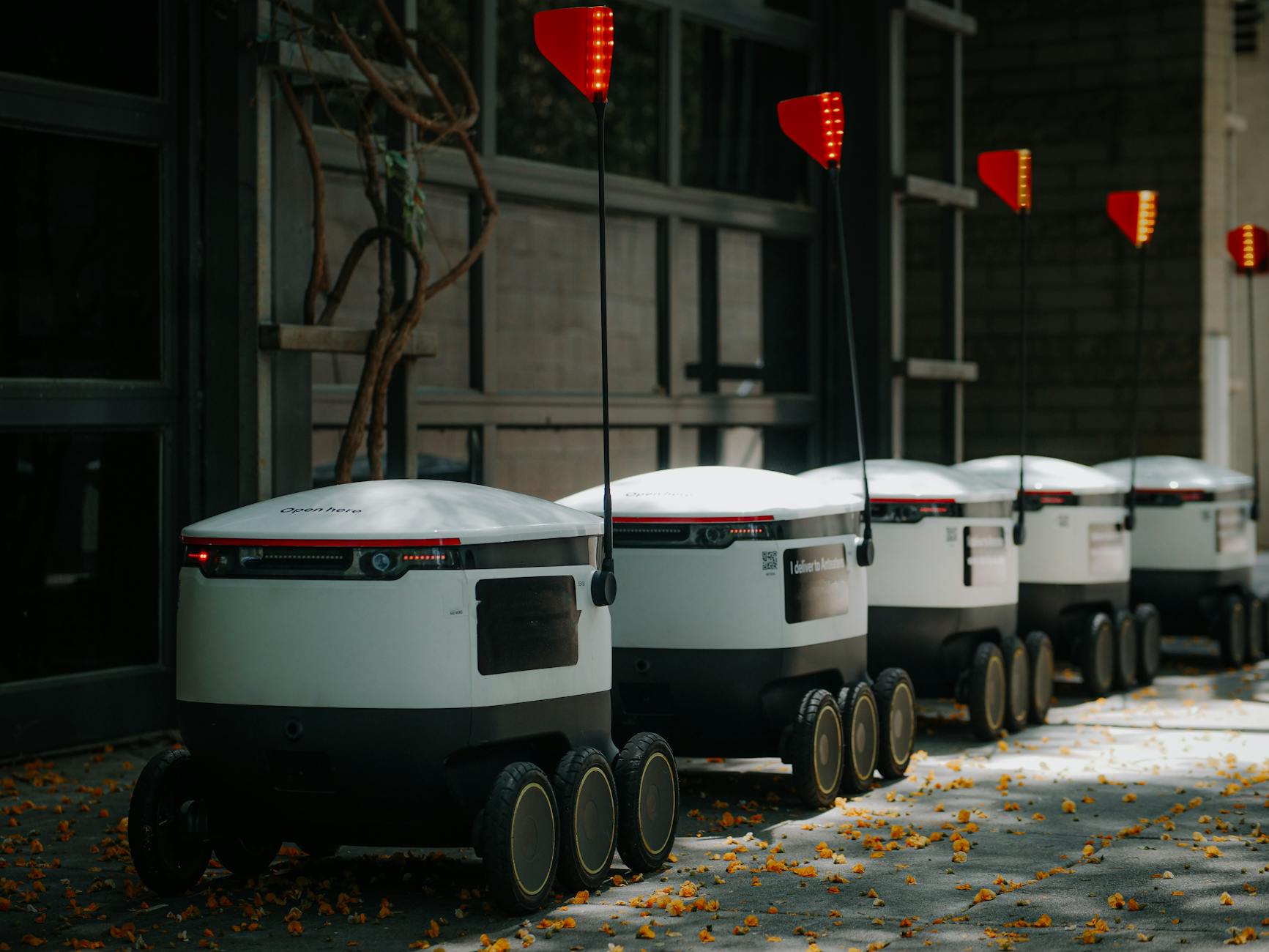
Trajectory error management becomes even more critical in autonomous systems where robots operate outside controlled factory environments. A delivery robot navigating city streets relies on TER principles to stay on sidewalks and avoid obstacles despite wind, uneven terrain, and unpredictable external forces. Unlike a stationary factory robot, mobile robots can’t rely solely on internal encoder feedback—they need GPS, visual odometry, and sometimes lidar data to cross-check their actual position against their mental map. When these systems disagree (GPS says the robot is at point A, but onboard cameras suggest point B), the robot’s error compensation system must decide which sensors to trust. Autonomous vehicles represent the most demanding application of TER technology.
A self-driving car must know its position within 10-20 centimeters for safe lane-keeping, and its heading angle within 1-2 degrees. This requires fusing data from multiple sensor types—GPS, inertial measurement units (IMUs), radar, lidar, and cameras—through sophisticated algorithms that weight each sensor’s reliability based on conditions. Heavy rain reduces camera accuracy, so the system downweights vision data and relies more on radar. Urban canyon conditions degrade GPS signals, so the system shifts toward lidar and visual features. This dynamic error management is far more complex than factory robotics because the environment isn’t controlled and the consequences of a trajectory error are human safety.
Comparing Legacy and Modern TER Approaches
Older industrial robots from the 1990s and early 2000s relied primarily on open-loop or simple proportional-integral-derivative (PID) error feedback. The robot would read its joint angles, compare them to desired angles, and make corrections based on a fixed algorithm. These systems worked adequately for repetitive tasks but had poor error compensation for external disturbances or thermal drift. A 10-year-old FANUC robot might need recalibration every few months to maintain tight tolerances.
Contemporary robots integrate machine learning models trained on months or years of operation data. These models learn the robot’s unique error patterns—how this particular unit drifts in heat, how it responds to different payloads, how vibration from nearby machinery affects its accuracy. A modern ABB robot can apply learned correction factors that adapt to current conditions, significantly extending the interval between maintenance calibrations and improving achievable precision without hardware upgrades. The trade-off is complexity: these systems require more computational power onboard the robot and more expertise to set up and troubleshoot. A technician needs to understand not just mechanics and control theory but also data science concepts.
Thermal Drift and Environmental Factors in TER
One of the most persistent challenges in TER management is thermal drift. As a robot operates, friction in motors and gearboxes generates heat. This heat causes aluminum arms to expand and steel joints to shift slightly. In a climate-controlled factory, this might be predictable and manageable. But robots deployed in outdoor environments—construction sites, agricultural applications, mining operations—face temperature swings that can shift a robot’s accuracy by millimeters over the course of a day.
Sophisticated TER systems now include thermal sensors at multiple points on the robot that feed temperature data into predictive models, allowing the control system to apply preemptive compensation before thermal effects degrade position accuracy. Humidity presents an underestimated TER challenge. Metal components absorb and release moisture, causing microscopic swelling and contraction. In humid environments, this effect is more pronounced and adds noise to sensor feedback. Some advanced robots use sealed bearing systems and protective coatings to minimize this, but this increases cost and maintenance complexity. The practical reality is that for robots operating in harsh environments, accepting slightly lower precision or requiring more frequent recalibration is often the cost-effective solution compared to engineering a fully thermally-isolated, humidity-sealed system.
Real-World TER Failures and Their Consequences
When TER systems fail or degrade beyond acceptable limits, the results can be costly or dangerous. In 2022, a major automotive supplier had to halt production at a facility when thermal drift in collaborative robots caused them to miss assembly points by increasing amounts. The company thought it was a software bug, but the root cause was that the cooling system in the robot control cabinet had degraded, allowing electronic components to run hotter than normal. This shifted the robot’s internal temperature model and made its learned error compensation ineffective. The outage cost the company several million dollars in lost production and penalty payments to customers.
In medical robotics, TER failures have more direct consequences. Surgical robots must maintain sub-millimeter accuracy during delicate procedures. A surgeon relying on a robotic system expects the robot’s actual tool position to match the virtual position they’re viewing on screen. If TER compensation fails, the robot might drift during a critical suture, requiring the surgeon to take over manually. Modern surgical robots have multiple redundant sensors and automatic safeguards that halt operation if error thresholds are exceeded, but the risk remains a driving factor behind the rigorous validation protocols for medical robotics.
The Future of TER and Next-Generation Error Management
The frontier of TER technology is moving toward predictive and self-correcting systems that don’t just react to errors but anticipate them before they occur. Researchers are exploring the use of digital twins—virtual models of physical robots that run in parallel with real operations—to predict error patterns and test corrections before implementing them. Another emerging approach is using reinforcement learning to allow robots to optimize their own error compensation strategies over time, improving accuracy without requiring explicit reprogramming by humans.
There’s also growing interest in collaborative error management, where multiple robots share data about their local environments and error patterns. If one robot in a factory detects a vibration problem affecting accuracy, it could broadcast this to nearby robots so they can adjust their error compensation preemptively. As robotics becomes more interconnected and autonomous, TER systems will likely shift from isolated, single-robot optimization to network-aware systems that consider system-wide factors. This evolution will make TER not just the backbone of individual robots but the nervous system of entire manufacturing ecosystems.
Conclusion
TER—whether measuring trajectory, thermal, or terminal errors—represents one of the most fundamental technical requirements in modern robotics. It’s the mechanism that transforms physically approximate machines into reliably precise tools capable of handling tasks that demand micron-level accuracy or millimeter-level safety margins. The sophistication of TER systems often determines whether a robot deployment succeeds or fails, making error management a central concern for anyone designing, deploying, or maintaining robotic systems.
As robotics continues to expand into more demanding and less controlled environments—from autonomous vehicles to outdoor construction robots to next-generation surgical systems—TER technology will continue to evolve in complexity and capability. The robots that succeed in the coming decade will be those with the most adaptive, predictive, and resilient error management systems. For manufacturers and integrators, understanding TER limitations and investing in appropriate error compensation strategies isn’t just about efficiency—it’s about competing effectively in an increasingly automated world.
Frequently Asked Questions
What’s the difference between TER and repeatability in robotics?
Repeatability is how accurately a robot can return to the same position multiple times—it’s about consistency. TER (Trajectory Error Rate) measures accuracy relative to a commanded path during movement. A robot might have excellent repeatability (always within 0.1mm of a position) but poor trajectory accuracy (drifting 2mm during high-speed motion). Both matter, but for different applications.
How often should a robot’s TER system be recalibrated?
Factory robots typically need recalibration every 6-12 months depending on usage intensity and environmental conditions. Robots with advanced thermal compensation and machine learning models can sometimes extend this to 18-24 months. Environmental robots operating outdoors or in harsh conditions may need quarterly recalibration. The best approach is to monitor error metrics continuously and recalibrate when they approach unacceptable thresholds.
Can TER accuracy be improved without replacing the robot?
Often yes. Software updates that improve error compensation algorithms, adding external positioning systems (vision or laser guidance), upgrading sensors, and improving environmental controls (temperature, vibration isolation) can all enhance TER performance. However, some limitations are hardware-based—a worn gearbox won’t be fixed by software alone.
What role does machine learning play in modern TER systems?
Machine learning allows robots to build predictive models of their error patterns based on operational data. Instead of using generic correction formulas, learned models can adjust compensation for the specific thermal characteristics, load responses, and environmental factors of each individual robot. This typically improves achievable precision by 15-40% compared to traditional PID control.
Is high TER accuracy necessary for all robot applications?
No. Simple material handling robots stacking boxes might need only ±1 inch accuracy and don’t require advanced TER systems. Surgical robots and precision manufacturing need sub-millimeter accuracy and rely heavily on sophisticated TER. Choose robot specs and error management complexity based on actual task requirements to avoid unnecessary cost.
How do autonomous vehicles handle TER in GPS-denied environments?
They rely on sensor fusion combining lidar, cameras, and inertial sensors to maintain position estimates without GPS. When these sensors disagree, the system uses error-checking algorithms to identify which sensors are most reliable in current conditions, then weights the error corrections accordingly. This is why autonomous vehicles struggle in certain conditions—when multiple sensor types fail simultaneously, TER compensation becomes unreliable.