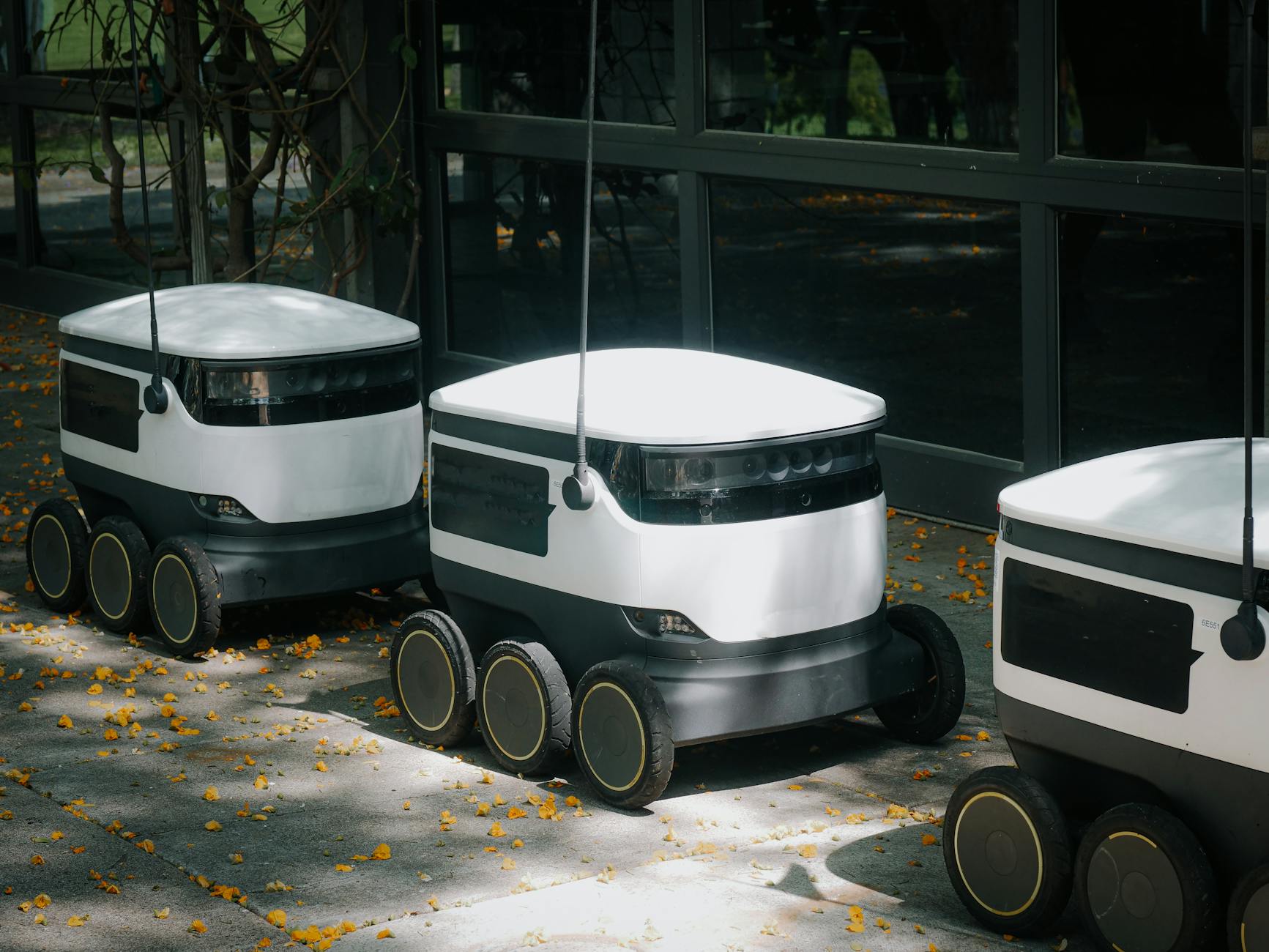

Serve Robotics has become the enabling infrastructure layer for autonomous last-mile delivery in America, much like NVIDIA serves as the foundational computing platform for AI. The comparison isn’t about market size—Serve is far smaller—but about strategic positioning. Just as NVIDIA’s chips power the systems everyone else builds on, Serve has become the operating backbone that restaurants and delivery platforms depend on to automate their sidewalk logistics. With 2,000+ deployed robots operating across 20 cities and serving over 3,600 restaurants, Serve doesn’t compete on every delivery route; it provides the platform that makes autonomous delivery operationally viable for businesses that would struggle to build their own.
The company achieved this position through relentless execution on a narrow problem: making autonomous robots reliable enough that restaurants can integrate them into daily operations. A 99.8% delivery completion rate isn’t marketing hyperbole when it comes from robots operating unsupervised on public sidewalks in rain, snow, and urban chaos. That consistency is what separates infrastructure from novelty. When Serve went public in late 2025, it wasn’t as a scrappy robotics startup—it was as a company with $2.7 million in full-year revenue, a 400% year-over-year increase in the fourth quarter, and a $26 million revenue outlook for 2026 that suggests the company is moving beyond pilot phase into genuine scale.
Table of Contents
- Why Last-Mile Robotics Needs an Infrastructure Layer
- Edge AI and the Computing Foundation
- The Product Breakthrough—Conversational Autonomy
- Scaling Revenue and Financial Momentum
- The Regulatory and Practical Limitations of Sidewalk Delivery
- Vertical Expansion Through Strategic Acquisition
- The Path Forward and Market Positioning
- Conclusion
Why Last-Mile Robotics Needs an Infrastructure Layer
The last-mile delivery problem is simultaneously one of the most economically critical and technically solvable problems in logistics. A meal delivered to your door by a human costs restaurants $2 to $4 in labor and overhead. A robot can theoretically do it for pennies per delivery once the fixed costs are amortized. But here’s the catch: building a delivery robot that works in actual cities requires solving dozens of hard problems simultaneously—navigation in crowded areas, weather resilience, sidewalk hazard detection, curb management, legal compliance, restaurant integration, and customer communication. Most companies trying to solve autonomous delivery attempted to solve all of these problems at once, which is why so many autonomous delivery startups have either disappeared or remain perpetually in pilot mode.
Serve’s insight was different. Rather than building the entire stack, the company focused obsessively on building the robot and logistics platform well enough that restaurant partners could plug in and forget about the technical complexity. The 3,600+ restaurants currently using Serve robots aren’t doing so because they’re interested in robotics—they’re using them because the integration is straightforward, the robots show up, deliver the food, and collect payment. This is the infrastructure-layer advantage. When Serve expanded to 20 cities across six major metropolitan regions in 2025, it did so with a platform that works reliably in Atlanta, Dallas, Chicago, Miami, and other regions with different weather patterns, urban layouts, and regulatory environments. That geographic diversity is hard to fake; it requires genuinely robust systems, not just a robot that works well in one city.

Edge AI and the Computing Foundation
Serve’s latest robots run on nvidia‘s Jetson Orin platform, which represents a meaningful shift in how last-mile autonomous systems approach computation. Earlier generations of delivery robots often relied on cloud processing for decision-making, uploading video feeds and waiting for responses from servers. This approach has a built-in latency problem: if your robot needs to ask a server “should I navigate left or right around this obstacle,” the delay between the question and answer can cause problems on a crowded sidewalk. The new generation of Serve robots, announced at NVIDIA GTC in April 2026, perform that decision-making on-board using edge computing, meaning the robot itself can react in real-time to what’s happening around it. The technical improvement is substantial but worth understanding in practical terms. Serve claims a 5x improvement in video processing capability compared to previous generation robots, which translates to faster object detection, better hazard identification, and more sophisticated understanding of dynamic environments.
The conversational robot unveiled at GTC, called Maggie, takes this further by adding natural language processing directly to the edge platform, allowing it to interact with customers, answer basic questions about orders, and handle payment interactions without requiring cloud connectivity. This is where Serve’s positioning as an infrastructure play becomes clear: the company is progressively pushing more of the AI workload to the robot itself, reducing dependency on cloud connectivity and making the system more resilient to network outages. The limitation here is important to acknowledge. Edge computing is powerful but requires careful power management, which is why Serve’s 12+ hours of battery life per charge is a meaningful but not unlimited resource. A robot that needs charging multiple times per day becomes operationally cumbersome, especially when restaurants are managing multiple units. The company has solved the basic power problem for a day shift, but extended operations during peak dinner hours or across multiple shifts still requires infrastructure planning that not all restaurant partners have figured out yet.
The Product Breakthrough—Conversational Autonomy
The introduction of Maggie at NVIDIA GTC represents a conceptual shift in what last-mile robots are capable of doing. Previous generations could navigate, detect hazards, and deliver—all impressive technical achievements. Maggie adds conversation to that capability, powered by AI running directly on the robot rather than in the cloud. This matters more than it might initially seem. A customer who receives a delivery from a robot that can actually communicate back—clarifying where to find the order, managing special instructions, handling payment issues—has a materially better experience than one dealing with a silent robot and a phone app. The real-world application is significant because it reduces friction points that have historically plagued autonomous delivery.
When a customer isn’t home, or their door is locked, or they have a question about the order, a conversational robot can actually solve those problems on-site rather than defaulting to a failed delivery or requiring human intervention. Combined with T-Mobile’s 5G Advanced connectivity, Maggie can handle data-intensive tasks like real-time video verification without saturating consumer networks. This transforms the robot from a delivery mechanism into something closer to a delivery assistant—capable of handling complexity that a pre-programmed system would struggle with. The constraint worth noting is that this conversational capability is still limited by the underlying AI models and how well they’re trained on delivery-specific scenarios. A robot can have perfect speech recognition and still misunderstand regional accents, colloquialisms, or unusual customer requests. Serve’s ability to scale Maggie will depend partly on whether the AI training keeps pace with the variety of situations real-world robots encounter. This is why the company’s acquisition of Diligent robotics in 2026—bringing in expertise with service robots operating in hospitals—matters strategically; hospital robots have spent years learning to navigate human interaction in complex, high-stakes environments.
Scaling Revenue and Financial Momentum
The financial metrics tell a story of a company moving from pilot economics to genuine commercial scale. Full-year 2025 revenue of $2.7 million might sound modest, but the fourth quarter’s 400% year-over-year growth rate and the company’s guidance for approximately $26 million in 2026 revenue suggest the inflection point is happening now. These aren’t hypothetical projections; Serve raised $80 million in 2025 specifically to fund this scaling expansion, and the company’s balance sheet of $260 million in cash and securities gives it runway to execute on growth without depending on favorable financing markets. The comparison to infrastructure companies is instructive here. NVIDIA didn’t become dominant by being the first GPU company; it became dominant by building a sustainable platform that generated enough profit to reinvest in R&D while scaling manufacturing. Serve is following a similar trajectory: the 2,000+ robots deployed as of late 2025 generate revenue, that revenue funds the engineering of better robots and smarter logistics software, and the improved robots enable deployment to more cities and more restaurant partners.
What distinguishes this from other robotics startups that have raised significant capital is the actual revenue growth backing up the expansion. Serve is making money from every deployment, not subsidizing customer usage or running indefinite pilots. The risk is execution risk, not the viability of the business model. At some point, Serve will need to prove that restaurant density and urban delivery demand can support thousands more robots without hitting saturation points in specific markets. The 20-city footprint is impressive, but it’s also still concentrated in major metropolitan areas with high customer density and favorable regulations. Smaller cities and suburban markets may have different unit economics that prevent the same scaling pattern.
The Regulatory and Practical Limitations of Sidewalk Delivery
Sidewalk delivery robots operate in a regulatory gray zone that hasn’t fully been resolved. Some cities allow them relatively freely, others have restrictions on robot size and weight, speed limits, hours of operation, and insurance requirements. Serve has successfully navigated this by working with local governments and tailoring its deployment approach to local requirements, but this means the playbook for Atlanta isn’t identical to the playbook for Dallas. A company that doesn’t prioritize regulatory compliance—or which tries to move faster than cities are willing to support—can find entire markets blocked off through legal challenges or new restrictions. There’s also a practical limitation around weather resilience. A 99.8% completion rate is exceptional, but that 0.2% failure rate still adds up across thousands of robots. Rain, snow, and ice affect navigation and sensor performance.
Flooding, construction, and special events force route changes. These are solvable problems, but they’re not solved problems, and they require either constant adjustment from a logistics operations team or increasingly sophisticated AI-driven decision-making. Serve is investing in both, but it means the platform economics depend on continued technical improvement, not just deployment of existing systems. The customer relationship is also more fragile than it might appear. A restaurant partner currently using Serve robots has invested in integration—staff training, menu adjustments, customer communications about autonomous delivery. But if a competitor emerges with lower costs, or if customer satisfaction drops due to reliability issues, or if regulations change unfavorably, that integration becomes portable to another platform. Serve has lock-in through execution quality, not through technical moats that are difficult to copy.
Vertical Expansion Through Strategic Acquisition
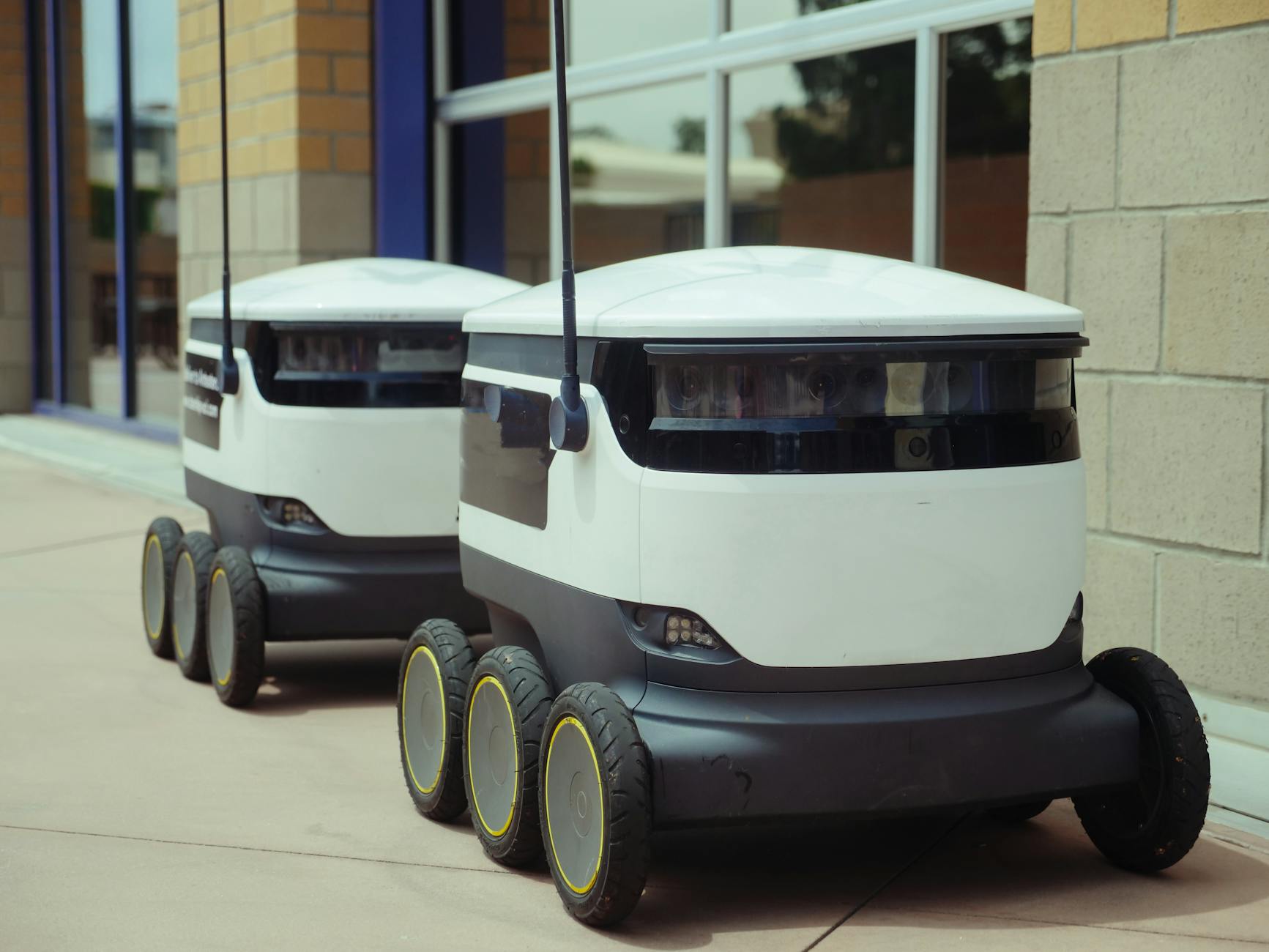
Serve’s acquisition of Diligent Robotics in 2026 signals a strategic pivot that extends beyond sidewalk delivery. Diligent operates robots in hospital settings, handling tasks like pharmaceutical dispensing, supply delivery, and logistical support within buildings. The synergy isn’t obvious on the surface—a hospital robot is fundamentally different from a delivery robot—but the underlying technology stack is related. Both need navigation in constrained spaces, interaction with humans, obstacle avoidance, and task execution in unpredictable environments.
The acquisition allows Serve to leverage its edge computing, AI infrastructure, and robotics expertise across a different revenue stream. Hospital robotics is a larger market by some estimates than sidewalk delivery, and the switching costs are higher; once a hospital commits to a particular robot system, it’s hard to switch. By combining Serve’s scaled manufacturing capabilities with Diligent’s hospital relationships and expertise, the combined entity can offer both companies’ customer bases new capabilities. Serve can bring lower-cost, more scalable robots to hospitals. Diligent brings Serve a foothold in a market that’s less dependent on consumer density and municipal regulation.
The Path Forward and Market Positioning
Looking toward the second half of 2026, Serve’s momentum is built on three distinct trends: expanding its installed base of sidewalk delivery robots through geographic expansion and new customer categories, improving the capability of those robots through better AI and edge computing, and diversifying revenue through services beyond restaurant delivery. The company’s upcoming Q1 2026 financial results, scheduled for May 7, 2026, will provide the first data point on whether the company’s guidance for ~$26 million in full-year 2026 revenue is tracking as expected. The “Nvidia of last-mile robotics” comparison holds if Serve can maintain its infrastructure-layer positioning.
That means staying focused on reliability and integration ease rather than trying to be the best at everything. NVIDIA never tried to be a smartphone manufacturer; it provided the chips that made others’ smartphones better. Serve’s challenge is similar: stay deep in the robotics and platform layer, support partners who are building the customer-facing delivery experience, and let the capital investments compound in capability and cost efficiency. If Serve executes on that positioning through 2026 and beyond, the company could legitimately reshape how urban logistics works at scale.
Conclusion
Serve Robotics occupies a unique position in the autonomous delivery market by solving the infrastructure layer that other companies can build on top of. With 2,000+ deployed robots, a 99.8% completion rate, and financial momentum that’s just beginning to accelerate, the company has moved beyond proof-of-concept into sustainable operations. The recent introduction of Maggie, powered by NVIDIA’s Jetson Orin platform and edge AI capabilities, suggests Serve is prioritizing technical depth and user experience over raw growth numbers.
The bigger question isn’t whether sidewalk delivery robots work—Serve has already proven that—but whether Serve can maintain its position as the enabling infrastructure layer while the market matures and new competitors emerge. The company’s acquisition of Diligent Robotics and its expansion into hospital service robots indicate confidence that the underlying platform can scale across different delivery contexts. That diversification, combined with strong balance sheet fundamentals, makes Serve worth watching as autonomous logistics moves from niche pilot programs to mainstream urban operations.