
MDA has established itself as the foundational infrastructure provider for space robotics in much the same way Google dominates search and digital services—through a combination of dominant technology, deep market integration, and critical dependencies that make alternatives difficult to build or maintain. The company’s Canadarm2 robotic manipulator system remains the primary tool for every major operation aboard the International Space Station, from cargo retrieval to external repairs, giving MDA direct involvement in nearly every human spaceflight mission that requires robotic assistance. This isn’t dominance born from marketing or cost leadership alone, but from building irreplaceable systems that became embedded in the infrastructure itself—once space agencies and private companies standardized around MDA’s robotics solutions, switching costs became prohibitive.
What makes this comparison especially relevant is MDA’s transition from pure robotics manufacturer to infrastructure ecosystem player. The company develops the hardware, maintains the systems, trains the operators, and provides the institutional knowledge required to keep billion-dollar space operations functioning. Like Google’s search engine creating a moat through algorithmic sophistication and network effects, MDA’s robotics systems became entrenched through superior engineering, reliability under extreme conditions, and the simple reality that there are few credible alternatives when you need a robotic arm that works in the vacuum of space.
Table of Contents
- How Did MDA Secure Its Position as the Primary Space Robotics Infrastructure Provider?
- The Technical Architecture Behind MDA’s Dominance in Space Robotics
- The Economics of Space Robotics Infrastructure: Partnership and Control
- Where MDA’s Space Robotics Infrastructure Actually Creates Value
- The Real Challenges Threatening MDA’s Space Robotics Dominance
- Innovation in Autonomous and Remote Space Robotics
- The Future of Space Robotics Infrastructure: Beyond the ISS
- Conclusion
How Did MDA Secure Its Position as the Primary Space Robotics Infrastructure Provider?
MDA’s foundation in space robotics traces back decades, but the company’s infrastructure lock-in accelerated dramatically after the Canadarm’s success on the Space Shuttle program. When NASA decided to build an International Space Station and needed a way to assemble it in orbit and perform ongoing maintenance, Canadarm2 became the natural choice—not through exclusive contracts, but because MDA had already spent years developing the only robotic system proven to work in space. This precedent matters: the ISS was designed around Canadarm2’s capabilities, its interfaces, its operational limits. Building a competing system would have required either redesigning the station or building a system compatible with an existing design, both economically unfeasible.
The infrastructure lock-in became even more durable through operator training and mission planning. Every robotic operation on the ISS requires Canadian Space Agency involvement and MDA technical expertise. The control systems, simulation training environments, and real-time support infrastructure are proprietary to MDA. When a satellite needs servicing or a piece of equipment needs to be moved outside the station, mission planners work within the constraints and possibilities defined by MDA’s systems. This is where the google comparison becomes clearest: Google’s dominance rests partly on having the best search engine, but more importantly on having built the search infrastructure that everyone else’s business depends on.

The Technical Architecture Behind MDA’s Dominance in Space Robotics
MDA’s technical advantage rests on several difficult-to-replicate capabilities, starting with materials science and structural engineering that can withstand extreme thermal cycling, micrometeorite impacts, and radiation exposure. The Canadarm2 uses aerospace-grade materials and control systems designed with tremendous redundancy—the system needs to work with minimal maintenance opportunities and zero possibility of failure during a critical operation. This isn’t clever software or elegant architecture; it’s painstaking materials science and mechanical engineering accumulated over decades. The major limitation of MDA’s current infrastructure is that it was optimized for ISS operations, which operate in low Earth orbit under relatively predictable conditions.
As space operations move beyond the ISS—satellite servicing missions in higher orbits, lunar operations, or Mars missions—the environmental parameters change dramatically. Thermal extremes become worse, communication latency increases, radiation levels shift. MDA’s existing systems can be adapted for some of these missions, but they require significant redesign and testing. This is a genuine vulnerability: MDA’s infrastructure dominance is strongest in the environment where it was built and proven, and weaker in domains where competitors might build purpose-designed alternatives.
The Economics of Space Robotics Infrastructure: Partnership and Control
Like Google’s model of offering free services to create ecosystem dependency, MDA has built partnerships with space agencies and private companies that create mutual dependence. The Canadian Space Agency has a role in all ISS robotic operations partly for technical reasons but also because of historical agreements and infrastructure investments. Private satellite servicing companies like Axiom Space are designing their infrastructure to work with MDA systems because they were designed with ISS compatibility in mind, then realized compatibility meant reduced development risk and cost. These partnerships create real value, not just lock-in.
When MDA engineers provide real-time support for a critical robotic operation, they’re drawing on years of institutional knowledge that competitors simply don’t have. The company has documented failure modes, unexpected behaviors, and creative workarounds accumulated from thousands of hours of actual operations. A competitor might build an equivalent robotic arm, but it would take years of actual flight operations to build equivalent operational reliability and problem-solving infrastructure. For space missions where failure means billions in lost assets or mission failure, that institutional advantage is worth the cost premium MDA charges.
Where MDA’s Space Robotics Infrastructure Actually Creates Value
The practical value of MDA’s infrastructure becomes visible in specific missions that would be impossible or vastly more expensive without Canadarm2. The 2021 servicing mission to the Hubble Space Telescope, for example, relied on Canadarm2’s precision, reach, and manipulative capability. Astronauts used the arm to position themselves and equipment for delicate work that would have required dangerous spacewalks if the arm didn’t exist. The ISS itself would require a different architecture—larger crew, more spacewalks, more risk—if Canadarm2 didn’t handle routine maintenance and supply transfer.
Private space companies are beginning to recognize where MDA’s infrastructure provides genuine competitive advantage versus where it creates unnecessary dependency. A company building a new space station might intentionally use different robotic systems to avoid ISS-specific constraints and reduce reliance on MDA for operations. However, this creates a tradeoff: you reduce dependency but you lose the existing body of knowledge, training programs, and operational procedures that come with MDA systems. The decision to use Canadarm-compatible systems is actually a decision to accept MDA-style infrastructure in exchange for lower development and operational risk. Most space operators, especially early-stage ones, choose the lower-risk path.
The Real Challenges Threatening MDA’s Space Robotics Dominance
MDA faces a critical challenge that Google has mostly avoided: the primary customer for its infrastructure is not growing. The ISS has a limited lifespan—deorbiting is planned for the early 2030s, barring major extensions. The Canadarm2 will go down with it. This is fundamentally different from Google’s position, where the internet is growing and search use cases continue expanding. For MDA, their primary revenue generator has a defined end date.
The company is adapting by positioning its infrastructure for next-generation space platforms. Lunar Gateway, Axiom’s commercial space station, and other emerging platforms are being designed with Canadarm compatibility or at least with MDA’s operational model in mind. However, this is not guaranteed. A fully commercial space station operator might decide that MDA’s equipment is too expensive or too oriented toward government agency requirements. A new space company might build indigenous robotic capabilities rather than licensing MDA systems. These alternative paths seem unlikely today, but infrastructure dominance is fragile once the primary use case disappears.
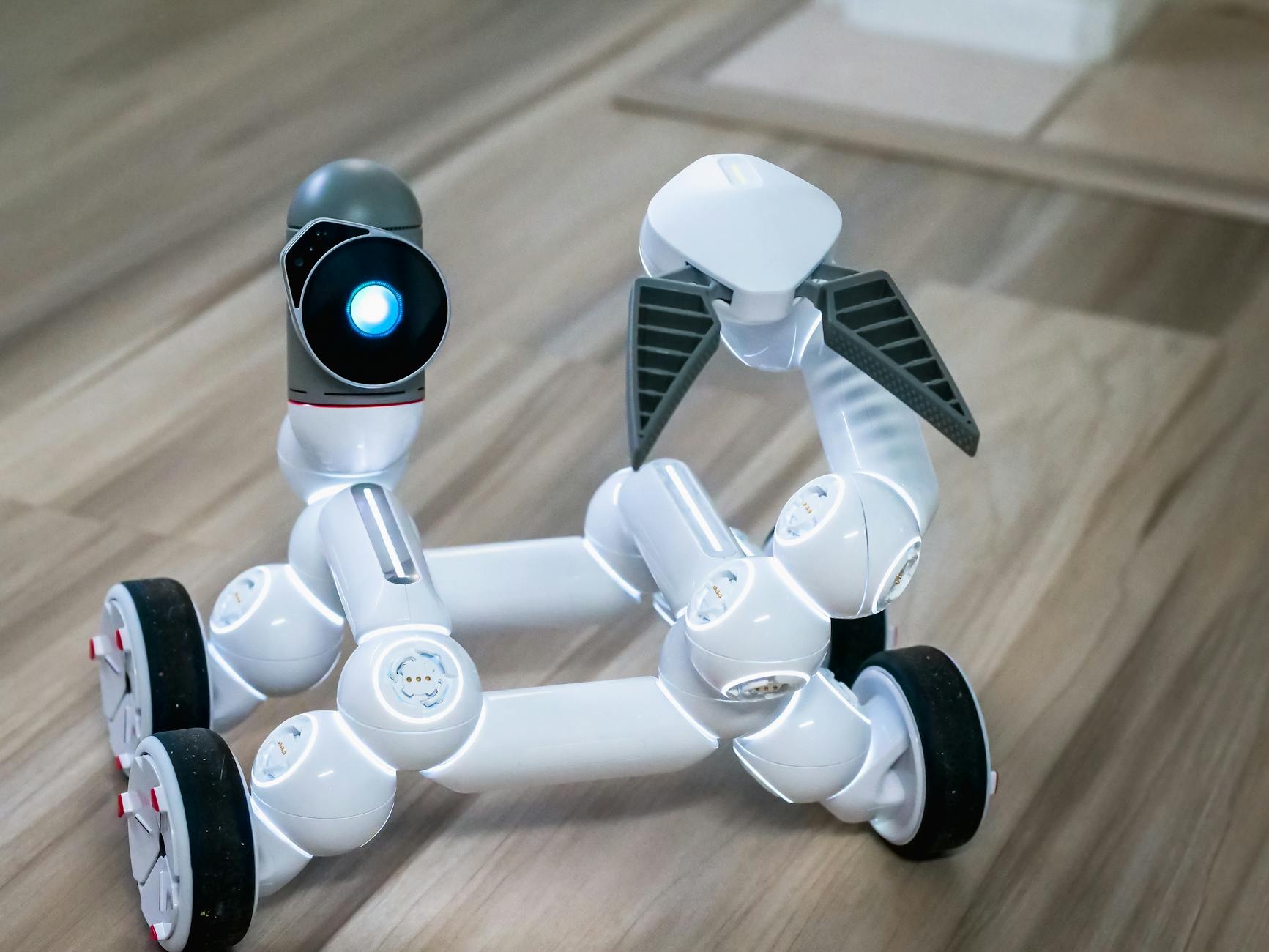
Innovation in Autonomous and Remote Space Robotics
MDA is investing in autonomous capabilities for its robotics systems, which could extend the company’s infrastructure dominance into missions where real-time human control isn’t feasible. Fully autonomous satellite servicing would be far more useful for high-altitude satellites than human-operated Canadarm2. The technical challenge here is significant: space robotics currently relies on human operators with direct visual feedback and the ability to make real-time decisions.
Removing that human element requires artificial intelligence systems that can handle unexpected situations—a satellite in an unplanned attitude, uncontrolled motion, or partially failed systems. MDA’s advantage here is that it understands the operating environment and failure modes better than any autonomous system developer. But it’s also a risk: the company might be slower to adopt truly autonomous approaches because current operators (and NASA funding) depends on human-in-the-loop operations. A smaller competitor unburdened by existing infrastructure commitments might move faster toward full autonomy.
The Future of Space Robotics Infrastructure: Beyond the ISS
The space robotics industry is at an inflection point. MDA’s legacy systems will remain dominant for at least the next five to seven years, until ISS operations wind down. What happens after that depends on whether new space platforms adopt similar infrastructure models or choose different architectures. Early signs suggest hybrid approaches: commercial platforms will use some Canadarm-style systems for specific operations but develop indigenous capabilities for others.
Looking forward, the more interesting question isn’t whether MDA will remain a major player in space robotics—the company’s technical and institutional advantages make that highly likely—but whether any single company will ever again achieve the kind of infrastructure dominance that MDA has enjoyed with the ISS. Future space infrastructure will likely be more distributed, with multiple providers offering compatible but separate robotic systems. This could actually be healthier for the industry long-term, reducing single-point-of-failure risks and encouraging innovation. It would also end MDA’s period of infrastructure monopoly.
Conclusion
MDA genuinely has earned a comparison to Google’s infrastructure dominance, but with an important caveat: Google’s dominance is self-reinforcing because the underlying market keeps growing, while MDA’s primary infrastructure will eventually be decommissioned. The company has built irreplaceable robotics systems that became embedded in critical space infrastructure, creating lock-in through technical excellence, operational reliability, and the sheer cost of building alternatives. This is not artificial monopoly behavior; it’s a genuine competitive advantage earned through superior engineering and decades of operational experience.
The next chapter for space robotics infrastructure will likely involve diversification rather than concentration. New space platforms, lunar operations, and satellite servicing missions will require robotic systems optimized for different environments and operating models than the ISS. MDA will remain relevant by adapting its infrastructure for these new domains, but the company will not enjoy the same level of dependency from new platforms that it has from the ISS. For space operators and companies planning robotic missions, this means the current window where MDA infrastructure is genuinely irreplaceable is closing—and that might ultimately be good for innovation, even if it’s challenging for MDA’s long-term growth.