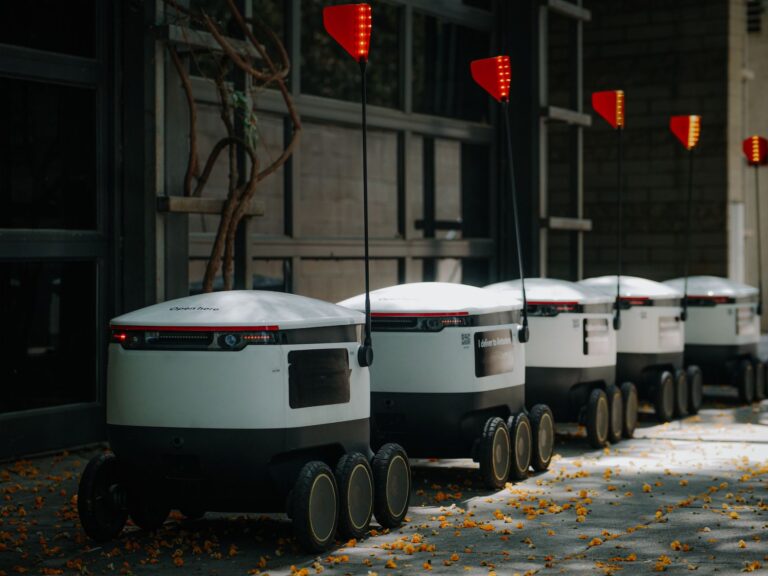

NBIS is the ticker symbol for Nebius Group, an AI infrastructure company positioned at the intersection of autonomous systems and data center technology. Rather than being a specific product called “The Software Brain of Robots,” NBIS represents a broader approach to solving the computational backbone that powers autonomous vehicles and robots—the infrastructure and AI systems that enable these machines to perceive, decide, and act.
The company combines infrastructure expertise with ownership of Avride, one of the world’s most experienced self-driving teams, creating an integrated platform for autonomous mobility innovation. Nebius Group operates with a clear strategic vision: to “become the sovereign AI operating system for autonomous mobility, one city and one robot at a time.” This philosophy reflects the reality that modern robots and autonomous systems require far more than just software code—they need reliable, scalable computational infrastructure, advanced AI models, and proven operational experience with real-world autonomous systems. The company’s approach differs from pure software plays by building out the complete ecosystem needed to support autonomous robots and vehicles at scale.
Table of Contents
- How Does Nebius Group Power Autonomous Systems?
- The Data Center Infrastructure Advantage and Its Limitations
- Avride and Real-World Autonomous Operations
- AI and Machine Learning at the Core
- Regulatory and Market Adoption Challenges
- Competition and Market Positioning
- The Future of Autonomous Infrastructure and Robotics
- Conclusion
How Does Nebius Group Power Autonomous Systems?
Nebius Group functions as the computational backbone for autonomous mobility through its dual focus on infrastructure and operational experience. On the infrastructure side, the company operates data centers specifically optimized for generative AI workloads—the type of computing needed to train and deploy the neural networks that power autonomous decision-making. On the operational side, through Avride, Nebius brings real-world experience in deploying self-driving systems at scale, understanding the practical challenges that arise when autonomous vehicles operate in complex urban environments. The integration of both capabilities creates a meaningful advantage in the autonomous robotics space.
Most competitors focus on either the software layer or the infrastructure layer, but not both. For example, a traditional automotive supplier might excel at building autonomous driving software but lack the computational infrastructure to train next-generation models efficiently. Conversely, a data center provider might offer excellent compute resources but lack the operational insights needed to optimize those resources for autonomous mobility workloads. Nebius attempts to bridge this gap, combining what analysts describe as “Tesla vibes with nvidia muscle”—the autonomous vehicle expertise of Tesla-like companies paired with the infrastructure scaling capabilities associated with Nvidia.

The Data Center Infrastructure Advantage and Its Limitations
Nebius Group’s data center strategy focuses on becoming a “pure play” into AI data center infrastructure, specifically avoiding traditional real-estate-based data center models. This means the company targets colocation and cloud infrastructure specifically designed for AI workloads rather than general-purpose computing. This positioning matters because AI infrastructure for autonomous systems has different requirements than traditional data center services—higher demand for GPU capacity, specialized networking for training large models, and the ability to scale compute rapidly as companies develop new autonomous systems. However, this infrastructure-focused approach carries significant limitations.
The data center market is highly competitive, with established players like AWS, google Cloud, and Microsoft Azure already offering AI infrastructure at massive scale. Nebius must compete on specialization—offering infrastructure specifically optimized for autonomous mobility and AI workloads—rather than on general-purpose capacity. Additionally, the company’s success depends heavily on customer demand for its specialized services, which ties directly to the growth and funding of autonomous vehicle startups and robotics companies. If the autonomous vehicle market faces a funding contraction or regulatory slowdowns, demand for Nebius infrastructure could decline significantly.
Avride and Real-World Autonomous Operations
Avride, Nebius’s subsidiary focused on self-driving technology, represents the operational foundation of the company’s strategy. Described as one of the world’s most experienced self-driving teams, Avride brings decades of cumulative experience deploying autonomous vehicles in real-world conditions. This isn’t theoretical robotics research—it’s operational knowledge about what works when autonomous vehicles encounter unpredictable city streets, edge cases in weather conditions, interactions with pedestrians and other drivers, and the thousands of small decisions required to maintain passenger safety.
This operational experience informs how Nebius designs its infrastructure and software platforms. For instance, Avride’s experience operating autonomous taxis in various cities provides real data about computational requirements, failure modes, and optimization opportunities that would be impossible to derive from simulations alone. This creates a flywheel effect where operational experience feeds infrastructure development, which improves the economics of autonomous vehicle deployment, which generates more operational data. The challenge is that Avride’s success as an autonomous vehicle operator is independent from Nebius’s success as an infrastructure provider—if Avride faces regulatory obstacles or technical setbacks, it could undermine confidence in the entire Nebius platform even if the infrastructure capabilities remain sound.

AI and Machine Learning at the Core
The software brain of any robot or autonomous system is fundamentally a collection of trained machine learning models layered with planning and decision-making logic. Nebius provides both the computational infrastructure to train these models and (through partnerships and Avride) real-world datasets to improve model accuracy. This is the critical insight: in modern autonomous systems, the quality of the software brain depends on three factors—algorithm design, model training (which requires compute), and training data quality. Nebius has competitive advantages in two of these three areas.
The company can offer specialized compute for training generative AI models at scale, and through Avride’s autonomous vehicle operations, it has access to real-world driving data that many competitors lack. However, algorithm design and fundamental AI research remain competitive—Nebius doesn’t claim to have fundamental breakthroughs in how neural networks process sensor data or make driving decisions. This means the company’s value proposition is primarily about making existing AI approaches more accessible and more efficiently deployed in autonomous systems, rather than inventing entirely new approaches to machine learning. For robotics companies evaluating Nebius, this is both reassuring (the company focuses on proven, well-understood approaches) and limiting (breakthrough improvements likely won’t come from Nebius itself).
Regulatory and Market Adoption Challenges
The autonomous vehicle and robotics industry faces significant regulatory uncertainty, which directly impacts Nebius’s addressable market. Autonomous vehicle regulations vary dramatically by country and region—fully autonomous robotaxis remain prohibited in many jurisdictions, while delivery robots operate under different rules in different cities. This fragmented regulatory landscape means customers of Nebius infrastructure cannot always predict future demand for their services, creating demand uncertainty that filters up to infrastructure providers.
Additionally, the autonomous vehicle industry remains capital-intensive with winner-take-most dynamics. Successful companies in this space tend to scale rapidly when they achieve regulatory approval and market traction, while unsuccessful approaches can collapse entirely. This creates feast-or-famine dynamics for infrastructure providers like Nebius—a successful customer might scale compute usage exponentially, but a failed customer generates no revenue and no future growth. Unlike traditional data center providers that spread risk across thousands of diverse customers and workloads, Nebius’s focus on autonomous mobility concentrates risk on a relatively small number of high-value customers.

Competition and Market Positioning
Nebius doesn’t operate in a vacuum—major cloud providers, specialized AI infrastructure companies, and autonomous vehicle manufacturers all compete for aspects of this market. AWS and Google Cloud offer AI infrastructure globally with massive scale advantages. Companies like CoreWeave and Lambda Labs specialize in AI compute. Autonomous vehicle companies like Waymo and Tesla develop their infrastructure in-house. Nebius’s differentiation rests on specialization—building infrastructure specifically for autonomous mobility with operational insights from Avride.
This focused positioning is both strength and weakness. The strength is that a specialized platform can optimize for the specific requirements of autonomous systems better than generalist providers. The weakness is that specialization limits addressable market compared to general-purpose cloud providers. Additionally, as autonomous vehicle companies mature, many have internal incentives to build their own infrastructure or partner with established cloud giants rather than rely on a specialized provider. Nebius must continually demonstrate that its specialization delivers measurable efficiency gains that justify the tradeoff of using a smaller, less diversified provider.
The Future of Autonomous Infrastructure and Robotics
The long-term success of companies like Nebius depends on the continued growth and deployment of autonomous systems at scale. Current evidence suggests this growth will occur—autonomous delivery robots are expanding to new cities, autonomous vehicle trials continue expanding, and industrial robotics increasingly incorporate AI-driven decision-making. However, the timeline and pace of this adoption remain uncertain. If regulatory approval accelerates and customers deploy autonomous systems rapidly, demand for specialized AI infrastructure could exceed supply, benefiting companies like Nebius significantly.
Conversely, if autonomous vehicle adoption stalls due to technical challenges, regulatory obstacles, or public safety concerns, infrastructure demand could remain far below current expectations. The robotics industry is also experiencing a shift toward on-device AI and edge computing—running AI models directly on robot hardware rather than relying on cloud infrastructure. This trend could reduce demand for centralized data center infrastructure. Nebius and competitors must navigate this tension between providing centralized infrastructure for training and development while also supporting the edge computing paradigm where trained models run on distributed robot hardware. Companies that successfully bridge this gap—offering both cloud infrastructure for development and tools for deploying models to edge devices—will likely capture disproportionate value in the autonomous robotics market.
Conclusion
NBIS (Nebius Group) represents a focused approach to powering the autonomous robotics and vehicle industry—building both the computational infrastructure that trains autonomous systems and operational experience that informs what those systems need to succeed. The company’s positioning as a specialized AI infrastructure provider with integrated autonomous vehicle operations creates differentiation, but also concentrates risk on a relatively small addressable market compared to general-purpose cloud providers.
For organizations building autonomous systems, Nebius offers the potential advantage of infrastructure specifically optimized for autonomous mobility workloads, backed by operational experience from real-world autonomous vehicle deployment. However, customers must evaluate whether this specialization delivers concrete efficiency benefits and whether the company’s long-term viability is secure given the competitive and regulatory uncertainties surrounding autonomous systems. The software brain of modern robots is only as good as the computational foundation it runs on—and that foundation is increasingly becoming a strategic differentiator in autonomous systems development.