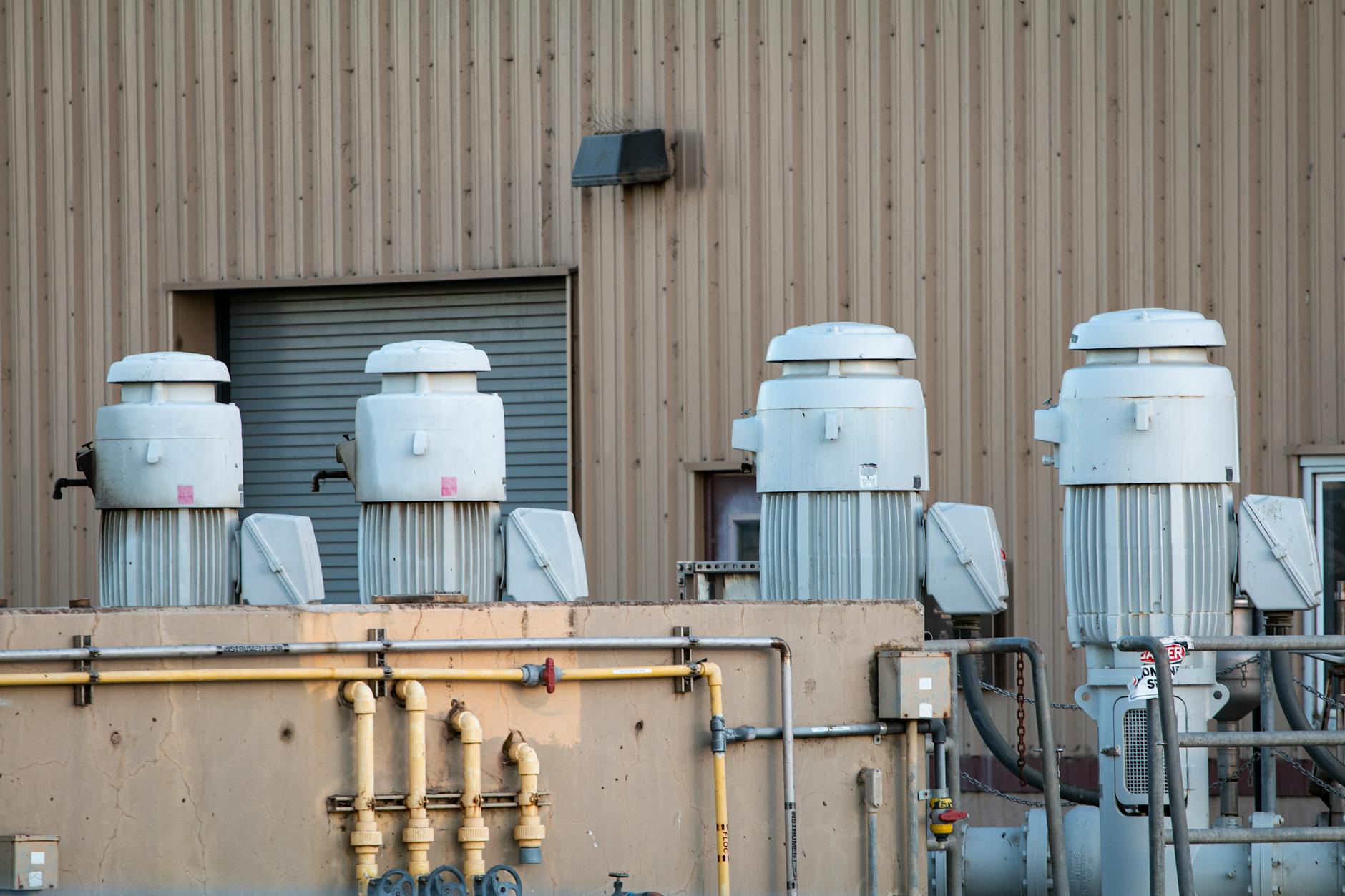

ABBNY operates as a comprehensive platform for factory infrastructure and automation, functioning similarly to how Amazon consolidates retail and logistics under one ecosystem. Rather than sourcing robotics, control systems, and industrial software from multiple vendors, manufacturers can access integrated solutions through ABB’s interconnected suite of products and services, from collaborative robots (cobots) and motion control to digital twin software and predictive maintenance analytics. This approach streamlines procurement and deployment, though it requires manufacturers to commit to ABB’s ecosystem rather than cherry-picking point solutions from competitors.
The comparison to Amazon extends beyond mere convenience. Like Amazon’s Fulfillment Network, ABBNY aggregates demand across industries, optimizes supply chains, and provides standardized interfaces that enable faster scaling. A mid-sized automotive supplier, for example, can deploy ABB IRB robots on an ABB control platform, monitor performance through ABB’s Ability Digital Services, and adjust processes through ABB’s engineering services—all within one vendor relationship and data environment.
Table of Contents
- What Makes ABB the Infrastructure Platform for Modern Factories?
- The Technology Stack Behind ABB’s Integrated Approach
- Real-World Implementations and Results
- Deployment Considerations and Integration Challenges
- Vendor Lock-In and Long-Term Considerations
- Data Ownership and Regulatory Compliance
- The Future of Factory Infrastructure and ABB’s Strategic Position
- Conclusion
What Makes ABB the Infrastructure Platform for Modern Factories?
ABB’s positioning as an industrial infrastructure platform rests on decades of specialization in electrification, robotics, and automation. The company doesn’t merely sell individual machines; it provides the connective tissue that enables factories to operate as integrated systems. Their portfolio includes collaborative robots for human-robot interaction, industrial robots for high-speed assembly, variable frequency drives for energy efficiency, control systems for process automation, and software platforms for real-time monitoring and predictive maintenance. This breadth is rarely matched by competitors, most of whom dominate specific segments but lack the depth across the full automation stack. The economic advantage mirrors Amazon’s model: aggregated purchasing power, shared infrastructure costs, and data insights that no single-product vendor can match.
A factory running ABB robots, ABB motion control, and ABB software generates operational data that ABB can anonymize and analyze across thousands of facilities. These insights feed back into product improvements and new service offerings. Meanwhile, a competitor using robots from one vendor and control systems from another loses that holistic view. However, this concentration creates vendor lock-in. Once a factory’s processes are deeply integrated with ABB systems, switching to competitors becomes costly and disruptive. A manufacturer considering ABB should view it as a long-term partnership, not a short-term procurement decision.

The Technology Stack Behind ABB’s Integrated Approach
ABB’s infrastructure platform relies on several interconnected layers that work together to create a cohesive factory ecosystem. At the hardware level, their robots range from collaborative cobots (designed to work safely alongside humans without cages or extensive safety interlocks) to heavy-duty industrial robots capable of palletizing 500-kilogram payloads with micron-level precision. These aren’t generic platforms; ABB has engineered proprietary joints, actuators, and sensing technologies specifically for their ecosystem. The middle layer consists of ABB’s control systems and communication protocols. Their AC500 PLCs and motion controllers enforce real-time determinism critical for coordinated multi-axis control.
ABB uses standardized industrial communication standards like EtherCAT and PROFINET, but their implementations are optimized for their own hardware, giving ABB-to-ABB integrations performance advantages over mixed-vendor setups. This is a limitation worth noting: while ABB systems can technically interoperate with competitors’ equipment via standard protocols, performance and latency characteristics often degrade compared to fully integrated ABB solutions. The top layer is ABB’s software ecosystem, particularly their Ability digital platform and cloud services. These systems collect data from floor equipment, perform analytics, and enable predictive maintenance. A textile manufacturer using ABB’s predictive analytics has reported 25% reductions in unplanned downtime. Yet this layer also presents the steepest lock-in: data collected in ABB’s cloud is structured for their algorithms and difficult to extract for use with third-party analytics tools.
Real-World Implementations and Results
ABB’s model works effectively in industries with complex, repetitive processes where integration pays dividends. In electronics assembly, ABB has deployed integrated systems where cobots feed components to high-speed industrial robots, all coordinated through ABB motion control and monitored by ABB software. A manufacturer in Taiwan described the deployment as “reducing hand-assembly labor by 60% while increasing throughput by 40% within 18 months.” These aren’t hypothetical gains; they come from standardized processes and tight integration. In food and beverage processing, ABB’s approach has proven valuable for companies operating multiple facilities.
A global dairy company with factories across Europe standardized on ABB infrastructure, enabling them to swap equipment between plants, transfer engineering expertise, and consolidate their control architecture. This flexibility—facilitated by having the same vendor across all sites—would be difficult with a fragmented approach. The downside emerges when process requirements deviate from ABB’s standard offerings. A specialty pharmaceutical manufacturer needed robots capable of handling compounds requiring ultra-clean sterilizable grippers. While ABB could deliver robots, the custom gripper development required a third-party specialist, introducing integration complexity and splitting accountability between vendors when issues arose.

Deployment Considerations and Integration Challenges
Rolling out ABB infrastructure isn’t simply a matter of installing equipment. It requires planning at three levels: equipment selection, control architecture design, and software strategy. Equipment selection is straightforward—identify robot payload and speed needs, select the appropriate model. Control architecture is more nuanced: decisions about whether to use ABB’s high-level programming environments (like Rapid language) versus lower-level control affect long-term maintainability and ability to hire engineers familiar with your systems. The software strategy layer is where many manufacturers encounter friction. ABB’s Ability platform is cloud-based and requires data transmission from facility equipment to ABB’s infrastructure.
This works smoothly for companies with robust internet connectivity and no sensitivity around transmitting operational data to external servers. For manufacturers with proprietary processes, weak internet connections, or regulatory constraints around data residency, ABB’s cloud-centric approach creates complications. Some customers implement hybrid solutions—using ABB’s edge computing capabilities to perform analytics locally before selectively sending insights to the cloud. Comparison to alternatives matters here. Fanuc and KUKA, ABB’s primary competitors, offer similar deep integration within their own ecosystems but don’t claim the same breadth across robotics and broader factory infrastructure. Smaller, specialized vendors offer flexibility but lack integration depth. ABB sits at the intersection: comprehensive integration with trade-offs around flexibility and vendor dependency.
Vendor Lock-In and Long-Term Considerations
The Amazon comparison extends to an uncomfortable truth: dominance creates dependency. Once a manufacturer has invested in ABB training, integrated ABB systems throughout a facility, and built workflows around ABB software, the switching costs are substantial. Replacing a single robot becomes simple; replacing an entire infrastructure ecosystem becomes a capital project spanning multiple years and millions of dollars. This dependency isn’t necessarily malicious. ABB has strong financial incentives to maintain customer satisfaction and competitive pricing—losing a major customer to a competitor is expensive.
But it does mean manufacturers should enter ABB relationships with eyes open about long-term commitment. A company considering a small pilot project with ABB should honestly assess whether they’re comfortable with the vendor relationship they’re initiating, because scaling from pilot to full deployment typically means increasing that relationship’s depth, not decreasing it. Contractual leverage also shifts over time. Early in a relationship, vendors compete aggressively on pricing and terms. Once integrated, customers have less leverage in negotiations for maintenance contracts, software upgrades, and professional services. A manufacturer who initially negotiated strong terms on robot purchases may find themselves paying premium rates for technical support later, when they’re dependent on ABB expertise to troubleshoot integrated systems.
Data Ownership and Regulatory Compliance
ABB’s cloud-based data collection raises legitimate questions about data ownership and regulatory compliance. When a robot on your factory floor generates performance data, who owns it? ABB’s standard terms typically grant ABB the right to use anonymized data for research, algorithm improvement, and benchmarking. For most manufacturers, this is acceptable; the data contains no proprietary process information.
However, regulatory requirements complicate this. In the European Union, GDPR applies if any personal data (operator names, timestamps linked to individuals) enters the system. In regulated industries like pharmaceuticals, data integrity requirements under 21 CFR Part 11 mean that systems must maintain auditable records, making cloud-based systems potentially problematic unless ABB meets specific compliance certifications. ABB has invested in compliance infrastructure, but customers must verify that their specific use case aligns with ABB’s certified capabilities.
The Future of Factory Infrastructure and ABB’s Strategic Position
ABB’s infrastructure model is likely to become more common, not less. As factories become more complex and the value of integrated data increases, the benefits of a unified platform grow. Emerging technologies like digital twins, AI-driven optimization, and edge computing work better when integrated into a cohesive ecosystem rather than bolted onto fragmented systems. Looking forward, ABB faces pressure from two directions.
Cloud-native companies like Siemens are building similar ecosystems using modern software architectures and emphasizing flexibility. Simultaneously, open-source robotics platforms and standards like ROS (Robot Operating System) are lowering barriers to entry for smaller vendors. ABB’s response has been to invest heavily in APIs, open standards, and interoperability—essentially softening their lock-in while maintaining integration depth for customers who stay within the ecosystem. This is a pragmatic acknowledgment that pure vendor lock-in is becoming an unsustainable strategy.
Conclusion
ABBNY, ABB’s infrastructure platform approach, delivers genuine value for manufacturers seeking integrated solutions across robotics, controls, and software. The model works particularly well for companies with standardized processes, multiple facilities, or significant automation budgets where the costs of integration exceed the costs of vendor dependency. The “Amazon of factory infrastructure” framing is apt: comprehensive, coordinated, and efficient for those who operate within the ecosystem.
Manufacturers evaluating ABB should approach it as a strategic partnership rather than a vendor relationship. Success requires clarity about long-term automation roadmap, commitment to developing internal expertise, and honest assessment of whether the integration benefits justify the reduced flexibility and increased dependency. For the right manufacturer, ABB’s integrated approach significantly simplifies automation and drives measurable improvements in efficiency and uptime. For others, the vendor dependency and cloud-first architecture may warrant exploring alternatives or implementing a hybrid approach that balances ABB’s strengths against flexibility needs.