
ABBNY represents one of the largest automation and robotics mega-cap plays in the market, capitalizing on the decade-long shift toward industrial automation and digital transformation across manufacturing, utilities, and infrastructure sectors. ABB Ltd, the Swiss multinational conglomerate behind this play, generates over $35 billion in annual revenue through its robotics, motion, industrial automation, and electrification divisions, making it a dominant force in how industries automate their operations. For investors and businesses tracking automation trends, ABBNY offers exposure to the core technologies driving this transition—from collaborative robots on factory floors to grid modernization software managing renewable energy integration.
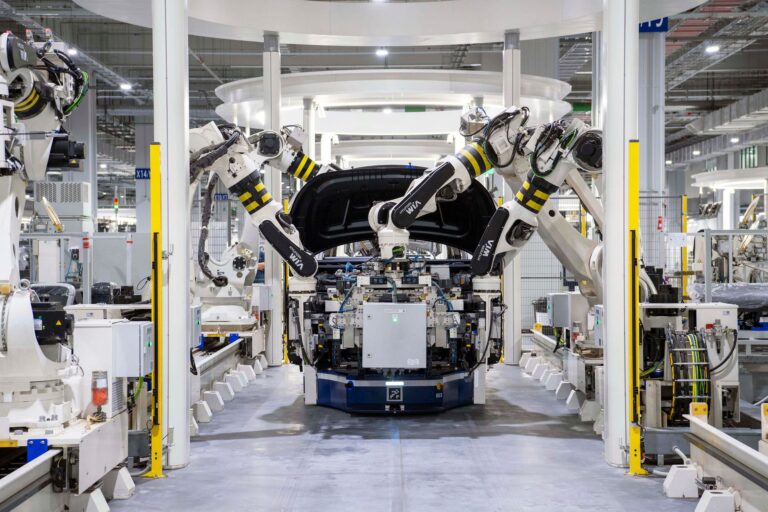
The company’s mega-cap status reflects its position as an essential infrastructure provider rather than a trendy growth play. Unlike smaller automation startups focused on niche applications, ABB operates across every major industrial sector globally: automotive manufacturing relies on ABB robots for precision welding and assembly, power utilities use ABB’s control systems to manage electrical grids, and pharmaceutical companies depend on ABB automation to maintain strict quality standards. This diversification makes ABBNY a bellwether for automation adoption rates across the entire industrial economy.
Table of Contents
- What Makes ABBNY A Mega-Cap Automation Investment?
- The Diversification Challenge in Mega-Cap Robotics
- Competitive Positioning and Market Share Dynamics
- The Automation Demand Cycle and Investment Timing
- Supply Chain and Margin Pressures
- Software and AI Integration as Future Margin Driver
- Future Outlook and Strategic Positioning
- Conclusion
- Frequently Asked Questions
What Makes ABBNY A Mega-Cap Automation Investment?
ABB’s mega-cap classification stems from its combination of market dominance, recurring revenue streams, and essential role in industrial infrastructure. The company commands roughly 15-20% of the global industrial robot market, competing primarily with other mega-caps like Siemens and Schneider Electric. Unlike software-as-a-service companies with high growth but uncertain profitability, ABB generates consistent cash flows from installed equipment that requires ongoing maintenance, software upgrades, and component replacements—a revenue model that attracts institutional capital seeking stability.
The mega-cap characterization also reflects ABB’s ability to weather economic cycles. During recessions, companies often delay new automation investments, but ABB’s installed base of equipment still generates service revenue. For example, when automotive manufacturing slowed during 2020’s pandemic disruption, ABB’s robotics division saw installation delays, but maintenance and spare parts sales remained steady. This defensive characteristic explains why mega-cap automation stocks typically command higher valuations than smaller, growth-focused competitors—investors pay a premium for predictability in cyclical industries.

The Diversification Challenge in Mega-Cap Robotics
While ABB’s diversification reduces risk, it also creates a complexity that pure-play robotics companies avoid. ABB’s electrification division (power systems, switches, circuit breakers) operates in a different margin structure and growth trajectory than its robotics business. Electrification serves the mature, commodity-like power infrastructure market where competition centers on cost and reliability, while robotics increasingly competes on software, AI integration, and collaborative features.
This means investors buying ABBNY get exposure to both a slow-growth utility-like business and a faster-growth robotics segment, neither of which may fully reflect market expectations. A practical limitation here: when analyzing ABBNY’s quarterly earnings, investors must separately track each division’s performance, since margin expansion in robotics might be masked by margin compression in electrification. For instance, ABB’s 2023-2024 earnings showed strong robotics growth driven by semiconductor and EV manufacturing demand, but this was partially offset by softer utility equipment sales in mature markets. For investors seeking pure automation exposure, this diversification can be frustrating when their automation thesis is sound but overall company performance lags due to underperforming non-automation segments.
Competitive Positioning and Market Share Dynamics
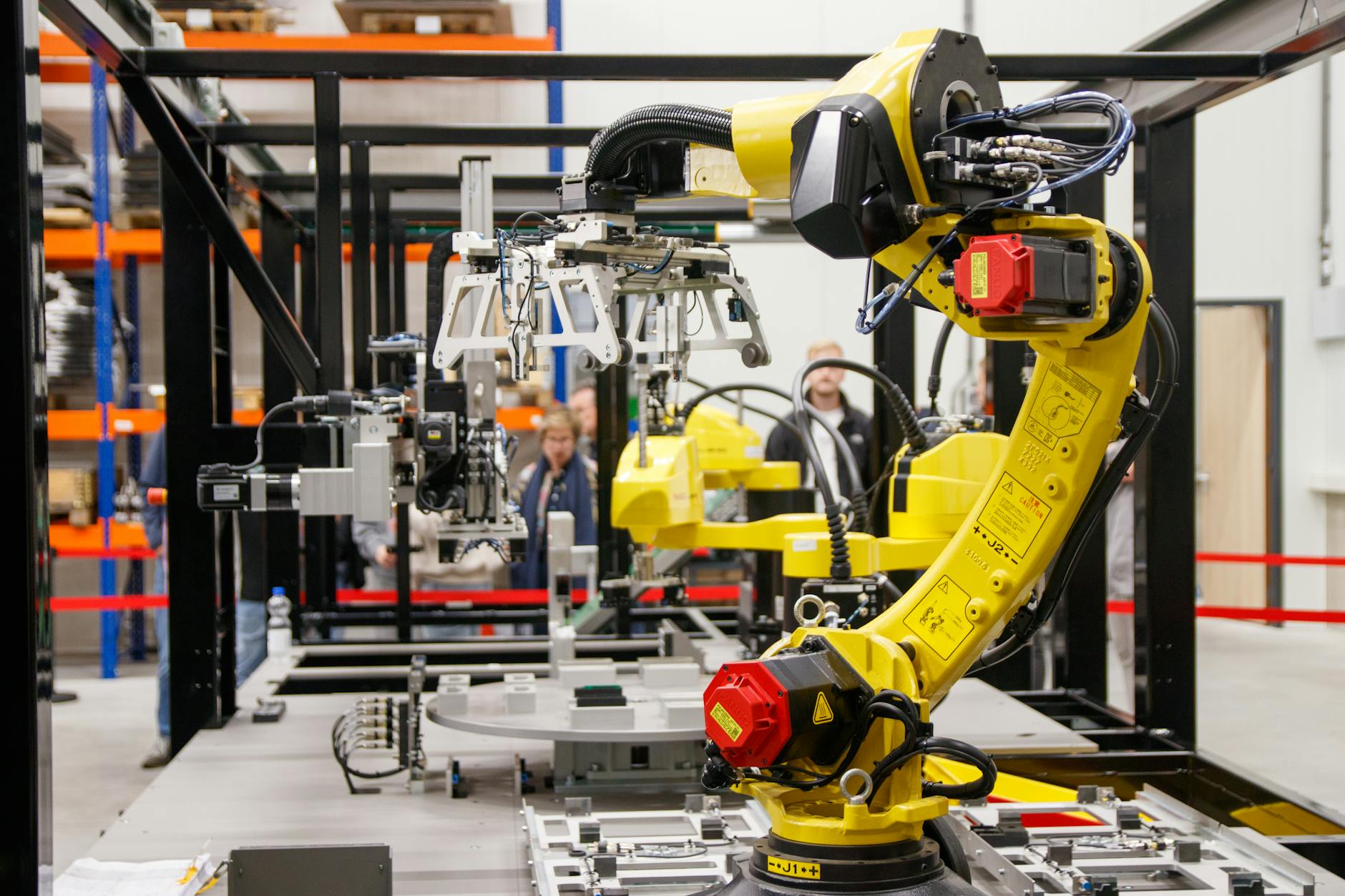
ABBNY’s robotics division faces intensifying competition from Fanuc (Japan), KUKA (Germany), and Yaskawa (Japan), each with 10-15% global market share. Chinese competitors like Estun and GSK are aggressively gaining share in cost-sensitive applications like assembly and material handling, particularly in Asian manufacturing hubs. ABB’s competitive advantage lies in software integration, service networks, and safety certifications rather than hardware innovation alone—most industrial robots operate on similar physics principles, so differentiation increasingly comes from vision systems, AI-driven programming, and predictive maintenance capabilities.
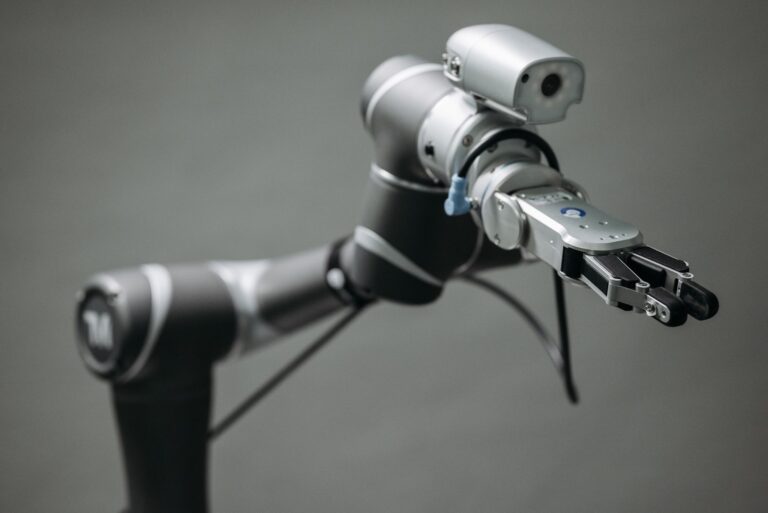
A concrete example: collaborative robots (cobots) represent the fastest-growing segment, and ABB’s GoFa cobot competes against Universal Robots’ UR line and Techman’s TM series. ABB’s advantage in manufacturing automation translates less directly to the cobot market, where smaller, more agile companies have captured significant mindshare. This explains why ABB’s cobot market share remains smaller than its traditional industrial robot dominance—mega-cap size provides capital for R&D but can slow innovation cycles compared to specialized competitors.

The Automation Demand Cycle and Investment Timing
ABBNY’s stock performance correlates tightly with industrial automation cycle expectations, which follow manufacturing output and capital expenditure trends. When manufacturers face labor shortages or wage pressures (as seen in 2021-2022), automation spending accelerates, driving strong demand for ABB’s robots and control systems. Conversely, when manufacturers cut capex due to recession concerns or weak order books, ABB faces demand headwinds.
The semiconductor manufacturing boom of 2022-2023 drove exceptional ABBNY performance as chip fabs expanded capacity and installed ABB’s precision robots; any slowdown in semiconductor capex immediately pressures the stock. The tradeoff for investors: ABBNY provides mega-cap stability compared to smaller robotics companies, but it still experiences significant cyclicality tied to capital expenditure cycles. A diversified investor might hold ABBNY for stable core exposure to automation, while also holding smaller-cap, faster-growth robotics or AI-focused automation companies that offer higher upside during expansion cycles but greater downside risk during slowdowns. This balanced approach captures both the defensive characteristics of mega-cap automation and the growth potential of specialized players.
Supply Chain and Margin Pressures
ABB’s robotics manufacturing depends on electronics components, precision machining, and integrated circuit supplies that experienced severe shortages and inflation during 2021-2023. Unlike smaller competitors that might handle supply chain disruptions through partnerships or outsourcing, ABB’s vertically integrated approach requires managing complex global supply networks. Component cost inflation directly pressures robotics margins—a 10% increase in semiconductor costs can reduce gross margins by 2-3% given robotics’ typical 35-40% gross margin structure.
A critical warning: supply chain resilience remains uncertain as geopolitical tensions increase semiconductor export restrictions and manufacturing regionalization. ABB has responded by expanding manufacturing in Europe and North America to reduce China exposure, but this adds production costs before any efficiency gains materialize. Short-term margin compression from supply chain restructuring could pressure ABBNY returns even if long-term strategic positioning improves.

Software and AI Integration as Future Margin Driver
ABB increasingly emphasizes software and AI capabilities to differentiate its robotics offerings. The company’s Ability platform provides cloud-connected monitoring, predictive maintenance, and data analytics for installed equipment—high-margin recurring revenue that improves customer retention. This shift mirrors broader industrial trends where hardware commoditization forces margins lower while software and services capture value.
For ABBNY investors, this evolution is positive: software revenue scales more efficiently than hardware manufacturing and attracts higher valuation multiples. An example of this evolution: ABB’s robots deployed on factory floors increasingly include machine vision and AI-powered programming that allows non-expert operators to reprogram tasks without traditional robotics knowledge. This reduces training costs for customers while creating lock-in through proprietary software ecosystems. As this software penetration increases, ABB’s revenue composition shifts toward higher-margin services, supporting valuation expansion if execution succeeds.
Future Outlook and Strategic Positioning
ABBNY is positioned to benefit from three structural trends: manufacturing nearshoring (reshoring production from Asia to North America and Europe), electrical grid modernization driven by renewable energy integration, and labor shortage persistence across developed economies. Each trend increases demand for ABB’s core competencies—industrial robots, automation controls, and grid management systems. The company’s stated strategy to divest slower-growth assets and focus on automation and electrification reflects management’s recognition that mega-cap investors increasingly demand higher growth rates than traditional diversified industrials can deliver.
Looking forward, ABBNY’s multi-billion dollar investment in robotics R&D, particularly in AI-driven perception and autonomous mobile robots, suggests the company is preparing for the next generation of factory automation. If successful in launching next-generation platforms that command premium pricing, ABBNY could compress recent valuation discounts relative to pure-play automation companies. However, execution risk remains—mega-cap organizations move methodically, and smaller competitors may launch breakthrough innovations faster despite fewer resources.
Conclusion
ABBNY represents a mega-cap approach to automation exposure that prioritizes stability, global scale, and recurring revenue over growth velocity. For investors seeking exposure to industrial automation trends without single-company risk, ABB provides a diversified entry point with strong competitive moats in service networks and manufacturing installed bases.
However, investors should understand the distinction between ABBNY’s defensive mega-cap characteristics and pure-play automation companies that offer higher growth potential at greater volatility. Success with ABBNY requires accepting that it will underperform specialized automation competitors during growth cycles while outperforming during downturns. The key to ABBNY investment is timing relative to the industrial capex cycle and monitoring the company’s software and services transition—margin expansion from high-margin recurring revenue should drive valuation re-rating over the coming years as investors recognize ABB’s transformation from hardware-centric industrials to automation-software hybrid.
Frequently Asked Questions
How does ABBNY compare to pure-play robotics stocks like Universal Robots?
Universal Robots offers higher growth potential with 30%+ revenue growth, while ABB offers stability with 5-10% growth but much larger installed bases and service revenue. Universal Robots trades at premium valuations reflecting growth expectations; ABB trades at discounted multiples reflecting lower growth but stronger cash generation.
What percentage of ABBNY’s revenue comes from robotics?
Robotics and motion represent roughly 25-30% of ABB’s total revenue, with electrification, industrial automation, and other segments making up the remainder. This diversification reduces pure robotics exposure compared to specialized competitors but provides revenue stability.
How does Chinese competition affect ABBNY’s margins?
Chinese competitors increasingly capture share in low-to-mid range industrial robots and assembly automation, pressuring ABB’s pricing in cost-sensitive applications. ABB maintains higher margins in premium applications (semiconductor, precision manufacturing) but faces mix shift toward lower-margin products.
What’s the dividend yield on ABBNY?
ABB typically pays dividends yielding 2-3% annually, reflecting its status as a mature mega-cap generating strong free cash flow. The dividend has historically grown modestly with earnings growth, making ABBNY suitable for income-oriented investors alongside capital appreciation.
Is ABBNY exposed to EVand battery manufacturing automation?
Yes, significantly. EV and battery manufacturers represent one of ABBNY’s fastest-growing customer segments, and supply chain electrification increases demand for ABB’s power management and distribution equipment. This exposure explains strong recent performance but also introduces concentration risk if EV manufacturing capex slows.
How should investors monitor ABBNY’s robotics performance?
Track robotics divisional revenue growth (target: 8-12% annually), gross margin trends (target: 35-40%), and backlog metrics that signal future demand. Monitor commentary on cobot adoption rates and software revenue penetration, which indicate transition progress toward higher-margin business models.