Figure AI’s $675 million Series B funding round in February 2024, which propelled the company to a $2.6 billion valuation, marked a pivotal moment in humanoid robotics.[1][2] This massive infusion of capital from heavyweights like Microsoft, OpenAI, NVIDIA, Jeff Bezos, and others underscores surging investor confidence in robots that mimic human form and function to tackle labor shortages in manufacturing, logistics, and beyond.[1][3] For the robotics industry, it’s a bet on “embodied AI”—machines that navigate human-designed spaces without requiring costly retrofits, potentially reshaping workforce dynamics. Readers will gain insights into Figure’s origins, technological breakthroughs like the Figure 01 robot, strategic partnerships, and progress toward commercialization amid fierce competition from Tesla’s Optimus and Agility Robotics.[1][4] This article dissects the funding’s implications, from AI integrations to real-world pilots, while exploring challenges like scaling production and achieving revenue viability.[3][4] By the end, you’ll understand why this investment signals humanoid robots’ shift from sci-fi prototypes to industrial reality.
Table of Contents
- What Sparked Figure AI’s Rapid Rise to a $2.6 Billion Valuation?
- How Does Figure 01 Represent a Leap in Humanoid Design?
- Which Partnerships Fueled Figure’s Commercial Push?
- What Challenges Lie Ahead Despite the Hype?
- Where Is Figure AI Headed Post-$2.6 Billion Bet?
- How to Apply This
- Expert Tips
- Conclusion
- Frequently Asked Questions
What Sparked Figure AI’s Rapid Rise to a $2.6 Billion Valuation?
Founded in 2022 by Brett Adcock, Figure AI emerged with a clear mission: develop bipedal humanoid robots capable of operating seamlessly in human environments, sidestepping the limitations of wheeled or fixed industrial bots.[1][4] The company’s Series B round, announced on February 29, 2024, raised $675 million—up from earlier talks of $500 million—valuing Figure at $2.6 billion post-money.[1][2] This leap followed a modest $70 million raise in 2022 and was fueled by demos of Figure 01 performing warehouse tasks like picking up crates and placing them on conveyor belts.[1] High-profile backers validated the vision. Investors included Microsoft, OpenAI Startup Fund, NVIDIA, Bezos Expeditions, Parkway Venture Capital, Intel Capital, Align Ventures, and ARK Invest, signaling belief in humanoid tech’s trillion-dollar potential.[1][5] Adcock emphasized accelerating “embodied AI” for commercial ops, with funds earmarked for AI model development and cloud infrastructure via Microsoft Azure.[1][2] By late 2025, this momentum carried Figure to a $39 billion Series C valuation after exceeding $1 billion in funding, though the $2.6 billion mark crystallized its early dominance.[3][6]
- **Key Investors Driving Momentum**: Microsoft and OpenAI provided not just capital but tech synergies, while NVIDIA’s involvement bolstered GPU-powered training for robot AI.[1][2]
- **Timeline Acceleration**: The round shortened paths to deployment, enabling pilots like BMW’s South Carolina factory trials for tedious automotive tasks.[1][4]
- **Market Vision**: Targets warehouses, manufacturing, logistics, and retail—spaces unchanged for human workers, minimizing adoption barriers.[1]
How Does Figure 01 Represent a Leap in Humanoid Design?
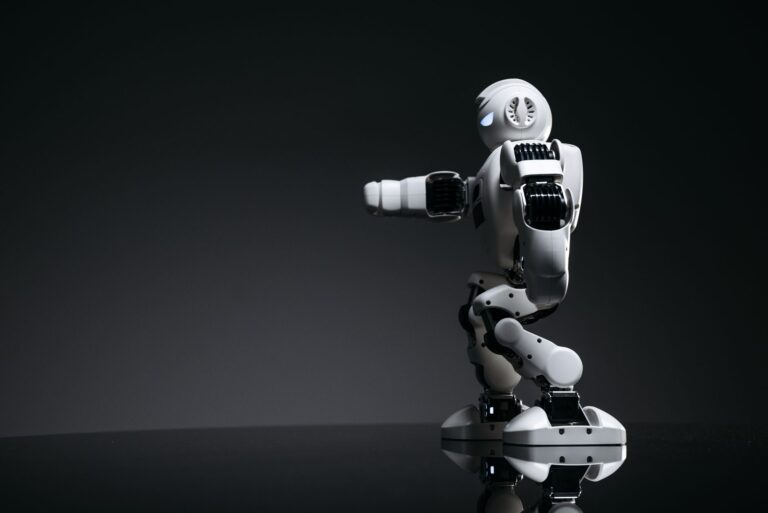
Figure 01, Figure AI’s flagship humanoid, stands about 5’6″ tall with a human-like bipedal frame, metallic grey body, and featureless black face, optimized for dexterity in people-centric spaces.[1][4] Unlike specialized robots, it walks, grasps objects, and executes tasks like crate handling without tethers in demos, showcasing balance and manipulation rivaling early human workers.[1] Its design prioritizes safety and versatility, allowing deployment in unmodified factories or warehouses. AI integration sets it apart. Paired with advanced models, Figure 01 processes natural language commands, reasons about environments, and acts autonomously—capabilities honed via OpenAI collaboration for vision-language-action processing.[1][2] Post-2024, Figure advanced to Figure 02 with improved dexterity, then unveiled Helix, its in-house Vision-Language-Action (VLA) model, ending the OpenAI tie-up while retaining Microsoft Azure for scaling.[3][4]
- **Hardware Innovations**: Human-scale form factor with dexterous hands for picking, placing, and tool use in dynamic settings.[1][3]
- **AI Backbone**: Combines perception, reasoning, and control for untethered autonomy, trained on multimodal data like human videos.[4][6]
Which Partnerships Fueled Figure’s Commercial Push?
The $2.6 billion raise coincided with game-changing alliances. Figure’s deal with OpenAI fused cutting-edge language models with robotics expertise, enabling robots to interpret commands and interact naturally—accelerating timelines for warehouse and manufacturing pilots.[1][2] Microsoft Azure powered the AI training infrastructure, ensuring scalable model development.[1] A landmark BMW partnership deployed Figure 01 in a South Carolina auto plant for dangerous or repetitive tasks, marking one of the first commercial humanoid trials.[1][4] By 2025, rumors swirled of a second customer like UPS, alongside BotQ—a facility targeting 12,000 robots annually per line and 100,000 shipments soon.[4][6] These ties bridged prototypes to revenue, even as Figure pursued massive Series C funding despite limited fielded units.[3][4]
- **OpenAI Synergy**: Boosted language reasoning until Figure’s Helix launch in 2025.[2][4]
- **BMW Pilot**: Real-world validation in automotive manufacturing, proving humanoid viability.[1]

What Challenges Lie Ahead Despite the Hype?
Scaling humanoid robots demands overcoming hardware reliability, AI generalization, and cost hurdles. At the $2.6 billion valuation, Figure boasted strong cash reserves—reportedly more than all humanoid rivals combined—but critics noted scant revenue and reliance on demo videos over audited results.[3][4] The WSJ highlighted ambitious $9 billion revenue forecasts by 2029 amid few deployed bots.[4] Competition intensifies from Tesla’s Optimus Gen 2 demos and Agility Robotics’ Amazon-backed warehouse tests.[1] Figure counters with BotQ production ramps and Helix’s in-house AI, but achieving mass autonomy in unstructured environments remains elusive without vast real-world data.[4][6] Investor appetite persists, as seen in the 15x valuation jump to $39 billion by September 2025, betting on Figure’s talent and compute edge.[3][6]
Where Is Figure AI Headed Post-$2.6 Billion Bet?
The 2024 funding supercharged expansions into homes and commerce, with Series C funds targeting BotQ scaling, GPU clusters for Helix training, and multimodal data collection from human inputs.[6] Figure eyes 100,000-unit shipments, positioning humanoids for logistics, manufacturing, and household aid—disrupting a $trillion labor market.[3][4] Adcock’s vision emphasizes speed: “bring humanoid robots into commercial operations as soon as possible.”[1][2] With cash hoards and pilots underway, Figure leads the pack, though profitability hinges on proving robots outperform cheaper alternatives like wheeled bots.[4] By 2026, expect broader deployments signaling humanoid maturity.
How to Apply This
- **Assess Workspace Fit**: Evaluate if your facility’s human-centric design suits bipedal humanoids over wheeled systems—ideal for retrofits without overhaul.
- **Pilot Small-Scale**: Start with BMW-style trials on tedious tasks, using Figure’s natural language interface for quick integration.
- **Leverage AI Partnerships**: Adopt cloud tools like Azure for custom training, mirroring Figure’s path to autonomy.
- **Scale with Data**: Collect on-site videos and sensor data to refine models, accelerating from demos to production fleets.
Expert Tips
- **Prioritize Dexterity Over Speed**: Humanoid hands excel in versatile grasping; optimize for quality in mixed tasks, not raw pace.[1]
- **Invest in Simulation First**: Use GPU infrastructure like Figure’s to simulate millions of scenarios, slashing real-world trial costs.[6]
- **Focus on Safety Protocols**: Ensure bipedal stability in crowds via advanced perception—key for human-robot coexistence.[4]
- **Monitor Competitor Benchmarks**: Track Optimus and Agility progress to benchmark Figure deployments realistically.[1]
Conclusion
Figure AI’s $2.6 billion bet crystallized humanoid robotics’ commercial inflection point, blending massive funding, elite partnerships, and tangible pilots to challenge labor constraints head-on.[1][3] From Figure 01’s warehouse feats to BotQ’s production ambitions, the company exemplifies how embodied AI could automate the unsafe and mundane, unlocking productivity gains across industries.[4][6] Yet success demands execution amid hype—scaling reliable, cost-effective bots while rivals circle. As Figure pushes toward 100,000 units and $39 billion valuations, it heralds a robotics renaissance where humanoids become as commonplace as cobots today, redefining work’s future.[3][6]
Frequently Asked Questions
What is Figure AI’s main product?
Figure 01 (and evolved Figure 02) is a general-purpose humanoid robot designed for human environments, excelling in walking, grasping, and AI-driven tasks like warehouse handling.[1][3]
Who invested in the $2.6 billion round?
Key backers included Microsoft, OpenAI Startup Fund, NVIDIA, Jeff Bezos via Bezos Expeditions, Parkway Venture Capital, Intel Capital, Align Ventures, and ARK Invest.[1][2]
What is the BMW partnership about?
Figure deploys robots in BMW’s South Carolina factory to automate difficult, dangerous, or tedious automotive manufacturing tasks.[1][4]
Has Figure achieved revenue since the funding?
As of late 2025 reports, revenue remains limited with few fielded robots, though pilots and production ramps like BotQ aim for commercialization.[3][4]