Consumer robotics has reached a tipping point in 2026, transforming everyday homes from passive spaces into dynamic environments where machines handle chores, provide companionship, and enhance security with unprecedented reliability. No longer confined to gimmicks or industrial floors, these robots deliver tangible value through advanced AI, precise sensors, and seamless integration with smart ecosystems, making them essential for busy households seeking efficiency and innovation.[1][2] This article curates the **top 10 consumer robots worth buying**, prioritizing models with proven real-world performance, affordability, and upcoming availability, drawn from CES 2026 showcases and industry benchmarks.
Readers will gain a clear roadmap to the best options across cleaning, companionship, and humanoid assistants, including key specs, pricing insights, and purchase considerations. Whether you’re automating floors or exploring early humanoids for home tasks, this guide equips you to invest wisely in robotics that evolve with your lifestyle.[1][2][3].
Table of Contents
- What Makes a Consumer Robot Worth Buying in 2026?
- Top Cleaning and Maintenance Robots
- Companion and Service Humanoids
- Advanced Humanoids for Home and Light Tasks
- Emerging Contenders and Accessibility Picks
- How to Apply This
- Expert Tips
- Conclusion
- Frequently Asked Questions
What Makes a Consumer Robot Worth Buying in 2026?
The bar for consumer robots has risen sharply, demanding not just flashy demos but practical ROI through autonomy, durability, and AI-driven adaptability. At CES 2026, standout models like Boston Dynamics’ Atlas highlighted human-like dexterity, while home-focused bots emphasized hands-free operation and multi-surface mastery, proving robots must solve real pain points like cleaning hard-to-reach areas or providing elderly support without constant supervision.[1][3] Worthy buys balance cost—typically $300 to $50,000—with features like self-maintenance, app control, and over-the-air updates that extend lifespan beyond two years. Buyers should prioritize robots with tactile sensing, vision-language models for natural interaction, and proven pilots in homes or warehouses, as seen in Agility Robotics’ Digit, which navigates stairs autonomously.[2] Energy efficiency and quiet operation are non-negotiable for daily use, ensuring these machines blend into family life rather than disrupt it.
- **Autonomy first**: Seek lidar mapping, AI obstacle avoidance, and self-emptying to minimize intervention, as in Roborock’s top vacuums.[2]
- **Scalable AI**: Models with generative AI for tasks like conversation or adaptive cleaning outperform rigid scripts.[1]
- **Value pricing**: Affordable entry points under $1,000 for cleaners, scaling to $30,000+ for humanoids with payloads over 15kg.[2]
Top Cleaning and Maintenance Robots
Household cleaning robots dominate consumer sales in 2026, with vacuum-mop hybrids leading due to their hygiene-focused innovations like on-the-go mop washing. The Roborock S8 MaxV Ultra sets the standard with 10,000 Pa suction and hot-water self-cleaning, addressing mold buildup in traditional mops while mapping multi-floor homes flawlessly.[2] Dreame’s Aqua10 Ultra Roller complements this by scraping debris mid-clean, ideal for pet owners tackling sticky messes without manual prep. These bots integrate with voice assistants for zoned cleaning, proving indispensable for allergy sufferers or large homes where manual upkeep falls short.
- **Roborock S8 MaxV Ultra**: Best overall for power and hands-free docks; priced around $1,500.[2]
- **Dreame Aqua10 Ultra Roller**: Hygiene leader with fresh-water rinsing; under $1,200.[2]
Companion and Service Humanoids
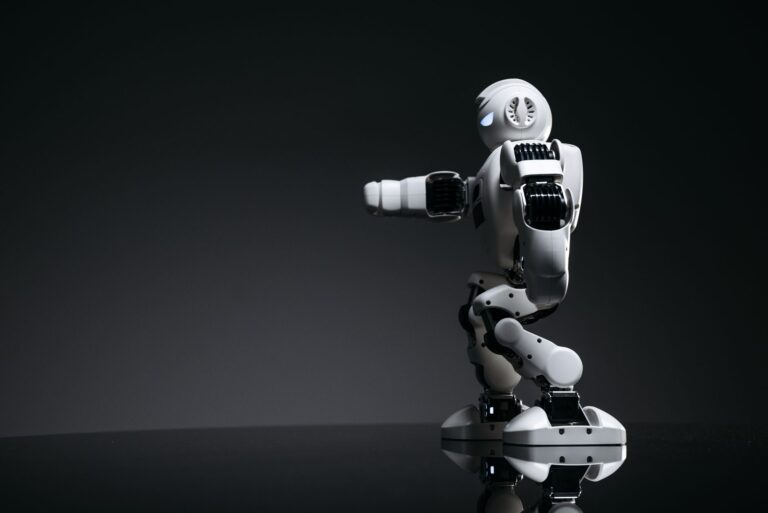
Humanoid robots are shifting from labs to living rooms, with 2026 models like Unitree’s H1 offering agile walking and task handling at accessible prices for research-turned-consumer use. Fourier Intelligence’s GR-1 excels in rehabilitation, supporting 50kg payloads for patient mobility aid in home settings.[2] SwitchBot’s Onero H1, unveiled at CES, brings Vision Language Action AI for chores like folding laundry intuitively.[1] These bots foster emotional bonds through conversational AI, making them viable for elderly care or child education.
- **Unitree H1**: Speedy and affordable humanoid for service tasks; evolving toward $20,000 commercial units.[2]
- **Fourier GR-1**: Rehab-focused with balance tech; targeted at home healthcare.[2]

Advanced Humanoids for Home and Light Tasks
Boston Dynamics’ Atlas tops CES 2026 as the ‘Best Robot,’ with 56 degrees of freedom, 360-degree joints, and tactile hands for precise manipulation like assembling car parts—soon adaptable for home workshops.[1][3] Agility Robotics’ Digit leads commercial readiness, piloted in Amazon for bin handling and stairs, positioning it for household logistics like grocery unpacking.[2] LG’s CLOiD and Sharpa’s North add variety: CLOiD for AI-driven home assistance, North with 1000+ fingertip sensors for delicate object gripping.[1] Priced from $40,000, these justify investment via labor savings in repetitive tasks.
Emerging Contenders and Accessibility Picks
Standard Bots’ RO1 cobot, at $37,000, brings industrial precision (18kg payload, 0.025mm accuracy) to home garages for polishing or assembly without safety cages.[2] Budget vacuums like Tapo RV30 Max Plus offer lidar and solid suction under $400, while solar-following bots from CES hint at off-grid maintenance.[5] Xiaomi and Pudu models target hospitality-style service, blending into kitchens for serving or monitoring.[4]
How to Apply This
- Assess your needs: Cleaning overload? Start with Roborock. Elderly care? GR-1 or Atlas.
- Check compatibility: Ensure app ecosystems match your smart home (e.g., Alexa, Google).
- Budget and pilot: Test demos or rentals; aim for ROI via time saved (e.g., 10 hours/week cleaning).
- Future-proof: Prioritize OTA updates and modular designs for 2027+ AI leaps.
Expert Tips
- Tip 1: Invest in multi-function bots like Digit for scalability from chores to security.
- Tip 2: Verify battery life over 4 hours for untethered operation in larger homes.
- Tip 3: Pair with AI hubs for task chaining, like vacuum-to-mop transitions.
- Tip 4: Monitor CES pilots—Atlas deploys in factories this year, home versions follow.
Conclusion
The top 10 consumer robots of 2026, from Roborock cleaners to Atlas humanoids, mark a maturation where robotics delivers measurable home value without sci-fi hype. Prioritizing these ensures you’re not just buying tech, but reclaiming time through reliable automation grounded in CES-proven advancements.[1][2][3] As humanoid prices drop and AI refines, expect even deeper integration—positioning early adopters ahead in an era where homes think and act independently.
Frequently Asked Questions
Which robot is closest to home use among humanoids?
Agility Robotics’ Digit, with Amazon warehouse pilots handling bins and stairs, leads commercial availability.[2]
Are cleaning robots truly hands-free now?
Yes, models like Roborock S8 MaxV Ultra feature self-emptying, hot-water mop washing, and AI mapping for minimal intervention.[2]
What’s the best value humanoid under $50,000?
Standard Bots’ RO1 at $37,000 offers 18kg payload and high precision for home workshops.[2]
How do I know if a robot is CES 2026 worthy?
Look for awards like Atlas’s ‘Best Robot’ from CNET, emphasizing real deployment and human-like gait.[3]