
NVIDIA remains the dominant force powering autonomous systems and robotics today, but the competitive landscape is shifting. While NVIDIA has built an overwhelming market advantage through its comprehensive ecosystem of hardware and software solutions, emerging competitors like Qualcomm and Intel are making serious moves to capture share in what’s projected to become a $15 billion industry. The question isn’t whether NVIDIA will be dethroned—it’s whether rivals can carve out meaningful territory in specialized robotics applications while NVIDIA continues to set the overall direction. NVIDIA’s dominance stems from more than just processing power.
The company controls both the silicon (from Jetson modules to data center GPUs) and the software stack (CUDA, robotics frameworks, foundation models like GR00T). CEO Jensen Huang has positioned robotics as NVIDIA’s second-most important growth category after AI itself. For 2026, this translated into aggressive product releases designed to make their platform more accessible and affordable—particularly the Jetson T4000, which costs just $1,999 per 1,000 units and brings Blackwell architecture efficiency to edge robotics. This combination of control and investment velocity makes NVIDIA the de facto standard for most developers and manufacturers building robots and autonomous systems today.
Table of Contents
- What Makes NVIDIA the Market Leader in Physical AI for Robotics?
- NVIDIA’s 2026 Product Suite and Physical AI Breakthroughs
- How Emerging Competitors Are Challenging NVIDIA’s Dominance
- Cost, Capability, and the Tradeoff Problem in Choosing Robotics Platforms
- Hardware Limitations and the Edge Deployment Reality
- Real-World Adoption and Where the Technology Actually Works
- The Future Market and What It Means for Robotics Development
- Conclusion
What Makes NVIDIA the Market Leader in Physical AI for Robotics?
nvidia‘s leadership isn’t accidental—it’s built on years of ecosystem investment and technical depth that competitors struggle to replicate quickly. The company controls the entire stack: edge processors through the Jetson line, cloud infrastructure via CUDA-powered data centers, development frameworks, and increasingly, the foundation models that teach robots to act intelligently. When a roboticist needs to train a robot on new tasks, NVIDIA offers an integrated path from simulation (Omniverse) through edge deployment on Jetson hardware. The company invested heavily in this vertical integration precisely because robotics demands it—you can’t just sell chips; you need to solve the entire problem.
The market projections back this up. Physical AI is forecast to grow from $1.50 billion in 2026 to $15.24 billion by 2032, a 47.2% compound annual growth rate. Most of that growth will run on NVIDIA infrastructure initially. However, this dominance comes with a real caveat: NVIDIA’s solutions aren’t always the cheapest or the most specialized. Their generalist approach works brilliantly for large manufacturers and well-funded robotics startups but leaves room for competitors to undercut them on cost or offer domain-specific advantages.
NVIDIA’s 2026 Product Suite and Physical AI Breakthroughs
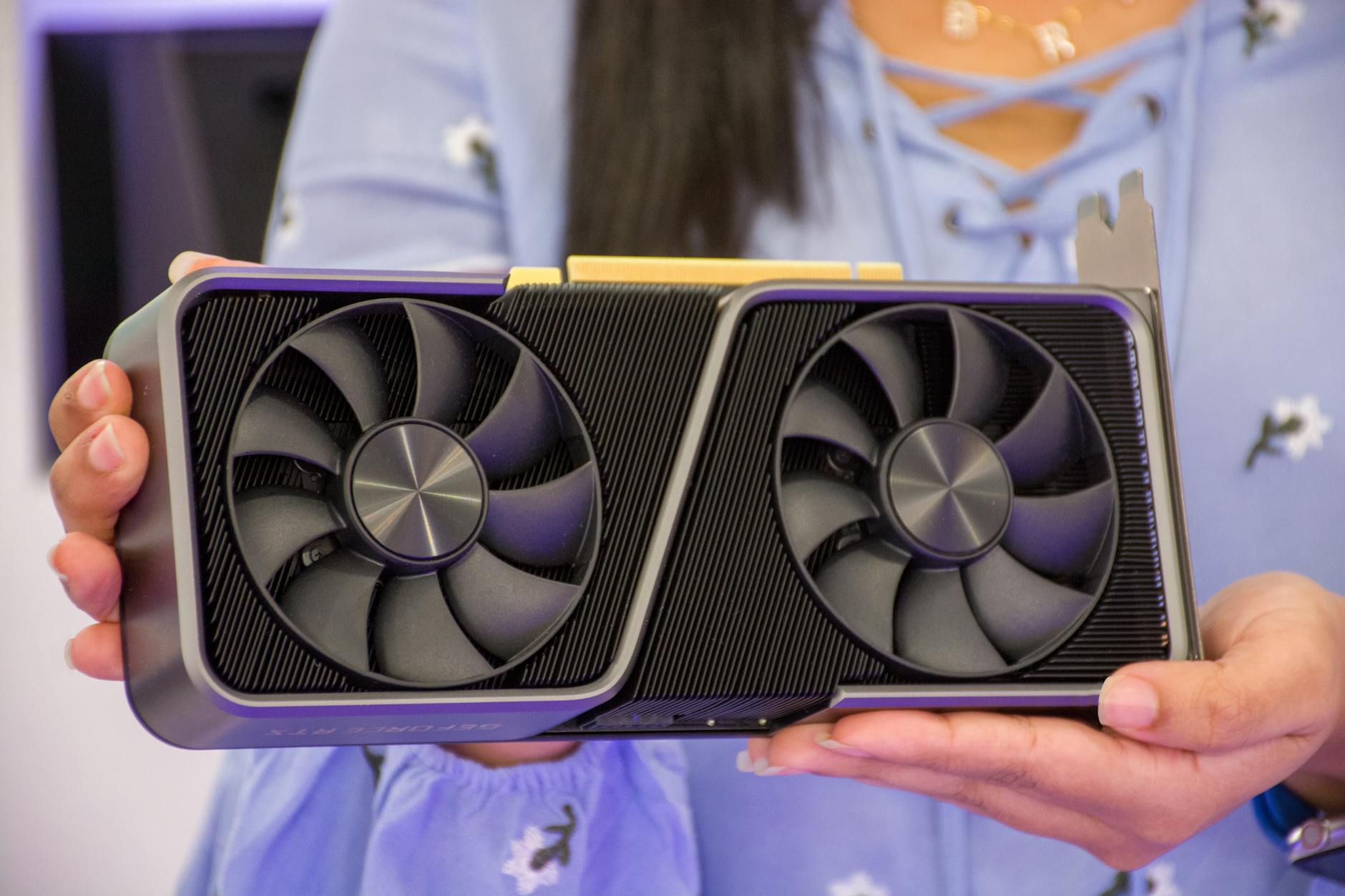
NVIDIA’s recent product announcements reveal a company doubling down on accessibility and capability. The Jetson T4000 is marketed as an affordable upgrade path—$1,999 per 1,000 units puts it within reach of mid-tier robot manufacturers and research institutions that previously couldn’t justify Jetson expenses. It pairs Blackwell architecture with reduced power consumption, a meaningful improvement for robots that operate on batteries or in energy-constrained environments like hospitals or manufacturing floors. More important than the hardware is GR00T N2, NVIDIA’s next-generation robot foundation model. The headline claim: it achieves 2x the success rate on new tasks compared to leading vision-language-action (VLA) models.
this matters because it directly addresses robotics’ hardest problem—generalization. A robot trained on 1,000 manipulation examples should be able to handle novel objects and scenarios without retraining. GR00T N2 appears to make real progress here. The model also powers Cosmos 3, NVIDIA’s world foundation model for synthetic data generation and action simulation. The limitation worth noting: foundation models are only as good as their training data. If GR00T hasn’t seen a particular task category or object type, it will still fail—a problem that becomes obvious in edge cases and long-tail robotics applications.
How Emerging Competitors Are Challenging NVIDIA’s Dominance
qualcomm made a notable move in early 2026 by unveiling Dragonwing, a robotics platform explicitly designed to challenge NVIDIA’s Jetson ecosystem. Rather than trying to outdo NVIDIA across the board, Qualcomm is focusing on automotive and mobile robotics where Snapdragon’s existing presence gives them distribution advantages. The Snapdragon Ride Pilot system is launching on BMW’s iX3 later in 2026—a real, named customer with real volume. This matters because autonomy requires two things: cutting-edge algorithms and manufacturing scale. Qualcomm brings the latter in a way pure AI chip companies don’t.
Intel’s Gaudi 3 GPU represents another avenue of competition, though its focus is primarily on data center training rather than edge robotics. Gaudi 3 trains models 1.5x faster than NVIDIA’s H100 while consuming less power, which could make a difference for organizations that need to train massive models quickly. However, Gaudi hasn’t established the same level of adoption in robotics workflows yet, and the ecosystem of optimized libraries and tools remains far smaller than CUDA’s. The real risk for NVIDIA isn’t that any single competitor wins—it’s that specialization fragments the market. Qualcomm might own automotive robots, a Chinese chipmaker might own manufacturing automation, and NVIDIA ends up holding humanoid and service robotics. That’s still a huge market, but it’s not the totality that NVIDIA currently controls.

Cost, Capability, and the Tradeoff Problem in Choosing Robotics Platforms
Selecting a robotics platform forces difficult tradeoffs between cost, capability, and ecosystem maturity. NVIDIA offers the most complete ecosystem but at premium pricing. The Jetson T4000’s aggressive pricing is partly an acknowledgment that even NVIDIA felt pressure on cost. For a startup building humanoid robots or a research lab exploring general manipulation, NVIDIA remains the obvious choice—the software ecosystem, foundation models, and developer community are unmatched. But if you’re building specialized robots in high volume—say, autonomous lawn mowers or warehouse delivery robots—NVIDIA’s solution might be overengineered. Qualcomm’s narrower focus could be cheaper and sufficient.
This tradeoff extends to software. NVIDIA’s CUDA ecosystem is vastly larger than alternatives, but it also locks you into NVIDIA hardware. Developers trained on CUDA can’t easily port code to Qualcomm or Intel GPUs. This lock-in is sometimes worth it for the capability gains; sometimes it’s not. A company building a robot that needs neural networks for vision but doesn’t require cutting-edge foundation models might find a more open-source approach (using PyTorch on generic hardware) adequate and lower-risk long-term. The hidden cost here: building on pure open-source often means slower time-to-market and needing specialized expertise.
Hardware Limitations and the Edge Deployment Reality
Deploying physical AI at the edge—on the robot itself rather than in the cloud—introduces constraints that don’t exist in data center contexts. Edge devices have power budgets, thermal limits, and size constraints. A Jetson module consuming 50 watts might be fine for a large industrial robot but unacceptable for a small, battery-powered delivery drone. NVIDIA’s newer modules address this (the T4000 specifically targets power efficiency), but there’s a fundamental limit: complex foundation models don’t compress well. GR00T N2 might be incredible at generalization, but running the full model on a Jetson at robot-control frequencies (30+ Hz for real-time control) still requires significant computational resources.
Another limitation: latency. Cloud-based robotics (sending sensor data to the cloud, getting actions back) introduces round-trip latency that makes real-time control nearly impossible for tasks like picking or assembly. This drives the entire edge-inference trend, but it also means robots need onboard compute. Jetson hardware solves this, but you lose the flexibility of cloud-based training and simulation. A robot using local Jetson inference has to carry its model with it; retraining requires edge updates, which is slower and more complex than cloud-based workflows. This is solvable but adds operational friction that manufacturers are still learning to manage.
Real-World Adoption and Where the Technology Actually Works
The robotics industry isn’t theoretical—there are actual deployments showing what works and what’s hype. Humanoid robots from Tesla (Optimus), Boston Dynamics, and Figure AI all rely on NVIDIA infrastructure for training, though they’ve developed custom inference solutions. Manufacturing environments show more widespread adoption: NVIDIA Jetson is the default in many computer vision quality-assurance systems and robotic arms performing repetitive tasks. In logistics, autonomous mobile robots from companies like Fetch and MiR use NVIDIA hardware, though many also developed in-house solutions to reduce dependency.
A concrete example: Tesla’s Optimus project reportedly uses CUDA-accelerated training on massive datasets of robot demonstrations, then deploys optimized models to edge hardware in the physical robot. This exemplifies NVIDIA’s strength—providing the full pipeline. However, it also shows the maturity gap: even with NVIDIA’s tools, deploying humanoid robots at scale required Tesla’s custom engineering. Off-the-shelf robot platforms often need significant customization to reach production quality, regardless of whether they’re built on NVIDIA, Qualcomm, or custom silicon.
The Future Market and What It Means for Robotics Development
The $15 billion projection by 2032 assumes adoption accelerates significantly. This will likely happen, but not uniformly across robotics categories. Autonomous vehicles represent the largest addressable market and will probably consolidate around a few platforms—likely NVIDIA for general autonomous driving stacks, and specialized competitors for specific OEM integrations like Qualcomm’s BMW partnership. Manufacturing and warehouse automation will likely remain more fragmented, with specialized solutions competing on domain expertise. Service robots (cleaners, delivery, inspection) will be competitive and cost-driven, potentially favoring newer entrants who can optimize for specific niches.
What this means for developers and manufacturers: the “NVIDIA or nothing” era is ending, but NVIDIA’s position remains extraordinarily strong. The company’s first-mover advantage in foundation models for robotics (GR00T, Cosmos) and the depth of its ecosystem create real advantages that won’t disappear in 2-3 years. But competitive pressure from Qualcomm, Intel, and others will likely accelerate specialization and push prices down across the board. New entrants should evaluate whether NVIDIA’s generalist platform fits their needs or whether a leaner, cheaper alternative suffices. Existing NVIDIA users should expect more competition and stronger pricing pressure from alternatives—but NVIDIA’s continued investment in robotics-specific models and tools should keep them ahead for the foreseeable future.
Conclusion
The phrase “the next NVIDIA in robotics” is premature. NVIDIA remains the dominant platform for physical AI, powering the majority of robots and autonomous systems in development and production. However, the market is large enough and diverse enough that real competitors are emerging. Qualcomm’s automotive focus, Intel’s data center training capabilities, and potential Chinese competitors in manufacturing all represent genuine alternatives for specific use cases.
The robotics industry isn’t moving toward a single winner; it’s moving toward NVIDIA as the default for general-purpose robotics and specialized competitors carving out domain leadership. The practical implication: if you’re building robots or autonomous systems, NVIDIA remains the safest, most feature-complete choice. But it’s no longer the only choice, and for cost-sensitive or highly specialized applications, alternatives deserve serious evaluation. The market growth is real, the technology is advancing rapidly, and the competition will only intensify.