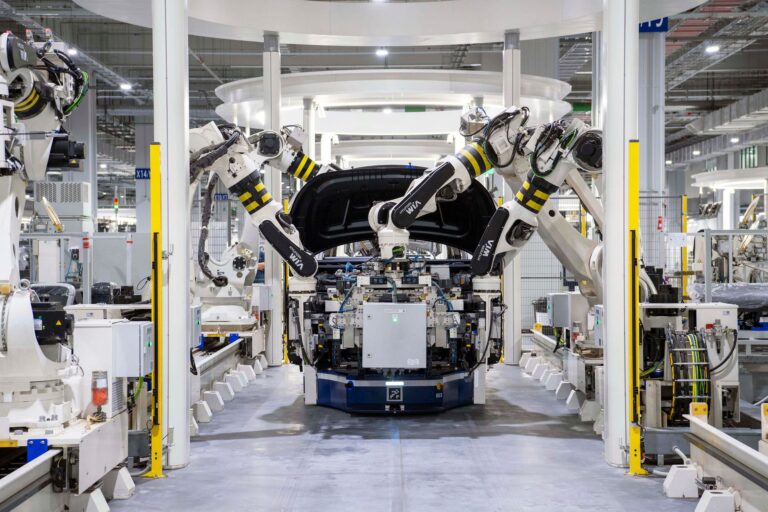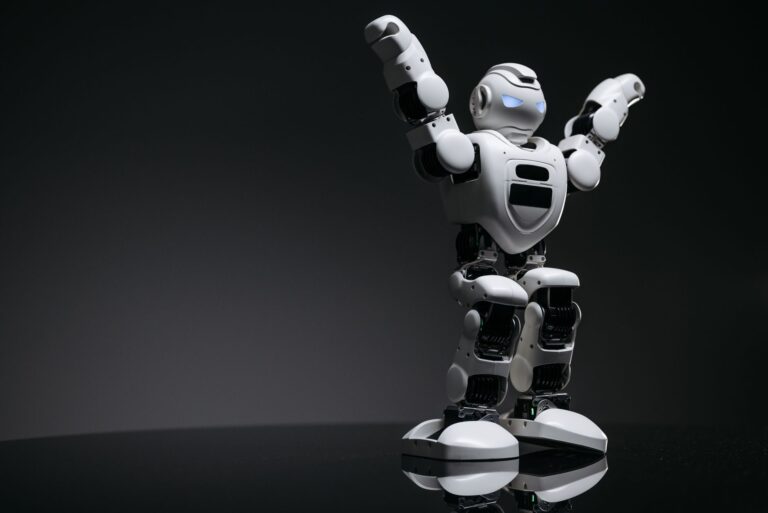

The next Nvidia-scale business empire might not come from semiconductor fabrication, but from companies that integrate robotics, artificial intelligence, and industrial automation into unified platforms. What once seemed like science fiction—a robotics company commanding valuations that rival chip manufacturers—is becoming the investment reality of 2026. Skild AI tripled its valuation from USD 4.5 billion to USD 14+ billion in just seven months, and that’s only one data point in a market that attracted USD 10.3 billion in funding last year, the highest total since 2021. The parallel to Nvidia’s trajectory is instructive: Nvidia didn’t simply sell GPUs; it became the enabling infrastructure for an entire ecosystem of AI products. Today’s robotics companies aren’t just building robots; they’re building the software, platforms, and standards that will run factories, warehouses, and supply chains for the next decade. The market fundamentals support this thesis. The global robotics market is projected to grow from USD 88.27 billion in 2026 to USD 218.56 billion by 2031, a compound annual growth rate of nearly 20 percent.
More compelling still, the AI-in-robotics segment is expanding even faster—from USD 20.4 billion in 2025 to USD 182.7 billion by 2033, representing a 32 percent annual growth rate. These aren’t niche numbers; they represent the structural shift of manufacturing and logistics toward machine intelligence. Unlike the semiconductor business, which sells fungible commodity products to an industry fighting for margin, robotics companies will own the customer relationship, the software, and the recurring revenue streams that come with ongoing AI updates and platform optimization. The difference between Nvidia and the next robotics titan will be profound. Nvidia succeeded as a supporting technology; the next leader may succeed as the operational backbone of industrial production itself. The robotics companies capturing investor attention right now—Figure AI at USD 39 billion, Galbot at USD 3 billion, Mind Robotics with USD 500 million raised in early 2026—are betting on this future. Whether they become the Nvidia of robotics depends on whether they can establish the platform dominance that makes their technology unavoidable.
Table of Contents
- Why Industrial Robotics Might Overtake Semiconductors as the Next Platform
- The AI-Powered Robot Economy Is Still in Its Earliest Innings
- The Platform Dynamics That Could Create the Next Nvidia
- Real-World Deployment and the Race to Scale
- The Risks That Could Derail the Robotics Davids
- Nvidia’s Bet on Robotics as Its Next Growth Engine
- What Comes Next for Robotics Investors and Manufacturers
- Conclusion
Why Industrial Robotics Might Overtake Semiconductors as the Next Platform
Nvidia’s dominance rests on a simple principle: it built something that no one else could easily replicate, and every major AI company needed it. The robotics sector is following a similar trajectory, but with a critical difference. Nvidia’s advantage was hardware specialization; robotics platforms offer something broader—integrated control of physical systems in the real world. A manufacturer deploying collaborative robots needs more than just the hardware; they need software for task planning, AI models for perception and decision-making, and ongoing support and optimization. Nvidia provides the chips; a dominant robotics platform will provide the entire decision-making layer. The funding explosion underscores this shift. In 2022, average robotics funding deals were around USD 50 million.
By 2025, that figure had nearly tripled to USD 135 million, suggesting investors believe that robotics companies can scale to much larger outcomes. Humanoid robot startups alone captured over 40 percent of all funding in 2024 and 2025, a category that barely existed before 2022. This concentration of capital is precisely what happened in AI infrastructure during the 2020s—when early winners emerged and capital flowed toward the likeliest scale opportunities. Consider the comparison to cloud infrastructure. When Amazon Web Services launched in 2006, it seemed like commoditized servers and storage. Twenty years later, AWS owns the relationship with developers, charges for managed services, and dictates the standards for the entire ecosystem. A robotics platform company with production-scale deployment across major manufacturers could operate with similar leverage—not because it owns the robots (many will be made by established OEMs), but because it owns the intelligence layer.
The AI-Powered Robot Economy Is Still in Its Earliest Innings
The data on AI-powered industrial robots reveals how nascent this market remains. AI-powered industrial robots represent USD 16.8 billion of total value in 2025, yet they’re expected to grow to USD 33.3 billion by 2035. That expansion—representing a doubling of market size—will happen while the overall industrial robot market grows at a more modest 7.1 percent annually. The divergence is important: AI-powered robots are the future, not the present, which means companies that establish dominance now will still have most of their growth runway ahead. This is crucial for investors and entrepreneurs because it means the category is far from settled. Semiconductor manufacturing is a mature, consolidated industry where market leadership was largely established by the early 2000s. Robotics is the inverse—it’s approaching an inflection point where standards and platforms haven’t yet crystallized.
The risk is substantial. Humanoid robotics, which captured enormous funding attention, may remain niche or encounter economic barriers that limit commercial viability. Manufacturing may prove more resistant to automation than projections suggest. The collaborative robot segment, currently growing at 25.64 percent annually through 2031, could face competition from lower-cost alternatives that don’t require the AI infrastructure that venture-backed companies are building. McKinsey estimates that the general-purpose robotics market could reach USD 370 billion by 2040, with half the value generated in China. That projection is bullish, but it also highlights the geographic concentration risk. If Chinese robotics companies can build equivalent platforms at lower cost, they may capture the larger share of value—just as they have in many adjacent hardware categories. The USD 14 billion valuation of Skild AI assumes the company can scale across geographies and defend against better-capitalized competitors who may simply buy their way into the market.
The Platform Dynamics That Could Create the Next Nvidia
Nvidia’s dominance depends partly on network effects and switching costs. Once major AI laboratories standardized on CUDA, the ecosystem effect became self-reinforcing—developers built tools for CUDA, universities taught CUDA, and alternative platforms became harder to justify. Robotics platforms could establish similar dynamics, but with a different mechanism. Instead of software developers choosing a platform, manufacturers will choose a platform. Once a factory invests in a particular robotics software ecosystem, switching costs increase dramatically. Retrain workers, rebuild workflows, revalidate safety protocols—the friction is immense. NVIDIA has already recognized this opportunity and positioned itself at the center of the robotics stack.
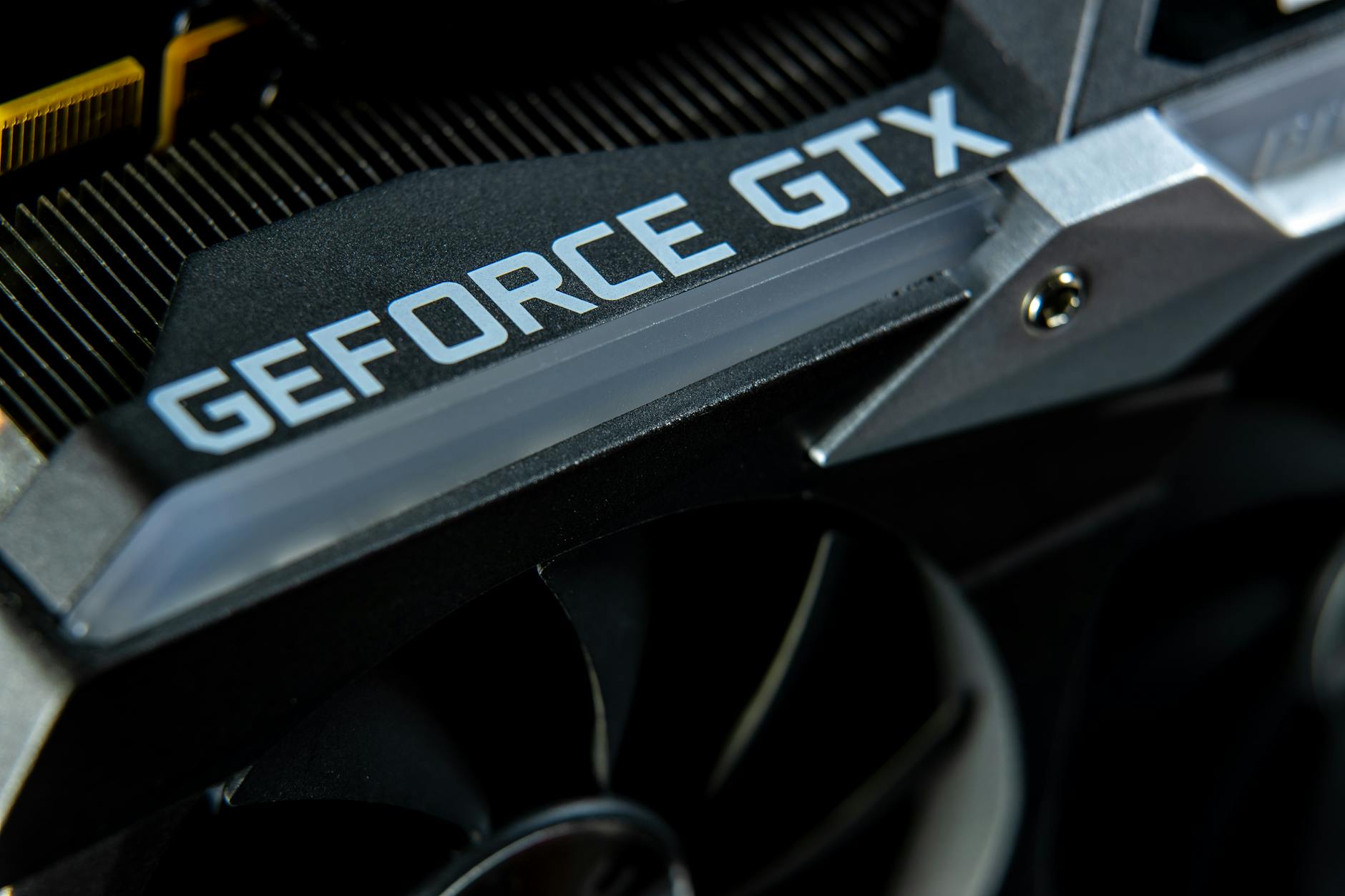
The company released the Jetson T4000 module with Blackwell architecture, delivering four times the performance of previous generations at USD 1,999 per 1,000-unit volume. More significantly, NVIDIA emerged as the most prolific corporate investor in robotics by 2025, participating in seven major funding rounds. This isn’t accidental; NVIDIA is building the infrastructure that robotics platforms will depend upon while simultaneously capturing ownership stakes in those companies. At GTC 2026, Texas Instruments, Infineon, NXP Semiconductors, Analog Devices, and Synopsys announced new collaborations with NVIDIA, all centered on robotics control and physical AI. The danger here is that NVIDIA could become the next Nvidia of robotics before any specialized robotics company does. Unlike 2006, when AWS wasn’t yet born, NVIDIA already has the brand, the installed base, and the strategic partnerships. A robotics platform company would need to build such superior software and customer relationships that manufacturers prefer it despite NVIDIA’s dominance in the underlying hardware layer. That’s possible—AWS didn’t own the servers, but it owned the developer relationship—but it’s a high bar.

Real-World Deployment and the Race to Scale
The distinction between a promising robotics company and a Nvidia-scale winner will be production deployment. Figure AI raised over USD 1 billion at a USD 39 billion valuation, making it one of the highest-valued hardware startups ever. But a USD 39 billion valuation assumes the company can deploy robots at scale and generate sustainable economics. Most humanoid robot startups are nowhere near positive unit economics. They’re building impressive prototypes and proving feasibility, but the path from early deployments to factory floor ubiquity is longer and more uncertain than investor enthusiasm suggests. Mind Robotics took a different path, raising USD 115 million in seed funding and USD 500 million in a Series A round in early 2026. Rather than focus exclusively on humanoid morphology, the company built AI-powered robots for manufacturing tasks like material handling and assembly. That narrower focus may prove more pragmatic.
In 2025, traditional industrial robot installations reached an all-time high of USD 16.7 billion in value globally. These are manufactured primarily by established companies like ABB, FANUC, KUKA, and YASKAWA. The question is whether new software platforms can layer on top of these existing installed bases, or whether new winners must build robots from the ground up. The tradeoff is telling. Incumbents like ABB and FANUC have installed bases and customer relationships worth billions, but they weren’t built for AI-native development. Startups have AI talent and ambition, but no installed base and limited capital to build one before funding dries up. The company that cracks this—building software that runs on existing robots while attracting enough new deployments on its own platforms—might indeed become the next dominant player. That’s harder than what Nvidia did, which was build better silicon. But it’s also more defensible.
The Risks That Could Derail the Robotics Davids
Robotics is capital-intensive in ways that AI software is not. Training a language model is expensive; building a manufacturing robot company requires factories, supply chains, ongoing R&D, and service networks. That’s why investors have been surprised at the speed at which robotics valuations have grown. Skild AI and other startups are raising at the pace of software unicorns, but with the capital requirements of hardware companies. If capital markets contract, or if a high-profile robotics startup fails to deliver on promises, the entire funding spigot could shut down. Nvidia survived the dot-com crash because it had sustainable revenue. Most current robotics startups have no revenue at all. The second risk is technical.
Humanoid robotics, which dominates media attention, remains far from economically viable in most applications. Robot hands that can manipulate arbitrary objects reliably don’t exist yet. The AI models that drive robot decision-making in unstructured environments are improving rapidly, but they’re not production-ready for most manufacturing tasks. This matters because it means early-stage robotics companies must maintain investor confidence on promises of future capability, not current performance. That’s fine until it isn’t—and the history of robotics is filled with funding waves followed by crashes when reality disappointed. The third risk is competition from China. Humanoid robot startups in China and collaborations between Chinese manufacturers and AI companies are advancing rapidly. If Chinese robotics platforms can achieve equivalent capability at significantly lower cost, they could dominate their home market and eventually expand globally. Western robotics companies assuming they’ll capture premium markets and cede cost-sensitive ones might find that assumption costs them their long-term viability.

Nvidia’s Bet on Robotics as Its Next Growth Engine
NVIDIA’s strategic positioning in robotics is worth examining because it suggests a different future than a scrappy robotics startup becoming the next dominant platform. ABB, FANUC, KUKA, YASKAWA, Figure, Agility Robotics, and dozens of other companies have announced they’re building on NVIDIA technology for production-scale physical AI. That suggests the future might look like: NVIDIA provides the chips and the foundational platform (CUDA for robotics), established manufacturers provide the hardware, and a fragmented ecosystem of software and service providers operate on top.
In that scenario, NVIDIA becomes even more dominant than it is in AI—because it captures value from the entire physical world automation wave, not just the model-training wave. But no single robotics company becomes the next Nvidia, because they all depend on NVIDIA’s underlying platform. This outcome is plausible and may be more likely than the narrative of a startup overthrowing incumbents. But it’s also less exciting from a venture capital perspective, which is why the money is still flowing toward companies betting they can become the integrated platform winners.
What Comes Next for Robotics Investors and Manufacturers
The robotics sector is at an inflection point where the next five years will determine whether funding waves translate into actual category dominance. The humanoid robot market growing from USD 2-3 billion in 2025 to USD 4-5 billion in 2026 shows demand is accelerating, but the absolute numbers remain small. Collaborative robots, growing at 25.64 percent annually, represent a more mature category where growth is faster than the general industrial robot market but from a larger base.
Forward-looking manufacturers should experiment with both: humanoid robotics for high-variance tasks where flexibility matters more than cost, and collaborative robots for defined manufacturing processes where safety and ease of programming are primary benefits. The company that wins won’t necessarily be the one with the most advanced robots, but the one that makes deployment easiest and most economical across real manufacturing environments. For investors, the calculus is simpler—capital will flow toward robotics companies at 2x the pace of other hardware, so timing on funding rounds and exit timelines matters more than picking the absolute best technology.
Conclusion
The next Nvidia might come from industrial robotics, but it’s more likely to be a different kind of company than Nvidia was. Rather than a single dominant supplier of essential infrastructure, it might be a platform company that integrates hardware, software, and services into a unified ecosystem that manufacturers depend upon. Or it might be NVIDIA itself, which is rapidly positioning robotics as its next growth engine by ensuring all major robotics companies build on its technology stack.
The market fundamentals are compelling—USD 10.3 billion in robotics funding in 2025, a doubling of average deal size to USD 135 million, and growth projections that put robotics at USD 218 billion by 2031—but momentum doesn’t guarantee winners. The robotics companies attracting capital right now have an opportunity that rarely emerges: a category inflection point where standards haven’t crystallized and fortunes can be made. Whether any of them actually becomes Nvidia-scale depends on whether they can move faster than incumbents can adapt, cheaper than competitors can undercut, and more reliably than customers require. Those are hard problems, which is precisely why the payoff for whoever solves them will be so large.