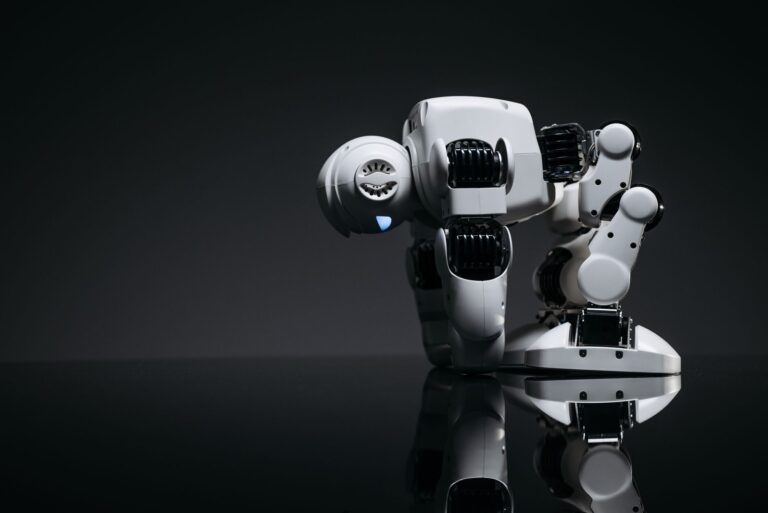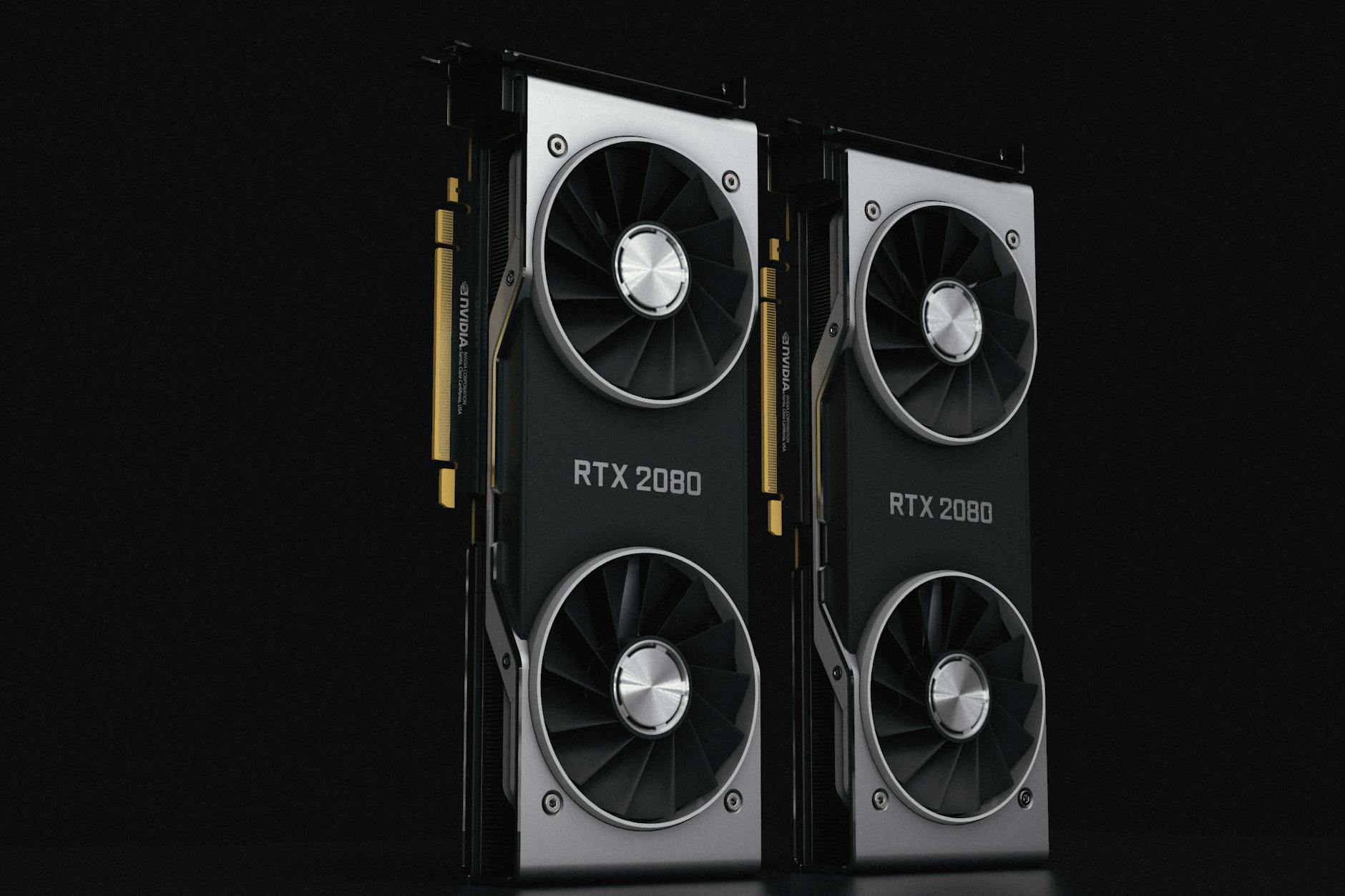

The next semiconductor giant won’t emerge from chasing more transistors on shrinking silicon—it will come from robotics chips and sensors, where demand is accelerating faster than GPU markets ever did. Unlike the AI chip boom that concentrated capital among a few winners, the robotics semiconductor market is fragmenting into specialized niches. A company that controls the compute platforms, motion sensors, and vision systems that physical robots need could achieve what NVIDIA has in AI: owning the foundational layer that every competitor depends on. This isn’t speculative. The robotics semiconductor market is valued at $14.53 billion today and is projected to reach $37.95 billion by 2035—a 12.75% compound annual growth rate—while the humanoid robot-specific chip segment alone is expanding at 27.1% CAGR, from $626 million in 2024 to $3,297 million by 2032.
NVIDIA is already making aggressive moves. At CES 2026, the company announced the Jetson T4000 module delivering 4x greater energy efficiency and 1200 teraflops of AI compute with 64GB of memory, alongside new foundation models like Cosmos and GR00T designed specifically for robot learning and reasoning. The company also unveiled Rubin, a six-chip system for next-generation physical AI, and announced sensor ecosystem partnerships with Aeva, Bosch, and Sony to expand the DRIVE Hyperion platform. But NVIDIA isn’t alone in spotting this opportunity. Microsoft, Tesla, Samsung Electronics, Intel, Qualcomm, and NXP are all competing for share in what could become the defining semiconductor category of the 2030s.
Table of Contents
- WHAT MAKES ROBOTICS CHIPS DIFFERENT FROM AI ACCELERATORS
- THE SEMICONDUCTOR MANUFACTURING BOTTLENECK IN ROBOTICS ADOPTION
- REGIONAL ROBOTICS ADOPTION AND THE RESHORING ADVANTAGE
- SPECIALIZED CHIPS VERSUS GENERAL-PURPOSE AI PROCESSORS
- THE LIDAR AND SENSOR FUSION INTEGRATION CHALLENGE
- ASSEMBLY AND INSPECTION AUTOMATION DRIVING NEAR-TERM DEMAND
- THE LONG-TERM RACE FOR PHYSICAL AI DOMINANCE
- Conclusion
WHAT MAKES ROBOTICS CHIPS DIFFERENT FROM AI ACCELERATORS
Robotics chips face a fundamentally different engineering problem than GPUs. While AI chips maximize throughput on standardized workloads, robotics processors must handle real-time sensor fusion, low-latency motor control, and decision-making under unpredictable conditions. A robot operating in a warehouse or manufacturing floor can’t tolerate 50-millisecond inference delays. this creates a market structure that favors integrated platforms over componentized solutions. NVIDIA’s Jetson line has dominated this space precisely because it combines compute, memory bandwidth, and power efficiency in ways that competing ARM or x86 processors haven’t matched. The humanoid robot market alone is projected to accelerate from $6 billion in 2030 to $51 billion by 2035—a 55% CAGR—creating a pull-through effect for specialized silicon that can’t be achieved by repurposing consumer chips.
The early mover advantage in robotics chips is steeper than it was in GPUs. CUDA locked in NVIDIA’s GPU dominance because retraining models on competing hardware was economically painful. Similarly, once robot manufacturers standardize on a particular chip architecture and development platform, switching costs become prohibitive. A startup that has engineered its quadruped locomotion algorithms around Jetson’s architecture can’t easily port to a competitor’s platform. This creates a winner-take-most dynamic, but with a critical difference: robotics is fragmented by application. A humanoid robot company has different compute and sensor needs than an autonomous warehouse system or a surgical robot. The next NVIDIA could emerge not from a single architecture, but from owning multiple specialized niches simultaneously.
THE SEMICONDUCTOR MANUFACTURING BOTTLENECK IN ROBOTICS ADOPTION
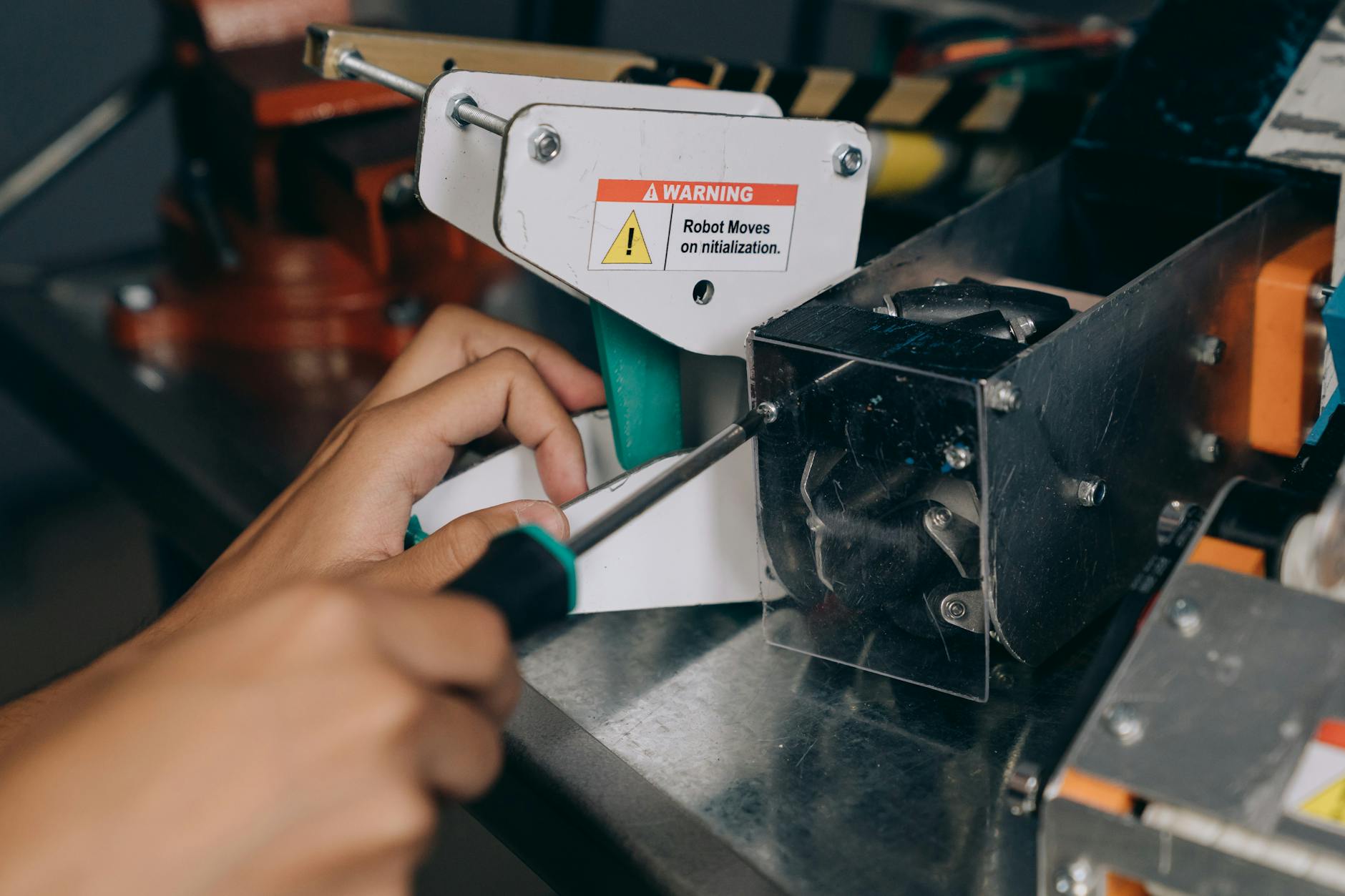
Here’s where the robotics chip opportunity reveals a dangerous constraint: most companies pursuing robotics semiconductors lack the manufacturing discipline of established chip makers. Semiconductor manufacturing for robots is currently dominated by large-scale operations, with semiconductor manufacturers themselves accounting for 38.50% market share in 2025. This concentration exists because the economics favor massive wafer fabs with tightly controlled cleanroom environments. A startup with a brilliant robotics chip design will struggle to achieve the 99.9% yield rates required for consumer-grade robot pricing. The inspection and testing segment of the robotics semiconductor market is growing at 17.10% CAGR, specifically because defect detection and quality assurance demands are rising sharply.
As robots move from controlled factory floors into variable environments—homes, hospitals, construction sites—even tiny manufacturing defects can cascade into safety failures. A sensor noise issue that goes undetected in a robotic arm in a fab could cause a humanoid robot to miscalculate a step and fall. This creates a paradox: the most innovative robotics chip companies are often the least equipped to manage the manufacturing complexity required for commercial viability. Partnerships with Samsung or Intel become not optional but existential. This suggests the next NVIDIA will likely emerge either as an internal division of a foundry giant (like Samsung’s semiconductor business entering robotics) or as a fabless company that’s willing to cede manufacturing to partners in exchange for design control and architectural lock-in.
REGIONAL ROBOTICS ADOPTION AND THE RESHORING ADVANTAGE
North America is experiencing the fastest adoption of robotics semiconductors, with an 8.28% CAGR driven by semiconductor reshoring programs and federal fab investments. The Infrastructure Investment and Jobs Act opened a $39 billion door for U.S. chip manufacturing expansion, and a significant portion of that is flowing toward automation—robots that can do the repetitive, precise work required in state-of-the-art fabs. This creates a closed-loop feedback mechanism. U.S.
fab investment drives demand for high-performance robotics semiconductors, which incentivizes semiconductor companies to invest in North American manufacturing, which in turn justifies investment in robotics systems to support that manufacturing. NVIDIA’s regional advantage here is substantial. The company’s headquarters is in California, its engineering talent cluster is in Silicon Valley, and its relationships with North American fab partners are strongest. Any competitor emerging from Asia or Europe faces a coordination problem: the robotics applications driving highest growth are domestic to North America, where fab investments are concentrated. Tesla’s Optimus robot development, Apptronik’s humanoid systems, and 1X’s worker robots are all North American companies that will naturally gravitate toward chip partnerships with domestic players. The practical implication is that a new robotics chip leader is statistically more likely to emerge from Silicon Valley than from Seoul or Shenzhen, simply because the application ecosystem and manufacturing infrastructure are co-located in North America.
SPECIALIZED CHIPS VERSUS GENERAL-PURPOSE AI PROCESSORS
The rise of robotics chips creates a direct tension with the trend toward general-purpose AI. Large language models run the same weights across millions of devices, creating economy of scale. Robotics chips must be optimized for specific sensor types, motor controllers, and physical constraints. An assembly line robot that needs real-time vision processing and servo control has completely different architectural requirements than a humanoid robot designed for dexterous manipulation. This specialization is a feature, not a bug—it’s precisely what creates defensible competitive moats. Where the tradeoff becomes sharp is in manufacturing flexibility.
A chip designer producing general-purpose AI processors can forecast demand globally, amortize the mask set costs across a billion units, and achieve $10 per unit margins. A robotics chip maker producing vision processors for quadruped robots might serve a global market of 10 million units over five years. The per-unit cost must be substantially higher. This is why robotics chip companies have historically charged 2-3x premiums for performance compared to consumer-grade processors. As the market grows—and SNS Insider data shows robotics semiconductors reaching $37.95 billion by 2035—those premiums will compress. The winner in robotics chips will be the company that can maintain specialization while achieving the scale economies of general-purpose platforms.
THE LIDAR AND SENSOR FUSION INTEGRATION CHALLENGE
Robotics chips are meaningless without paired sensor ecosystems. Vision systems, LIDAR, ultrasonic arrays, and inertial measurement units generate raw data. The chip must process that sensory stream in real-time, fuse conflicting signals, and output motion commands within milliseconds. NVIDIA’s announcement of partnerships with Aeva (3D perception), Bosch (sensors), and Sony (imaging) signals a clear understanding that the future of robotics semiconductors is inseparable from sensor integration. But here’s the critical warning: sensor technology is progressing slower than compute. LIDAR units that provided millimeter-level accuracy at $30,000 in 2020 have barely dropped to $5,000 by 2025.
Until sensor costs decline dramatically, robotics hardware costs will remain stubbornly high, which constrains the total addressable market. This is particularly acute in humanoid robotics. A humanoid robot requires full-body proprioception—sensors embedded in joints, torque feedback, contact detection, and environmental awareness. The bill of materials for sensors alone often exceeds the cost of the computational core. If sensor costs don’t decline, the killer app for humanoid robots (consumer home robots priced under $30,000) becomes technically impossible. A robotics chip company that can solve the sensor integration problem—not just the compute side—will have a durable advantage. NVIDIA’s multi-partner approach with Aeva, Bosch, and Sony looks less like collaboration and more like hedging against the risk that any single sensor vendor can’t meet the volume and cost requirements of the emerging robotics market.
ASSEMBLY AND INSPECTION AUTOMATION DRIVING NEAR-TERM DEMAND
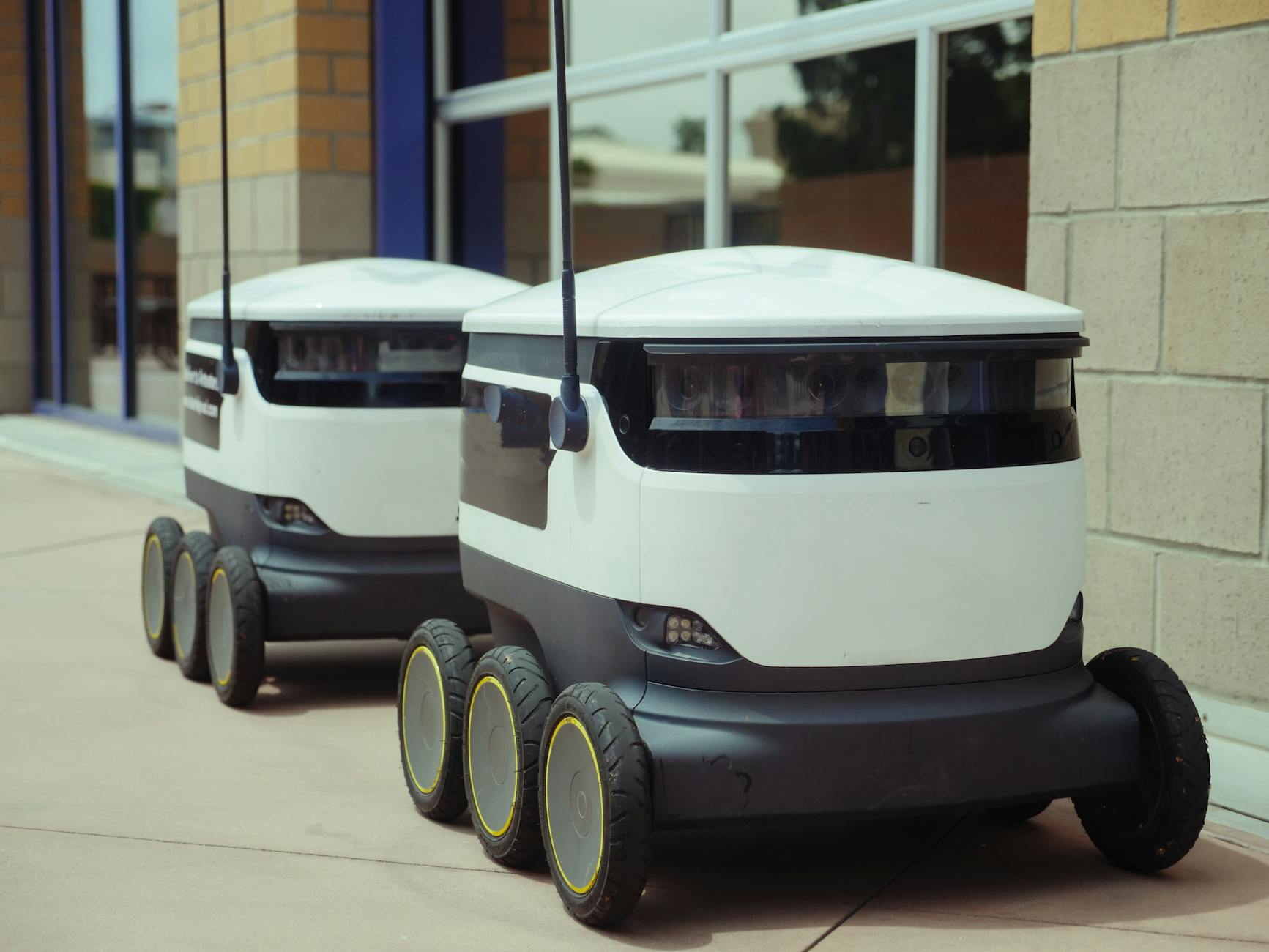
While humanoid robots get media attention, the immediate revenue driver for robotics semiconductors is mundane: assembly line automation and inspection systems. Assembly line robots account for 29.20% market share, with demand driven by packaging efficiency and reduced production cycle times. The semiconductor industry itself—which controls 38.50% of the robotics semiconductor market—is the largest user of robotic automation. When Samsung, TSMC, or Intel build a new fab, they’re installing robotic wafer handling systems, cleanroom automation, and defect inspection equipment. Each system requires specialized chips for motion control, vision processing, and coordination.
A manufacturer contemplating a $10 billion fab investment amortizes that cost over 20 years of operations. A 2% efficiency gain in robotic wafer throughput translates to $200 million in additional output. This economic reality creates purchasing power that drives rapid adoption of next-generation robotics semiconductors. The moment a chip supplier demonstrates a 5-10% throughput improvement, the entire fab industry switches. This creates a near-term revenue base that humanoid robots—still in prototype phase—cannot match for at least another five years. The path to becoming the “next NVIDIA” in robotics may require starting with unglamorous industrial applications and building the market presence and ecosystem partnerships needed to dominate consumer robotics later.
THE LONG-TERM RACE FOR PHYSICAL AI DOMINANCE
The future of robotics semiconductors is inseparable from what NVIDIA calls “physical AI”—systems that can perceive, reason about, and act in the physical world with minimal human guidance. The Cosmos and GR00T models announced at CES 2026 represent NVIDIA’s bet that the software layer will increasingly abstract away hardware details. If this bet wins, robotics chips become commoditized. Conversely, if specialized hardware turns out to be irreducible—if the best robot perception requires entirely different architectures than large language models—then the design space fragments, and multiple winners emerge. The data suggests the latter is more likely.
The aggressive growth forecasts for humanoid robot-specific chips (27.1% CAGR) and overall robotics semiconductors (projected at $41.24 billion by 2030, up from $11.23 billion in 2025) imply that specialized hardware maintains its advantage even as software models improve. A company that can couple strong software foundations with hardware that’s optimized for robotic constraints will dominate. That company could be NVIDIA, strengthened by its existing market position. But it could equally be a startup that understands robotics physics better than NVIDIA understands robotics hardware constraints, or a traditional semiconductor giant like Samsung or Intel that decides to bet seriously on the space. The window for disruption is now—before any single player locks in the architectural standards that the entire industry will standardize on for the next decade.
Conclusion
The robotics semiconductor market is where the next dominant semiconductor company will likely emerge, but not through GPU-style standardization. Instead, the winner will own multiple specialized niches—humanoid robot chips, vision processors, sensor fusion platforms, and industrial automation controllers—all integrated under a common software ecosystem. NVIDIA is in the strongest position today, but its dominance is not inevitable. The market is large enough ($37.95 billion by 2035), growing fast enough (12.75% CAGR), and fragmented enough by application type that a well-capitalized competitor with deep robotics expertise could disrupt.
The critical requirement isn’t chip design talent alone; it’s the ability to coordinate across sensor partners, robotics manufacturers, and fab operators to build an integrated ecosystem before standards crystallize. The next three to five years will determine whether robotics semiconductors follow the GPU playbook—where NVIDIA’s early lead becomes unassailable—or create a more distributed market where multiple companies own specialized domains. Investors and robotics entrepreneurs should watch closely for which company can simultaneously excel at chip design, software abstractions, sensor integration, and manufacturing partnerships. That company won’t just become the next NVIDIA; it will define the hardware foundations of physical AI for decades.