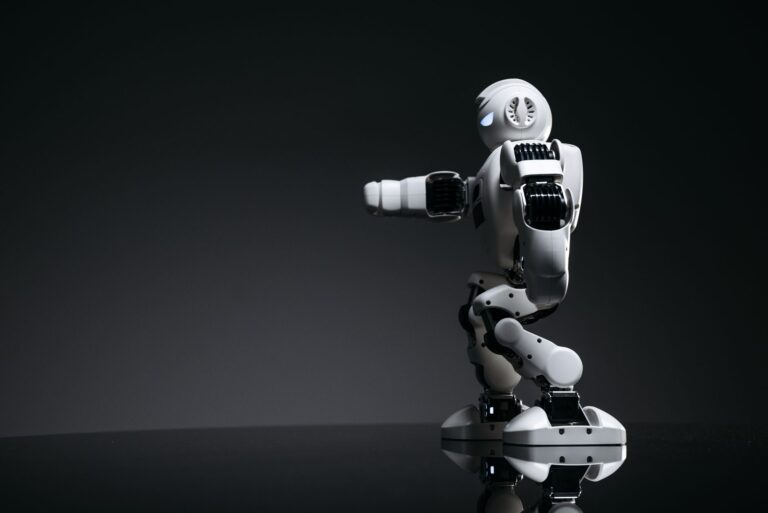

The Tesla Optimus stock play has emerged as one of the most debated investment theses in the robotics sector, forcing investors to grapple with a fundamental question: does buying TSLA shares represent the optimal strategy for gaining exposure to the burgeoning humanoid robot market? With humanoid robots projected to become a multi-hundred-billion-dollar industry by the mid-2030s, the stakes of this decision extend far beyond typical stock picking. Tesla’s aggressive push into humanoid robotics with its Optimus program has transformed what was once purely an electric vehicle investment into something far more complex and potentially more lucrative. The humanoid robotics space presents a unique challenge for investors because most companies developing bipedal robots remain private or exist as small divisions within larger conglomerates. Figure AI, Apptronik, and Agility Robotics have attracted significant venture capital but offer no public market access.
Boston Dynamics sits within Hyundai’s sprawling corporate structure. This scarcity of pure-play investment options has elevated Tesla’s position, making TSLA one of the few liquid, publicly traded vehicles for betting on humanoid robot commercialization at scale. Understanding whether Tesla truly represents the best humanoid robot investment requires examining multiple dimensions: the company’s technical progress, manufacturing capabilities, competitive positioning, and valuation relative to the humanoid opportunity. Readers will gain clarity on how Tesla’s Optimus program compares to alternatives, what percentage of TSLA’s current valuation might be attributable to robotics, and whether alternative investment strategies might offer superior risk-adjusted returns for those bullish on humanoid automation.
Table of Contents
- What Makes Tesla’s Optimus a Compelling Humanoid Robot Stock Play?
- Comparing TSLA to Alternative Humanoid Robotics Investment Options
- Valuation Challenges When Betting on Tesla for Humanoid Exposure
- How to Evaluate TSLA as a Humanoid Robot Investment
- Risks and Challenges Facing Tesla’s Humanoid Robotics Ambitions
- The Broader Humanoid Robot Market Opportunity
- How to Prepare
- How to Apply This
- Expert Tips
- Conclusion
- Frequently Asked Questions
What Makes Tesla’s Optimus a Compelling Humanoid Robot Stock Play?
Tesla’s approach to roboticsreports.com/how-to-invest-in-humanoid-robots-before-mass-production-begins/” title=”How to Invest in Humanoid Robots Before Mass Production Begins”>humanoid robotics differs fundamentally from competitors in ways that create both opportunity and risk for investors. The company leverages its existing expertise in battery technology, electric motors, AI software development, and high-volume manufacturing to attack the humanoid problem from a position of established industrial strength. Optimus uses Tesla’s custom-designed actuators, the same neural network training infrastructure that powers Full Self-Driving, and battery cells derived from the company’s automotive production lines. This vertical integration means Tesla doesn’t need to source critical components from suppliers who might prioritize other customers.
The manufacturing angle deserves particular attention because it represents Tesla’s most differentiated advantage. Building humanoid robots at scale requires solving problems that look remarkably similar to automotive production: welding, assembly, quality control, and supply chain management for thousands of precision components. Tesla produces roughly two million vehicles annually, giving it institutional knowledge about high-volume manufacturing that pure robotics startups simply cannot match. CEO Elon Musk has suggested Tesla could eventually produce Optimus units at costs below $20,000, a figure that would undercut competitors by substantial margins.
- Tesla’s AI team, numbering over 1,000 engineers, provides software development resources unmatched by dedicated robotics companies
- The company’s Dojo supercomputer and massive real-world data collection from vehicles accelerate neural network training
- Existing Gigafactory infrastructure could be repurposed for robot production without greenfield capital expenditure
- Tesla’s brand recognition and retail investor following ensure consistent capital access for funding development

Comparing TSLA to Alternative Humanoid Robotics Investment Options
Investors seeking humanoid robot exposure face a surprisingly limited menu of publicly traded options, making direct comparisons both necessary and somewhat frustrating. Hyundai Motor Company owns Boston Dynamics, arguably the most technically advanced humanoid robotics firm, but Boston Dynamics represents a tiny fraction of Hyundai’s $40 billion market capitalization. Even if Boston Dynamics achieved spectacular success, the impact on Hyundai’s stock price would likely be muted by the company’s massive automotive operations. Similar dynamics affect other industrial conglomerates dabbling in robotics.
Honda has developed humanoid robots for decades, most notably ASIMO, but has never commercialized them at scale and shows limited recent momentum. Japanese robotics companies like Fanuc and Yaskawa focus primarily on industrial arms rather than humanoids. Chinese competitors including UBTECH and Fourier Intelligence remain difficult for Western investors to access directly, though some trade on Hong Kong exchanges with limited liquidity. The venture capital route through funds investing in Figure AI or Apptronik requires accredited investor status and multi-year lockup periods.
- Hyundai (HYMTF): Boston Dynamics exposure diluted by core automotive business representing 95%+ of revenue
- Honda (HMC): Historical humanoid research but minimal commercial focus; electric vehicle transition consuming resources
- Fanuc (FANUY): Industrial robotics leader but no meaningful humanoid program
- SoftBank: Previously owned Boston Dynamics; current robotics investments through Vision Fund lack transparency
- ETFs like ROBO or BOTZ: Broad robotics exposure but holdings weighted toward industrial automation, not humanoids
Valuation Challenges When Betting on Tesla for Humanoid Exposure
Determining what portion of Tesla’s roughly $800 billion to $1 trillion market capitalization (fluctuating significantly) relates to Optimus versus electric vehicles versus energy storage versus autonomous driving presents an analytical puzzle with no clean solution. Bull case analysts have attributed anywhere from zero to $500 billion in potential value to the Optimus program, depending on assumptions about production volumes, pricing, and market timing. This wide range reflects genuine uncertainty rather than analytical sloppiness. The problem compounds because Tesla management provides limited granular financial disclosure about Optimus spending or milestones. Quarterly earnings calls mention robotics progress in general terms without offering unit production targets, development budgets, or commercialization timelines with the specificity investors typically expect.
This opacity makes it nearly impossible to construct discounted cash flow models with meaningful precision. Investors essentially must decide whether they trust Tesla’s execution capability and then apply a subjective probability to various outcome scenarios. Some analysts argue that Optimus currently contributes minimal value to Tesla’s stock price, meaning investors get humanoid exposure essentially “for free” when buying shares primarily for EV and autonomy upside. Others counter that Tesla’s premium valuation relative to traditional automakers already embeds optionality across multiple future businesses, including robotics. The truth likely falls somewhere between these positions, but the exact allocation remains unknowable given available information.

How to Evaluate TSLA as a Humanoid Robot Investment
Constructing a rational investment framework for Tesla’s humanoid potential requires separating technical progress from commercial viability and both from stock price implications. Technical demonstrations showing Optimus walking, manipulating objects, and responding to voice commands prove engineering advancement but reveal little about production costs, reliability in commercial settings, or customer willingness to pay. Investors should track specific metrics that bridge the gap between prototype and product.
Production volume announcements matter more than capability demonstrations at this stage. Tesla has indicated plans to deploy thousands of Optimus units internally before external sales, using its own factories as proving grounds. This strategy mirrors the company’s approach with Full Self-Driving, where Tesla employees served as early testers. Monitoring how many robots Tesla deploys internally, what tasks they perform, and whether they genuinely replace human labor provides more investment-relevant signal than videos of robots performing choreographed movements.
- Track quarterly disclosures for specific Optimus unit counts and deployment locations
- Monitor job postings for Optimus-related manufacturing roles as production scaling indicators
- Compare Tesla’s stated cost targets against teardown analyses from third-party researchers
- Evaluate whether robotics segments appear in financial reporting, signaling materiality thresholds
- Watch for enterprise customer pilot announcements that validate commercial demand
Risks and Challenges Facing Tesla’s Humanoid Robotics Ambitions
Investors bullish on TSLA for humanoid exposure must acknowledge substantial execution risks that could delay or diminish the opportunity. Humanoid robots operating in unstructured environments face far more complex challenges than industrial arms performing repetitive tasks in controlled settings. Dexterity, balance, and real-time adaptation to unpredictable situations require AI capabilities that may take longer to develop than optimistic timelines suggest. Tesla’s Full Self-Driving program has repeatedly missed self-imposed deadlines, offering a cautionary precedent.
Competitive dynamics could also erode Tesla’s perceived advantages faster than expected. Figure AI raised over $700 million and partnered with BMW for manufacturing deployments. Chinese companies benefit from government support and lower labor costs. If multiple players achieve commercial viability simultaneously, the market structure could evolve toward commoditization rather than winner-take-most dynamics. Tesla’s manufacturing scale advantages matter less if robots become assembled from standard components by contract manufacturers.
- Regulatory frameworks for humanoid robots in workplaces remain largely undefined, creating compliance uncertainty
- Liability questions around robot-caused injuries could generate litigation exposure
- Labor unions may resist humanoid deployment, particularly in automotive and logistics settings
- Component supply chains for actuators and sensors face capacity constraints as demand increases
- Tesla’s attention split across vehicles, energy, autonomy, and robotics risks diluting focus
The Broader Humanoid Robot Market Opportunity
Understanding Tesla’s Optimus opportunity requires contextualizing the total addressable market for humanoid robots and how it might evolve over the coming decade. Goldman Sachs projects the humanoid robot market could reach $38 billion by 2035, while more aggressive estimates from ARK Invest suggest potential markets exceeding $100 billion annually if manufacturing and service deployment accelerate. These projections depend heavily on cost curves, with widespread adoption requiring price points below $50,000 for most commercial applications. The use cases driving demand span manufacturing, logistics, healthcare, and eventually consumer applications.
Automotive factories represent an obvious early market given their controlled environments and high labor costs. Warehouses operated by Amazon, Walmart, and logistics providers offer another near-term opportunity. Healthcare applications including patient mobility assistance and eldercare present longer-term potential but face more stringent regulatory requirements. Each segment presents different competitive dynamics, margin profiles, and adoption timelines that investors should consider when evaluating any humanoid robotics investment.
How to Prepare
- **Establish your base case for Tesla’s core business**: Understand whether you believe Tesla’s electric vehicle and energy storage businesses justify current valuations independent of Optimus. If not, you’re essentially making a leveraged bet on robotics success to justify the stock price, which amplifies risk.
- **Define your humanoid robot market assumptions**: Write down specific projections for market size, Tesla’s potential market share, and unit economics. Having explicit assumptions allows you to update views as new information emerges and recognize when your thesis breaks down.
- **Research competitive landscape thoroughly**: Study Figure AI, Agility Robotics, Apptronik, and Chinese competitors to understand their technical approaches, funding levels, and commercialization timelines. Tesla’s advantages may be narrower than casual observation suggests.
- **Assess your risk tolerance for binary outcomes**: Humanoid robotics investments could produce exceptional returns or substantial losses depending on technological and commercial developments. Ensure position sizing reflects this uncertainty rather than conviction about specific outcomes.
- **Establish monitoring criteria and exit triggers**: Decide in advance what evidence would cause you to increase or decrease exposure. This might include production volume milestones, competitive developments, or valuation thresholds relative to your base case.
How to Apply This
- **Consider position sizing relative to overall robotics thesis**: If you’re highly bullish on humanoid robots broadly, TSLA might represent one component of exposure alongside traditional robotics ETFs, Japanese automation companies, and potentially venture investments for accredited investors.
- **Use options strategies to define risk**: Given uncertainty around timing, buying LEAPS calls or constructing spreads can provide Optimus upside exposure while limiting maximum loss to premium paid. This approach suits investors who want asymmetric payoff profiles.
- **Dollar-cost average rather than lump-sum investing**: Spreading purchases over time reduces the impact of Tesla’s substantial price volatility and allows you to adjust positioning as new information emerges about Optimus development.
- **Rebalance as robotics narratives evolve**: If Optimus achieves major milestones and TSLA appreciates substantially, consider whether the position has grown too large relative to portfolio risk parameters. Conversely, setbacks might present averaging-down opportunities if your long-term thesis remains intact.
Expert Tips
- **Track Tesla AI Day presentations and earnings call transcripts** for specific language changes around Optimus timelines and capabilities. Management’s word choice often signals confidence levels more reliably than headline announcements.
- **Monitor teardown analyses from firms like Munro & Associates** that provide detailed cost breakdowns of Tesla products. When Optimus units become available for analysis, teardowns will reveal actual bill-of-materials costs versus aspirational targets.
- **Pay attention to hiring patterns** in Tesla’s robotics division through LinkedIn and job board monitoring. Rapid hiring suggests accelerating development; hiring slowdowns might indicate timeline extensions or strategic reprioritization.
- **Compare Tesla’s actuator and sensor specifications** against academic research and competitor products to assess whether claimed performance advantages hold up under technical scrutiny. Marketing materials often emphasize best-case scenarios.
- **Consider tax implications** of TSLA’s volatility. Holding periods, wash sale rules, and capital gains treatment all affect after-tax returns, particularly for active traders attempting to time robotics-related news flow.
Conclusion
Evaluating Tesla as a humanoid robot investment requires balancing genuine competitive advantages against meaningful uncertainties and valuation complexity. The company brings unmatched manufacturing scale, substantial AI engineering resources, and proven ability to commercialize ambitious technology programs to the humanoid robotics challenge. These strengths position Tesla among the leading contenders in what could become one of the defining technological opportunities of the next two decades. For investors who believe humanoid robots will achieve widespread commercial adoption, TSLA offers rare liquid exposure to the theme.
The optimal approach likely involves treating Tesla as one component of broader robotics exposure rather than a singular bet on humanoid outcomes. Combining TSLA with traditional industrial automation investments, maintaining awareness of private market developments, and sizing positions appropriately for the inherent uncertainty creates more robust portfolios than concentrated positions in any single company. As Optimus development progresses and competitive dynamics clarify, investors can adjust allocations based on emerging evidence rather than speculation about unknowable future states. The humanoid robot revolution may or may not arrive on schedule, but thoughtful investors can position themselves to benefit regardless of exactly which companies ultimately lead the market.
Frequently Asked Questions
How long does it typically take to see results?
Results vary depending on individual circumstances, but most people begin to see meaningful progress within 4-8 weeks of consistent effort. Patience and persistence are key factors in achieving lasting outcomes.
Is this approach suitable for beginners?
Yes, this approach works well for beginners when implemented gradually. Starting with the fundamentals and building up over time leads to better long-term results than trying to do everything at once.
What are the most common mistakes to avoid?
The most common mistakes include rushing the process, skipping foundational steps, and failing to track progress. Taking a methodical approach and learning from both successes and setbacks leads to better outcomes.
How can I measure my progress effectively?
Set specific, measurable goals at the outset and track relevant metrics regularly. Keep a journal or log to document your journey, and periodically review your progress against your initial objectives.
When should I seek professional help?
Consider consulting a professional if you encounter persistent challenges, need specialized expertise, or want to accelerate your progress. Professional guidance can provide valuable insights and help you avoid costly mistakes.
What resources do you recommend for further learning?
Look for reputable sources in the field, including industry publications, expert blogs, and educational courses. Joining communities of practitioners can also provide valuable peer support and knowledge sharing.