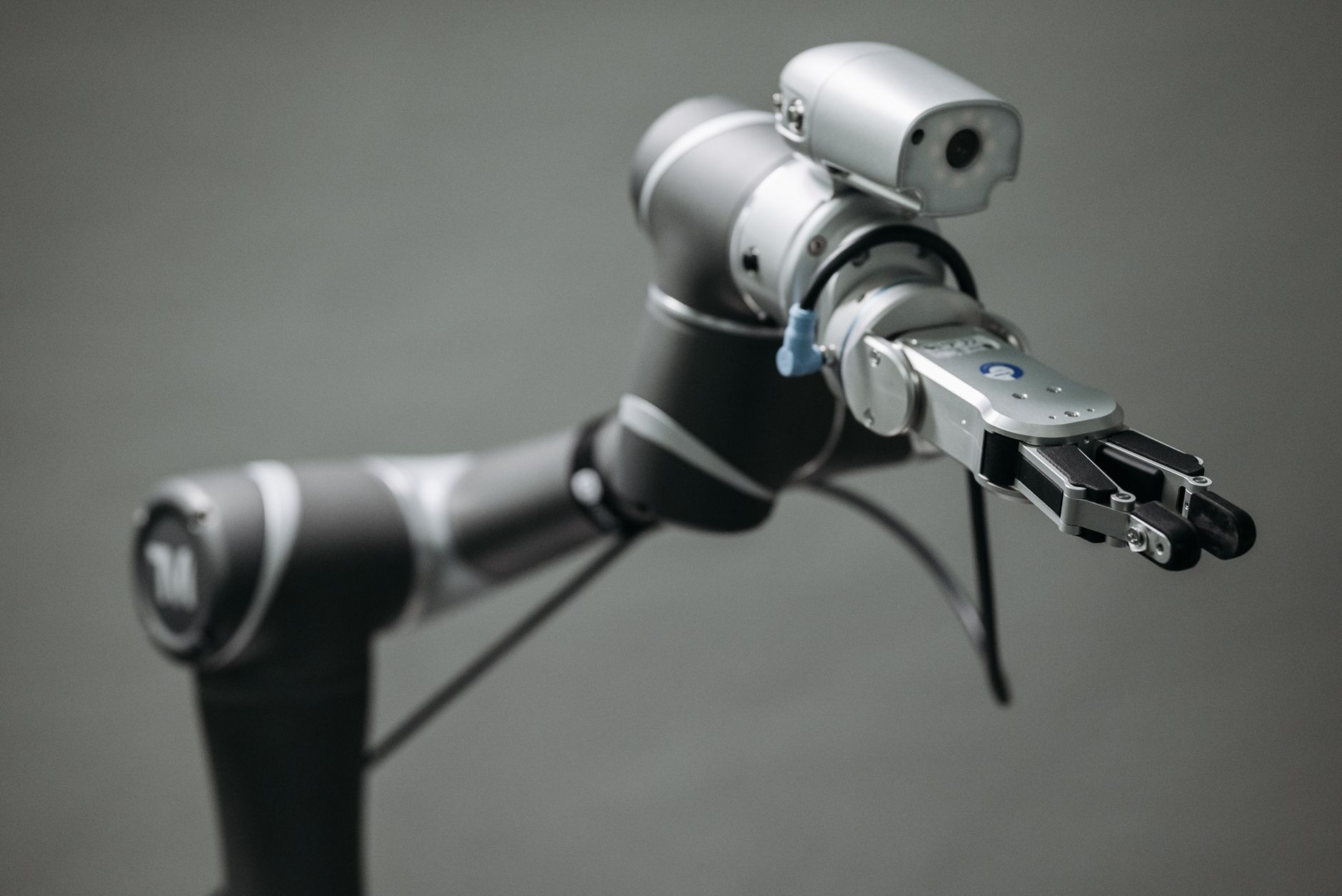

Zebra Technologies powers robotics vision because their enterprise-grade imaging, real-time data capture, and IoT integration platforms provide the foundational layer that autonomous systems depend on to perceive, process, and act in dynamic environments. Unlike consumer-grade cameras or isolated computer vision systems, Zebra’s hardware and software stack handles the full pipeline from capture to actionable intelligence—critical when a warehouse robot must identify a pallet, read a barcode, navigate around obstacles, and confirm a pick within milliseconds.
A typical automated guided vehicle (AGV) in a fulfillment center uses Zebra fixed and mobile imaging combined with their location services to map warehouse layouts, track inventory positions, and coordinate with other robots without constant human oversight. Zebra’s dominance in robotics vision stems from three interconnected strengths: their decades of barcode and RFID dominance mean every warehouse robot already trusts their data standards, their mobile computing platforms run the edge software that processes vision in real time without cloud dependency, and their sensor ecosystems are designed for industrial environments where vibration, temperature swings, dust, and chemical fumes destroy consumer hardware. This vertical integration—from the camera sensor to the software that interprets what it sees—eliminates the integration friction that slows down competing robotics vendors.
Table of Contents
- What Makes Zebra Vision Systems the Standard for Industrial Automation?
- How Zebra’s Real-Time Data Processing Keeps Robots Autonomous
- Real-World Robotics Applications Powered by Zebra Vision
- Building and Deploying Zebra-Based Robotics Vision Systems
- Common Pitfalls in Zebra Vision Robotics Deployments
- Environmental Resilience and Durability Advantages
- Integration Pathways with Existing Warehouse Automation Stacks
- Frequently Asked Questions
What Makes Zebra Vision Systems the Standard for Industrial Automation?
Zebra’s imaging modules combine high-speed capture with built-in processing power, meaning a robot doesn’t need a separate external processor to run its vision algorithms. Their fixed-mount and handheld cameras ship with firmware optimized for barcode and text recognition, which is the most repetitive task in logistics robotics—reading labels on boxes, pallets, and shelves. When a mobile robot needs to confirm that it’s grabbed the correct item, a Zebra vision system can decode a barcode in 50–100 milliseconds, far faster than a general-purpose camera feeding data to a separate computer vision pipeline that might add 200–500ms of latency.
The industrial-grade build quality separates Zebra from webcams or smartphone camera modules. Their cameras are sealed against dust ingress, rated for storage temperatures from -10°C to 50°C, and designed to survive repeated mechanical shock—specifications that matter when a robot is operating 24/7 in a warehouse next to forklifts and pallet jacks. A consumer USB camera fails after weeks of vibration; a Zebra-based system keeps working for years. This reliability difference directly affects the total cost of ownership for a robotics deployment, since hardware swaps mean downtime and labor costs that accumulate across hundreds of units.
How Zebra’s Real-Time Data Processing Keeps Robots Autonomous
The critical limitation of bolting a camera onto a robot is latency and processing dependency. zebra addresses this by embedding processing at the sensor itself, allowing robots to make vision-based decisions without waiting for cloud responses or offloading to a central server. This edge-first architecture is non-negotiable in environments like pick-and-pack warehouses, where a 500ms delay in identifying the wrong item propagates into picking errors and downstream fulfillment delays.
However, there’s a trade-off in what kind of vision problems Zebra systems are optimized for versus what they struggle with. Barcode and text recognition is their strength; complex scene understanding, hand-pose estimation, or detecting obscured or partially visible objects is harder. A robot using Zebra vision can reliably detect “item X is at location Y because the barcode confirms it,” but asking the same system to identify a partially crushed box in a pile of mixed goods requires additional computer vision layers or fallback to slower cloud processing. This limitation means Zebra works best in structured environments—organized warehouse shelves, conveyor lines, standardized packaging—and becomes a bottleneck in chaotic fulfillment centers where items are irregular or barcodes are damaged.
Real-World Robotics Applications Powered by Zebra Vision
amazon Robotics warehouse floors deploy thousands of mobile manipulators that rely on fixed Zebra imaging at dock doors and mobile Zebra cameras on the robots themselves to track items, pallets, and bin locations. The system works because every unit in an Amazon fulfillment center is already barcode-labeled; the robot uses Zebra vision to confirm it’s at the right location and has the right item before passing it to a human picker or conveyor.
In pharmaceutical and medical device manufacturing, Zebra vision systems on pick-and-place robots verify that the correct component—sterile syringe, vial, or sensor—is being moved to the next stage of assembly. A single mislabeled component can make an entire batch unsellable, so the vision system’s ability to read QR codes and barcodes with near-zero false negatives is essential. These robots operate in cleanroom environments where the camera must function under specific lighting (often UV-friendly) and pass sterilization cycles without degradation, requirements that Zebra hardware explicitly addresses.
Building and Deploying Zebra-Based Robotics Vision Systems
Implementing a Zebra vision system starts with understanding the capture environment: lighting conditions, surface reflectivity, barcode density, and ambient temperature. Unlike a smartphone camera that adjusts automatically to sunlight and shadow, industrial Zebra cameras often require precise lighting design—infrared LEDs built into the camera fixture, matte surfaces to reduce glare, and consistent mounting angles. A poorly lit implementation can render a Zebra camera blind, even though the hardware is working correctly.
The deployment timeline differs significantly between replacing one robot and scaling to a fleet. Adding Zebra vision to a single robot in a controlled environment—a factory assembly line with consistent lighting and known barcode placements—can take weeks. Deploying the same system across 50 robots in a chaotic fulfillment center where lighting varies by zone, barcode angles are unpredictable, and new items arrive daily can take months of tuning, lighting adjustments, and fallback logic to handle edge cases. This labor cost is often underestimated by companies comparing Zebra to lower-cost camera alternatives; the apparent savings vanish when deployment friction is factored in.
Common Pitfalls in Zebra Vision Robotics Deployments
A frequent failure point is overestimating what Zebra vision can do in real-time on the robot itself. Organizations often assume a Zebra camera can perform the same image analysis as a high-end GPU in a data center, then encounter performance cliffs when the robot tries to process complex scenes or run inference on a neural network. The embedded processing is optimized for 1D and 2D barcode reading, not deep learning; attempting to run YOLO or similar models on a Zebra sensor’s built-in processor leads to timeouts, dropped frames, and robot errors.
Another common issue is assuming that Zebra hardware automatically works with any robotics platform or middleware. In reality, integrating Zebra vision into a robot requires device drivers, firmware updates, and custom middleware configuration specific to the robot manufacturer. A warehouse using both ABB and FANUC robots can’t simply copy the vision pipeline from one to the other; each robot maker has different APIs and assumptions about how vision data flows into the control system. This hidden integration cost is why many robotics deployments end up with longer timelines and higher engineering costs than anticipated.
Environmental Resilience and Durability Advantages
Zebra vision systems outperform alternatives in harsh industrial environments because their optics are protected by industrial-grade housings and their sensors are rated for extreme conditions. A robot operating in a cold-storage warehouse at -20°C can use a standard Zebra camera without condensation or sensor failure; a consumer USB camera freezes and fails. Similarly, in food manufacturing where washdown is routine, Zebra’s IP65/IP67 ratings (ingress protection from water and dust) mean the camera can survive spray and moisture without electrical failure.
The durability advantage also extends to vibration tolerance. Mobile robots operate on uneven warehouse floors, and the mechanical shock from wheels hitting cracks or ramps stresses optics and sensor alignment. Zebra cameras are designed with mechanical damping and sealed optical paths that prevent vibration-induced misalignment, whereas cheaper camera modules can shift focus or develop dead pixels after weeks of continuous operation on a moving platform.
Integration Pathways with Existing Warehouse Automation Stacks
Zebra vision integrates into existing automation through their device management cloud platform and REST APIs, allowing a robot to query real-time data about inventory locations and barcode assignments without embedding that logic locally. A robot from a vendor like MiR (Mobile Industrial Robots) can use Zebra cameras via USB or network connection, then call Zebra’s AirWatch or Magellan platform to confirm that a captured barcode matches expected inventory in the warehouse management system. The middleware layer matters more than the hardware in these integrations.
A robot using Zebra vision must connect to the warehouse management system (WMS), the robotic process automation (RPA) orchestration layer, and potentially a MES (manufacturing execution system). Each connection requires translation logic—converting barcode data to the WMS format, handling exceptions when a barcode is unreadable, and routing retry attempts if a location is blocked. Zebra’s integration software handles these flows, but the complexity of multi-system coordination means that the vision hardware is only one component of a larger automation architecture that typically requires systems engineering expertise to deploy.
- —
Frequently Asked Questions
Do I need Zebra vision systems if my warehouse already has centralized RFID?
RFID and vision serve different purposes. RFID tracks items at a distance without line-of-sight, while Zebra vision confirms exact position and reads labels when the robot is close. Many warehouses use both, with RFID for broad location and vision for precise confirmation.
Can a Zebra camera work outdoors or in sunlight-exposed areas?
Zebra cameras can work outdoors, but direct sunlight creates glare and washout that impairs barcode reading. You’ll need sunshades, polarizing filters, or infrared-optimized camera models to achieve reliable outdoor performance.
How much does a Zebra vision system add to the cost of a warehouse robot?
A single Zebra imaging module costs $2,000–$8,000 depending on resolution and processing power. Adding the mounting hardware, integration, and testing typically adds $5,000–$15,000 in total system cost per robot.
Can Zebra vision systems integrate with vision-based AI models for defect detection?
Yes, but with caveats. Zebra cameras can capture images that feed into separate AI pipelines, but the embedded processing isn’t optimized for running neural networks. For AI-driven tasks, plan to offload image processing to an external edge device or cloud service.
What happens if a barcode is damaged or unreadable?
Zebra systems include fallback mechanisms to capture a partial read or trigger a manual confirmation step. However, no vision system can read a barcode that’s completely obscured or torn; physical item damage is a business process problem, not a vision technology problem.
How often do Zebra cameras need maintenance in a warehouse setting?
Industrial Zebra cameras require minimal maintenance—occasional lens cleaning and occasional firmware updates. A well-deployed system can run for 3–5 years without hardware replacement, though vibration and thermal cycling can eventually affect optical alignment. —