
Robots are learning to manipulate objects, grasp tools, and execute complex physical tasks by studying video recordings of humans and other robots performing those same actions. This capability stems from deep learning models that analyze visual patterns across hundreds or thousands of video frames, identifying the precise hand positions, object trajectories, and timing cues that characterize successful task execution. A robot watching a video of a human placing a block in a specific location can extract the underlying movement principles and apply them to its own mechanical arms and sensors, bypassing the need for thousands of hours of trial-and-error practice.
The breakthrough centers on the transition from symbolic, rule-based robot programming to learned representations. Instead of an engineer writing explicit instructions for every joint angle and motor command, a neural network trained on video data learns an implicit model of cause and effect in the physical world. When a robot arm reaches for a cup, grasps its handle, and lifts it without spilling, the network has internalized spatial reasoning, object properties, and force dynamics purely from observing those patterns in video footage.
Table of Contents
- How Do Robots Extract Knowledge From Video Footage?
- The Technical Mechanisms Behind Physical Skill Acquisition
- Real-World Applications in Manufacturing and Service Robotics
- Practical Challenges in Deploying Video-Learned Skills
- Limitations and Failure Modes in Video-Based Learning
- Training Data, Annotation, and Scale Requirements
- Current State and Emerging Patterns in Deployment
- Frequently Asked Questions
How Do Robots Extract Knowledge From Video Footage?
Video-based robot learning relies on convolutional and transformer-based neural networks that process sequences of image frames to identify motion patterns and their consequences. These models learn to recognize hand positions, object locations, lighting changes, and the subtle shifts that precede successful actions. The network doesn’t need explicit labels describing each frame—it can learn from unlabeled video through self-supervised techniques that predict future frames or masked portions of the image, forcing the model to develop an internal understanding of physics and causality. The process typically involves two stages: learning a visual representation from video, then adapting that representation to control a robot.
A network might first train on millions of hours of internet video footage showing humans performing everyday tasks—opening doors, pouring water, folding cloth. Once the network understands common movement patterns, a robot operator can fine-tune it on a smaller set of demonstrations specific to their task. This transfer learning approach dramatically reduces the amount of custom data required, since the network has already learned fundamental concepts about how objects move and interact. A concrete example: a robot trained on videos of humans assembling simple wooden furniture can transfer that knowledge to assemble a similar kit for the first time, even though it has never seen that exact furniture design before. The underlying principles—where to align pieces, how much force to apply, when to move to the next step—have been learned from the broader patterns observed across many assembly videos.
The Technical Mechanisms Behind Physical Skill Acquisition
Video-based learning works because neural networks can encode spatial and temporal information in high-dimensional representations that capture the essence of a task without being explicitly programmed. A convolutional network extracts visual features from individual frames—shapes, textures, colors, spatial relationships. A temporal component, often built with recurrent layers or transformers, tracks how these features evolve across the sequence, learning to predict which changes lead to successful task completion and which lead to failure. The challenge lies in bridging the gap between what a robot sees in video and what its own sensors perceive. A human hand and a robot gripper have different shapes and sensing capabilities.
Video recorded under studio lighting differs from the fluorescent warehouse where a robot must operate. This domain shift problem means a network trained solely on human videos often fails when controlling a robot in a real environment. Researchers address this through domain randomization—training on videos with varied backgrounds, lighting, object textures, and camera angles so the network learns invariant features that transfer to new visual conditions. One limitation of current approaches is the need for precise temporal alignment. If a video shows an action taking 10 seconds but the robot’s hardware can execute the same movement in 3 seconds, the learned policy must generalize across different speeds. Some methods use phase-based representations that abstract away absolute timing, focusing instead on which movements precede which, but this remains an active research challenge with no universally effective solution.
Real-World Applications in Manufacturing and Service Robotics
Robot arms in manufacturing facilities are beginning to deploy vision systems trained on video data to handle variability in component orientation and placement. An assembly task that once required custom end-effectors and hardcoded paths can now be programmed by demonstrating the task a few times on video, with the robot generalizing to parts that arrive in slightly different positions or from different suppliers. Manufacturers benefit because retooling a robot line takes days instead of weeks. In warehouse automation and logistics, robots are learning to pick, sort, and manipulate diverse packages by watching videos of human pickers and other successful robotic attempts.
A package handling system trained on video of humans opening boxes, removing items, and placing them in bins can handle novel items it has never encountered, adapting its grasping strategy based on the object’s visual properties. This flexibility reduces the brittleness of traditional picking systems that fail when faced with package shapes, weights, or surfaces outside their training set. A specific example: companies testing mobile manipulation robots in hospitals have trained them to deliver supplies and assist with basic tidying tasks by providing video demonstrations of the desired behavior. The robot learns to navigate cluttered hallways, identify relevant objects on tables, and manipulate them carefully—skills that would take months to program by hand but can be acquired from a few hours of demonstration video.
Practical Challenges in Deploying Video-Learned Skills
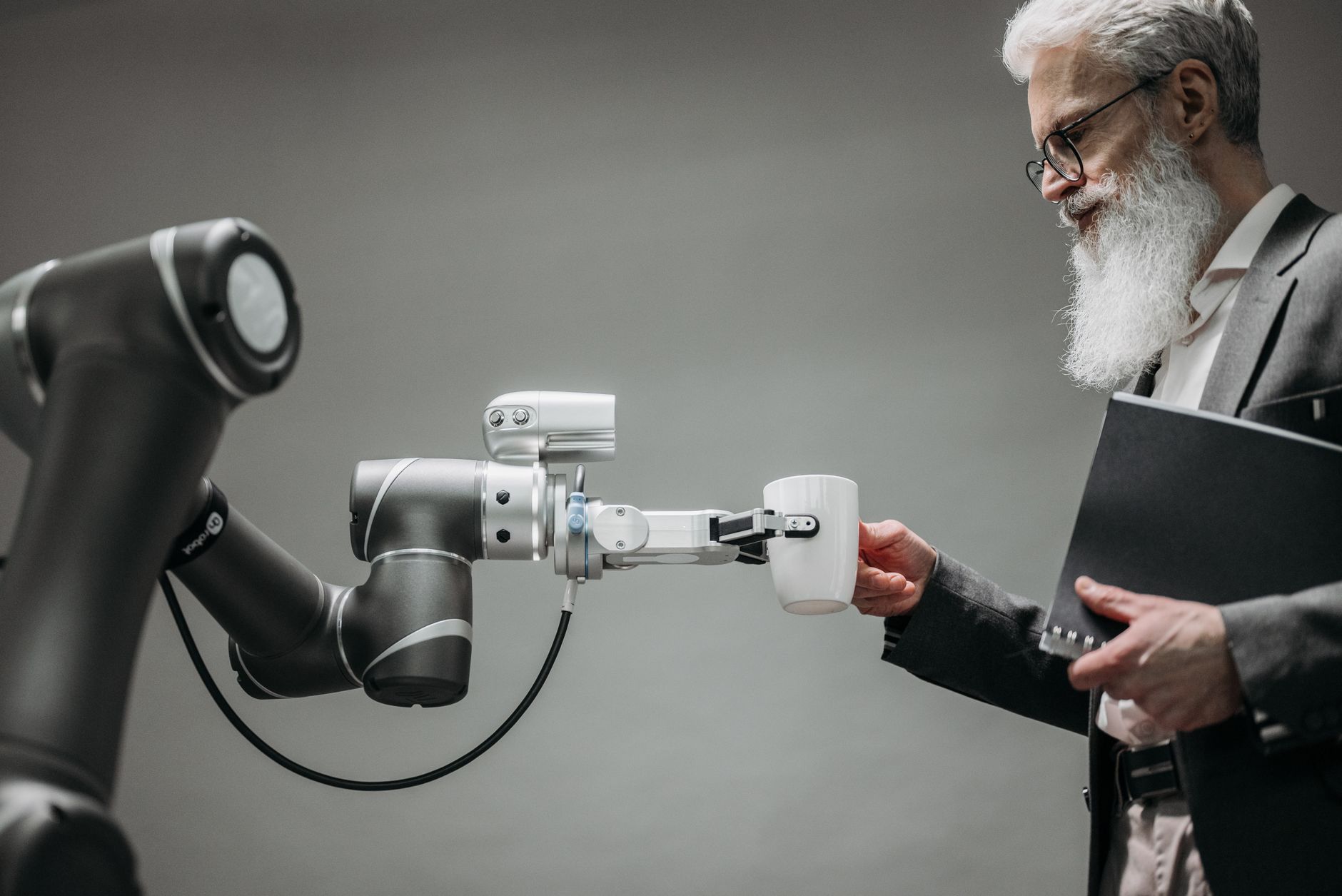
Training a robot on video data requires solving the problem of action correspondence—connecting what the network sees in video to the motor commands the robot should execute. A human hand opening a door can be mapped to a robot gripper opening that same door, but the mapping is not straightforward. Some systems use pose estimation to extract hand keypoints from video, then learn a function that maps those keypoints to robot joint angles. Others work directly from pixels to motor commands, which is more flexible but requires more data and careful training. The computational cost of processing video is substantial. A single demonstration video contains thousands of frames, and high-resolution images demand significant memory and processing power during both training and inference.
Robots operating in real time cannot afford to run inference every video frame; they must subsample or use efficient architectures. This introduces additional approximation errors that can compound during long manipulation sequences. A tradeoff exists between data efficiency and generalization. A model trained on abundant diverse video data generalizes well but requires substantial data collection and annotation effort. A model trained on limited, carefully curated demonstrations learns faster but may fail when the real-world setup differs slightly from the training conditions. Companies must balance their tolerance for robot failures against the cost of gathering more training data.
Limitations and Failure Modes in Video-Based Learning
A critical limitation is that video cannot capture all the information a robot needs to succeed. Visual feedback alone cannot reliably sense the force required to insert a peg into a hole or the stiffness of a hinge. A video shows the hand moved in a particular way, but it does not reveal the applied force, the precise contact points, or the resistance felt by the robot’s wrist. Models trained purely from vision often learn superficially correct movements that fail under contact with the physical world—a robot hand may appear to grasp an object while in reality applying insufficient pressure. The data efficiency problem persists as a major barrier.
Large-scale pre-training on internet video helps, but fine-tuning on specific robot tasks still requires substantial task-specific footage. If a task requires handling objects with unusual textures, gripping positions, or force profiles, the model may need retraining. The cost and time required to gather this data can exceed the cost of traditional programming for narrow, repetitive tasks. A warning for practitioners: video-based learning can encode human biases and inefficiencies. If the training videos show humans performing a task in an awkward but effective way, the robot may learn that awkward approach rather than discovering more efficient movement patterns. The robot becomes a mimic rather than an optimizer, sometimes replicating human errors or suboptimal strategies that worked in the training context but fail elsewhere.
Training Data, Annotation, and Scale Requirements
Building effective robot learning systems requires not just video collection but intelligent selection of which videos to include. A network trained on thousands of random human videos may learn task-irrelevant details—background clutter, clothing colors, camera angles—and fail to generalize to a robot executing the same task in a different setting. Active learning approaches select the most informative videos to annotate, reducing the annotation burden, but identifying informativeness requires either expensive human judgment or expensive model-based analysis. The annotation process itself varies in sophistication.
Simple approaches label each video with the task name: “pick up cup,” “insert peg.” More detailed approaches annotate keyframes or segment the video into phases. The most rigorous approaches provide dense annotations—hand positions, object states, relevant environmental features at each frame. Denser annotation yields better learned representations but at exponentially higher cost. Teams must decide whether the performance gain justifies the annotation expense.
Current State and Emerging Patterns in Deployment
Several robotics companies have moved video-based learning from research prototypes into production systems. Mobile manipulation robots in research labs successfully learn to perform multi-step tasks from a handful of demonstrations. Grasping systems trained on large video datasets generalize to novel objects reasonably well, though they still fail more often than traditional engineered solutions for the easiest, most repetitive tasks.
The field is moving toward systems that combine video learning with traditional robot control, using the learned policy as a starting point and refining it with force feedback and real-world interaction. The strongest current evidence for video-based learning comes from manipulation tasks where the action space is continuous and visual feedback is the primary source of task-relevant information—reaching, grasping, pushing, assembly operations. Tasks requiring precise force control or perception beyond the visual spectrum remain challenging and typically require augmentation with additional sensor modalities or learned models trained on robot-specific data rather than generic video.
Frequently Asked Questions
Can a robot learn from any video, or does it have to be a robot performing the task?
Robots can learn from human demonstration videos, which is often more efficient than collecting robot videos. However, the differences between human and robot morphology create domain shift problems that require careful handling through techniques like domain randomization or explicit pose mapping.
How many videos does a robot need to learn a task?
This varies widely. Pre-trained models can learn from dozens of task-specific videos. Models trained from scratch may need hundreds or thousands of hours of footage, depending on task complexity and diversity.
Why doesn’t video learning work for tasks requiring precise force control?
Video captures appearance and motion but not forces, pressures, or contact information. A robot cannot see how hard to grip an object or how much force to apply during insertion. These require additional sensing beyond vision.
Can robots trained on video learning handle objects they’ve never seen before?
This depends on the training data’s diversity. Robots trained on varied objects and contexts generalize better, but failures remain common with highly novel shapes, materials, or weights.
Is video-based learning faster than traditional robot programming?
Not always. Creating and annotating video datasets takes time. For simple, repetitive tasks with stable conditions, traditional programming remains faster. Video learning excels when task variability is high or when many similar tasks need quick deployment.