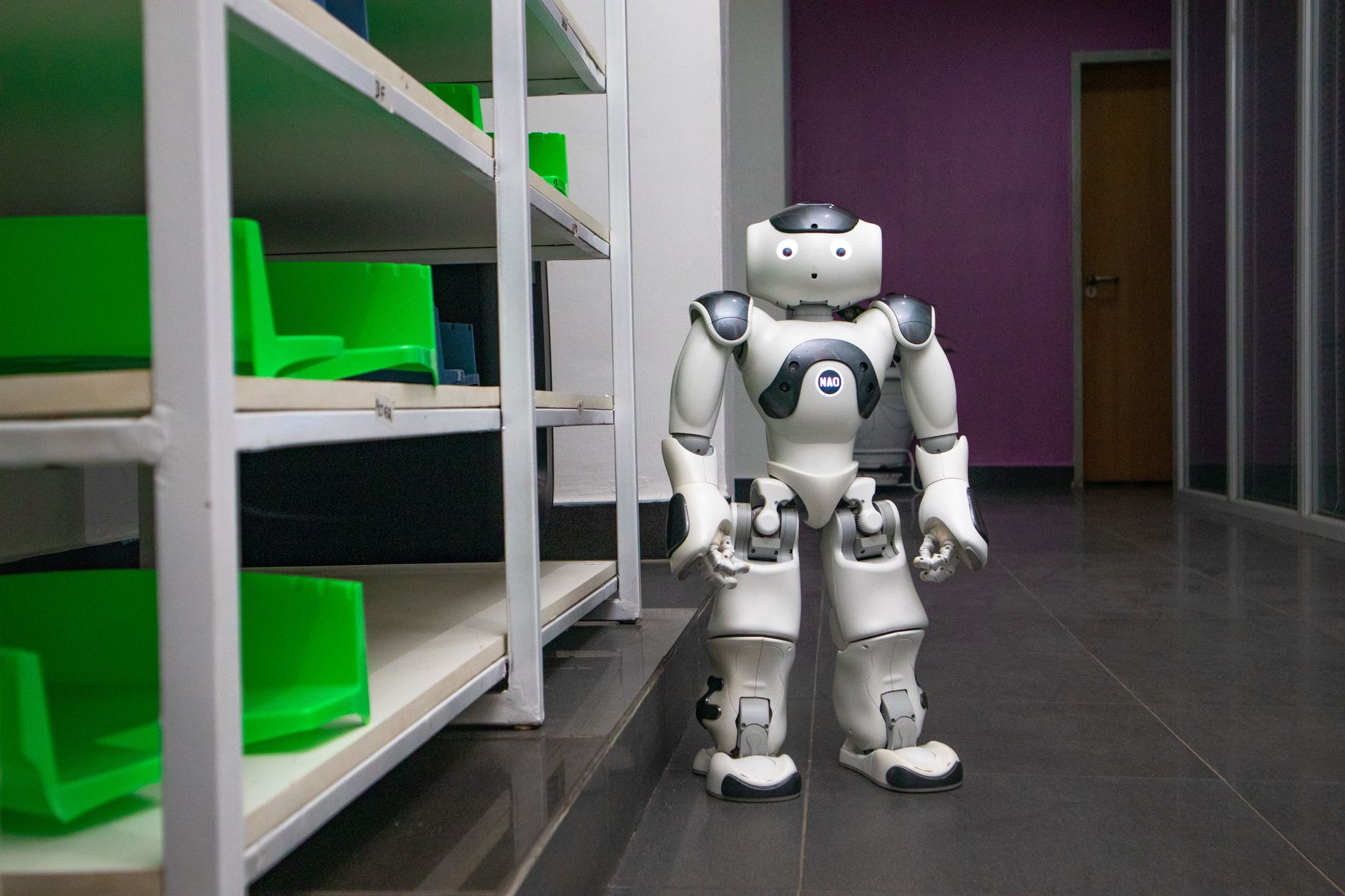

Humanoid robot technology has reached a point where machines can now combine lifelike physical characteristics—articulated limbs, expressive faces, and biomimetic movement patterns—with sophisticated artificial intelligence systems. This convergence enables robots to interpret context, learn from their environment, and respond adaptively to unpredictable situations in ways that earlier mechanized systems could not. A robot performing warehouse tasks, for example, can now recognize objects it has never seen before, adjust its grip strength based on an item’s fragility, and navigate around obstacles without explicit reprogramming.
The integration of advanced AI into humanoid platforms represents a fundamental shift from purely scripted machines to systems that can generalize across different scenarios. Rather than requiring a robot to follow predetermined sequences for each task variation, modern humanoid robots use machine learning models trained on diverse data to handle novel situations. This capability has begun attracting investment from manufacturers, logistics companies, and research institutions looking to deploy robots in environments where flexibility and adaptability matter as much as raw efficiency.
Table of Contents
- How Do Lifelike Features Enhance Robot Functionality?
- What Are the Challenges of Achieving True Human-Like Movement?
- How Does AI Enable Robots to Handle Unexpected Situations?
- What Practical Advantages Emerge from Combining Physical Realism With Machine Learning?
- Where Do Integration and Safety Concerns Remain Critical?
- How Are Current Deployments Demonstrating Practical Value?
- What Architectural Trade-Offs Shape Humanoid Robot Design?
How Do Lifelike Features Enhance Robot Functionality?
The physical design of humanoid robots—including articulated hands with individual finger control, head movement that mimics human eye contact, and torso flexibility—serves functional purposes beyond aesthetics. When a robot can tilt its head or adjust its posture, it can better sense its surroundings, manipulate objects with precision, and communicate intent to human coworkers without requiring external displays or audio cues. A robot with expressive facial movements can signal when it is processing a task, when it needs assistance, or when it has completed an action, reducing confusion in mixed human-robot environments.
The investment in lifelike design also addresses practical limitations of boxy industrial robots. Humanoid proportions fit better into spaces designed for human work—doorways, workstations, and equipment controls made for human hands and heights. When a robot can grasp items the way a human does, it can interact with tools and objects that existing machinery cannot, reducing the need for specialized fixtures or workflow redesigns. A robot with human-like arm length and reach can work at a standard desk or assembly line with minimal environmental modification.
What Are the Challenges of Achieving True Human-Like Movement?
Replicating the fluidity and precision of human movement remains technically difficult, despite advances in motor control and sensor integration. Human bodies contain roughly 200 muscles working in coordinated patterns that took millions of years to evolve; robots attempt to approximate this with motors, actuators, and control algorithms that must be calibrated and maintained. The difference becomes apparent in subtle tasks—a human hand can detect the tensile strength of fabric by touch and adjust force accordingly, while robots struggle with tactile feedback at the speed and sensitivity humans achieve naturally. Power consumption presents a significant practical limitation.
Humanoid robots with realistic movement patterns and sufficient battery capacity for an eight-hour shift remain constrained in how much sustained physical work they can perform. A robot optimized for energy efficiency may move more rigidly or slowly, limiting its utility in time-sensitive tasks. Additionally, the cost of manufacturing humanoid robots with multiple articulated joints and advanced sensors remains substantially higher than purpose-built machines designed for single, repetitive tasks. A specialized gantry robot for welding may cost half as much as a humanoid robot while delivering faster output in that specific application.
How Does AI Enable Robots to Handle Unexpected Situations?
Machine learning systems allow humanoid robots to recognize patterns in visual data, audio input, and sensor readings, enabling them to make decisions without explicit programming for every scenario. When a robot encounters an object positioned differently than in its training data, or encounters a surface texture it has not seen before, AI models can generalize from previous experience and attempt appropriate actions. This adaptive behavior is particularly valuable in unstructured environments like kitchens, offices, or construction sites where conditions vary unpredictably.
The training process itself involves substantial effort—teams must collect datasets, label examples, and iteratively refine models to achieve acceptable performance. A robot designed to sort recyclable materials might require thousands of labeled images to learn to distinguish paper from plastic consistently. The AI system must also handle edge cases and failures gracefully; if a robot encounters a situation outside its training distribution, it should request human assistance rather than make damaging mistakes. Integration of safety mechanisms with AI decision-making remains an active research area, particularly for robots working near humans or handling delicate items.
What Practical Advantages Emerge from Combining Physical Realism With Machine Learning?
Robots that move and look humanoid often generate greater acceptance from human workers compared to purely mechanical systems. In environments where robots work alongside human teams—hospitals, manufacturing facilities, offices—the familiarity of a humanoid form can reduce anxiety and increase willingness to collaborate. When workers trust a robot’s movements and can predict its intentions through postural cues, the overall workflow becomes safer and more efficient than scenarios where humans must remain constantly wary of unpredictable machine behavior. The learning capability reshapes deployment economics.
Instead of commissioning custom software for each new task variation, organizations can sometimes deploy the same robot with updated training data or fine-tuned models. A humanoid robot initially trained for assembly tasks might be retrained for quality inspection or material handling with less physical reconfiguration than a single-purpose robot would require. However, this flexibility comes with hidden costs—training data collection, model validation, and integration testing all require expertise that many organizations lack. The total cost of ownership for a “flexible” robot can exceed that of a specialized alternative if the organization underestimates training and support requirements.
Where Do Integration and Safety Concerns Remain Critical?
Introducing humanoid robots into established workflows creates friction points that technical sophistication alone cannot resolve. A robot that learns from its mistakes still learns slowly compared to human workers, meaning production rates in early deployment phases may actually decrease. If a humanoid robot drops a fragile component while learning proper handling technique, the financial loss and workflow disruption are real, regardless of the AI system’s eventual proficiency. Safety certification for robots working near humans requires extensive testing and documentation; deploying a new humanoid robot design in a facility with strict safety standards involves regulatory approval processes that can span months.
The long-term reliability of AI-enabled robots under real-world conditions remains incompletely understood. Machine learning models can behave unexpectedly when exposed to input that differs from training data—a robot trained on images of one lighting condition might fail when placed in different illumination. Sensor degradation, environmental contamination, and subtle wear on mechanical components can degrade robot performance over months in ways that predictive maintenance systems might miss. Organizations considering humanoid robot deployments should approach early adoption cautiously, with realistic expectations about failures, downtime, and the need for on-site technical expertise.
How Are Current Deployments Demonstrating Practical Value?
Research facilities and large industrial manufacturers have begun deploying experimental humanoid robots in controlled settings. A facility handling small-parts assembly has used humanoid robots to sort components, with workers monitoring performance and stepping in when error rates exceed predetermined thresholds. These pilots provide valuable data on actual maintenance requirements, learning curves, and the human-organizational factors that determine success or failure.
Hospitals exploring humanoid robot deployment in logistics roles—transporting medications or supplies—report that staff acceptance improves when robots demonstrate reliable, predictable behavior over weeks of continuous operation. These early deployments consistently reveal that technical capability is necessary but insufficient for successful integration. The robot that performs its core function excellently can still fail deployment if its interface for receiving instructions is cumbersome, if it generates unexpected maintenance requirements, or if integration with existing systems creates workflow bottlenecks. Organizations reporting successful small-scale humanoid robot deployments typically invested heavily in staff training, dedicated support personnel, and iterative workflow redesign rather than simply installing robots and expecting workers to adapt.
What Architectural Trade-Offs Shape Humanoid Robot Design?
Engineers designing humanoid robots face fundamental trade-offs between payload capacity, movement speed, energy efficiency, and cost. A robot optimized for heavy lifting may require more powerful motors and a reinforced frame, increasing size, weight, and power consumption. A smaller, more nimble design sacrifices carrying capacity and force-exertion capability. A robot built to match human size and strength precisely would require substantially more investment than one accepting somewhat reduced capabilities, yet that investment might not justify itself in most applications.
Different manufacturers have taken different positions on these trade-offs—some prioritizing energy efficiency for extended operation, others prioritizing strength and speed for manufacturing settings. The software architecture underlying AI integration shapes deployment feasibility as much as mechanical design does. A robot relying on continuous cloud connectivity for AI inference sacrifices autonomy and introduces latency and security vulnerabilities compared to edge-based processing. A system with full on-board AI capability requires sufficient compute capacity, power, and thermal management, adding cost and complexity. Organizations evaluating humanoid robot systems should scrutinize not just the visible mechanical capabilities but also the underlying computing architecture and where AI processing actually occurs during operation.