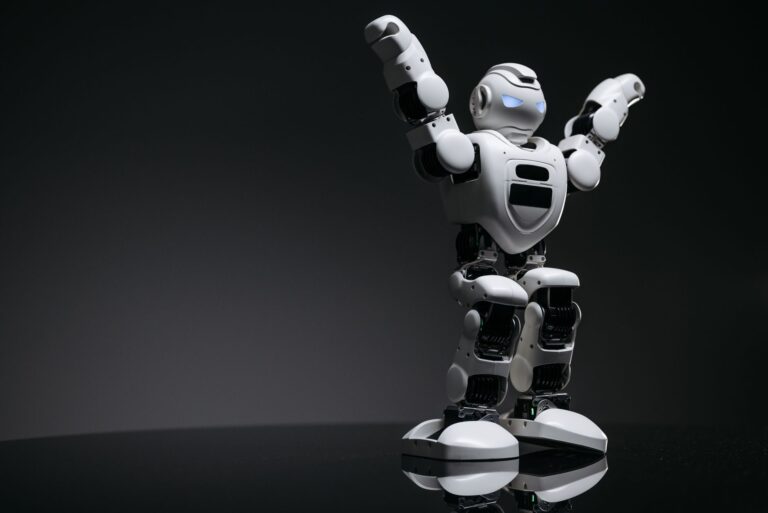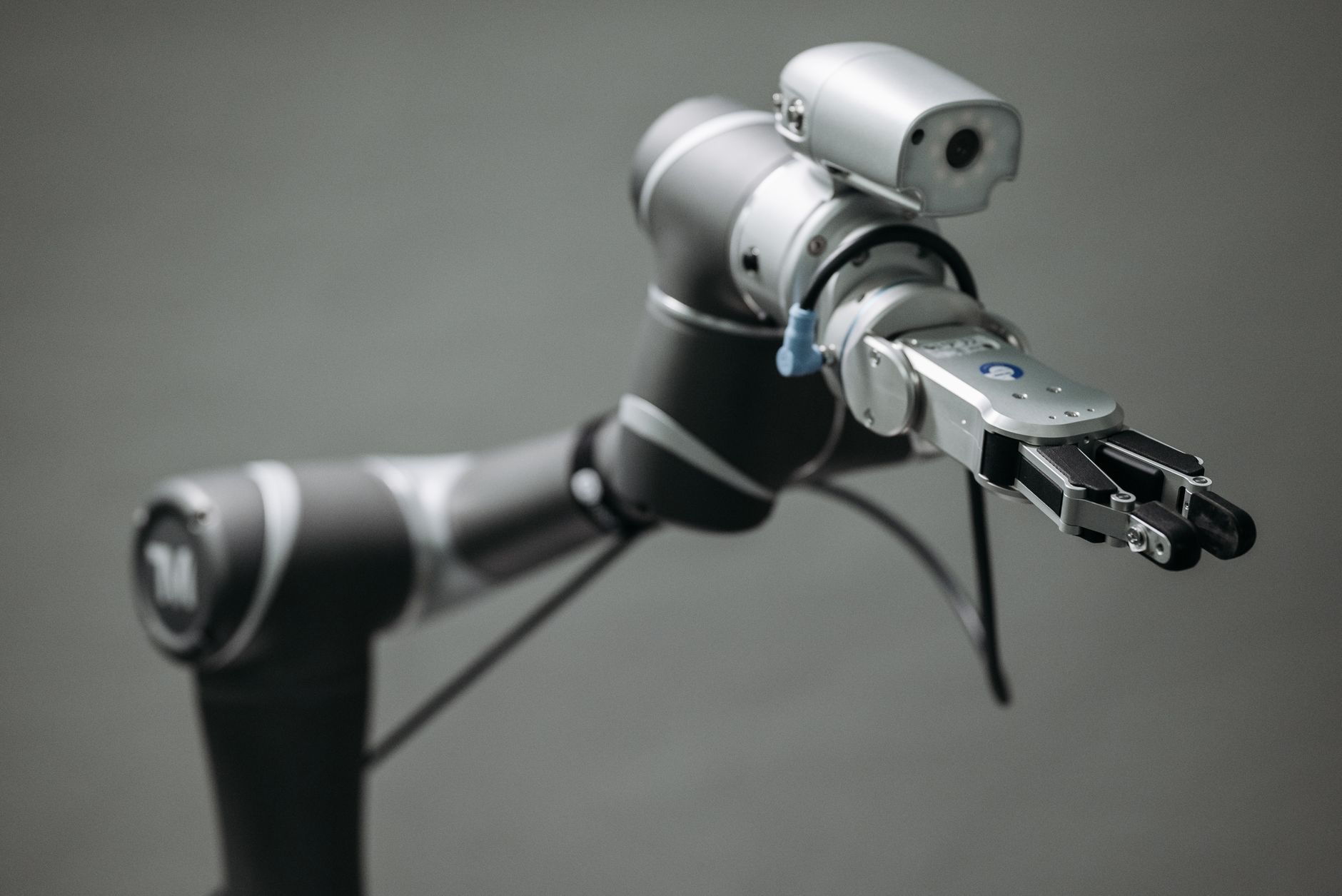

Neura Robotics, a German humanoid robotics startup, secured $1.4 billion in Series C funding announced on June 10, 2026, making it the largest venture capital round in German history and establishing the company as Europe’s most-funded humanoid robotics venture. The financing round attracted an unusual coalition of investors: Tether leads the round, while technology giants including Qualcomm, Amazon, and NVIDIA joined European industrial players like Bosch, Schaeffler, and the European Investment Bank. This convergence of crypto capital, Big Tech, and traditional industrial investors reflects the shifting confidence in physical AI—robots designed to learn and operate autonomously in real-world environments rather than controlled settings. The $1.4 billion raise values Neura at approximately $7 billion post-funding, positioning it ahead of most other humanoid robotics companies globally. The company enters this capital phase with an existing orderbook exceeding $1 billion, meaning it already has real customer commitments rather than just prototype demonstrations or laboratory proofs-of-concept.
This distinction is crucial: Neura is not purely a speculative play on future robotics demand. It claims to have manufacturing contracts lined up that justify the valuation premium investors are placing on the company. What distinguishes this funding round from typical robotics ventures is the investor coalition itself. When Tether—the controversial stablecoin issuer—leads alongside Amazon and Qualcomm, it signals that the robotics industry has become a priority asset class for multiple investment constituencies simultaneously. The presence of the European Investment Bank indicates government-level confidence in European robotics competitiveness, a response to years of Chinese and American dominance in the sector.
Table of Contents
- Why Humanoid Robotics Attracted $1.4 Billion at This Moment
- The Investor Coalition Behind Neura’s Funding
- Physical AI and the Neuraverse: What Neura Actually Builds
- From Funding to Real-World Deployment: The Challenge Ahead
- Strategic Risks and Competitive Pressures Neura Faces
- What a $7 Billion Valuation Signals for Humanoid Robotics
- European Venture Capital’s Turning Point in Robotics
- Frequently Asked Questions
Why Humanoid Robotics Attracted $1.4 Billion at This Moment
The $1.4 billion Series C for a single robotics company would have seemed impossible five years ago. The humanoid robotics sector has historically struggled with investor skepticism, repeated overpromises about timeline, and limited commercial traction. Boston Dynamics, for example, remained largely in research mode under Google ownership before being sold to Hyundai. Agility Robotics and Figure AI raised significant amounts but operated in a space where investors frequently walked away from failed promises. Neura’s ability to raise at this scale reflects a genuine inflection point: robotics hardware, AI training, and manufacturing economics have aligned enough that commercial deployment is now viable at scale rather than remaining perpetually five years away. The timing also reflects competition between investment blocs. American tech companies (Amazon, Qualcomm, NVIDIA) are investing in European robotics partly to ensure they maintain access to critical manufacturing infrastructure and talent outside their home markets.
Bosch and Schaeffler, two of Germany’s largest industrial manufacturers, are investing to secure proprietary robotics technology before competitors do. The European Investment Bank’s participation suggests that European governments view robotics as strategic infrastructure comparable to semiconductors or battery manufacturing. None of these investors would commit at this scale unless they believed they would see commercial returns within a reasonable timeframe. One limitation to recognize: large funding rounds often create inflated expectations that companies struggle to meet. Neura’s $1 billion existing orderbook is substantial, but if those orders are concentrated with a few large customers or depend on aggressive timelines, the company could face pressure to cut corners on safety testing or quality control. The scale of capital raised ($1.4 billion) actually increases execution risk rather than eliminating it. Larger rounds demand larger revenues to justify the valuation, which can push companies toward overselling capabilities.
The Investor Coalition Behind Neura’s Funding
The diversity of Neura’s investor list is worth examining in detail. Tether’s lead position is the most controversial element—the stablecoin company operates in a regulatory gray zone and has faced repeated scrutiny about its reserve backing. However, Tether’s involvement signals that crypto capital is now flowing into non-financial infrastructure at scale. Qualcomm’s participation makes more straightforward sense: the company manufactures the processors that power robotics systems and has strategic incentives to see the robotics market grow. amazon Web Services has positioned itself as the cloud backend for robotics applications, making Neura a potential customer and partner. NVIDIA’s involvement is almost inevitable given its dominance in AI accelerators and computing chips that power robotic perception and decision-making. The European industrial contingent—Bosch, Schaeffler, the European Investment Bank—represents a different calculation entirely. These are manufacturers who see humanoid robots as transformative for their own supply chains.
Bosch operates factories across Europe and understands that labor costs and availability increasingly constrain production scaling. Schaeffler manufactures bearings and precision components that robots require in large quantities. Both companies are simultaneously customers for Neura’s robots and investors betting on company success. This dual relationship creates built-in demand but also means their interests may not always align with pure profitability—they might prioritize supply security or strategic control over returns. Imec.xpand and Lingotto Horizon represent venture capital and growth equity players with European focuses, ensuring the round didn’t become entirely dependent on tech giants or industrial players. This structure creates a stable investor base less prone to sudden exits or demands for dramatic pivot changes. However, it also means negotiating future decisions becomes more complex. When investors include companies that both use Neura’s products and compete with them indirectly, corporate governance becomes more fraught.
Physical AI and the Neuraverse: What Neura Actually Builds
Neura’s stated mission involves building “Physical AI infrastructure where cognitive robots learn, collaborate, and operate in real-world environments” through what the company calls the “Neuraverse”—a shared intelligence ecosystem where robots learn collectively. This is more ambitious than simply manufacturing better robots. Neura is proposing an infrastructure layer comparable to cloud computing or smartphone operating systems. Individual robots would contribute data and learned behaviors to a central system, which would then improve all other robots in the network. The technical appeal of this approach is real. Training individual robots in isolation is computationally expensive and time-consuming. If Neura can create a system where thousands of deployed robots contribute to a shared learning model, training time for new tasks could drop dramatically.
A robot trained to perform one assembly task could, in theory, rapidly adapt to similar tasks using knowledge from thousands of other robots performing comparable work. This would be genuinely transformative for manufacturing, where flexibility and rapid retooling matter enormously. However, the Neuraverse model also represents a potential business risk and customer vulnerability that requires scrutiny. If customers deploy Neura robots, they’re essentially contributing their proprietary manufacturing knowledge to a shared system that Neura controls. A manufacturer using robots to perform a secret assembly process would be teaching Neura’s system about that process. Over time, this creates dependencies and potential information leakage risks. Additionally, if competitors also use Neura robots, the shared learning system could theoretically allow one customer’s innovations to benefit rivals. Neura would need to implement sophisticated data partitioning and privacy controls to address these concerns, and such controls might limit the effectiveness of the collective learning approach.
From Funding to Real-World Deployment: The Challenge Ahead
Having $1.4 billion in capital is not the same as successfully deploying humanoid robots at scale. The existing orderbook of $1 billion provides some proof that customers are willing to sign contracts, but contracts are not delivered robots. Manufacturing humanoid robots involves supply chain complexity that exceeded what companies like Tesla encountered with electric vehicles. Each robot requires thousands of components—motors, sensors, processors, wiring, structural materials—sourced from reliable suppliers and assembled with precision tolerances. If any critical component has a shortage or quality issue, entire production batches can be delayed. Neura will use this capital to scale manufacturing, train a workforce to build these robots, and establish distribution and service infrastructure. The company will need service technicians in multiple countries who can repair and maintain deployed robots. It will need warehousing and logistics to handle the physical product.
It will need regulatory compliance across different countries’ labor and safety requirements. These are not technology challenges—they are operational challenges that many robotics startups have stumbled on in the past. Boston Dynamics eventually found it needed Hyundai’s manufacturing expertise precisely because building robots at scale is harder than designing them. One comparison worth considering: when Tesla raised large capital rounds in the early 2010s, the company still took years longer than projected to reach production targets. Neura will likely face similar delays despite having more capital and better robotics precedents to learn from. The $1 billion existing orderbook is actually a constraint as well as an asset. Customers who have signed contracts expect delivery on timelines. If Neura falls behind, it faces not just lost revenue but customer litigation and reputation damage that could prevent future sales.
Strategic Risks and Competitive Pressures Neura Faces
Despite the impressive funding round, Neura operates in an increasingly crowded field. Tesla is developing humanoid robots (Optimus). Boston Dynamics remains in operation under Hyundai ownership. Chinese companies including Unitree and Fourier Intelligence are pursuing humanoid robotics and have cost advantages in manufacturing. Neura’s $7 billion valuation assumes it will capture significant market share in a sector that may not materialize at expected scales or timelines. If humanoid robot adoption grows more slowly than investors currently predict, Neura’s valuation will face downward pressure regardless of how well the company executes operationally. The company faces a specific technical risk around the Neuraverse platform. The intellectual property strategy for a shared learning system is complicated.
If robots learn collectively, who owns the resulting AI models? If a manufacturing customer develops an innovative technique that the shared learning system picks up and distributes to other customers, has Neura violated that customer’s trade secrets? Early disputes over these questions could create legal liability that consumes capital and management attention. Neura has not disclosed detailed privacy or IP frameworks for how the Neuraverse will operate, which suggests these questions remain unresolved. Additionally, Neura’s reliance on a diverse investor base creates governance complexity. Tether and traditional venture capital have different investment horizons and risk tolerances. Bosch and Schaeffler care about supply security and strategic advantage. Amazon and Qualcomm care about ecosystem positioning. The European Investment Bank cares about regional development. Managing a cap table with these diverse stakeholders means Neura’s board contains conflicting interests. Major strategic decisions—like whether to focus on manufacturing applications versus care work, or whether to license the Neuraverse platform to competitors—will face resistance from investors with different priorities.
What a $7 Billion Valuation Signals for Humanoid Robotics
Neura’s approximately $7 billion post-funding valuation is substantial but not absurd given current market conditions and the company’s orderbook. For comparison, Rivian (electric vehicles) was valued at roughly $27 billion during its public market debut, and Rivian faced enormous manufacturing challenges before demonstrating any significant production volume. Neura’s $7 billion valuation in a fully private round is actually more conservative than many recent biotech or software valuations, suggesting investors are pricing in meaningful manufacturing and execution risk. However, this valuation has practical implications for how Neura must perform. To justify a $7 billion valuation, the company will eventually need to demonstrate annual revenues in the hundreds of millions of dollars. With an existing orderbook exceeding $1 billion, reaching $200+ million in annual revenue is theoretically possible within 2-3 years if execution is flawless. This creates pressure to deliver robots quickly and accurately rather than spending years on perfecting every technical detail.
For customers, this trade-off matters. A robot delivered 90% of the way to perfect in year one is more useful than a perfect robot delivered three years late. The valuation also affects talent and supply chain negotiations. Neura can now offer higher salaries to attract the manufacturing engineers and roboticists it needs. It has leverage to negotiate with component suppliers. This capital advantage creates a flywheel where Neura can outcompete smaller robotics startups for talent and components. However, this same dynamic means competitors with comparable capital (like Tesla or Chinese manufacturers) face off against Neura on more equal footing.
European Venture Capital’s Turning Point in Robotics
Neura’s funding round represents a crucial inflection point for European robotics and European venture capital more broadly. German manufacturing has faced labor pressures and automation challenges for decades. Until now, European robotics companies have either remained small, been acquired by American or Japanese conglomerates, or struggled to raise capital at scale. Neura’s $1.4 billion Series C—the largest venture round in German history—suggests that pattern may be shifting. The presence of the European Investment Bank and explicit European investors signals policy-level commitment to building a robotics industry within Europe rather than remaining dependent on imports.
This matters for long-term competitiveness. If robotics manufacturing becomes concentrated in China and the United States, European industries will lose bargaining power and strategic flexibility. By backing Neura at scale, European capital is signaling that robustness and resilience matter enough to justify supporting a higher-cost producer compared to Chinese alternatives. The $1.4 billion represents not just investment capital but a deliberate European choice about where manufacturing capability should concentrate. This decision carries both economic and geopolitical dimensions that extend far beyond Neura itself.
Frequently Asked Questions
Why did Tether lead a $1.4 billion robotics investment when crypto markets were uncertain?
Tether has been seeking to diversify beyond stablecoin issuance into venture capital and strategic infrastructure investments. Robotics represents a physical asset class outside traditional finance. This move also provides Tether with geopolitical legitimacy through association with established industrial companies and European institutions.
Does Neura have actual customers or just conceptual products?
Neura claims an existing orderbook exceeding $1 billion, meaning contracts are signed with customers waiting for delivery. However, a signed order is not a delivered product. The company’s actual ability to fulfill these orders on schedule will determine whether the $7 billion valuation is justified.
How does Neura compete against Tesla’s Optimus robot?
Tesla has cost and integration advantages but focuses on humanoid form factors for general-purpose work. Neura appears focused initially on manufacturing and industrial applications where specialized designs can be more efficient than general-purpose humanoids. The market may eventually be large enough for multiple competitors.
What happens if Neura fails to deliver on its orderbook commitments?
Customers would likely pursue litigation for breach of contract. The company would face reputation damage preventing future sales. Investors might demand leadership changes or strategic pivots. The $1.4 billion would deplete rapidly trying to recover from manufacturing delays.
Is the Neuraverse platform a major competitive advantage or an overstated concept?
It’s unclear. Collective robot learning is theoretically powerful but requires solving significant IP, privacy, and technical challenges first. The concept may take years to mature into a working system that delivers meaningful competitive advantage over independently trained robots.
Why would competitors use Neura’s robots if it teaches their competitors through the Neuraverse?
Customers would likely demand data partitioning and privacy guarantees that limit the effectiveness of collective learning. Alternatively, customers might accept the risk if Neura’s robots are sufficiently superior to alternatives and offer significant cost or performance advantages that outweigh IP leakage concerns.