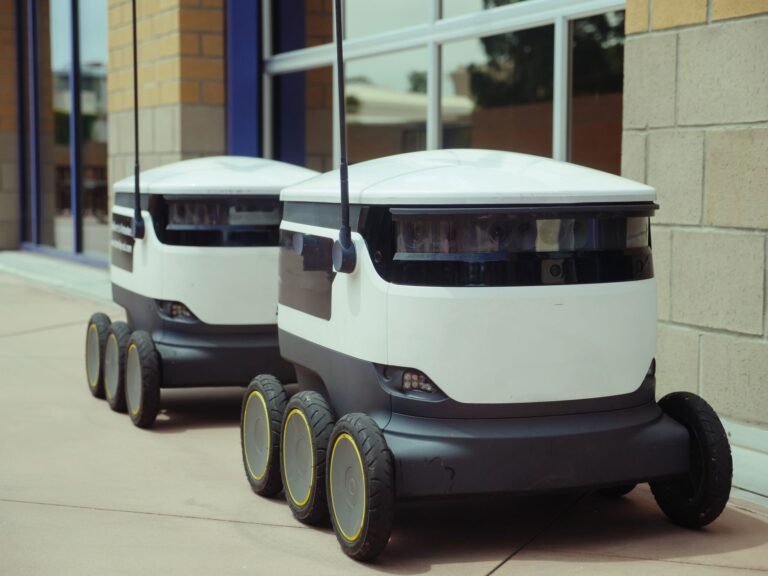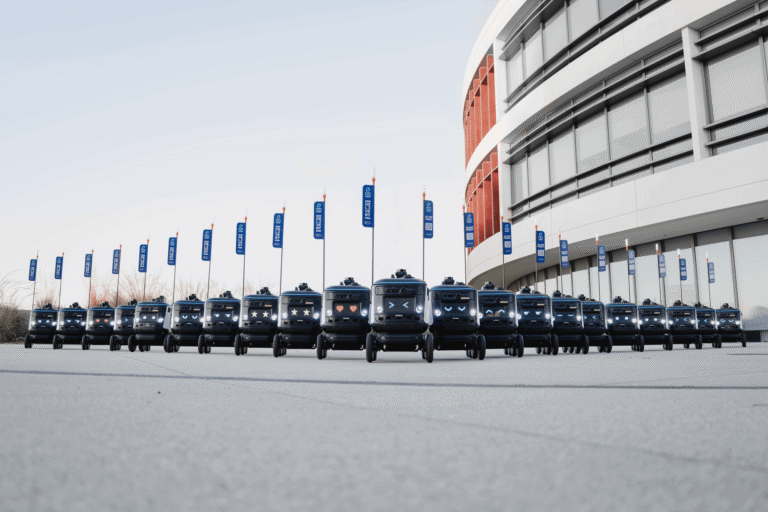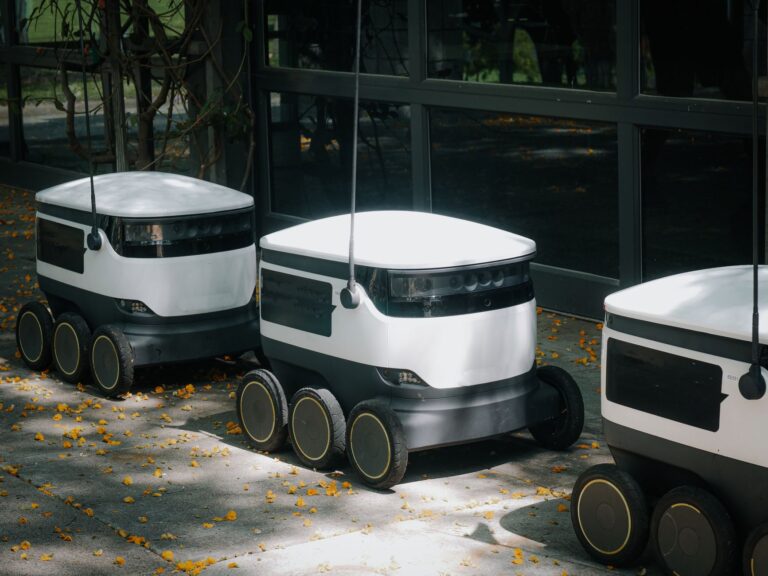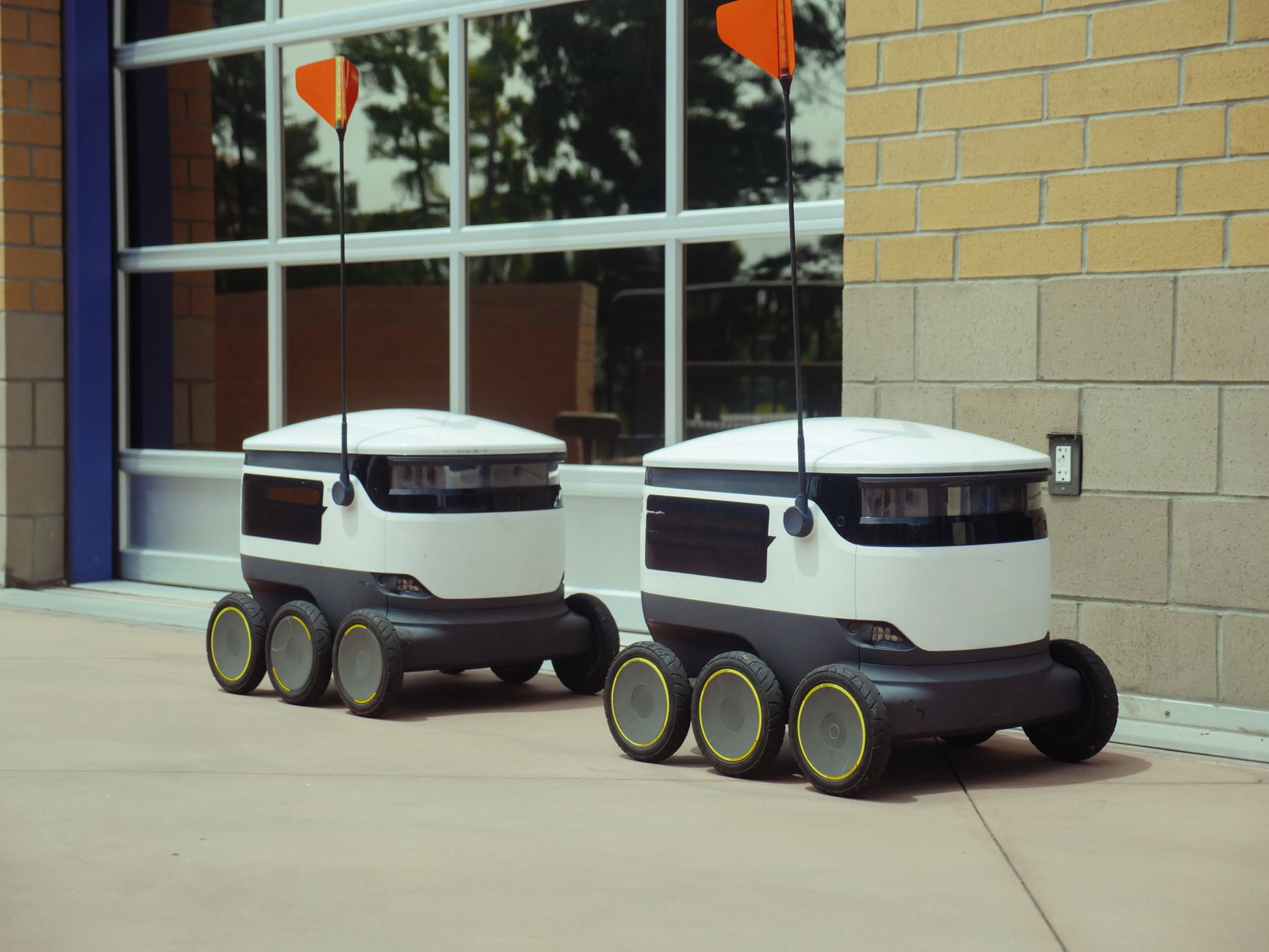

The autonomous delivery robot sector presents a fragmented investment landscape in 2026, with only a handful of publicly traded options despite significant private funding and commercial deployment. For investors seeking direct stock exposure, the universe is surprisingly small—Agility Robotics achieved the first major humanoid robotics company IPO through a SPAC merger in mid-2026, while iRobot trades as a bankruptcy-restructured shell at $0.05 on the over-the-counter market. Most of the innovation and capital deployment occurs in private companies like Waymo (valued at $126 billion but still a subsidiary of Alphabet), Nuro ($8.6 billion valuation), and Boston Dynamics (now 80% owned by Hyundai), leaving retail investors to choose between declining plays, indirect market exposure, or funding rounds closed to public participation. The broader market opportunity justifies investor interest. The autonomous delivery robot market reached $923.5 million in 2026 and is projected to grow at a 26.8% compound annual rate through 2033, potentially reaching $4.87 billion. Yet this explosive forecast masks the reality that commercial deployment remains concentrated in a few geographies and use cases. Waymo is delivering over 250,000 autonomous rides weekly across six U.S.
cities and plans to reach 1 million trips per week by year-end 2026, demonstrating that the technology works at meaningful scale. Amazon is investing $4 billion to triple its rural delivery network by 2026 and acquired Rivr in March 2026 to add stair-climbing capabilities. These deployments prove the business case exists—but identifying which companies will generate shareholder returns requires looking past hype to execution rates and capital efficiency. The investment comparison breaks into three distinct tiers. The first tier comprises private mega-funds like Waymo and Amazon Robotics, which are scaling rapidly but offer no direct public equity path. The second tier includes structural plays like Hyundai (which owns Boston Dynamics) and iShares Korea ETF exposure, which bundle robotics with broader holdings. The third tier consists of pure-play public companies that are either too early (Agility’s post-IPO trajectory) or too late (iRobot’s chapter 11 restructuring). Understanding the risk-return tradeoff across these tiers is essential before deploying capital.
Table of Contents
- Which Autonomous Delivery Companies Are Publicly Traded or Publicly Fundable?
- Performance Metrics and Valuation Disparities Across Public and Private Plays
- Waymo’s Market Position and the Scale Challenge of Autonomous Delivery
- Direct Equity vs. Indirect Exposure: Investment Structure Tradeoffs
- Regulatory, Capital, and Execution Risks in the Autonomous Delivery Sector
- Amazon’s Robotics Expansion and the Internal Division Model
- iRobot’s Bankruptcy and What It Reveals About Robotics Market Maturation
- Frequently Asked Questions
Which Autonomous Delivery Companies Are Publicly Traded or Publicly Fundable?
The honest answer: very few, and not the ones you’d expect. Waymo, despite a $126 billion February 2026 valuation and $16 billion in recent funding, remains a wholly owned subsidiary of Alphabet—it will not have its own ticker or IPO timeline disclosed. Amazon Robotics operates similarly, as an internal division deploying $4 billion toward rural delivery network expansion and €10 billion for European growth; it generates no separate public equity. Boston Dynamics, Nuro, and Serve Robotics are all private, though Boston Dynamics’ ownership by Hyundai (80% stake acquired from SoftBank in 2021) provides an indirect access point. Hyundai shareholders gain exposure to Boston Dynamics alongside automotive and robotics operations, though the Boston Dynamics business represents a minority asset. For those seeking direct public equity in autonomous delivery robotics, the options narrow to Agility Robotics and iRobot. Agility Robotics completed its public debut via SPAC merger in mid-2026, becoming the first major humanoid robotics company to go public.
The company focuses on humanoid robots for warehouse automation, not autonomous delivery per se, but operates in the adjacent autonomous systems category. iRobot, the legacy Roomba manufacturer, filed Chapter 11 bankruptcy, and as of July 2026 trades at $0.05 per share on the over-the-counter market under ticker IRBTQ, with a 52-week range of $0.05 to $10.73. iRobot’s presence as a public company is technically intact but functionally a restructuring play rather than a growth vehicle. The private companies represent where capital deployment is actually accelerating. Nuro, valued at $8.6 billion and having raised $2.1 billion, operates hundreds of autonomous vehicles in California, Texas, and Arizona. Serve Robotics partners with Uber Eats and DoorDash for sidewalk delivery and acquired Diligent Robotics in January 2026 to expand its capabilities. These companies are generating revenue and proving the business model, yet remain closed to retail equity investors. This creates a structural gap: the most proven autonomous delivery players are private, while public options are either nascent (Agility) or distressed (iRobot).
Performance Metrics and Valuation Disparities Across Public and Private Plays
Valuing autonomous delivery robot companies requires separate frameworks for private venture-backed firms and public market securities, because they operate under entirely different investor dynamics. Waymo’s $126 billion valuation, set in February 2026 through its funding round, reflects venture capital’s assessment of a company delivering 250,000+ autonomous rides weekly—implying roughly a $504 million weekly revenue run rate if priced at market rates, though Waymo’s actual financial reports remain consolidated within Alphabet’s earnings. This top-line scale masks a critical gap: profitability data is not publicly available, and losses may be substantial. Venture-backed valuations also embed expectations of rapid growth and eventual liquidity events that may not materialize on investors’ timelines. In contrast, Agility Robotics’ post-IPO performance provides a direct market test of investor appetite. The company trades in a public market where sentiment adjusts daily based on operational progress, competitive threats, and macro sentiment. This transparency cuts both ways—investors get real pricing information, but also experience volatility.
iRobot’s bankruptcy serves as a cautionary tale: a once-dominant brand in autonomous home cleaning failed to translate its market position into sustainable profitability, likely due to margin compression, competitive intensity, and its core market (robotic vacuums) proving less defensible than anticipated. The stock’s 52-week range from $0.05 to $10.73 reflects the severity of this collapse. Nuro’s $8.6 billion private valuation appears more defensible than iRobot’s fate because the company has demonstrated unit economics at scale—hundreds of deployed vehicles generating real deliveries in multiple states. However, private valuations lack the price discovery that public markets enforce. Nuro could be overvalued if capital costs and operational complexity prove higher than venture backers assumed, or undervalued if deployment accelerates. Investors have no real-time mechanism to test valuation assumptions the way public markets do through daily trading. This informational asymmetry matters when considering capital allocation.
Waymo’s Market Position and the Scale Challenge of Autonomous Delivery
Waymo has emerged as the clear technology leader in autonomous ride-hailing, not delivery, though the technical and operational capabilities transfer across use cases. Delivering 250,000+ autonomous rides per week across six U.S. cities represents genuine operational proof—not a pilot program or limited trial, but consistent consumer engagement. The company’s plan to reach 1 million trips per week by end of 2026 signals confidence in scaling both the technology and the business model. For investors, Waymo presents both an opportunity and a limitation: the opportunity is clear technology leadership and proven commercial traction; the limitation is that Alphabet’s scale and diversification mean Waymo will not be a focused robotics pure-play even if it achieves profitability. The $16 billion funding round closed in 2026 provides capital for fleet expansion, geographic rollout, and likely research into adjacent markets like autonomous trucking and delivery. This capital size indicates venture investors view Waymo as a multi-billion-dollar commercial opportunity, possibly a $100+ billion endgame.
However, Alphabet’s position as parent company complicates the investment thesis. Alphabet shareholders gain exposure to Waymo’s upside, but diluted by the much larger Search and Cloud divisions. A 100% Waymo investor would bet entirely on robotics; an Alphabet investor bets that robotics will be material enough to move the needle on a $2 trillion market cap company. The math favors the latter if Waymo succeeds, but makes Waymo’s performance harder to isolate from quarterly earnings noise. Waymo’s dominance in ride-hailing does not necessarily translate to dominance in delivery, where different regulatory approval pathways, operational constraints, and competitive dynamics apply. Nuro and Serve Robotics operate in delivery-specific use cases where they may face different competitive pressures or regulatory burdens than Waymo. Investors should not assume Waymo’s current lead in autonomous mobility automatically confers leadership in every autonomous logistics subset.
Direct Equity vs. Indirect Exposure: Investment Structure Tradeoffs
Investors evaluating autonomous delivery robotics face a fundamental structural choice with distinct risk-return profiles. Direct equity investment in Agility Robotics offers focused exposure to a pure-play humanoid robotics company, but introduces concentration risk—the company must execute on technology, manufacturing scale, and market adoption without other business lines to offset shortfalls. Agility’s mid-2026 IPO is recent enough that long-term track record is unavailable; investors are essentially funding an expansion phase bet. If the company succeeds, returns could be substantial. If it faces manufacturing delays, customer adoption slowdowns, or competitive pressure, a single-business-line public company offers no safety net. Indirect exposure through Hyundai Holdings, facilitated by the iShares MSCI South Korea ETF (EWY), provides diversification by bundling Boston Dynamics’ robotics upside with Hyundai’s core automotive business and financial services. Hyundai owns 80% of Boston Dynamics (acquired from SoftBank in 2021), and holds the asset as a 2.5% constituent of the EWY fund.
This structure distributes risk—Hyundai shareholders benefit if Boston Dynamics accelerates, but do not face total loss if robotics fails because automotive and financial businesses sustain dividends and cash flow. The tradeoff is dilution: Boston Dynamics’ potential upside is spread across Hyundai’s much larger market cap, and EWY investors add Korea macro risk to robotics-specific risk. Currency fluctuations, Korean regulatory changes, and geopolitical factors affecting South Korea all influence returns regardless of robotics performance. A third approach is passive exposure through broad robotics sector ETFs or technology funds that hold multiple stakeholders. This diversifies the bet across platforms (Waymo via Alphabet, Amazon Robotics via Amazon, Agility via its own equity), but introduces tracking error and management fees. None of these alternatives offer Waymo-equivalent concentration on autonomous delivery, because Waymo remains private. For investors convinced that autonomous delivery will define the 2030s, the structural absence of a Waymo public security represents a gap that cannot be bridged through public markets alone.
Regulatory, Capital, and Execution Risks in the Autonomous Delivery Sector
The autonomous delivery sector faces compounding execution risks that valuations may not fully price. Regulatory approval timelines remain uncertain despite real-world deployments. Waymo operates across six U.S. cities, but each city represents a distinct regulatory approval process, and national or federal standards do not yet exist. Boston Dynamics robots, despite Hyundai’s backing, have not achieved mass-market deployment. Amazon’s European expansion, despite €10 billion in capital commitment, depends on navigating different regulatory regimes across EU member states. A single adverse regulatory decision—for example, a city banning autonomous delivery or imposing liability standards that prove economically unworkable—could slow an entire sector. Capital efficiency remains unproven at scale. Waymo’s $16 billion funding round, while large, reflects capital intensity in autonomous vehicle development.
Unit economics (cost to acquire one autonomous vehicle, cost per trip, revenue per trip) are not disclosed, leaving investors to infer profitability from private valuations. Nuro’s $2.1 billion in raised capital and hundreds of deployed vehicles suggest the company has raised roughly $10+ million per deployed unit, a figure that must decline substantially for the business to generate returns. If deployment capital costs remain high, future funding rounds will require larger capital raises to scale, potentially diluting existing venture holders. Public companies like Agility face similar scrutiny but with quarterly disclosures that provide accountability. The iRobot bankruptcy illustrates a meta-risk: established robotics brands can fail despite decades of market presence. iRobot pioneered the robotic vacuum and built a consumer base, yet could not sustain profitability as competition intensified and the market matured. Amazon’s acquisition of iRobot was abandoned, and the company restructured. This suggests that market size and early leadership do not guarantee survival, particularly if unit economics compress or competitive offerings proliferate. Investors in autonomous delivery should assume that multiple companies in this sector will fail, and construct portfolios accordingly—either by diversifying across multiple players or by accepting that a concentrated bet may result in total loss.
Amazon’s Robotics Expansion and the Internal Division Model
Amazon Robotics operates differently from venture-backed startups because it has captive deployment, internal funding, and no pressure to achieve positive unit economics in the short term. The division is investing €10 billion in European expansion and $4 billion toward tripling the rural delivery network by 2026. These are not venture-style bets with defined ROI timelines; they are capital allocations from a company that can absorb years of losses if the strategic benefit justifies it. In January 2026, Amazon acquired Rivr, a stair-climbing delivery robot specialist, expanding its technical capabilities and addressing a specific deployment challenge (residential deliveries involving stairs). This acquisition strategy differs from Waymo or standalone robotics firms because Amazon is optimizing for its own logistics network, not for third-party commercialization.
Amazon may never disclose whether Rivr robots achieve positive unit economics, because the metric that matters is whether they reduce overall Amazon delivery costs at scale. This opacity makes Amazon Robotics investments harder to evaluate as public market bets. Amazon shareholders gain exposure through the company’s P&L, but robotics performance is not isolated or transparent. If Amazon’s robotics investments accelerate adoption and reduce delivery costs, shareholders benefit through margin expansion. If capital burns without commensurate delivery savings, the losses are absorbed into Amazon’s P&L without specific robotics disclosure.
iRobot’s Bankruptcy and What It Reveals About Robotics Market Maturation
iRobot’s trajectory from market pioneer to bankruptcy restructuring provides a sobering case study in robotics commercialization. The company defined the consumer robot vacuum category and achieved significant brand penetration, yet filed Chapter 11 bankruptcy with completion expected in February 2026. As of July 2026, iRobot trades at $0.05 per share on the over-the-counter market under ticker IRBTQ, with a 52-week range from $0.05 to $10.73. The collapse from the 52-week high reflects a fundamental economic failure: iRobot’s core business could not sustain profitability against competition from lower-cost alternatives and platform retailers. Amazon, the company best positioned to integrate iRobot’s technology, chose not to acquire it during bankruptcy, allowing it to fail and signaling limited confidence in the core business model. The specific circumstances of iRobot’s failure matter for interpreting broader sector risks.
The company’s robotics were functional and consumer-facing, yet the business failed due to margin compression, competitive intensity, and possibly overvaluation during venture boom years. iRobot had a direct path to profitability that many autonomous delivery robots lack—it could sell units to consumers directly—yet still failed to sustain value. This suggests that having a working product and market demand is insufficient; unit economics must support ongoing R&D investment and deployment scaling. Autonomous delivery robots face even steeper unit economics challenges than home vacuums because deployment often involves supporting infrastructure (charging stations, maintenance, geo-fencing), which adds operational overhead. The $0.05 trading price suggests shareholders lost 99%+ of their value, and the bankruptcy restructuring will likely wipe out most equity holders entirely. This is the default outcome for robotics companies that fail to find sustainable business models, even with well-known brands and existing customer bases. Investors in Agility Robotics or private companies like Nuro should not extrapolate from iRobot’s success in the 2010s, but instead study its failure to understand what execution risks could eliminate shareholder value in autonomous robotics.
Frequently Asked Questions
Can I buy Waymo stock directly?
No. Waymo remains a wholly owned subsidiary of Alphabet and does not trade separately. Alphabet shareholders gain indirect Waymo exposure, but cannot isolate their investment to robotics.
Is iRobot a buy at $0.05?
No. iRobot is restructuring in bankruptcy, and the $0.05 price reflects near-zero equity value. Equity holders will likely be wiped out in Chapter 11 proceedings. Trading as IRBTQ on OTC markets carries severe liquidity and delisting risks.
How do I invest in Nuro or Serve Robotics?
Both companies remain private and do not accept retail equity investment. Exposure is limited to venture capital funds or late-stage private equity vehicles.
Does Agility Robotics do autonomous delivery?
Agility focuses on humanoid robots for warehouse automation, not sidewalk or last-mile delivery like Nuro or Serve Robotics. It operates in the adjacent autonomous logistics category but does not directly compete in delivery.
What’s the market size for autonomous delivery in 2026?
The global market reached $923.5 million in 2026 and is projected to grow at 26.8% annually through 2033, potentially reaching $4.87 billion. This forecast assumes multiple companies survive and scale successfully.
Can I invest in Boston Dynamics through Hyundai?
Yes, indirectly. Hyundai owns 80% of Boston Dynamics and holds a 2.5% position in iShares MSCI South Korea ETF (EWY). This provides diluted exposure bundled with Korean macro risk and currency fluctuations.