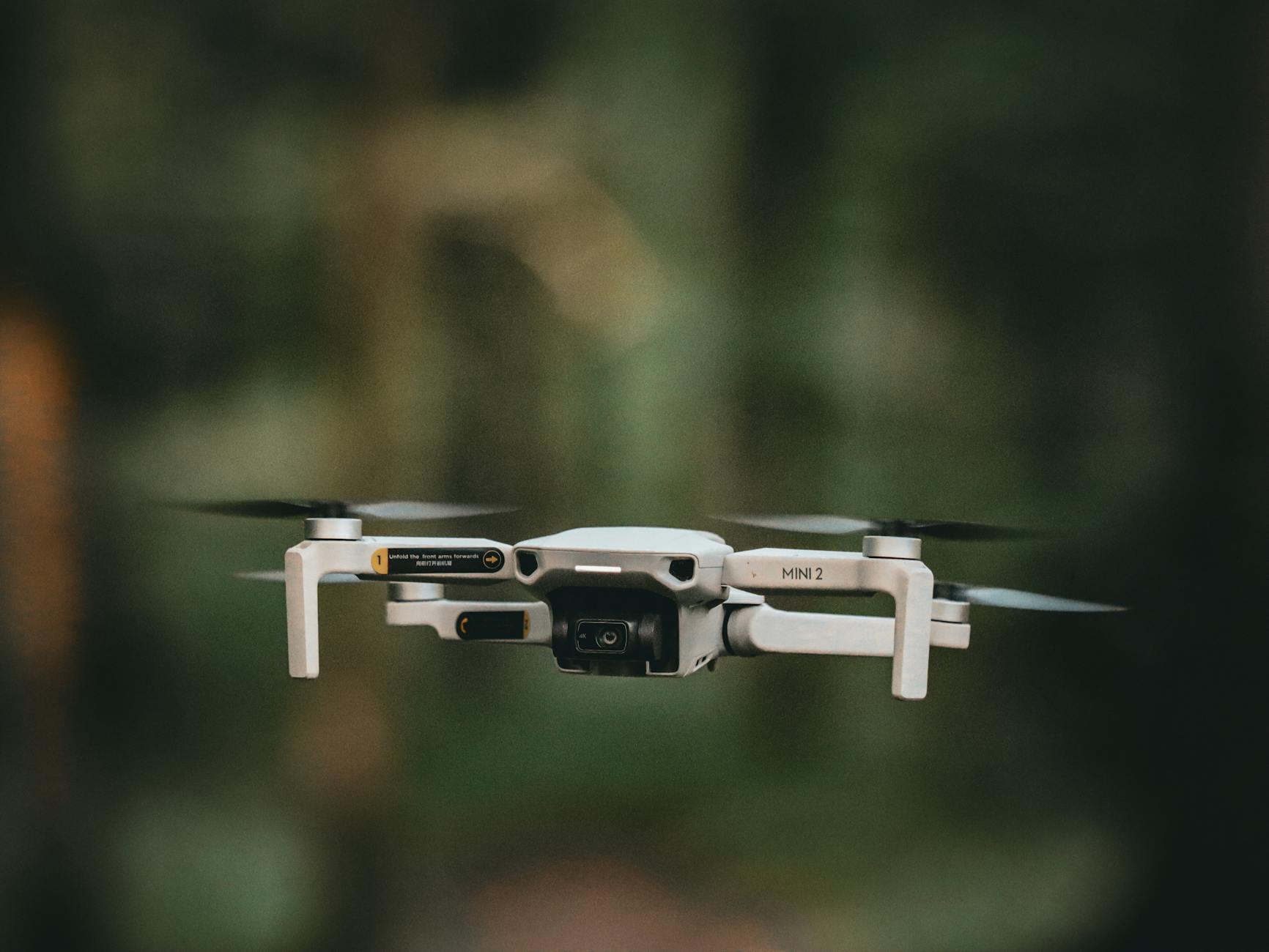

Identifying the best drone stocks to buy for the autonomous delivery future has become a priority for investors seeking exposure to one of the most transformative sectors in logistics and transportation technology. The commercial drone market, valued at approximately $28 billion in 2024, is projected to exceed $90 billion by 2030, with autonomous delivery applications representing the fastest-growing segment. This explosive growth trajectory has attracted significant attention from both retail and institutional investors looking to capitalize on the shift from pilot programs to full-scale commercial operations. The autonomous delivery sector addresses fundamental inefficiencies in last-mile logistics, which accounts for roughly 53% of total shipping costs.
Traditional ground-based delivery faces mounting challenges: labor shortages affecting major carriers, rising fuel costs, urban congestion, and increasing consumer expectations for same-day or even same-hour delivery. Drone technology offers a compelling solution by bypassing traffic entirely, reducing delivery times from hours to minutes, and slashing per-package delivery costs from several dollars to potentially less than one dollar in mature operations. Companies positioned to lead this transformation represent compelling investment opportunities across hardware manufacturing, software platforms, and integrated delivery services. By the end of this article, readers will understand the key players dominating the drone delivery landscape, the financial metrics that separate promising investments from speculative bets, regulatory catalysts that could unlock massive market expansion, and practical strategies for building a diversified portfolio in this emerging sector. Whether approaching this space as a growth investor, a technology enthusiast, or someone seeking exposure to the broader automation revolution, the analysis ahead provides actionable insights grounded in current market realities and forward-looking industry dynamics.
Table of Contents
- Which Drone Stocks Offer the Best Investment Potential for Autonomous Delivery?
- Key Financial Metrics for Evaluating Drone Delivery Companies
- Regulatory Landscape Shaping Drone Stock Valuations
- How to Build a Diversified Drone Delivery Stock Portfolio
- Technical and Operational Challenges Affecting Drone Stock Performance
- Emerging Players and Future Drone Delivery Stock Opportunities
- How to Prepare
- How to Apply This
- Expert Tips
- Conclusion
- Frequently Asked Questions
Which Drone Stocks Offer the Best Investment Potential for Autonomous Delivery?
The autonomous delivery drone market features a mix of pure-play drone companies, diversified aerospace manufacturers, and technology conglomerates with substantial drone divisions. Among pure-play investments, Joby Aviation (JOBY) and Archer Aviation (ACHR) focus primarily on urban air mobility but maintain significant technology overlap with delivery applications. AgEagle Aerial Systems (UAVS) concentrates on commercial and agricultural drone solutions, while AeroVironment (AVAV) commands the defense drone sector with emerging commercial applications. Each company presents distinct risk-reward profiles depending on their revenue stage, regulatory positioning, and technological differentiation.
Diversified players offer different investment characteristics. Amazon (AMZN) operates Prime Air, which has achieved FAA approval for beyond-visual-line-of-sight operations and currently delivers packages in select Texas and Arizona communities. Alphabet’s Wing (GOOGL) represents another major technology company with active drone delivery operations across the United States, Australia, and Europe, completing over 350,000 commercial deliveries by late 2024. United Parcel Service (UPS) operates Flight Forward, holding full Part 135 airline certification for drone operations—the first company to receive such authorization in the United States. These established corporations provide exposure to drone delivery growth while offering diversification across other profitable business segments.
- **Pure-play drone stocks** offer higher growth potential but carry greater volatility and execution risk
- **Diversified technology giants** provide drone exposure with downside protection from established revenue streams
- **Defense contractors with commercial ambitions** like AeroVironment and Northrop Grumman bring proven engineering capabilities and government contract stability
- **Component suppliers** such as Ambarella (AMBA), providing computer vision chips, offer picks-and-shovels exposure to the sector

Key Financial Metrics for Evaluating Drone Delivery Companies
Assessing drone stocks requires moving beyond traditional valuation metrics to examine factors specific to early-stage aerospace and logistics technology. Revenue growth rates matter, but investors should scrutinize the composition of that revenue—distinguishing between one-time hardware sales, recurring software licensing, and delivery service fees. Companies generating revenue from actual delivery operations, rather than solely from drone sales or pilot programs, demonstrate real-world commercial viability. Wing’s reported delivery volume growth of over 60% year-over-year through 2024 illustrates the kind of operational traction that signals sustainable business models.
Cash runway and path to profitability deserve particular attention in an industry where many companies remain pre-revenue or early-revenue. Analyzing quarterly cash burn rates against available liquidity reveals how long a company can sustain operations before requiring additional capital raises, which often dilute existing shareholders. Joby Aviation, for instance, maintained approximately $1 billion in cash reserves entering 2025, providing multi-year runway for continued development and certification efforts. Investors should calculate the implied cash runway by dividing total cash and equivalents by quarterly operating cash outflows, targeting companies with at least 18-24 months of runway.
- **Revenue composition**: Delivery services revenue indicates commercial maturity; hardware-only revenue suggests earlier development stage
- **Gross margins**: Target companies achieving or approaching positive unit economics on per-delivery basis
- **Customer concentration**: Diversified customer bases reduce risk compared to dependence on single enterprise contracts
- **R&D spending as percentage of revenue**: Higher ratios may indicate continued innovation but also delayed profitability
- **Backlog and pre-orders**: Forward commitments from customers provide visibility into future revenue recognition
Regulatory Landscape Shaping Drone Stock Valuations
Federal Aviation Administration regulations represent the single most significant factor determining when drone delivery can achieve mass-market scale. The FAA’s Part 107 rules govern most commercial drone operations, while Part 135 certification enables more extensive delivery operations. Beyond-visual-line-of-sight (BVLOS) waivers remain the critical regulatory threshold, as they allow drones to operate autonomously without human pilots maintaining visual contact—essential for economically viable delivery networks.
As of early 2025, the FAA has granted BVLOS authorizations to fewer than a dozen operators, creating significant competitive moats for approved companies. The FAA Reauthorization Act of 2024 mandated the establishment of standardized BVLOS rules by 2026, representing a potential catalyst that could rapidly expand the addressable market. Industry analysts estimate that comprehensive BVLOS regulations could increase the serviceable market for drone delivery by a factor of ten or more, transforming currently limited operations into nationwide networks. Companies already operating under existing waivers—Amazon, Wing, Zipline, and UPS—stand to benefit most immediately from regulatory liberalization, as they possess operational experience and safety data that newer entrants lack.
- FAA Type Certification validates specific drone models for commercial passenger or cargo operations
- Remote identification requirements, finalized in 2023, enable airspace management necessary for scaled operations
- State and local regulations create patchwork compliance requirements that favor well-resourced operators
- International regulatory harmonization, particularly with European Union Aviation Safety Agency standards, could accelerate global expansion for certified U.S. operators

How to Build a Diversified Drone Delivery Stock Portfolio
Constructing a balanced portfolio in the drone delivery sector requires deliberate allocation across different risk categories and value chain positions. A prudent approach divides exposure among pure-play drone companies, diversified technology leaders, component suppliers, and adjacent infrastructure plays. This diversification ensures that portfolio performance doesn’t depend entirely on any single company’s execution or regulatory approval. Allocating perhaps 40-50% to established technology companies with drone divisions, 30-40% to promising pure-play companies, and 10-20% to component suppliers creates balance between growth potential and stability.
Position sizing should reflect each investment’s risk profile and the investor’s overall risk tolerance. Pure-play drone stocks, given their volatility and binary regulatory outcomes, warrant smaller individual position sizes—perhaps 2-4% of total portfolio value each. Larger positions in diversified companies like Amazon or Alphabet can reach 5-8% given their drone operations represent only a fraction of overall business value. Investors should also consider their existing portfolio exposure; those already holding significant technology positions may prefer emphasizing pure-play drone companies for differentiated exposure.
- **Tiered allocation model**: Core holdings in diversified leaders, satellite positions in pure-play growth names
- **Geographic diversification**: Consider companies with international operations and approvals beyond U.S. markets
- **Value chain coverage**: Hardware, software, and service providers respond differently to market developments
- **Rebalancing discipline**: Quarterly reviews prevent winning positions from becoming concentrated risks
Technical and Operational Challenges Affecting Drone Stock Performance
Investors must understand the technical barriers that separate current pilot programs from profitable scaled operations. Battery technology remains a fundamental constraint, with current lithium-polymer cells limiting most delivery drones to ranges of 10-20 miles round-trip with typical package payloads. This range limitation concentrates addressable markets in dense urban and suburban areas where distribution centers can be located within drone range of delivery addresses. Companies investing in battery advancement, hybrid propulsion systems, or charging infrastructure may gain competitive advantages as the industry scales.
Weather dependence poses another operational challenge that affects financial projections. Most current drone delivery operations pause during precipitation, high winds exceeding 20-25 miles per hour, or extreme temperatures. This limitation reduces serviceable hours, particularly in regions with variable climates, affecting revenue potential and unit economics. Zipline’s fixed-wing drones, designed for challenging conditions in East African healthcare delivery, demonstrate higher weather tolerance than many multi-rotor designs, illustrating how engineering choices affect operational reliability. Noise concerns also shape where drones can operate; community acceptance varies significantly, and some municipalities have implemented noise-based operating restrictions.
- Payload capacity constraints limit addressable package types—most drones carry under 5 pounds
- Airspace integration with manned aircraft requires sophisticated detect-and-avoid systems
- Cybersecurity vulnerabilities in autonomous systems present regulatory and operational risks
- Maintenance and fleet management costs scale differently than traditional vehicle operations

Emerging Players and Future Drone Delivery Stock Opportunities
Beyond currently public companies, several private firms and recent market entrants deserve monitoring for future investment opportunities. Zipline, the global leader in drone delivery by volume with over one million commercial flights completed, has publicly discussed IPO plans that would provide pure-play exposure to the highest-volume operator in the industry. The company’s expansion from healthcare delivery in Rwanda and Ghana to U.S.
commercial operations with Walmart and other retailers positions it as a potentially significant public market opportunity. Other emerging players include Matternet, which operates drone delivery networks for healthcare systems including WakeMed and several Swiss hospitals, and Flytrex, focusing on suburban food and retail delivery. German company Wingcopter has attracted significant investment from Japanese trading houses for pharmaceutical and e-commerce delivery applications. For investors, tracking these private companies’ progress toward profitability, regulatory approvals, and potential public market debuts provides a pipeline of future investment candidates as the sector matures.
How to Prepare
- **Research regulatory status thoroughly**: Review each company’s FAA certifications, BVLOS waivers, and pending applications. The FAA’s online databases and company SEC filings disclose regulatory milestones and timelines. Understanding where each company stands in the certification process reveals near-term catalysts and risks.
- **Analyze financial statements with sector-specific focus**: Examine cash positions, burn rates, and revenue quality using the latest 10-K and 10-Q filings. Calculate cash runway independently rather than relying on company projections, and assess whether current cash supports operations through expected profitability milestones.
- **Evaluate competitive positioning and partnerships**: Map each company’s customer relationships, exclusive partnerships, and geographic operating rights. Long-term enterprise agreements, such as Zipline’s multi-year Walmart partnership, provide revenue visibility that speculative operators lack.
- **Assess technology differentiation and intellectual property**: Review patent portfolios, published technical specifications, and third-party assessments of drone capabilities. Companies with proprietary advantages in range, payload, weather tolerance, or autonomy software command stronger competitive moats.
- **Determine personal allocation limits**: Establish maximum portfolio exposure to the drone sector overall and individual positions specifically before investing. Written investment criteria prevent emotional decision-making during volatile market periods common in emerging technology sectors.
How to Apply This
- **Open or review brokerage accounts**: Ensure your brokerage provides access to both U.S. exchanges for domestic drone stocks and international markets if considering foreign-listed companies. Check commission structures for smaller position sizes typical in satellite growth holdings.
- **Implement positions systematically**: Rather than investing entire allocated capital immediately, consider dollar-cost averaging into positions over three to six months. This approach reduces timing risk in volatile growth stocks and allows reassessment as new information emerges.
- **Establish monitoring processes**: Set alerts for SEC filings, FAA announcements, and earnings releases for portfolio holdings. Regular information flow enables timely responses to material developments without requiring constant attention.
- **Document investment theses and review triggers**: Write down specific reasons for each investment and conditions that would prompt selling. This discipline prevents holding declining positions beyond reasonable recovery scenarios and captures gains when theses play out successfully.
Expert Tips
- **Prioritize companies with operational revenue over those still in development**: Actual delivery operations generating fees, even if modest, demonstrate commercial viability that pre-revenue companies cannot claim. Wing’s 350,000+ deliveries and Zipline’s one million flights represent de-risked operations compared to companies with only prototype testing.
- **Watch for insider buying signals**: Corporate executives purchasing shares in the open market, disclosed in SEC Form 4 filings, often indicates confidence in near-term positive developments. Insider selling is less informative given compensation practices, but concentrated buying deserves attention.
- **Consider the infrastructure angle**: Companies providing drone infrastructure—vertiports, charging networks, airspace management software—may benefit regardless of which drone manufacturers ultimately dominate. This picks-and-shovels approach historically performs well in emerging technology cycles.
- **Account for macroeconomic sensitivity**: Growth stocks in unprofitable sectors typically suffer disproportionately during interest rate increases and economic uncertainty. Maintaining cash reserves to add to positions during market corrections can improve long-term returns significantly.
- **Track international regulatory developments**: Markets in Europe, Australia, Japan, and the UAE are advancing drone delivery regulations in parallel with the FAA. Companies with multi-jurisdictional approvals can scale globally, diversifying regulatory risk beyond any single country’s decisions.
Conclusion
The autonomous drone delivery sector represents a genuine inflection point in logistics technology, with publicly traded companies offering investors various pathways to participate in this transformation. From diversified technology leaders like Amazon and Alphabet operating actual delivery networks, to pure-play companies racing toward certification and scale, the market provides options matching different risk tolerances and investment horizons. Understanding the regulatory landscape, technical challenges, and financial metrics specific to this industry enables more informed capital allocation than simply chasing headlines about drone technology.
Success in drone stock investing ultimately depends on identifying companies that can navigate the transition from pilot programs to profitable commercial operations—a journey that requires regulatory approvals, technological reliability, unit economic viability, and customer adoption simultaneously. The next several years will likely separate genuine industry leaders from also-rans, creating both significant gains for well-positioned investors and painful losses for those backing companies that fail to execute. Approaching this sector with disciplined research, appropriate position sizing, and patience for regulatory timelines positions investors to benefit from what may become one of the most significant logistics innovations since containerized shipping.
Frequently Asked Questions
How long does it typically take to see results?
Results vary depending on individual circumstances, but most people begin to see meaningful progress within 4-8 weeks of consistent effort. Patience and persistence are key factors in achieving lasting outcomes.
Is this approach suitable for beginners?
Yes, this approach works well for beginners when implemented gradually. Starting with the fundamentals and building up over time leads to better long-term results than trying to do everything at once.
What are the most common mistakes to avoid?
The most common mistakes include rushing the process, skipping foundational steps, and failing to track progress. Taking a methodical approach and learning from both successes and setbacks leads to better outcomes.
How can I measure my progress effectively?
Set specific, measurable goals at the outset and track relevant metrics regularly. Keep a journal or log to document your journey, and periodically review your progress against your initial objectives.
When should I seek professional help?
Consider consulting a professional if you encounter persistent challenges, need specialized expertise, or want to accelerate your progress. Professional guidance can provide valuable insights and help you avoid costly mistakes.
What resources do you recommend for further learning?
Look for reputable sources in the field, including industry publications, expert blogs, and educational courses. Joining communities of practitioners can also provide valuable peer support and knowledge sharing.
Related Reading
- Which Surgical Robotics Stock Will Dominate the 2030s
- Amazon Robotics Expansion: Hidden Value in AMZN Stock
- Best Robotics Penny Stocks With Massive Upside Potential
- Should You Buy Google Stock for Its Robotics Division
- How Generative AI Is Transforming Robot Programming