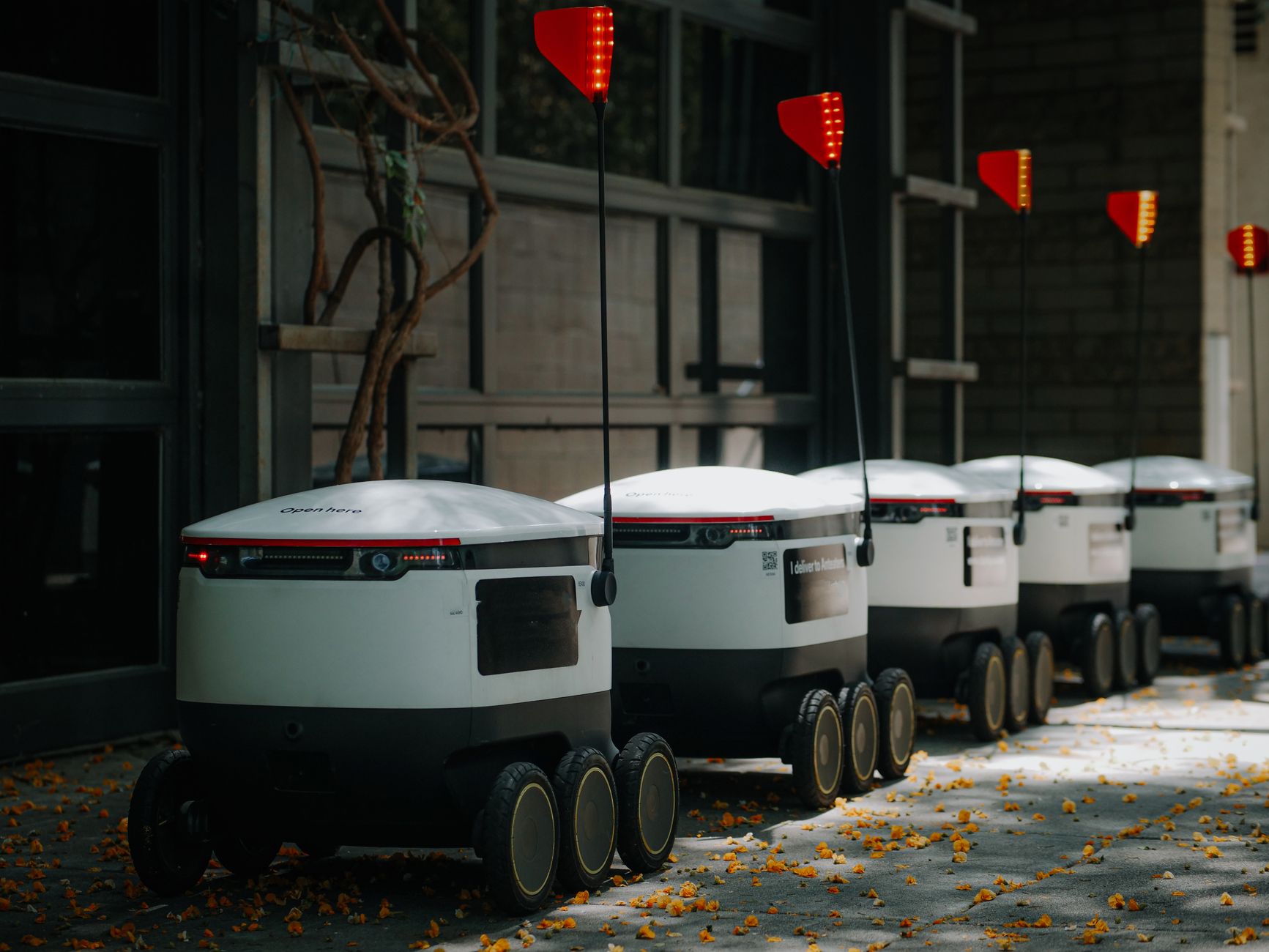

DoorDash has not deployed autonomous delivery robots across New Mexico roadways or residential areas. The company told KOB 4 it has "no immediate plans" to introduce its Dot robots in the state. Dot is DoorDash's all-electric autonomous delivery robot. The documented New Mexico activity concerns proposed legislation that could permit a future rollout—not an active delivery service.
Table of Contents
- What happened in New Mexico?
- What can the Dot robot do?
- Where could deployment eventually occur?
- What would robots mean for delivery drivers?
- Why local control remains disputed
What happened in New Mexico?
DoorDash presented its plans on July 14, 2026, to the New Mexico Legislature's Transportation Infrastructure Revenue Subcommittee. The committee's official page records the meeting.
Company representatives asked lawmakers to consider rules for self-driving "personal delivery devices." They did not announce a launch date, operating area or pilot program. Legislation during the next session could be a first step. Even if lawmakers establish a legal framework, that would not by itself confirm that DoorDash will deploy robots.
What can the Dot robot do?
DoorDash designed Dot to travel on roads, bike lanes, sidewalks and driveways before carrying an order to a customer's door. The company says the robot can reach 20 mph, according to its September 2025 product announcement. The proposed New Mexico use case focuses on short deliveries of approximately three to five miles.
Each robot could carry up to 30 pounds of goods. DoorDash's proposal also contemplated a maximum loaded weight of 500 pounds, insurance held by the owner and a 10-mph speed limit near pedestrians. Those proposed safeguards are policy ideas, not current statewide operating rules for a live Dot service.
Where could deployment eventually occur?
DoorDash has not identified any New Mexico cities, neighborhoods or roads for deployment. Its representatives said urban areas with substantial bike infrastructure would be the most likely candidates. That description points toward places where a robot could combine bike-lane, sidewalk and road travel during a short delivery.
It does not amount to a site selection or commitment. Residents should therefore treat claims of an imminent neighborhood rollout cautiously. A confirmed deployment would require, at minimum, a specific location and start date from DoorDash or an applicable public authorization.
What would robots mean for delivery drivers?
DoorDash says robots could handle some short trips while drivers take other orders. The company characterized Dot as a complement to its workforce rather than a replacement for the more than 40,000 drivers it says operate in New Mexico, as KUNM reported.
The practical effect cannot yet be measured because no New Mexico service exists. DoorDash has not specified how orders would be assigned, how many robots it might use or which deliveries would remain with drivers. Drivers, merchants and customers should look for concrete operating details before drawing conclusions about availability or employment effects:.
- A named launch area and start date
- Published rules for assigning robot deliveries
- Customer instructions for receiving an order
- Local safety, access and incident-reporting procedures
Why local control remains disputed
DoorDash sought limits on local taxes, fees and regulations affecting delivery robots. That request could reduce differences between municipal rules, but it would also restrict how cities respond to local street and sidewalk conditions. State Sen.
Linda Trujillo called the proposed restriction a "huge red flag," according to KANW and Source New Mexico. The unresolved question is whether state law would set uniform rules or leave municipalities room to impose additional requirements. For residents and local officials, the next concrete development to watch is proposed legislation—not the arrival of robots on New Mexico streets.